
On this page
Quick answer: where should inverter battery be placed?
The best place for an inverter battery is a dry, ventilated, easy-to-service utility or passage area where it does not block movement or sit near water, heat, gas or sleeping zones. In traditional Vastu, electrical and fire-related equipment is often linked with South-East, while heavier equipment may also suit South, West or South-West when the layout supports it. In real homes, the safest location is the one that keeps the unit cool, stable, clean and professionally wired.
Avoid treating the inverter as just another storage item. Batteries can be heavy, warm and sensitive to poor ventilation. Some systems also need specific clearance around vents and terminals. Follow the manufacturer and electrician first, then use Vastu direction as a secondary planning lens.
Use this article with Electrical Switchboard Vastu, Washing Machine Vastu, and Utility Room Vastu.
Best directions for inverter and UPS placement
South-East is traditionally connected with fire and electrical activity, so many people consider it suitable for electrical equipment. This can work if the area is dry, ventilated and not already overloaded with kitchen heat or appliance clutter. Do not place a battery beside the stove or under a sink just because South-East sounds right.
South, West and South-West can also be practical for heavier equipment when the wall and floor are stable. These zones are often used for storage and service equipment in modern homes. Keep access open so a technician can check the unit without moving half the household.
North-East, pooja corners and the centre of the home are usually better kept light, clean and calm. If an inverter already exists there in a compact flat, do not panic; reduce clutter, improve ventilation and consider a safer relocation during the next electrical service.
Room-wise placement guidance
Utility area or service passage
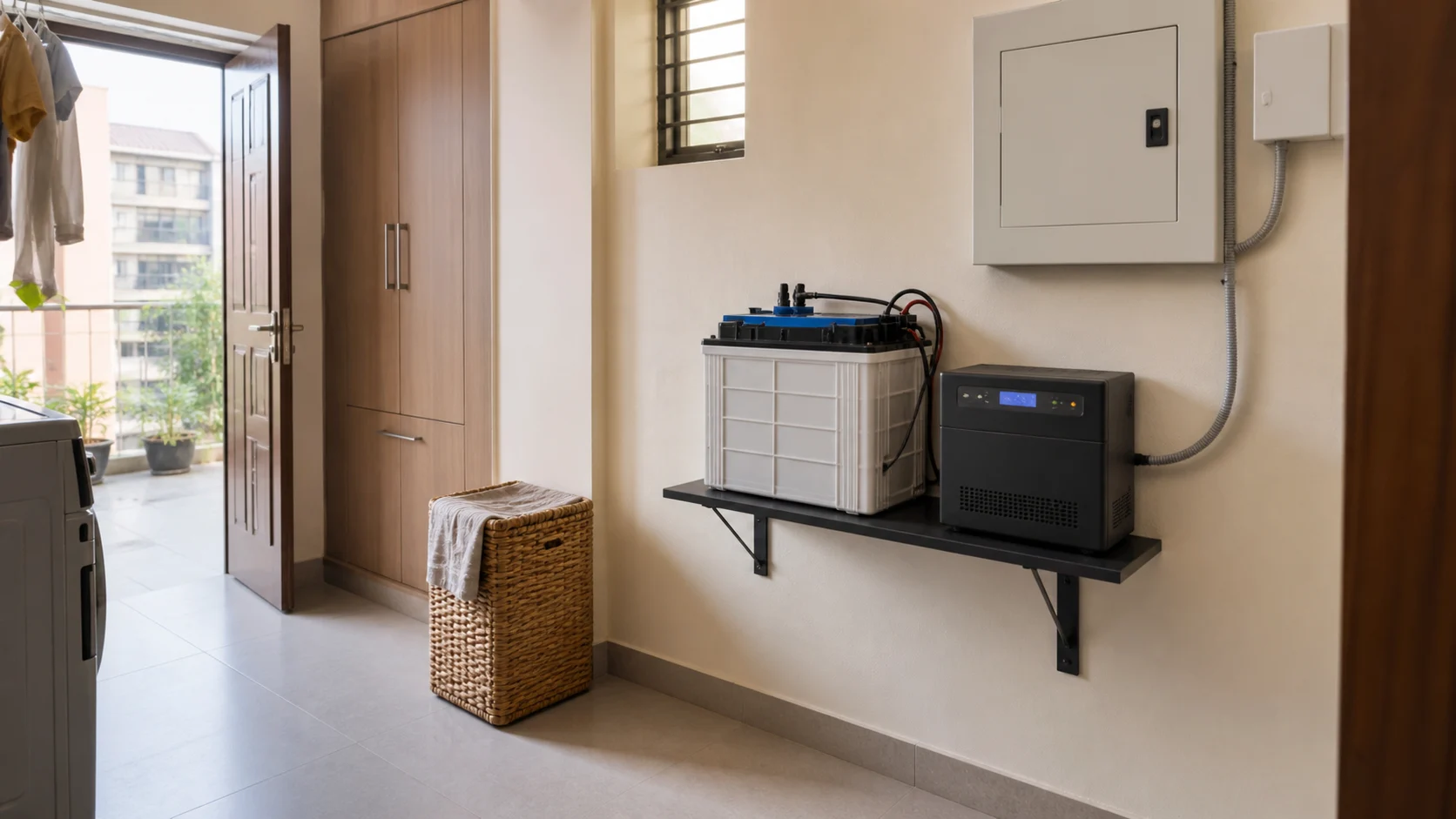
A ventilated utility area is often the best practical choice. It keeps the equipment away from bedrooms and dining while remaining accessible. The key is separation from wet activities. If the washing machine, mop sink or balcony rainwater is nearby, keep the inverter on a dry side wall with splash protection and professional wiring.
Bedroom and study room
Avoid bedrooms if possible. A bedroom should support sleep, quiet and clean air. Inverter humming, indicator lights, heat or battery concerns can disturb rest. Study rooms and home offices also need visual calm, so a dedicated service cabinet outside the main desk zone is better.
Kitchen and dining area
Kitchen placement is usually not ideal because of heat, steam, oil and water. Dining areas should also feel clean and calm, not like a service corner. If a compact apartment has only one electrical wall near dining, use a neat ventilated cabinet and keep the equipment visually quiet.
Balcony or covered service ledge
A covered balcony can work only when protected from rain, direct harsh sun, dust and accidental splashes. Do not keep battery equipment where children can touch terminals or where clothes drip water nearby.
Electrical and battery safety checklist
Safety comes before Vastu direction. Use a qualified electrician for installation, earthing, wire gauge, circuit protection and load planning. Do not run heavy backup systems through loose extension boards. Do not hide warning smells, heat or unusual noise behind decorative panels.
- Keep the unit on a stable, dry surface with ventilation.
- Leave manufacturer-recommended clearance around vents and terminals.
- Keep water taps, sinks, washing machines and wet mops away.
- Use cable clips, conduit or proper trunking instead of loose wires.
- Do not store paper, cloth, cardboard or cleaning chemicals beside batteries.
- Keep the area accessible for service and emergency shutoff.
- Check monthly for heat, swelling, leakage marks, corrosion or dust buildup.
Inverter battery placement table
| Location | Good use | Check first | Avoid |
|---|---|---|---|
| Utility room | Best practical service zone | Ventilation, dry floor, access | Water splash and blocked vents |
| Service passage | Works with a neat cabinet | Clear walking path and wiring | Equipment projecting into movement |
| South-East wall | Traditional electrical/fire zone | Heat, water and appliance crowding | Kitchen steam or gas proximity |
| Balcony | Possible if covered and dry | Rain, sun, dust and security | Open weather exposure |
| Bedroom | Generally avoid | Noise, heat, air and light disturbance | Battery near bed or pillow wall |
Practical examples for Indian homes
Example 1: 2BHK apartment utility area. The inverter sits beside a washing machine. The safer correction is to shift it to a dry side wall, route cables neatly and keep laundry water away from the equipment. This improves both safety and Vastu comfort.
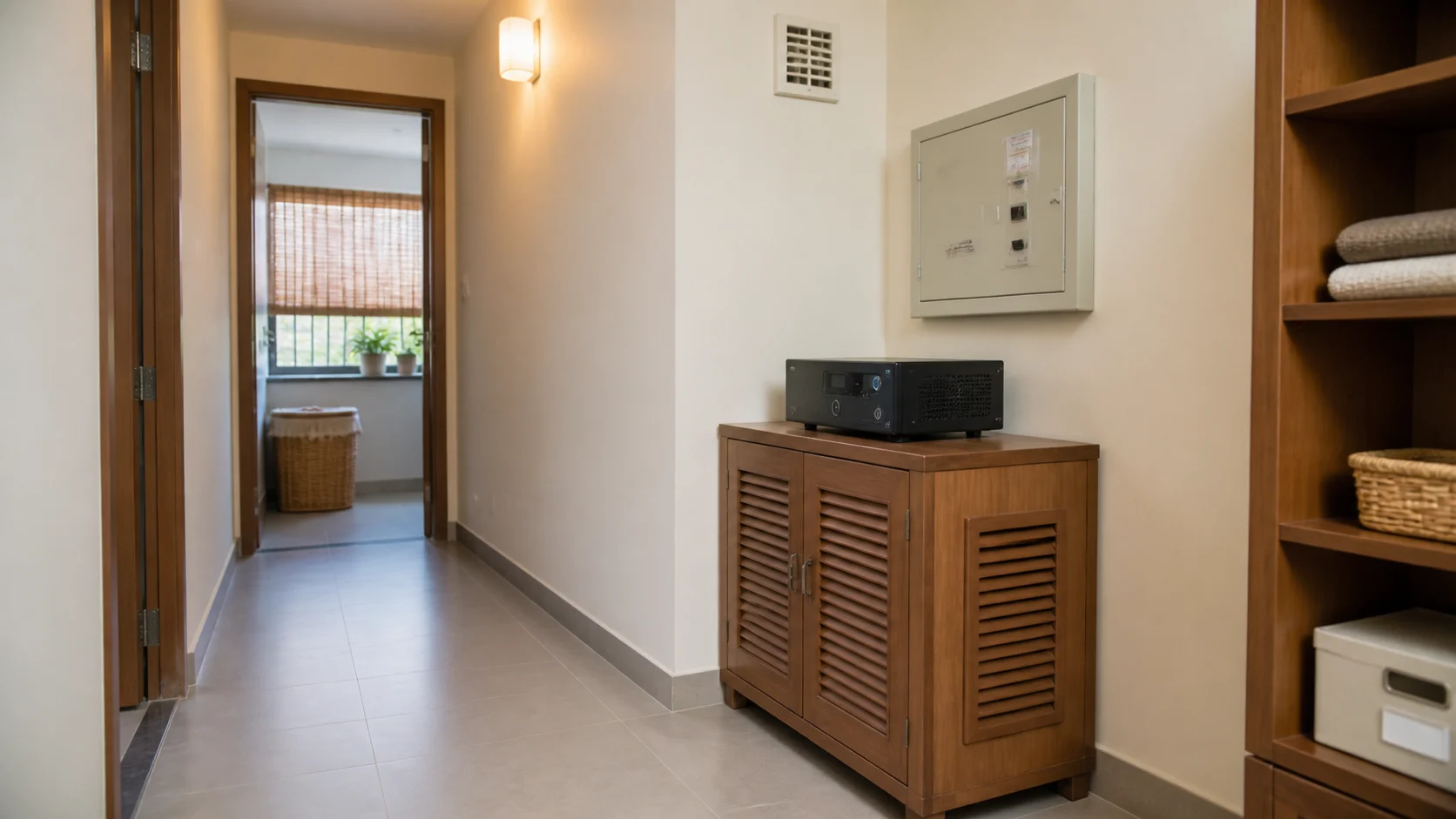
Example 2: Passage cabinet in a rental flat. The tenant cannot change wiring. A ventilated movable cabinet, cable clips and a clear service label can make the area neater without permanent renovation. Owner permission is still needed for electrical changes.
Example 3: Independent house service room. A dedicated power backup corner in South or South-East can work well if the room has ventilation, fire safety and technician access. Do not use the same corner for old paint, cardboard boxes or cleaning chemicals.
Example 4: Bedroom inverter problem. The unit hums at night and has bright lights. Relocating it outside the bedroom is best. If not immediately possible, reduce bedroom exposure and plan relocation during the next service visit.
Apartment and villa examples
Apartment utility balcony: In many flats, the inverter is placed near the washing machine because both points are in the same service area. This can work only when the battery cabinet stays dry, raised from the floor, away from drain splash, and easy to ventilate. Keep detergent bottles, wet mops, buckets and drying clothes away from the battery side. Traditional Vastu may prefer activity-heavy utilities toward south-east, west or north-west, but moisture separation is the deciding factor.
Independent house service room: A small service room can hold the inverter, DB board, stabilizer and solar controls if the electrician plans heat clearance and access. Do not hide the battery behind locked storage or under a staircase packed with old cartons. Keep a clear path so inspection, replacement and emergency switch-off are simple. This gives the home a calmer service rhythm and avoids turning power backup into a hidden maintenance problem.
Common inverter battery Vastu mistakes
1. Wet corner
Keeping batteries near taps, sinks, balcony rain or laundry splash.
2. Airtight box
Hiding equipment in sealed storage that traps heat.
3. Bedroom placement
Letting noise, lights or heat disturb sleep.
4. Cable mess
Loose wires crossing walkways or collecting dust.
5. Fire clutter
Storing cloth, paper, cardboard or chemicals beside equipment.
6. Forced direction
Choosing a direction while ignoring electrician advice.
Traditional guidance with practical limits
Inverter battery Vastu should be treated as traditional planning guidance, not a guarantee of prosperity, health or success. Electrical equipment is useful because it keeps daily life running during power cuts. Its “positive” effect comes from reliability, safety and calm placement. A direction label cannot compensate for poor wiring, blocked ventilation or wet flooring.
Use the four-step order: safety first, ventilation second, access third, direction fourth. This keeps the advice grounded. When all four align, the placement feels settled. When they conflict, choose safety and consult a qualified electrician.
Frequently asked questions
Which direction is best for inverter battery as per Vastu?
South, West, South-West or South-East utility zones are often considered workable for electrical and heavier equipment, but the final location must be dry, ventilated, accessible and approved by an electrician.
Can inverter battery be kept in bedroom?
Avoid keeping inverter batteries in bedrooms where possible. Bedrooms need clean air, quiet and rest. Use a ventilated utility, passage cabinet or service area instead.
Can inverter be placed in kitchen?
It is usually better to avoid kitchen placement because heat, steam, oil and water increase risk. If there is no alternative, keep it far from sink, stove and wet counters, with professional electrical safety.
Is South-East good for inverter placement?
South-East is traditionally linked with fire and electrical activity, so it may work for inverter equipment if ventilation, dry flooring and safe wiring are available. Do not force it beside heat or water.
Can inverter battery be kept near the main entrance?
Avoid making battery equipment the first view at the entrance. If it must be near a passage, use a neat ventilated cabinet, clear walking path and safe wiring.
Should inverter battery be covered?
Do not seal it in an airtight box. A ventilated cabinet can hide visual clutter while allowing heat and gases to disperse according to the equipment manufacturer’s instructions.
Can inverter battery be kept in balcony?
A covered, dry, ventilated balcony or utility area can work only if it is protected from rain, direct harsh sun, children, pets and water splashes. Follow electrical safety rules.
What should be avoided near inverter batteries?
Avoid water taps, sinks, washing machines, gas cylinders, pooja corners, beds, direct sunlight, closed airtight storage, loose cables and flammable clutter.
How can renters improve inverter Vastu?
Renters can keep the unit dry, tidy cables, use a ventilated movable cabinet, avoid overloading sockets and get owner permission before any wiring change.
Is inverter noise a Vastu issue?
Noise affects comfort, so it matters practically. Keep the inverter away from bedrooms, study desks and prayer spaces if humming or fan noise disturbs routine.
How often should inverter area be checked?
Check the area monthly for dust, heat, leakage marks, cable damage, blocked vents and clutter. Have battery and wiring serviced by qualified technicians.
What is the safest simple rule?
Keep inverter and battery equipment dry, ventilated, accessible, away from heat and water, and professionally installed. Safety comes before direction.
Conclusion
Good inverter battery Vastu is simple: keep backup power equipment dry, ventilated, accessible and away from sensitive living areas. South-East, South, West or South-West may work when the practical conditions are right, but no direction is worth unsafe wiring or poor ventilation.
Continue with Electrical Switchboard Vastu, Utility Room Vastu, and Vastu Remedies Without Renovation.