

What you’ll get from this page
This beginner guide is a “home base” you can return to anytime. It explains the most common Vastu terms, shows simple direction diagrams, and gives you a step-by-step path so you don’t feel overwhelmed. Use it whether you live in an apartment, rent a flat, or plan an independent house.
Bookmark this page and use it like a checklist hub. Whenever you read a new rule somewhere, come back here and ask: does this rule improve light, airflow, hygiene, or daily flow? If yes, it’s probably worth trying.
Start with these three beginner pages
These pages answer the most common questions before you go deeper.

Vastu FAQ
Quick answers to common questions.
Is Vastu scientific?
Understand what is practical vs traditional.
Vastu vs Feng Shui
Learn the difference without confusion.
Beginner rule #1: directions are the map
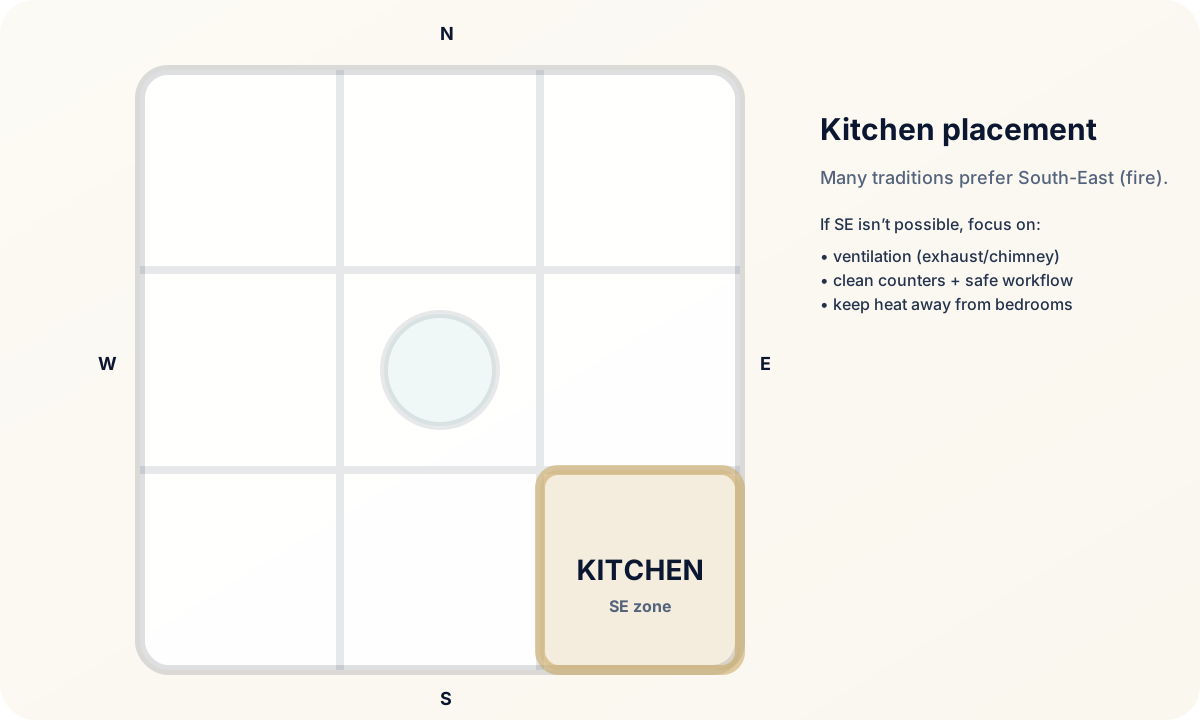
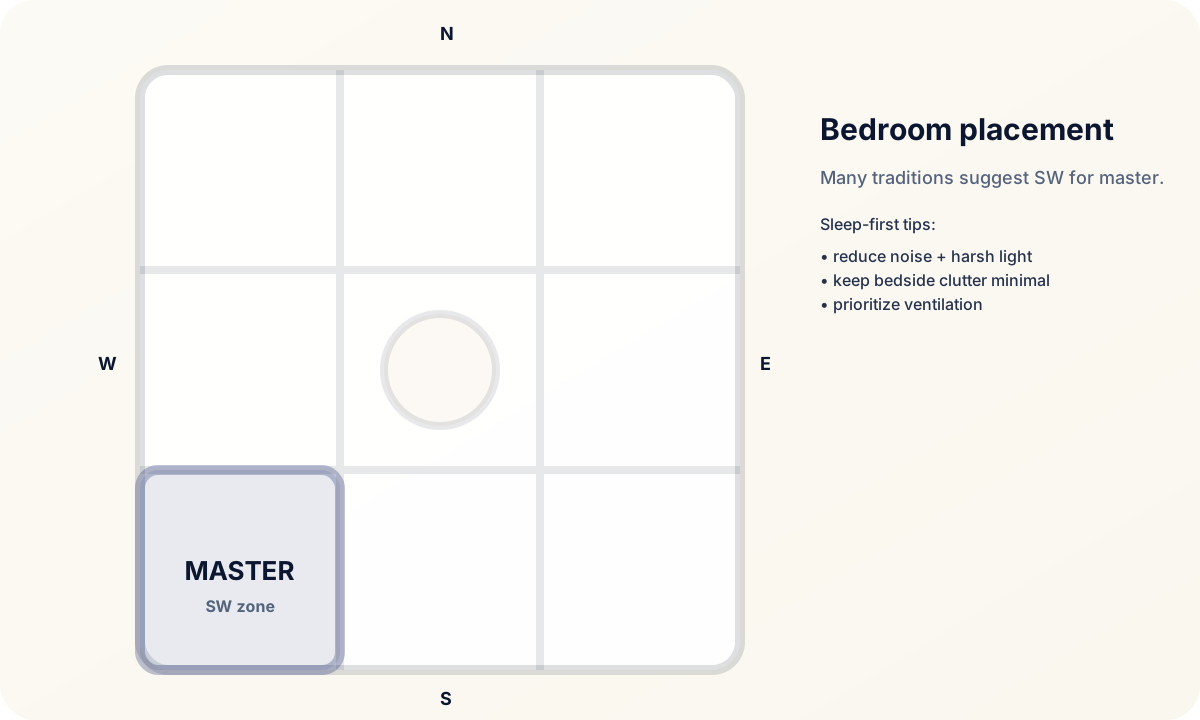
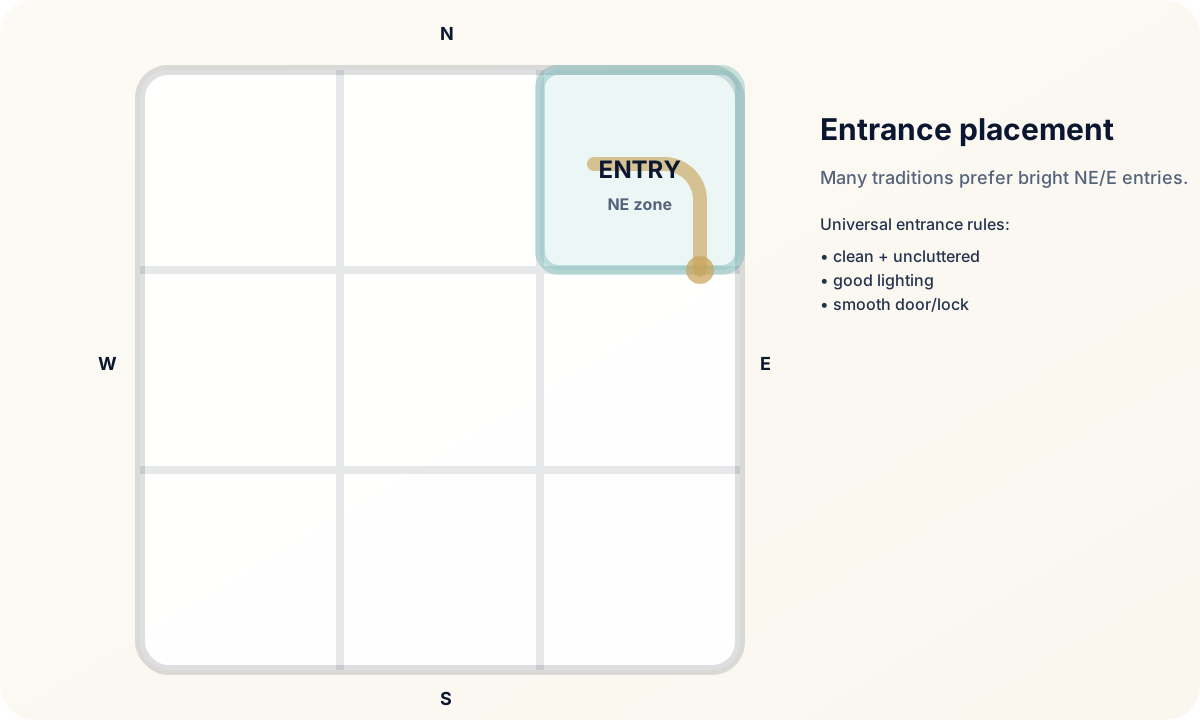
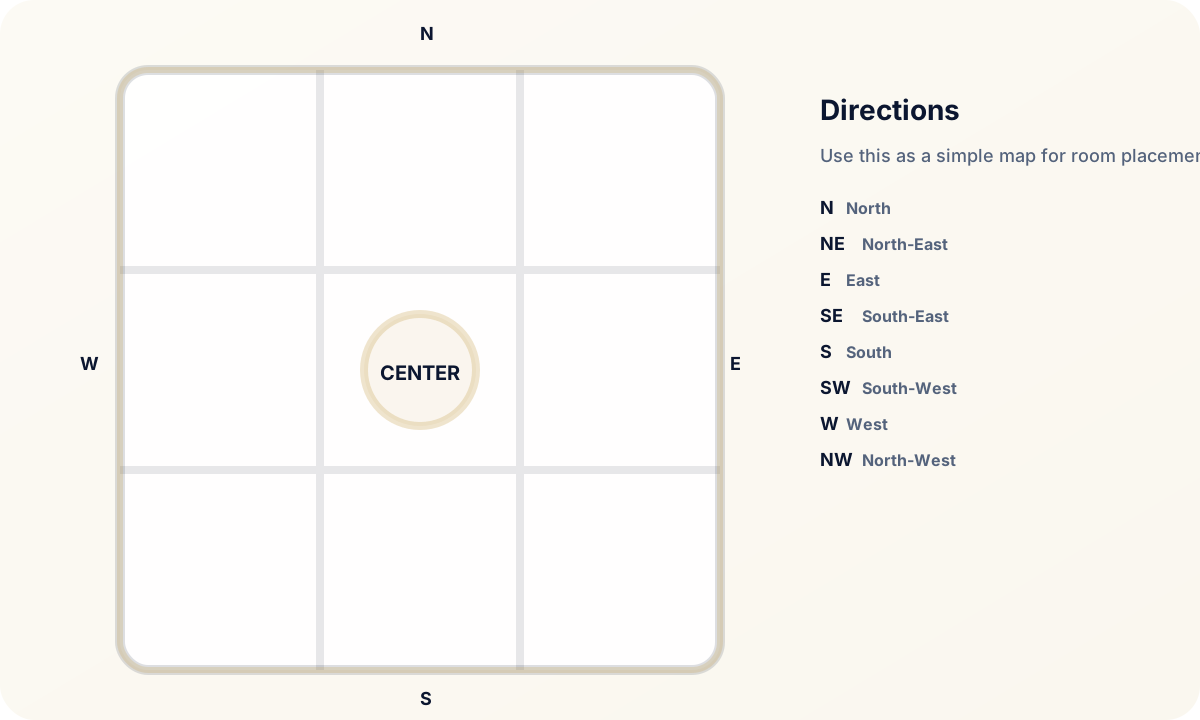
Most people try to “apply Vastu” without knowing directions clearly. That creates unnecessary stress. Start by identifying north and using a simple zone map: north-east (NE), south-east (SE), south-west (SW), and north-west (NW). Many traditions use these zones for kitchen, bedroom, and entrance guidance.
How to measure
Stand away from metal objects, take two readings, and use the main door/gate side to decide facing and entry.
What to map
Mark your kitchen, bedrooms, toilets, and the entry path on the zone grid. Then improve comfort.
If you want a quick helper, try the Direction Finder and then read the full Direction Vastu guide (with diagrams).
Direction diagrams: room placement examples
These are not strict “must-follow” rules. They are common examples found across many traditions. Use them as a visualization tool and adapt to your layout.
Beginner rule #2: prioritize comfort fundamentals
A premium home feels premium because daily life is smooth. Before complex rules, focus on fundamentals that always help:
Light
Layered lighting + daylight. Bright, clean corners feel better than dark corners with “remedies.”
Airflow
Working exhaust fans and open windows reduce smell and dampness and improve sleep.
Hygiene
Leak-free plumbing, dry floors, clean kitchen and toilets. This is the real “energy” foundation.
Flow
Clear walking paths and uncluttered entry. Make daily movement easy.
Beginner mistakes (and what to do instead)
Beginners often feel stuck because they start with fear-based lists or because they try to change everything at once. Use the calm alternatives below.
Mistake: chasing perfection
Alternative: map zones, then improve one priority area (entry, kitchen, bedroom) each week.
Mistake: ignoring ventilation
Alternative: fix exhaust fans, reduce dampness, and open windows daily. Air quality is a premium upgrade.
Mistake: clutter near the door
Alternative: create an entry system (shoe storage + warm light). Small change, big daily impact.
Mistake: relying only on “remedies”
Alternative: treat remedies as comfort add-ons. Planning and maintenance matter more.
How to use this site (so it feels premium, not confusing)
Vastu topics can quickly explode into hundreds of rules. We keep it simple using “pillars” (big overview pages) and “spokes” (room pages and checklists). As a beginner, stick to the pillars first—then go deep only where you need it.
Pillars (start here)
Spokes (when you’re ready)
Use these related guides to explore one topic at a time and return to this page when you need the next step.
Recommended reading order (3 levels)
If you don’t know what to read next, follow this simple ladder. It’s designed to keep learning smooth: first build the map, then learn room basics, then explore specialized topics only when needed.
Level 1 — Basics
Read Introduction and learn Direction Vastu.
Level 2 — Rooms
Use Room-wise Vastu and start with kitchen + bedroom checklists.
Level 3 — Projects
If building/buying, use Home and Plot guides to avoid expensive mistakes.
Optional — Tools
Use tools to confirm directions and compare options, then apply one change at a time.
The biggest beginner win is consistency: pick one level, do one improvement, and observe your comfort. This makes Vastu feel realistic and premium instead of confusing. If you ever feel stuck, return to the 7-day plan and restart calmly.
Tools walkthrough (10 minutes)
Tools are optional, but they can make learning faster because they remove uncertainty. Use them as helpers—not as “final answers.”
Step 1 — Direction Finder
Confirm directions and understand zones. Try: Direction Finder.
Step 3 — Plot Shape Analyzer
Buying land? Compare plot shapes and constraints. Try: Plot Shape Analyzer.
Step 4 — Apply one change
Pick one improvement (entry light, exhaust, declutter). Observe comfort for a week before adding more.
This “one change at a time” habit is what makes the process calm. It also prevents you from spending money on fixes that don’t improve daily life.
Room-wise starter kit (most useful pages)
If you want practical results fast, start room-wise. You’ll learn a clear checklist per room, which is easier than memorizing abstract rules.
Living room
Seating flow, entry comfort, and clutter control.
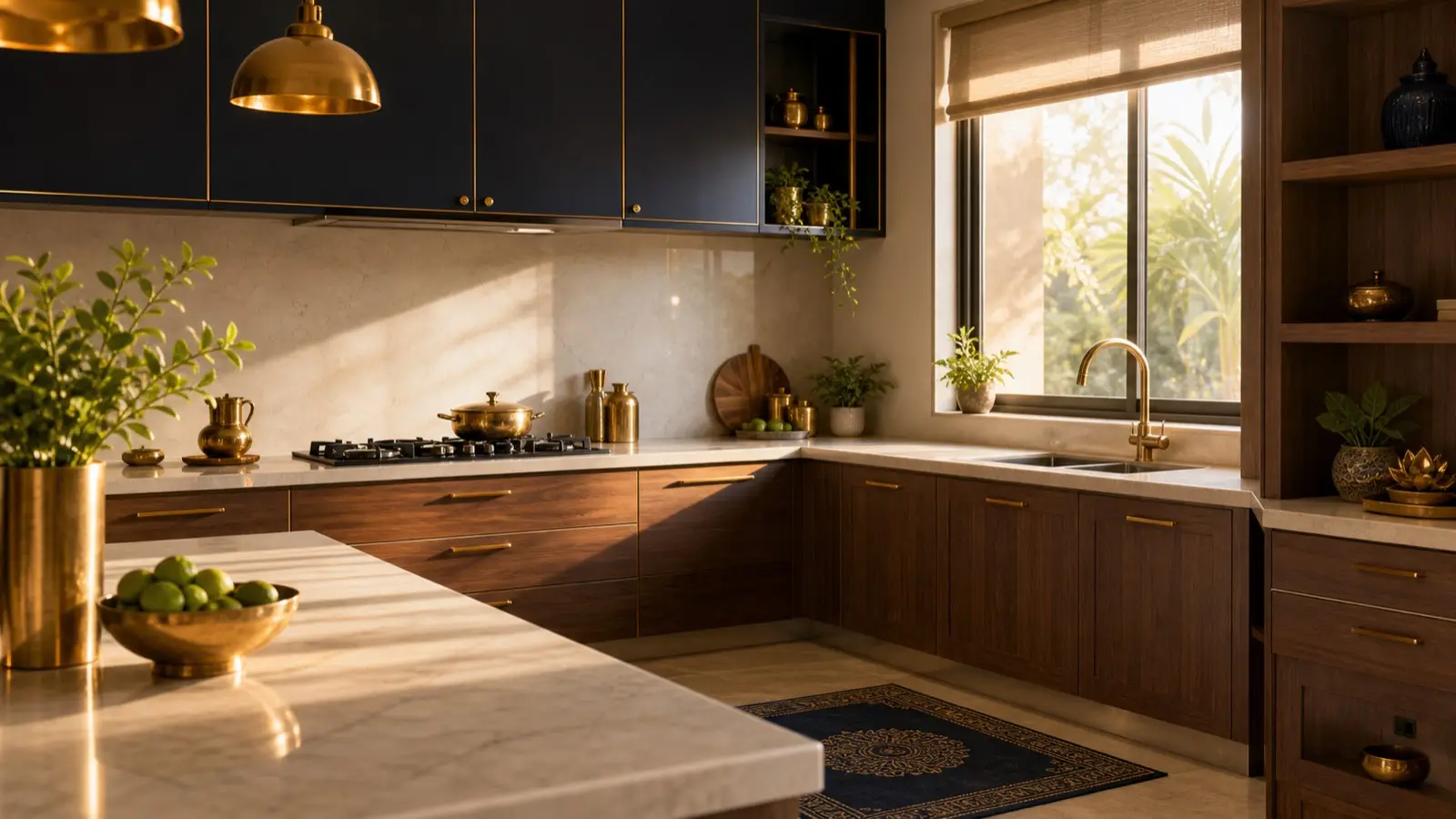
Kitchen
Ventilation, stove/sink logic, and safe workflow.
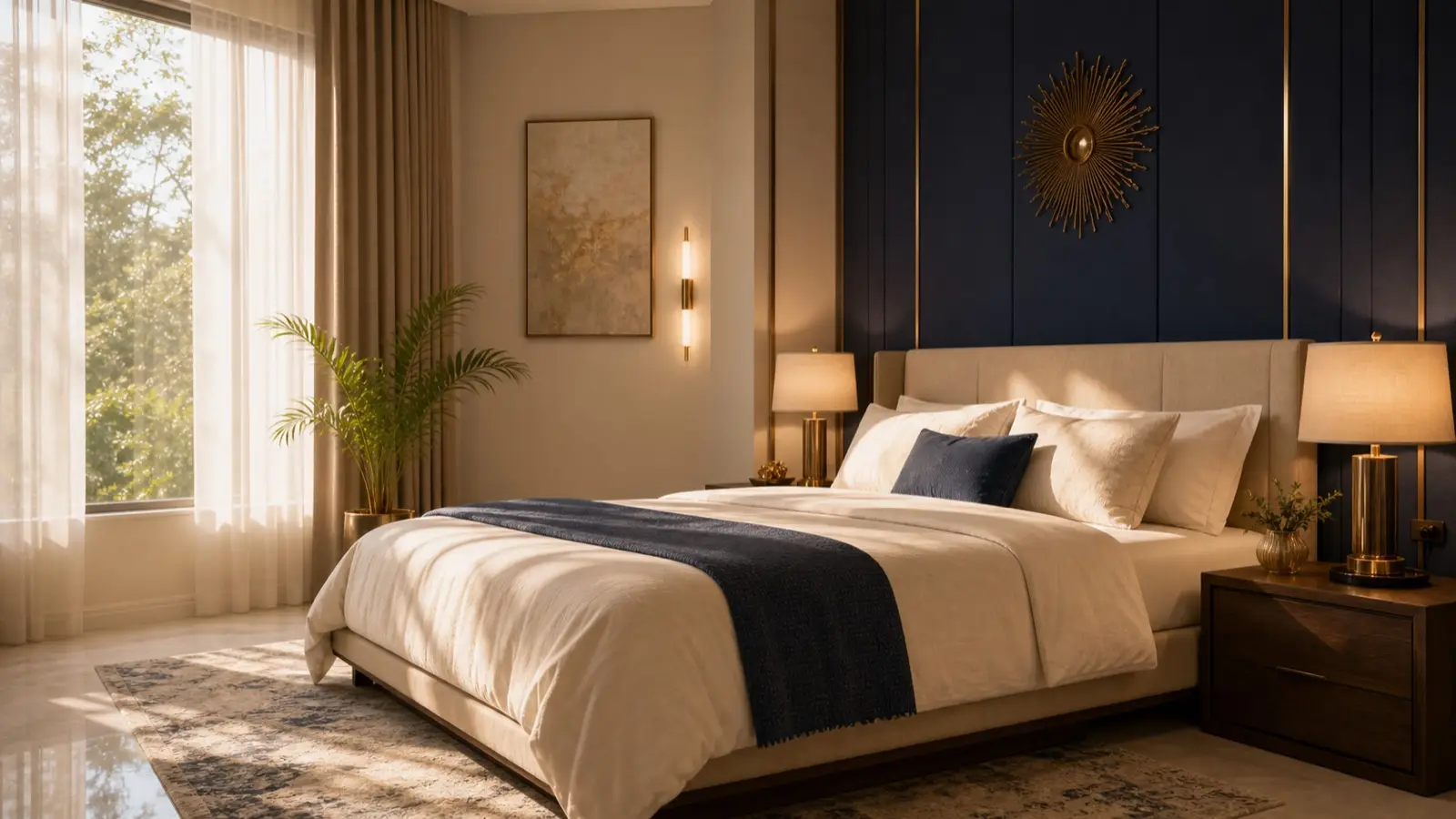
Bedroom
Sleep-first setup: light/noise control and calm layout.
Mini case study (apartment-friendly)
Example: a family lives in a flat where the kitchen is not in the “ideal” zone and the main door opens into a narrow passage. Instead of stressing, they improve what is controllable: add warm light at the entry, create closed shoe storage, and keep the door area uncluttered. In the kitchen, they install a stronger exhaust, keep the stove area clean, and ensure safe spacing between stove and sink. In the bedroom, they add blackout curtains and reduce visible clutter. Result: the home feels calmer within two weeks even though the walls did not change. This is the premium approach: fix daily friction first.
Myths vs facts (beginner clarity)
A premium learning experience is honest: some “viral rules” are exaggerated. Use these calm truths to stay grounded.
Myth: one rule decides your luck
Fact: comfort comes from consistent basics—ventilation, hygiene, sleep quality, and uncluttered flow.
Myth: south-facing homes are always negative
Fact: shading, daylight control, and a good plan matter more than the label.
Myth: remedies replace maintenance
Fact: fixing leaks, dampness, and airflow problems improves a home faster than symbolic fixes.
Myth: Vastu must be expensive
Fact: the highest-impact fixes are often low-cost: lighting, decluttering, and ventilation upgrades.
Pick a learning path (based on your goal)
Choose one path to avoid overwhelm. Each path is designed for a different situation.
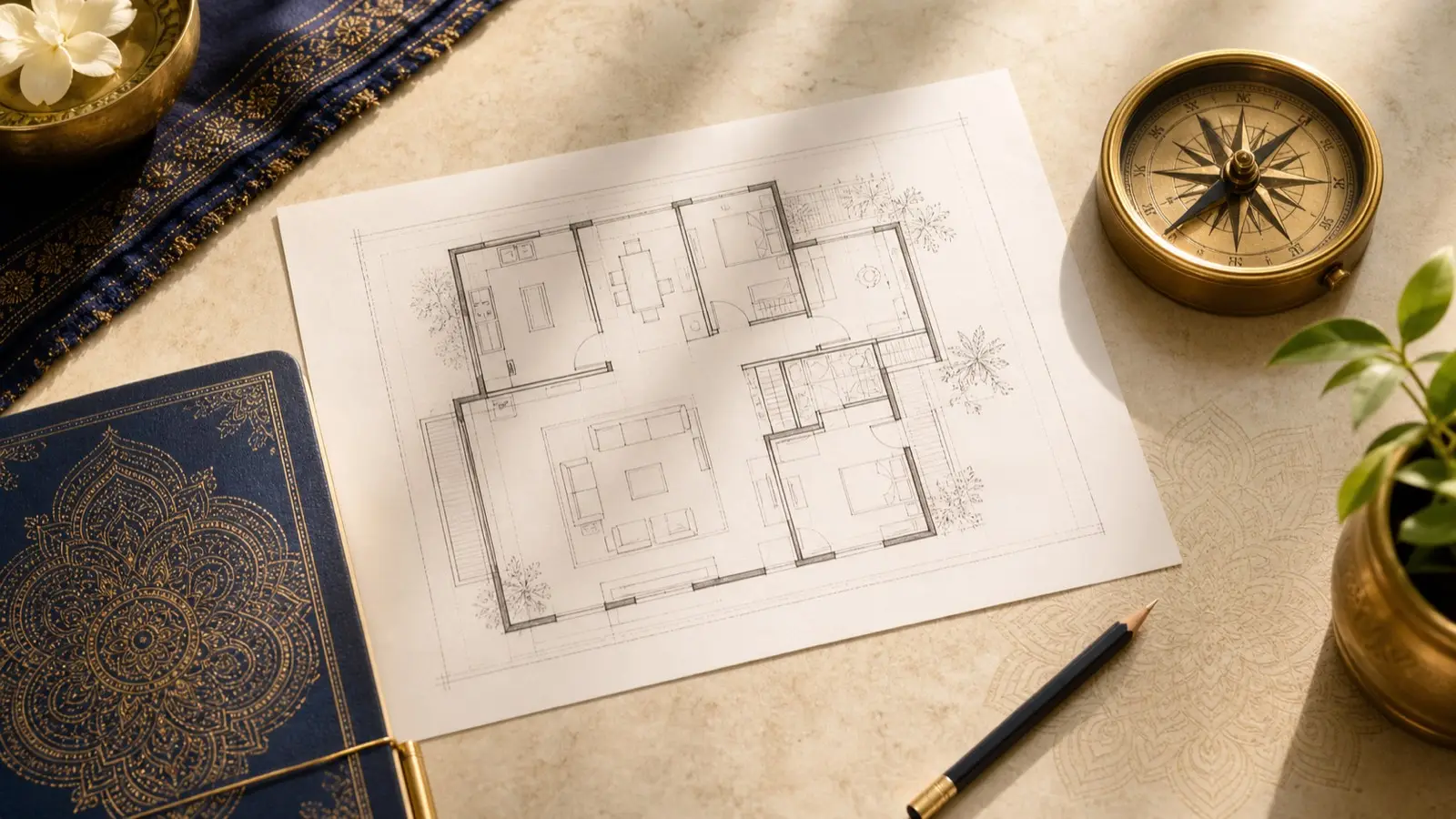
Room-wise Vastu
Fix one room at a time (best for apartments).
Home Vastu
Plan a home layout with entry + rooms + flow.

Plot & Land
Buying land? Start with drainage and shape-fit.
Choose your situation (so you read the right pages)
Vastu feels “premium” when it matches your reality. A person building a new house has different options than someone living in a rented flat. Use this quick guide to go straight to the most relevant pages.
Building an independent house
Entrance, kitchen, bedroom zones, stairs, and utilities (planning-friendly).
Living in an apartment/flat
Furniture placement, airflow, and no-demolition improvements (most practical).

Living in a rental
Reversible fixes: lighting, decluttering, and ventilation priorities.
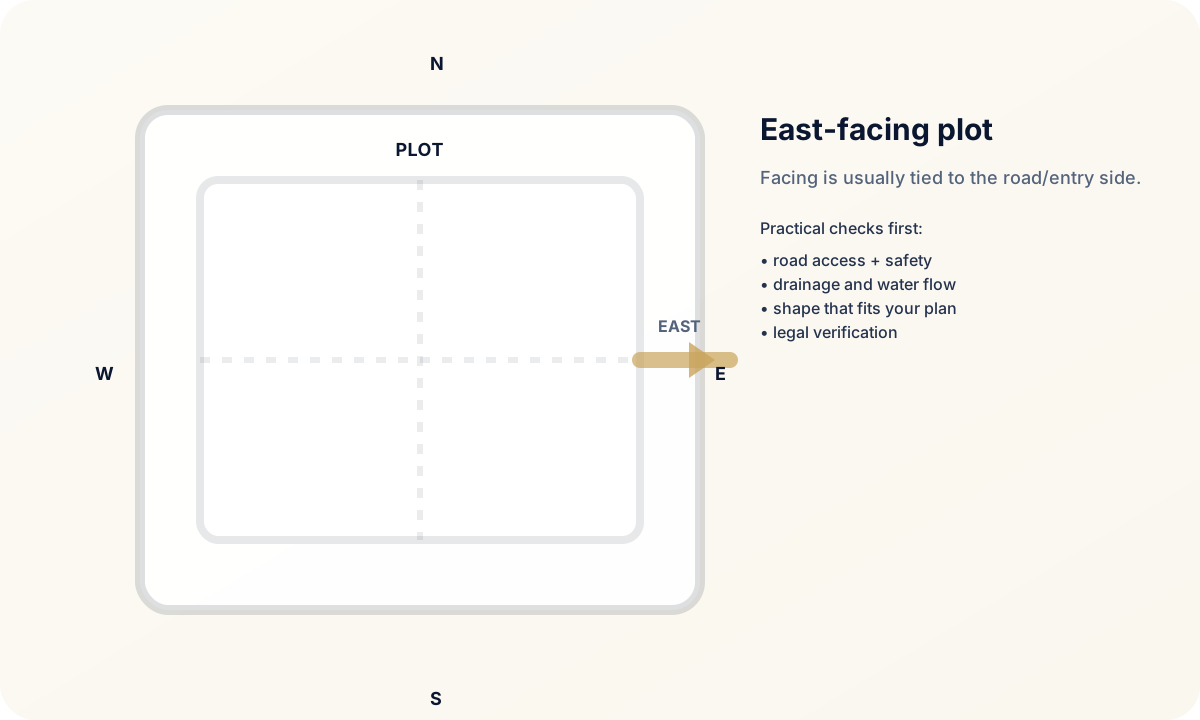
Buying an east-facing plot
Drainage, slope, entry planning, and room priorities before you build.
Plot buyers: what to learn first (simple)
If you are buying land, don’t start with superstition. Start with the practical checks that protect you: documents, drainage, slope, and a shape that fits your intended floor plan. Then use facing and direction as a planning layer.

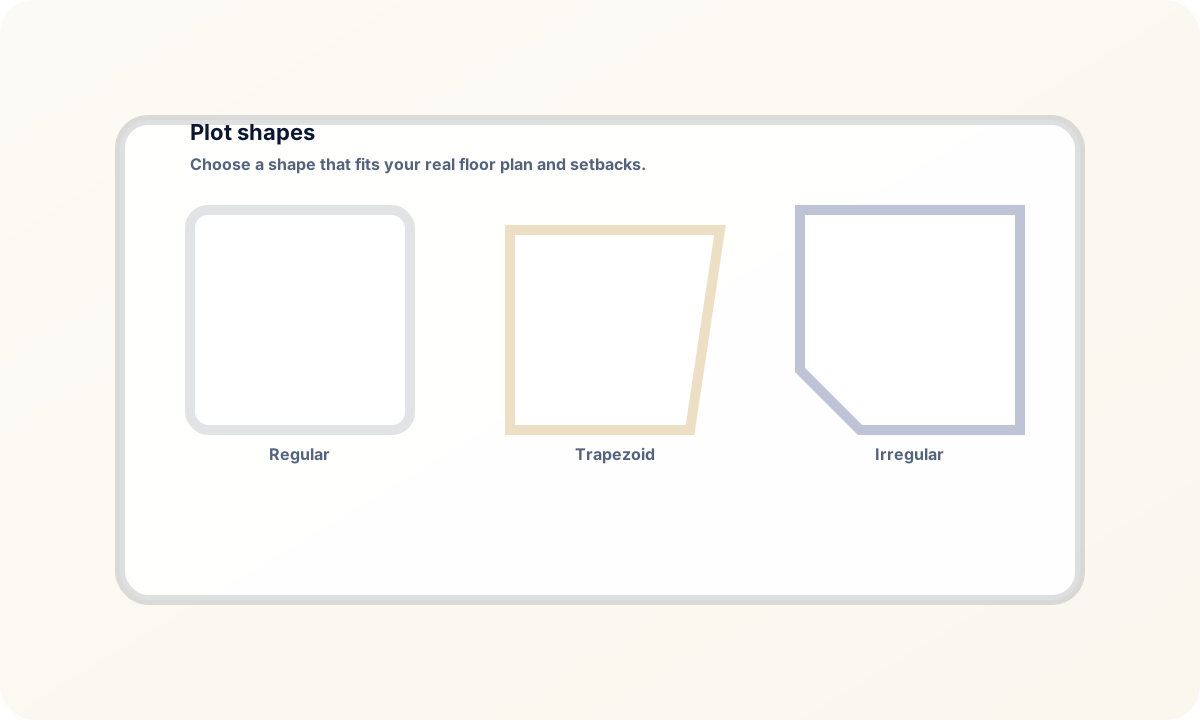
Read the full overview: Plot & Land Vastu, then use the specific page for your case like East Facing Plot Vastu.
7-day beginner plan (simple and premium)
Use this plan to build confidence fast. Keep it calm and repeatable.
Day 1 — Measure
Confirm north; map rooms to zones; take notes.
Day 2 — Entry reset
Declutter, add warm light, and create a clean shoe/storage system.
Day 3 — Kitchen basics
Improve exhaust and workflow; keep cooking zone safe and clean.
Day 4 — Bedroom basics
Improve sleep: noise/light control, low clutter, calm lighting.
Day 5 — Airflow
Open windows daily; fix damp smell; check toilets and kitchen.
Day 6 — Center flow
Clear walkways and keep center circulation open.
Day 7 — Choose a path
Go deeper into Room-wise, Home, Plot, or Direction Vastu based on your goal.
Optional: 30-day beginner plan (for real results)
If you want Vastu to feel premium and measurable, use a longer plan. The goal is to create a home that is easier to live in: cleaner air, calmer entry, better sleep, and smoother daily routines. Go slowly—small improvements compound.
Week 1 — Directions + entry
Measure directions, map zones, clean the entrance, and improve lighting.
Week 2 — Kitchen + hygiene
Upgrade exhaust, reduce clutter, fix leaks, and simplify storage so cleaning is easy.
Week 3 — Bedroom + sleep
Darken the room at night, reduce noise, reset wardrobe clutter, and create a calm routine.
Week 4 — Flow + fine tuning
Open walkways, fix “dead corners,” and choose the next 3 upgrades to repeat monthly.
At the end of 30 days, you should feel a difference in air quality and routine. If not, that’s useful data: it usually means the issue is structural (dampness, poor ventilation design) and needs practical professional attention.
Mini glossary (beginner terms)
Facing
Direction associated with the road/door side used for entry planning.
Zones
NE/SE/SW/NW zones used for room placement guidance.
No-demolition fixes
Lighting, ventilation, decluttering, hygiene, and small layout changes.
Brahmasthan
Center zone—many traditions prefer it open for movement and freshness.
Pancha Bhoota
The five elements (earth, water, fire, air, space) used as a balance framework in many explanations.
Vastu Purusha Mandala
A zone grid used by some traditions to plan room placement; for beginners, the simple zone map is enough.
Remedy
A fix or practice used to improve comfort. Premium filter: it should be safe, clean, and easy to maintain.
Checklists
The most practical way to use Vastu: room-by-room steps instead of hundreds of rules.
If you ever feel overwhelmed, return to the glossary and the 7-day plan. The goal is not to memorize everything; the goal is to apply a few useful ideas consistently.
Frequently asked questions (beginner)
Start with directions (the map), then fix entry flow, kitchen ventilation, and bedroom sleep quality. Remedies are optional comfort add-ons—use them only after the basics are good.
Yes. In apartments and rentals, focus on furniture placement, decluttering, lighting, airflow, and hygiene. These changes usually create more visible improvement than chasing perfect room zones.
Keep it calm. Prioritize ventilation, safe stove placement, and clean workflow. Many homes cannot match ideal zones; comfort and safety matter more.
No. In real life, comfort depends on shading, ventilation, and room placement—not a single label. Many south-facing homes feel excellent with good window planning and heat control. Use facing as a planning layer after the basics (air, light, hygiene) are strong.
It’s often accurate enough for a beginner map, but readings can be disturbed by metal grills, wiring, elevators, and vehicles. Take readings in two spots and confirm before making decisions. If readings vary widely, step away and re-check.
Most homes have fixed toilets. The premium approach is hygiene-first: strong exhaust, dry floors, leak-free plumbing, and good lighting. If you can’t move it, reduce stress by improving ventilation and routine. That usually matters more than a zone label.
Use a practical approach: avoid mirrors that reflect clutter, harsh glare, or disturb sleep. Use mirrors to improve light and spaciousness thoughtfully. If a mirror makes a room feel restless, move it—your comfort is the best guide.
Yes. The best beginner improvements are usually free: declutter the entry, open windows daily, clean and dry wet areas, and reorganize furniture so walking paths feel easy. If you spend at all, prioritize ventilation and lighting first.
Start with the entrance (daily impression) or the bedroom (sleep quality). If cooking smell and heat are major issues, start with the kitchen. Choose the room that causes the most daily stress—premium results come from fixing real friction points.
If you focus on fundamentals, you often feel a difference quickly. Entry decluttering and lighting can feel better on day 1. Kitchen ventilation and hygiene upgrades can feel better within a week. Sleep improvements often take 1–2 weeks. If nothing improves, it’s a sign the issue is practical (dampness, poor ventilation design, noise) and needs real-world fixes.
Use a premium filter: if a remedy is safe, clean, and improves comfort, it’s fine to try. If it creates clutter, fear, or pressure to spend money, skip it. Always prioritize engineering and hygiene (leaks, ventilation, electrical safety) over symbolic items.