
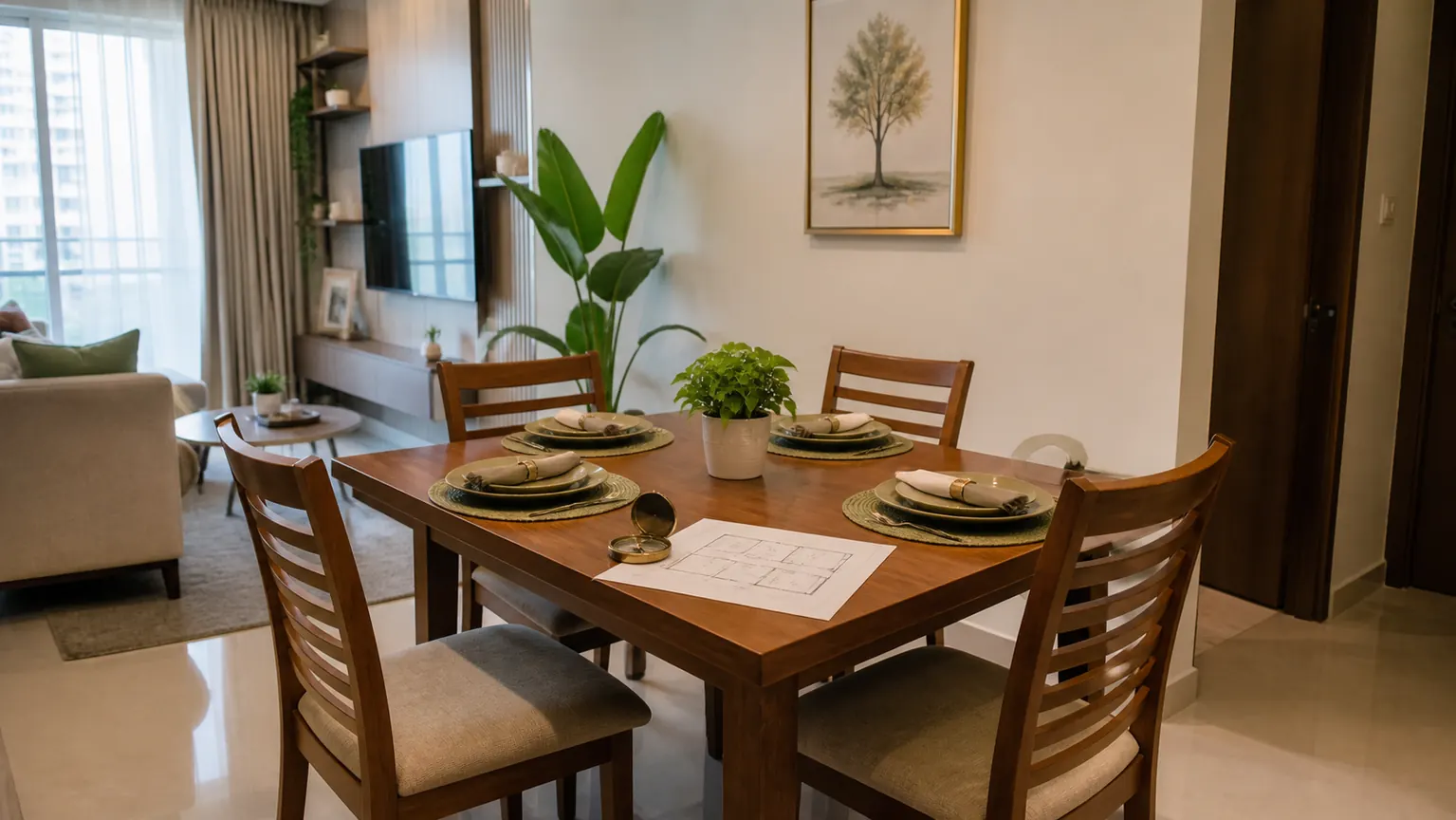
Dining room Vastu in one sentence
Place the dining table where people can move comfortably (near the kitchen), keep the table surface clean, use warm lighting, and choose colors that support calm conversation and appetite—then maintain it with a simple daily reset.
Premium rule
A dining table should not become a storage table. Clear surface = calm mind.
Biggest comfort factor
Chair movement space. When chairs scrape walls, the room feels cramped and stressful.
Lighting rule
Warm, even light makes meals feel relaxing. Harsh light makes the space feel “busy.”
Direction is guidance
If you can choose, many layouts keep dining in west/north zones near the kitchen. If you can’t, optimize flow.
Ideal direction
Dining direction guidance varies, and many modern homes use an open dining area connected to the kitchen and living room. A practical approach is to keep dining close to the kitchen so serving is easy and mess is contained. Many Vastu interpretations place dining in west or north-west zones, while keeping the kitchen commonly in the south-east. Treat these as planning preferences, not strict rules.
The strongest “direction” decision in dining is actually the table’s relationship to circulation: keep the main walking path clear so people can move without bumping chairs. When circulation is smooth, the space feels harmonious.
Best colors (appetite-friendly and premium)
Dining rooms benefit from warm, welcoming tones. The goal is comfort and calm. You don’t need loud colors. A premium dining space looks intentional and clean.
Best base colors
Warm white, ivory, beige, soft grey—easy to style and keeps the space bright.
Warm accents
Terracotta, muted saffron, warm wood tones. Small accents support appetite and warmth.
Avoid clutter colors
Too many mixed patterns and loud colors can feel restless. Premium is simple and consistent.
Placement tips (table, chairs, and circulation)
The dining table should feel easy to approach and easy to clean. When the dining area is tight, prioritize smaller tables with better chair clearance. Comfort matters more than table size.
Chair clearance
Leave enough space behind chairs for people to stand without bumping walls or cabinets.
Avoid blocking pathways
Keep the main path from entry → kitchen → rooms clear. Dining should not become an obstacle course.
Table shape
Round tables feel social in small spaces; rectangular tables fit along walls. Choose what supports circulation.
Storage placement
If you use a crockery unit, keep it accessible but closed. Open shelves often turn into clutter.
Lighting (the fastest way to make dining feel premium)
A dining area changes dramatically with lighting. Use warm light, avoid harsh overhead glare, and ensure the table is evenly lit. A pendant can look beautiful if it doesn’t blind people sitting at the table.
- Use a warm bulb tone for dinner hours to support relaxation.
- Add a softer side light if the overhead light feels harsh.
- Keep the table visible but not “spotlighted” intensely.
Serving flow: kitchen → dining without stress
In real homes, dining comfort depends heavily on serving flow. If serving requires crossing a narrow hallway or carrying hot items through a crowded living room, meals feel rushed and stressful. A good dining setup minimizes unnecessary steps and keeps pathways clear.
Use a simple “serve–eat–clear–wash” sequence: serving plates and hot items should have a stable landing spot (a sideboard or a small counter), eating should feel comfortable, clearing should be quick, and washing should not turn the dining table into a staging area for dirty dishes.
Sideboard or buffet
If you host often, a sideboard reduces table clutter and supports serving without chaos.
Keep the sink path clear
Clearing dishes should be easy. If paths are blocked, clutter builds quickly and the room feels heavy.
Avoid hot-carry hazards
Keep children’s pathways away from hot serving routes. Safety is part of a harmonious home.
Control cooking odors
Strong kitchen ventilation protects the dining vibe. Odor is a real “energy” factor.
Seating comfort and “togetherness”
Dining Vastu is often discussed as a prosperity topic, but the practical truth is simple: families feel closer when meals are comfortable. Comfort comes from enough space, calm lighting, and a table that doesn’t feel like a work desk.
If you have limited space, aim for fewer chairs with better clearance rather than squeezing extra chairs. It is better to have four comfortable seats than six tight seats. Premium dining is about ease.
Soft edges
If you have small kids, avoid sharp table edges. Comfort and safety support a calmer home.
Supportive chairs
Chairs matter more than most people think. If chairs are uncomfortable, meals feel shorter and tense.
Simple centerpiece
If you want décor, keep it minimal and removable so cleaning stays easy.
Mirror and wall placement (make the room feel larger)
Some dining Vastu guidance mentions mirrors. Practically, mirrors can help if they reflect light and make the room feel larger. But mirrors can also amplify visual clutter. Use them only if they improve calm and cleanliness perception.
- Use a mirror to reflect light, not mess.
- Avoid placing mirrors where they reflect a constantly cluttered table.
- If the mirror creates glare at night, move it or use softer lighting.
Renters: dining Vastu without renovation
Rental homes often have limited dining space. The most effective rental-friendly improvements are the simplest: right-size the table, improve lighting, and create a “clear table” routine. You can also define the dining zone with a small rug or pendant-style lamp (if allowed).
Foldable options
A foldable or extendable table can give you space when hosting and breathing room daily.
Lighting swap
Switch to a warmer bulb. This tiny change often makes the dining space feel instantly better.
Mini case study: “Dining feels heavy” open-plan home
In many open-plan homes, the dining table sits between kitchen and living room and becomes the default “drop zone” for bags, bills, and devices. The family then feels the space is heavy or disorganized. When the home adds a dedicated drop zone near the entrance (a closed cabinet or basket), the dining table becomes clean again. The dining experience improves immediately without changing direction or construction.
This is the best example of practical Vastu: when the layout supports habits, the home feels harmonious naturally.
Common mistakes
Dining areas become stressful when they become storage, when chair movement is cramped, or when lighting is harsh. Fix these and the space feels calm again.
Mistake: table as storage
Fix: make a rule—no bills, bags, or random items on the table. Store in a closed basket elsewhere.
Mistake: chairs hit walls
Fix: reduce table size or reposition. Comfort matters more than squeezing extra seats.
Mistake: harsh lighting
Fix: use warmer bulbs, add a dimmer if possible, or add softer side lighting.
Mistake: cluttered crockery unit
Fix: closed storage and a monthly reset. Premium homes hide clutter.
Mistake: dining blocks circulation
Fix: keep main paths clear; the home feels lighter when movement is easy.
Mistake: dirty corners
Fix: easy-clean surfaces and a nightly reset. Hygiene supports a positive dining vibe.
Do’s & don’ts
Do: keep the table clear
A clear table invites meals and conversations. It’s the simplest “Vastu remedy.”
Do: use warm light
Warm light makes food and people look better. It supports comfort and togetherness.
Do: keep movement easy
Circulation is harmony. Ensure chairs can move without friction.
Don’t: overcrowd the space
If you squeeze too much furniture, the room feels heavy and meals feel rushed.
Don’t: store random items here
Dining should not become a “drop zone.” Create a separate drop zone near the entry.
Don’t: ignore hygiene
Food zones must stay clean. Odors and sticky surfaces reduce comfort quickly.
Remedies (no demolition)
If your dining area feels heavy or cramped, use remedies that improve flow. The best changes are often furniture choices and routines, not construction.
Right-size the table
A smaller table with better clearance feels more premium than a large cramped table.
Add a closed storage basket
Keep a basket for daily items (keys, bills) outside the dining area so the table stays clean.
Improve lighting
Warm, layered lighting makes dining feel welcoming. It’s one of the fastest upgrades.
Create a nightly reset
Clear the table and wipe surfaces after dinner. Consistency keeps the space light.
Open dining + living (modern layout)
Many homes combine living and dining. This works well when zones are defined. Use lighting, rugs, or furniture orientation to create a clear dining zone. A defined zone feels premium because it looks intentional rather than accidental.
If cooking odors reach the dining area, improve kitchen ventilation. Dining comfort is strongly affected by smell and humidity. A clean dining zone begins with a clean kitchen airflow routine.
If you work or study at the dining table during the day, treat it as a “convertible” zone. Keep a basket for laptops and papers, and return everything to the basket before meals. This one habit keeps the space flexible without making it permanently messy. Premium homes often look premium because they reset rooms to their intended purpose daily.
Myths vs facts
Myth: one direction guarantees prosperity
Fact: the dining space improves when meals feel calm and the space stays clean. Routine matters most.
Myth: bigger table is always better
Fact: clearance and comfort matter more. Cramped dining reduces joy.
Myth: décor creates energy
Fact: clean surfaces, good light, and easy movement create the best dining energy.
Myth: dining must be separate room
Fact: open dining works well when the zone is defined and clutter is controlled.
7-day dining room reset plan
Use this plan to improve dining comfort in one week.
Day 1: clear the table
Remove everything that is not dining-related. Start with a clean surface.
Day 2: chair clearance check
Pull out each chair and check movement. Reposition or downsize if needed.
Day 3: lighting upgrade
Switch to warm bulbs or add a softer side light. Make dinner lighting comfortable.
Day 4: define the zone
Use a rug or furniture orientation so dining looks intentional.
Day 5: storage reset
Organize crockery storage and remove unused items that create visual mess.
Day 6: hygiene deep clean
Wipe sticky edges, clean corners, and refresh table surfaces. Cleanliness changes the vibe.
Day 7: nightly reset rule
Create a 3-minute routine after dinner: clear, wipe, and reset for tomorrow.
Bonus: kitchen ventilation
If odors linger, improve exhaust use. Dining comfort depends on kitchen airflow.
30-day maintenance rhythm
Keep dining premium with a light routine.
Weekly
Wipe table edges, clean chair legs, and reset any slow clutter returning.
Monthly
Declutter crockery storage, clean under the table, and refresh lighting if it feels harsh.
Seasonal
Review furniture placement and circulation. Adjust as family needs change.
Ongoing
Protect the “clear table” rule. It’s the single best dining Vastu habit.
Dining checklist (print-friendly)
Flow
Main walkways clear; chair movement comfortable.
Clean table
No permanent storage clutter; easy nightly reset.
Lighting
Warm, even light over dining; no harsh glare.
Storage
Closed crockery storage; monthly declutter.
Hygiene
Sticky corners cleaned; odors controlled from kitchen.
Colors
Warm neutrals with small warm accents.
Summary: 6 dining rules that feel premium
If you want a simple way to judge dining Vastu, use these six rules. When you follow them, the dining area feels lighter and more welcoming, regardless of exact direction.
1) Clear surface
Keep the table clean daily. The table is for meals, not storage.
2) Easy movement
Ensure chairs pull out comfortably. Cramped movement creates daily irritation.
3) Warm light
Use warm light for dinner hours. Soft light supports calm conversation.
4) Defined zone
In open plans, define dining with lighting or a rug so it looks intentional.
5) Serving flow
Make kitchen → dining movement smooth and safe. The home feels calmer when serving is easy.
6) Monthly reset
Declutter crockery storage and wipe hidden corners. Premium is maintenance, not perfection.
Hosting tip: when guests visit, remove extra items from the dining zone. A clear surface and comfortable chairs create the best impression—more than any décor purchase.
FAQ
Is dining direction mandatory?
No. Dining is a function zone. If the table placement supports comfort and circulation, it will feel good. Direction preferences can guide planning, but daily habits and layout matter more.
What if I can only place dining in the living room?
Define the zone with lighting, a rug, or furniture orientation. Keep the table clear and avoid using it as a storage surface.
Which is the best remedy to make dining feel premium?
Use warm lighting and protect the clear-table rule. If the table stays clean daily, the whole space feels upgraded.
Is it okay to keep a mirror in the dining room?
Yes, if it helps the room feel brighter and does not reflect clutter. Use mirrors as a light tool, not as a way to multiply mess. If the mirror creates glare at night, soften lighting or reposition it.
What if my dining table is also a work table?
Many homes do this. The key is a fast reset: keep work items in one closed box or bag, and clear the surface before meals. When the dining table stays visually clean at meal times, family energy improves naturally.
Summary
Dining room Vastu is simple: flow, clean surface, warm light, and comfortable seating. When the table is clear and movement is easy, meals feel calmer and the home feels lighter. Direction preferences can guide planning, but routine creates the result.
Direction note: If you are building new, keep dining close to kitchen and away from bedrooms. Choose any zone that supports airflow and easy cleaning. Comfort at meals is the real sign of good dining Vastu for your family every day.
If you want one daily habit, choose this: after dinner, clear the table completely. A clear table is the strongest signal of order, and it makes tomorrow feel easier before the day even begins.