
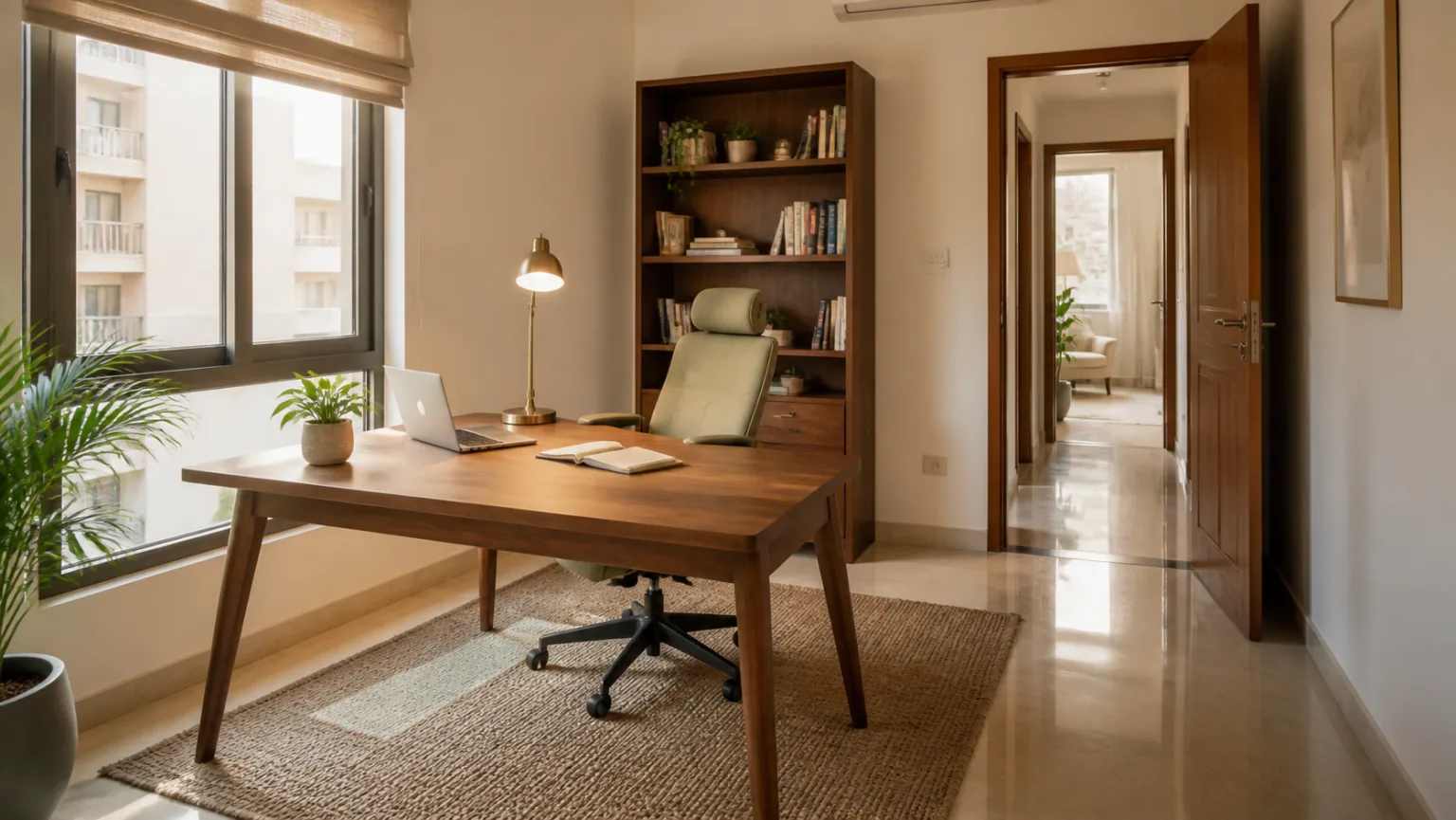
Study room Vastu in one sentence
Choose the quietest bright corner (often east/north if available), place the desk with a stable backing and comfortable light, keep the surface minimal, and protect focus by controlling noise and digital distractions.
Biggest upgrade
A better light setup (task lamp + glare control). It improves comfort and concentration instantly. The Curtain Colours Vastu guide explains practical sheer, layered and blackout choices.
Premium signal
A clean desk surface with organized cables. Visual calm supports mental calm.
Direction is guidance
If you can choose, east/north zones are commonly preferred. If you can’t, choose quiet and bright.
Focus boundary
Keep study separate from bed when possible. Mixing zones makes the mind restless.
Ideal direction
Many Vastu traditions associate learning and clarity with the north and east zones. As a simplified practical guideline, you can aim for a study space in east/north parts of the home if you have choice. These zones often have better daylight and feel mentally “fresh.”
If your home doesn’t have an ideal zone, don’t worry. A study desk in the “wrong direction” still works well if it is comfortable, well lit, and quiet. Your environment can override direction preferences in daily life.
Desk placement (support + visibility + comfort)
Think of desk placement the way you think of bed placement: you need support behind you, enough space to work, and a layout that doesn’t feel exposed or cramped. Many people lose focus because their desk faces a busy passage or because glare hits their screen.
Stable backing
If possible, sit with a wall behind you rather than open space. It helps you feel supported and less distracted.
Avoid door-in-line
Don’t place the desk directly in the line of a frequently used door. Movement in your peripheral vision reduces focus.
Screen glare check
Avoid facing a bright window directly. Use blinds/curtains or change the angle to reduce eye strain.
Reach zones
Keep most-used items within reach. A desk that forces you to get up constantly breaks flow.
Best colors (focus-friendly palettes)
Study room colors should support concentration. Very intense colors can feel energetic but distracting. A premium study space is usually calm and simple.
Best base colors
Warm white, ivory, light grey—keeps the space bright and reduces visual fatigue.
Calm accents
Muted blue, sage green, soft teal (small accents). These often feel steady and non-distracting.
Avoid overload
Too many bright posters and mixed patterns can feel restless. Use one clean focal wall at most.
Placement tips (lighting, storage, and focus)
For shelf direction, storage height, moisture control and child-safe anchoring, use the detailed Bookshelf Vastu and home library guide.
A study space becomes powerful when it is easy to use daily. The core is lighting and organization. The best Vastu “remedy” for study is reducing friction: fewer distractions and less visual mess.
Task lighting
Use a desk lamp that lights your work area without shining into your eyes. Comfort supports endurance.
Cable discipline
Keep one charging station and hide cable clutter. A clean desk looks premium and feels calm.
Closed storage
Use closed shelves for books and stationery if you get distracted by visual clutter.
Comfortable chair
Ergonomics is not optional. A painful setup destroys focus faster than any “direction” issue.
Common mistakes
Most study room problems are pattern problems: people set up the desk, then slowly the space becomes a storage corner or a dumping zone for random items. A premium study space stays ready to use.
Mistake: desk in a passage
Fix: rotate the desk or use a screen. Reduce movement in your peripheral vision.
Mistake: glare on screen
Fix: change the angle, use curtains, or add a lamp. Glare silently drains energy.
Mistake: cluttered surface
Fix: remove everything that isn’t needed today. Keep one tray for essentials and store the rest.
Mistake: uncomfortable chair
Fix: upgrade the chair or add support. Pain becomes distraction.
Mistake: study in the bed zone
Fix: create boundaries. Even a small desk corner separate from the bed helps.
Mistake: “everything” storage
Fix: choose categories and reduce. The study space should not become a warehouse.
Do’s & don’ts
Do: keep a clean desk
A clean surface reduces mental noise and makes work start easier.
Do: control glare
Glare is the fastest path to headaches and lost focus. Fix it early.
Do: protect quiet
Choose the quietest corner. Soft furnishings can reduce echo and distraction.
Don’t: mix study with storage
If the desk becomes storage, you’ll avoid sitting down. Keep storage separate.
Don’t: rely on one harsh light
Use layered lighting: general light + task lamp. Comfort improves endurance.
Don’t: ignore ergonomics
Bad posture becomes fatigue. Comfort is the foundation of performance.
Remedies (no demolition, high impact)
If you can’t move rooms or change directions, use practical remedies: improve light, reduce noise, and keep the desk minimal. These upgrades are renter-friendly and create a premium work feel quickly.
Lighting upgrade
Add a good task lamp and control window glare. Your eyes will thank you.
Sound softening
Use curtains, rugs, and soft panels if the room echoes. Focus improves with calmer sound.
Desk reset routine
End the day by clearing the desk surface. Starting tomorrow becomes easier.
One storage system
Use one drawer organizer or one shelf system so papers don’t spread everywhere.
Students: study room Vastu for kids and exam seasons
A child’s study space is different from an adult’s office. Kids need more frequent breaks, easier storage, and clearer boundaries. In many homes, the study table becomes a mixed-use surface: schoolwork, crafts, gadgets, snacks. That is normal, but it can slowly reduce focus if the surface becomes permanently messy.
The best “Vastu” for students is a setup that makes good habits easy: a clear tabletop, a visible timetable, and a light that reduces eye strain. For exam seasons, reduce distraction more aggressively: keep the phone away, simplify wall visuals, and keep one clear task list.
One-box rule
Give the student one closed box for daily stationery so items don’t spread across the desk.
Posture check
Table height, chair height, and screen height matter. Comfort supports longer study sessions.
Visible plan
Use one simple weekly plan. Too many charts become visual noise.
Bookshelves and storage (avoid the “paper mountain”)
Many study rooms fail because storage is unclear. Papers pile up, books overflow, and the desk becomes a sorting table. Premium study rooms look premium because storage is quiet: categories, labels, and closed containers.
- Keep the desk for work, not storage. Store papers in one file box or drawer.
- Use vertical storage. A slim shelf can reduce desk clutter drastically.
- Archive monthly. Once a month, remove outdated papers and reset categories.
If your study is a small corner in the living room, storage becomes even more important. A closed cabinet or basket keeps the corner from becoming messy.
Digital distractions and “mental clutter”
Many people want study Vastu to improve concentration, but the real enemy is digital distraction: notifications, open tabs, and constant switching. While Vastu is a traditional discipline, the modern version of “clutter” includes screens.
A practical remedy is to design the desk for one job at a time. Keep one notebook, one pen, and one active task visible. Hide the rest. When the surface is clean, the mind feels less overloaded.
Also protect your energy with breaks. A short stretch every 30–45 minutes and a few deep breaths near a window can reset attention better than forcing yourself to continue while tired. Good Vastu is not just about placement—it’s about supporting sustainable routines.
Even a small plant or clean water bottle can make the desk feel fresh, but avoid clutter—choose one calm item only and keep the rest stored so you begin work without resistance every day at home.
Renters: a premium study setup without renovation
Rentals often limit what you can change, but study improvements are usually easy because they depend on furniture, lighting, and organization rather than walls. You can upgrade focus with a better lamp, a comfortable chair, and a clean storage system.
Portable lamp
A good desk lamp is one of the best ROI purchases for study comfort.
Removable glare control
Use curtains, blinds, or removable window film to reduce direct glare on the screen.
Cable clips
Small cable clips keep chargers tidy. A tidy desk feels premium and lowers stress.
Foldable boundary
A folding screen can separate a study corner from the living room and reduce distraction.
Myths vs facts (study room edition)
Myth: direction alone improves marks
Fact: lighting, posture, quiet, and routine matter more. Direction is a helpful layer.
Myth: more books visible is motivating
Fact: visual overload can reduce focus. Use closed storage if you get distracted.
Myth: the desk must face one exact way
Fact: comfort and glare control matter most. Choose the orientation that supports long, calm work.
Myth: a small corner can’t work
Fact: small corners work well with a boundary, good light, and clean storage discipline.
Mini case study: turning a noisy corner into a focus zone
A common home situation is a study desk placed in a living room corner near a walkway. The student feels distracted and the family thinks it’s “bad Vastu.” In practice, the problem is peripheral movement and noise. When the desk is rotated so the person faces a calmer wall, a small screen blocks movement, and a task lamp improves visibility, focus usually improves quickly.
This is why we emphasize a focus-first approach. When the environment supports the brain, direction preferences become a gentle bonus rather than a rigid rule.
7-day study room reset plan
Use this plan to create a stable study environment in one week.
Day 1: choose the corner
Pick the quietest bright corner. Map directions if you want to follow east/north preference.
Day 2: glare check
Sit at the desk and check morning, afternoon, and night glare. Adjust angle or add curtains.
Day 3: lighting upgrade
Add task light and choose a comfortable bulb tone. Aim for clear visibility without harshness.
Day 4: declutter the surface
Remove everything not needed daily. Create one tray for essentials.
Day 5: cable control
Create one charging station. Hide cables and reduce visual mess.
Day 6: storage system
Use one drawer organizer or shelf system. Label where things go.
Day 7: routine
Set a 2-minute daily reset: clear surface, close tabs, and prepare tomorrow’s first task.
Bonus: distraction rule
Keep the phone away from the desk or use focus mode. Environment + habit equals results.
30-day maintenance rhythm
A study space stays premium when it stays “ready.” Use a monthly rhythm to prevent slow clutter.
Weekly
Clear papers, wipe the desk, and reset cables. Keep the surface minimal.
Monthly
Archive documents, remove unused items, and refresh your “one tray” essentials setup.
Seasonal
Review lighting, chair comfort, and noise control. Small changes keep the space sustainable.
Ongoing
Protect focus boundaries: don’t let the desk become a storage table.
Study room checklist (print-friendly)
Direction
East/North preferred if possible; otherwise quietest bright corner.
Lighting
Task lamp + glare control; comfortable brightness.
Desk surface
Minimal items; one tray for essentials.
Cables
One charging station; hidden wires; clean look.
Ergonomics
Comfortable chair; good posture; screen height right.
Boundary
Study zone separate from bed zone; reduce distractions.
Summary: the 5 rules that work in every home
If you want a simple “Vastu-style” approach without overthinking, follow these five rules. They work whether you have a full study room or a small desk corner.
1) Light first
Fix glare and add a task lamp. Comfort keeps you studying longer.
2) Quiet corner
Reduce movement and noise in your peripheral vision. Use a screen if needed.
3) Clean surface
Remove clutter and keep one tray for essentials. Clean desk, clear mind.
4) Storage system
One file box or drawer system prevents paper mountains from returning.
5) Routine
A two-minute daily reset protects the setup. Consistency beats perfection.
Direction as a bonus
If you can choose, east/north is commonly preferred. If not, still succeed with the rules above.
FAQ
Is east direction mandatory for study?
No. East/north zones are common preferences, but focus depends more on light, noise, comfort, and routine. Choose the quietest bright corner and you will usually see better results than forcing a direction in a noisy area.
What if I can only study in my bedroom?
Create boundaries. Keep the desk separate from the bed, and do a nightly reset so work clutter does not spill into the sleep zone. Even a small divider or shelf can help.
Which is the best remedy for low motivation?
Improve lighting and reduce friction. Keep a clean desk, set one clear first task, and remove distractions. Environment influences behavior more than most people expect.
Does color affect study performance?
Yes, indirectly. Calm, light palettes reduce fatigue and distraction. The main drivers are still lighting quality and comfort.
What’s a quick fix when I feel distracted?
Do a 60-second reset: clear the desk surface, close extra tabs, turn on task lighting, and write the next single step on paper. Environment + clarity restores focus fast.
Summary
A premium study room is not about complicated rules. It is about focus-first design: comfortable light, clean desk, controlled cables, and a quiet boundary. If you can choose a direction, east/north zones are common preferences. If you can’t, build the best environment where you are and maintain it consistently.
If you want the space to feel premium, reduce “visual noise.” Use matching storage, hide cables, and keep one calm color palette. When the study corner looks intentional, you sit down more easily and your brain enters work mode faster. This is the practical meaning of good study Vastu: a setup that supports good habits every day.
Final tip: the best desk is the one that is ready. If you must clear the desk before you can start, you will procrastinate. Keep tomorrow’s first task visible and keep everything else stored.