
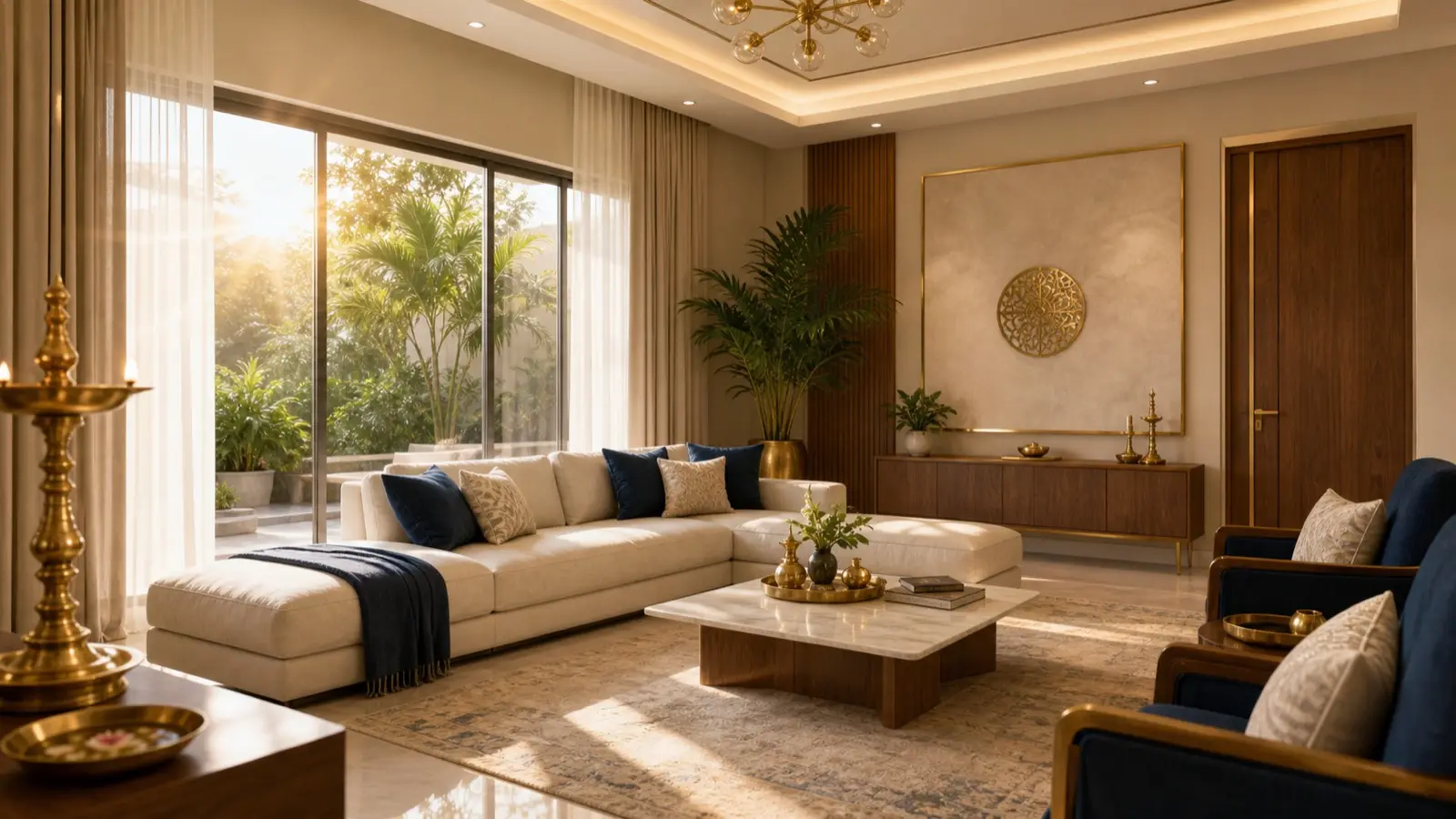
Living Room Vastu (what it really means)
Living room Vastu is mostly about one thing: how the home feels in daily life. The living room is usually the first space you enter after the main door. It shapes the mood for family time, guests, and sometimes work-from-home. A premium living room feels bright, breathable, and easy to maintain.
Direction traditions are often used as a guide (many checklists like bright zones such as north/east/NE for living), but your best result comes from the fundamentals: light, airflow, clean circulation, and clutter control. This page is educational only and designed to be calm—not fear-based.
For air-conditioned living rooms, use the AC Placement Vastu guide to coordinate the indoor unit with sofas, curtains, windows, the TV wall, drainage, and outdoor-unit ventilation without directing a constant draft at seated guests.
Ideal direction (common guidance, calm version)
Many traditional checklists prefer living and gathering spaces in brighter zones (often described as North, East, or North-East). But don’t treat this as a strict rule. In apartments and rentals, the living room is usually fixed. The premium approach is: use direction as a map, then improve comfort.
If your living room is in a “preferred” zone
Keep it bright, uncluttered, and welcoming. Protect the space from becoming a storage dumping zone.
If your living room is not in a preferred zone
Focus on ventilation, layered lighting, and flow. These upgrades matter more than labels.
Entry-to-living flow (the #1 premium factor)
In most homes, the living room is connected to the entry. If the entry opens straight into the living space, small decisions determine whether the home feels welcoming or chaotic.
Avoid “collision entry”
If the door opens into a wall or clutter, add a small buffer: a console table, a screen, or a furniture shift.
Keep the first view calm
The first view should not be shoes, wires, or storage piles. Closed storage is a premium upgrade.
Create a clear walking path
A smooth path from door to seating makes the room feel larger and easier to clean.
Use warm light
Warm lighting near entry and in corners reduces harshness and makes guests feel comfortable.
Seating layout (comfort + social energy)
The most common living room question is: “Where should the sofa go?” Instead of rigid rules, use a comfort-first approach: seating should feel stable, and circulation should be easy.
Solid backing
If possible, place the main sofa against a solid wall. It often feels more secure and visually calm.
Avoid blocking pathways
Don’t place furniture where people constantly bump into corners. A clear path is premium.
Center openness
Keep the center area open for movement. This matches many traditional preferences and helps cleaning.
Guest seating
Plan seating so conversations are easy and the TV isn’t the only focal point.
TV placement and glare control
TV placement is not a “Vastu” debate—it’s an eye comfort debate. The premium rule is to reduce glare and create a clean viewing angle without cramping the room.
Avoid direct window glare
If the TV faces a window, glare will irritate eyes. Use curtains or change the angle. Compare direction, shade and opacity in the Curtain Colours Vastu guide.
Cable discipline
Hide wires. Visible cable chaos destroys the premium feel.
Balanced lighting
Add soft light behind or beside the TV to reduce eye strain at night.
Sound and neighbors
Rugs and curtains reduce echo. This improves calm “energy” and comfort.
Colors (simple, premium palettes)
The best living room colors are the ones that keep the space bright and clean. In small rooms, heavy dark colors can feel cramped if daylight is limited.
Best base colors
Warm whites, off-whites, beige, soft greys—easy to maintain and looks premium with good light.
Accent colors
Teal, muted blue, soft green, warm terracotta accents—use sparingly for calm.
Avoid visual overload
Too many bold colors and patterns can feel restless. Premium homes feel easy on the eyes.
Lighting matters more than paint
Good layered lighting often beats repainting when the goal is comfort.
Decor, mirrors, and plants (calm rules)
Decor should support calm, not create clutter. Use a practical filter: if an item makes cleaning harder or creates visual mess, it reduces comfort over time.
Mirrors
Avoid mirrors that reflect clutter or harsh glare. Use mirrors to brighten and open space thoughtfully.
Plants
Choose easy-care plants. Don’t block airflow and daylight. Keep it hygienic (no damp soil smell).
Artwork
Choose calming art. The goal is a welcoming mood, not visual pressure.
Closed storage
Closed cabinets instantly make a living room feel premium because clutter disappears.
Common mistakes (and easy fixes)
Most living room “Vastu problems” are actually layout or maintenance problems.
Mistake: cluttered entry view
Fix: closed shoe storage + a simple daily reset.
Mistake: blocked walkways
Fix: move furniture to create a clear path; keep center open.
Mistake: dark corners
Fix: layered lighting (lamp + warm bulb). Light is the best no-demolition remedy.
Mistake: TV glare and cables
Fix: curtains for glare; cable management for a premium look.
Work-from-home corner (living room setup)
Many modern homes use the living room as a work zone. The premium approach is to create a clear boundary: a small desk area that stays tidy and does not overflow into seating and circulation. Direction traditions sometimes mention north/east light for focus, but the practical rules are the same: daylight comfort, ergonomics, and low distraction.
Daylight without glare
Place the desk so daylight comes from the side; use curtains to reduce screen glare.
Solid back support
A wall behind you often feels more stable and helps posture.
Cable discipline
Hide charging cables and routers. Visual mess reduces focus and premium feel.
Daily reset
Clear the desk at night. A clean desk makes the living room feel lighter.
Pooja corner in the living room (when space is limited)
Many homes place a small pooja shelf in the living room. Traditions often prefer a clean, bright zone (frequently discussed as North-East). If your layout doesn’t allow that, keep it calm: choose the cleanest corner, keep it uncluttered, and use soft lighting. Routine matters more than strict placement.
Keep it separate
Avoid mixing pooja with heavy storage. Clutter reduces calm.
Keep it bright
Soft light and clean surfaces create a peaceful feel even in small homes.
Myths vs facts (living room)
Myth: one sofa direction decides results
Fact: seating comfort, circulation, and lighting decide how the room feels daily.
Myth: decor items fix a messy room
Fact: closed storage and decluttering create the biggest upgrade.
Myth: plants always improve energy
Fact: plants help only when they don’t block light/airflow and stay hygienic.
Myth: living room must follow strict rules
Fact: a calm, clean, bright room is already strong Vastu in practice.
Optional: 30-day living room plan
If you want a consistent premium feel, use a longer plan. The goal is habits, not one-time rearranging.
Week 1 — Declutter + entry
Fix the entry view, remove unused items, and create closed storage for daily clutter.
Week 2 — Lighting
Add one lamp, improve corner lighting, and reduce harsh glare with curtains.
Week 3 — Seating flow
Refine furniture placement so circulation is smooth and cleaning is easy.
Week 4 — Maintain
Adopt a daily 60-second reset and a weekly deep-clean routine.
Living room summary checklist (fast scan)
If you do nothing else, do these six items consistently—they cover most real-world Vastu outcomes for living rooms.
Entry view
Clean, bright, and uncluttered.
Circulation
Clear walkways and open center.
Lighting
Layered lighting: ceiling + lamp + corner.
Clutter control
Closed storage and a daily reset habit.
TV comfort
No glare and tidy cables.
Airflow
Windows and balcony not blocked by storage.
Mini glossary (living room)
Circulation
Walking paths through the room. Clear circulation is a premium feature.
Layered lighting
Ceiling light + lamp + corner light. Reduces dark zones and improves mood.
Entry buffer
A small space that reduces “collision entry” and improves privacy.
Clutter control
Closed storage and daily reset habits that keep the room visually calm.
Recommended next
Living room improvements work best when the rest of the home supports them. Use these pages to complete your room-wise plan:
- Kitchen hygiene + ventilation: Kitchen Vastu.
- Sleep-first setup: Bedroom Vastu.
- Whole-home checklist: Room-wise Vastu.
- Direction map + entrance logic: Direction Vastu.
If you’re buying a home: living room evaluation checklist
If you’re choosing between two houses or apartments, the living room tells you a lot about the home’s comfort potential. Use this calm checklist during visits. It’s also helpful for “Vastu” because it focuses on what you can actually feel and verify.
Daylight quality
Does the room feel bright without harsh heat? Can glare be controlled with curtains?
Airflow reality
Open windows and notice stale smell. Fresh airflow is a premium feature.
Entry-to-living transition
Does the door open into a wall or clutter? Is there space for a small buffer?
Noise and privacy
Can you relax here? Road/lift noise often ruins “positive energy” more than directions.
After this checklist, you can use direction zoning as a bonus: map where the living room sits on the grid and see if entry flow and bright zones are supported.
Illustrative example: a narrow living room with a balcony door
Consider a narrow apartment living room where a deep sofa sits across the route from the entrance to the balcony. Moving it against the long wall may free that route, but first check the television angle and whether an armchair can still face the sofa for conversation. Keep the balcony door usable with curtains drawn and furniture occupied. A smaller coffee table or movable side table may fit better than adding another storage unit beside the doorway.
Try a simple habit: once a month, do a 20-minute “living room reset.” Remove unused items, wipe surfaces, reorganize cables, and check lighting in corners. This keeps the space premium over time without needing frequent redesign.
Furniture checks for a combined living and dining room
Check the arrangement with people using it, not just with every chair pushed in. Pull out a dining chair, open the balcony door, and walk from the entrance to the sofa. That route should not require someone to step between the television and seated viewers or squeeze behind an occupied chair.
A large sofa is not automatically the best use of a long wall. Compare its full depth with the space needed for a coffee table and a walking route. In a compact apartment, a smaller sofa with one movable chair may offer more workable conversation seating than a deep sectional that closes off the balcony.
Position display units so open shutters do not collide with seating. Keep heavy items on suitable shelves and secure tall furniture according to its instructions. Plan media cables away from foot traffic, without blocking equipment ventilation. A mirror can reflect window light, but check its reflection from the sofa and dining seats before fixing it permanently.
When to consult a professional
This site is educational only. If your concern involves structure, waterproofing, electrical safety, gas lines, or major plumbing, consult qualified professionals before making changes. Many “Vastu problems” people experience in real life are actually practical building issues: dampness from leaks, poor ventilation, unsafe wiring, or blocked drainage. Fixing those basics often improves comfort immediately.
Compare the plan with the room in use: guests arriving, a dining chair pulled out, and someone opening the balcony door. Confirm that seating, storage, and media equipment leave those activities possible before committing to large furniture.
After rearranging furniture, check that lamps and charging leads do not cross the walking route and that tall display units remain stable. Keep the existing daylight and ventilation openings usable.
Frequently asked questions (living room)
Traditions vary, but many prefer brighter zones like north/east/NE. In real homes, layout and comfort matter more: choose the room that supports good light, airflow, and clear circulation.
Use comfort rules first: solid backing, clear walkways, and good viewing angles for TV. Direction is optional; comfort is mandatory.
Use a practical rule: avoid mirrors that reflect clutter or harsh glare. Use mirrors to improve light and spaciousness thoughtfully.
Check the route with the balcony door open and someone seated on the sofa. Keep side tables, plant pots, and curtain fabric outside that route. A shorter sofa or smaller movable table may be preferable to squeezing through a narrow gap.
Many traditions prefer a clean, bright zone (often discussed as NE). If your layout doesn’t allow that, choose the cleanest, calmest corner available, keep it uncluttered, and use soft lighting. Routine and cleanliness matter more than exact placement.
Use the premium basics: keep the center path open, avoid bulky furniture, use closed storage, and add layered lighting. In small rooms, clutter and dark corners create most discomfort—fix those first.
Use a practical approach: if a corner repeatedly bumps people or points directly at the main seating, soften it with furniture placement, a plant, or a small rounded table. Comfort and safety matter more than fear-based rules.
Rather than strict rules, check comfort: if the mirror creates glare, reflects clutter, or feels distracting, move it. Mirrors work best when they add light and spaciousness without creating visual noise.
Yes. Angle a chair toward the sofa or arrange seats around a shared table while preserving the walking path. Check screen viewing from the seats that actually use it; the whole room does not have to be arranged solely around the television.
If possible, keep shoes near the entry in closed storage rather than inside the living room. The premium reason is practical: shoes create visual clutter and sometimes smell. If your home has limited space, use a closed rack, keep it tidy, and add a small entry light so the zone feels organized.
Yes—many homes have a combined living + dining layout. Keep circulation clear: you should walk from entry to seating and kitchen without squeezing between furniture. Choose a table size that fits the room and use a pendant or warm light above it so the combined space feels intentional and premium.
Facing matters mostly through sunlight and heat. If your living room gets harsh afternoon sun, manage it with curtains, shading, and ventilation. If it’s too dark, add layered lighting and reflective surfaces thoughtfully. The premium goal is comfort: a room that’s easy on the eyes and easy to relax in.