
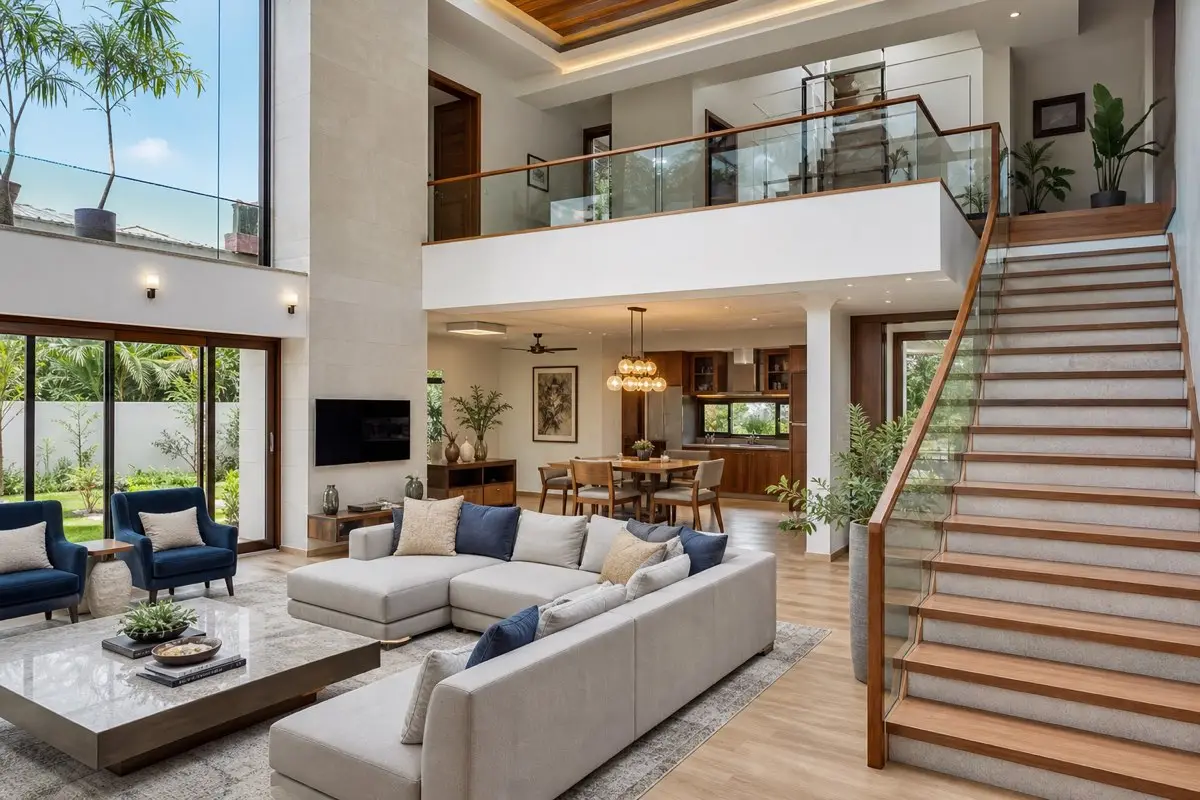
Staircase Vastu in one sentence
Place stairs where they don’t block the home’s main flow (often south/west zones in many plans), keep them well lit and safe, and avoid turning under-stair space into messy storage that creates visual and physical stress.
Top priority
Safety: non-slip steps, strong railing, and good night lighting.
Premium rule
No clutter under stairs. Closed storage only, kept neat and intentional.
Flow rule
Stairs should not cut the living room in half or block the entry path. Circulation is harmony.
Direction is guidance
Many designs keep stairs in south/west zones. If fixed, focus on lighting and organization.
Ideal direction (traditional guidance)
Staircases are heavy, movement-rich elements. Many Vastu interpretations prefer placing stairs in south, west, or south-west zones and avoid placing stairs in the north-east. The practical idea is to keep NE lighter and calmer and keep heavier structure away from that zone.
In apartments, internal staircases are rare. In duplex homes, stairs are often fixed by design constraints. If your staircase is not in a preferred zone, don’t panic. The lived outcome depends more on whether stairs are safe, well lit, and not cluttered.
Best colors (clean, safe, and calm)
Staircase colors should support clarity and safety. Very dark stairs can look stylish but can hide dust and reduce visibility at night unless lighting is excellent. Premium staircases feel clean and easy to navigate.
Best base colors
Warm whites, light neutrals, natural stone/wood tones—clean and timeless.
Contrast for safety
If steps and walls are the same color, add subtle contrast on the step edge for visibility.
Avoid grime magnets
Glossy finishes that show every footprint if your home is busy. Choose easy-clean textures.
Placement tips (layout and circulation)
Staircases should support movement without creating chaos. The best staircase is the one you don’t “notice” because it works smoothly. The biggest staircase Vastu mistakes are blocking paths and turning the under-stair area into messy storage.
Keep entry path clear
Avoid stairs that dominate the entrance view. The entry should feel open and welcoming.
Center zone caution
If possible, avoid placing stairs in the center of the house. Center clutter creates a heavy feeling.
Lighting
Use strong lighting and step lights if needed. Safety and confidence improve instantly.
Noise control
Loose steps and squeaks create stress. Fix small noises; they matter more than direction.
Under-stair space: storage that looks premium
Under-stair space can be useful, but it becomes a problem when it turns into an open junk zone. The premium rule is simple: if you use under-stair storage, make it closed, categorized, and easy to clean.
If you have open under-stair space, treat it like a design feature: one simple bench, one plant (if you can maintain it), or one closed cabinet. Avoid stacking cardboard boxes and broken items. That is what creates “heavy energy” in real life.
Closed cabinet
Best option. Hides clutter and looks intentional.
No open junk
Avoid open piles. If it looks messy, it feels messy.
Avoid damp storage
Don’t store wet mops or cleaning buckets under stairs. Dampness creates odor.
Lighting and visibility (why stairs “feel heavy”)
People often describe staircases as “heavy” when they are dark, narrow, or visually cluttered. The fastest fix is lighting. Good lighting makes stairs feel open and safe. Poor lighting makes people hesitate and increases risk. In Vastu language, hesitation is blocked flow. In practical terms, it’s poor visibility.
Use a mix of lights: a bright overhead light for cleaning and general use, plus softer step lights or a night light for safe movement at night. If the staircase has a landing, ensure the landing is not shadowy. Shadows create stress.
Step lights
A premium upgrade. Step lights create confidence and reduce accidents at night.
Switch placement
Ensure switches are reachable at both ends. People shouldn’t walk in the dark to find a switch.
Avoid harsh glare
Avoid blinding lights at eye level. Use diffused lighting for comfort.
Highlight edges
Subtle contrast on step edges improves visibility for kids and elders.
Kids and elders: staircase safety checklist
A staircase is one of the highest-risk areas in a home. If you want a premium home experience, design for safety. The best staircase Vastu is a staircase that everyone can use confidently.
- Railing: stable, comfortable height, no looseness.
- Anti-slip: use anti-slip strips if the surface is polished or glossy.
- Clear steps: no toys, bags, or objects on steps—ever.
- Night light: ensure safe movement to bathrooms at night.
Staircase direction and movement myths (keep it simple)
Some staircase Vastu discussions go deep into rules about rotation and exact orientation. These topics vary by tradition, and modern homes often cannot adjust them. The best approach is to treat direction guidance as a planning preference and focus your effort on what always improves outcomes: safety, light, and flow.
If you are building new, work with your architect to keep stairs out of the NE and away from the center when possible, while still meeting structural needs. If you already have stairs fixed, do not treat it as a failure. A clean, bright, safe staircase supports a balanced home.
Renters: staircase Vastu without renovation
If you live in a rental duplex or a rental home with stairs, you might not be able to change lighting fixtures or build cabinets. You can still upgrade the staircase area with simple, reversible changes: better bulbs, removable step lights, and strict clutter control.
Removable step lights
Battery step lights can add safety without electrical work.
Anti-slip strips
Easy to add and remove. A small safety upgrade with big impact.
One storage rule
If items must be stored under stairs, keep them in one closed container and keep the area tidy.
Mini case study: under-stair clutter causing “heavy feeling”
Many homes store rarely used items under stairs: paint cans, broken furniture, old boxes. Over time, the pile grows and becomes visually chaotic. People then feel the staircase area is heavy. When the family removes broken items, adds one closed cabinet, and keeps only useful items inside, the staircase area feels calmer immediately. Nothing mystical changed—the environment became orderly.
This is why staircase Vastu works best as an organization discipline. Clear movement and clean storage create a better daily experience than obsessing over small symbolic details.
Best staircase shapes (what works in daily life)
Staircases come in different shapes: straight flights, L-shaped stairs with a landing, U-shaped stairs, and spiral stairs. Vastu discussions sometimes talk about rotation and direction, but the practical truth is: the best staircase is the one that feels safe and comfortable for your family.
If you have elders at home, choose a staircase with a comfortable rise and landing rest points. If you have small children, choose railings that cannot be easily climbed and avoid large gaps. Premium homes feel premium because they are safe for everyone.
Straight stairs
Simple and efficient. Ensure landing space and good lighting at both ends.
L/U-shaped stairs
Often more comfortable because landings break the climb. Keep the landing well lit.
Spiral stairs
Space-saving but can be risky for elders and moving furniture. Use only when necessary.
Staircase materials (stone, wood, metal) and maintenance
Materials affect safety and comfort. Polished stone looks premium, but can be slippery. Wood feels warm, but needs maintenance. Metal can be modern, but can feel noisy if not installed properly. Choose materials that your household can maintain easily.
Stone
Durable and easy to clean. Add anti-slip edges and ensure good lighting.
Wood
Warm and quiet when built well. Keep it dry and maintain finish so it doesn’t become slippery.
Metal
Modern and strong. Ensure it does not create echo or sharp edges, and keep it stable.
Carpets/runners
Can reduce slip risk and noise. Ensure edges are secured so they don’t become trip hazards.
Staircase + entrance: what makes it feel welcoming
In many homes, the staircase is visible from the entrance. This can look elegant when designed well, and stressful when cluttered. If your entry view is dominated by a messy staircase, visitors feel it immediately. If the staircase looks clean, bright, and orderly, the home feels premium instantly.
If you can’t change the staircase location, focus on presentation: keep the area under stairs clean, hide storage, and use warm light. If shoes pile up near the staircase, create a closed shoe cabinet near the entry. That single change can transform the feel.
Myths vs facts (staircase edition)
Myth: stairs always ruin Vastu
Fact: stairs are normal. Problems come from darkness, clutter, and unsafe design—not the existence of stairs.
Myth: under-stair storage is forbidden
Fact: closed, organized storage is fine. Open junk piles are the issue.
Myth: you must rebuild to fix staircase energy
Fact: lighting, anti-slip safety, and organization provide most of the improvement.
Myth: dark stairs look luxurious
Fact: dark stairs only work with excellent lighting and low dust. Safety comes first.
Common mistakes
Staircases feel “wrong” when they are unsafe, dark, or cluttered. Fix those problems and the home feels lighter quickly.
Mistake: dark staircase
Fix: add brighter lights or step lights. Visibility is comfort.
Mistake: slippery steps
Fix: add anti-slip strips or choose a safer finish. Safety is the first Vastu rule.
Mistake: clutter under stairs
Fix: use closed storage and remove broken items. Keep the space clean and intentional.
Mistake: loose railing
Fix: repair immediately. A stable railing reduces stress for everyone.
Mistake: noisy squeaks
Fix: tighten and repair. Small noises create a constant background stress.
Mistake: blocked flow
Fix: rearrange furniture so the staircase area remains open and navigable.
Do’s & don’ts
Do: keep it bright
Bright stairs reduce accidents and improve mood.
Do: keep it clear
No objects on steps. Clear movement equals calm energy.
Do: use closed storage
If you store under stairs, keep it closed and organized.
Don’t: use it as a dump zone
Avoid stacking boxes and broken items. It creates heaviness in the home.
Don’t: ignore safety fixes
Loose steps, railings, and slippery edges should be fixed quickly.
Don’t: keep it dark
Dark stairs reduce confidence and increase risk, especially for kids and elders.
Remedies (no demolition)
If you want quick staircase improvements, choose practical remedies: lighting, anti-slip edges, and clutter removal. These changes work in any home style.
Add step lighting
Step lights make stairs feel premium and safe at night.
Anti-slip edges
Simple anti-slip strips reduce accidents dramatically.
Closed under-stair cabinet
The best visual remedy: hides clutter and creates order.
Repair squeaks
Fixing small noises reduces background stress.
Myths vs facts
Myth: direction alone decides staircase energy
Fact: safety, light, and clutter control decide day-to-day comfort.
Myth: under-stair storage is always bad
Fact: closed, organized storage is fine. Open junk storage is the problem.
Myth: dark stairs look premium
Fact: dark can look stylish, but only with excellent lighting. Safety comes first.
Myth: you must rebuild
Fact: lighting, anti-slip edges, and a cabinet can transform the area without construction.
7-day staircase reset plan
Use this plan for quick improvement.
Day 1: clear the steps
Remove objects and create a rule: steps stay clear.
Day 2: lighting check
Increase brightness and add a night light or step lights if needed.
Day 3: safety check
Check railing stability and step edges. Fix any loose parts.
Day 4: anti-slip
Add anti-slip strips if the surface is smooth or slippery.
Day 5: under-stair organization
Remove junk and decide: closed cabinet, bench, or keep it open and minimal.
Day 6: noise fixes
Repair squeaks and loose fittings. Small noises matter.
Day 7: keep it consistent
Set a weekly sweep and wipe routine so the area stays clean.
Bonus: visual calm
Use one calm color palette and avoid busy patterns near stairs.
30-day maintenance rhythm
Stairs feel premium when they stay maintained.
Weekly
Sweep steps and wipe railing. Keep under-stair area tidy.
Monthly
Check for loose screws, squeaks, and lighting performance.
Seasonal
Review anti-slip surfaces and refresh lighting as needed.
Ongoing
Keep the steps clear. This is the single best staircase habit.
Staircase checklist (print-friendly)
Safety
Non-slip steps, stable railing, good lighting.
Flow
Doesn’t block entry/living movement; center remains open.
Under-stair
Closed storage only; no open junk piles.
Lighting
Bright, even, night-friendly. Step lights if needed.
Noise
No squeaks or loose fittings causing stress.
Cleanliness
Weekly wipe and sweep to maintain premium feel.
Summary: the staircase that feels premium
A premium staircase is safe, bright, and free of clutter. If you can plan a new home, place stairs in a way that respects flow and keeps the center and north-east lighter (a common preference). If you already have stairs fixed, improve what matters most: lighting, anti-slip safety, and closed, neat storage. These changes create the calm “Vastu-correct” feeling you can actually experience every day.
FAQ
Is staircase direction mandatory?
No. Direction guidance can help in new construction, but safety, lighting, and clutter control matter more for daily comfort. Focus on what you can control.
Is it okay to use under-stair space?
Yes, if it is closed and organized. Open junk storage is what creates the heavy feeling. Keep it intentional and easy to clean.
What is the best staircase remedy?
Improve lighting and remove clutter. A brighter, clearer staircase immediately feels safer and calmer.
Summary
Staircase Vastu is about safe flow. Place stairs thoughtfully when building (south/west zones are common preferences), but in any home, the premium result comes from bright lighting, non-slip safety, and keeping the area clear and uncluttered.
If you do only one improvement, add better lighting and remove clutter. A bright staircase changes how the home feels at night and reduces stress for children and elders. In many homes, this is the biggest “energy” shift you can make without any renovation.
Keep a simple rule: steps stay clear always. When you protect the staircase as a clean movement path, you protect the home’s flow. That is the simplest, most practical staircase Vastu rule for every family.
When stairs are bright, safe, and uncluttered, the whole home feels more confident daily for everyone at home always.
Small fixes compound quickly daily now too always today everywhere.