

East-facing plot Vastu in one sentence
Confirm the plot truly faces east, choose an entrance position that supports a clean approach and good drainage, avoid irregular shapes where planning becomes inefficient, and design room zoning using a simple direction grid before you finalize the build.
What “east-facing” actually means
The side with the road/approach and the main gate is on the east. Don’t confuse it with which side “gets sunlight.”
The real priorities
Drainage, soil, shape, and setbacks affect your daily comfort more than any single symbolic rule.
Build-ready mindset
A plot is “good” when it supports a safe structure, easy circulation, light, ventilation, and low maintenance.
Use a grid early
Map the plot on a compass grid before finalizing rooms. This prevents expensive redesign later.
Step 1: verify facing (don’t assume)
Many plot decisions are made from marketing descriptions: “East facing, premium location.” Before you believe it, confirm the facing on site. Stand on the plot facing the road and use a compass to see which direction you face. If you face east while looking outward from the plot to the road, the plot is typically considered east facing.
Also verify the orientation on the official plan or survey map. Roads can curve and neighboring buildings can create optical illusions. The goal is not perfection to the degree; the goal is to avoid a mistaken assumption that leads to wrong placements.
Step 2: understand road approach and entry experience
In Vastu language, the entrance is where energy enters. In practical terms, the entrance is where people, light, air, vehicles, and noise enter. A good plot supports a clean approach: safe visibility, comfortable turning space, and an entrance that doesn’t flood during rain.
Clear approach
Avoid entrances that force sharp turns or blind spots. Comfort begins with easy movement.
Noise and dust
If the road is noisy, plan greenery, boundary walls, and a small buffer zone so the home stays calm.
Rainwater reality
Check whether the road is higher than the plot. If water flows into your entrance, you will fight it forever.
Parking flow
Plan vehicle movement early so the gate, driveway, and main door do not compete for the same space.
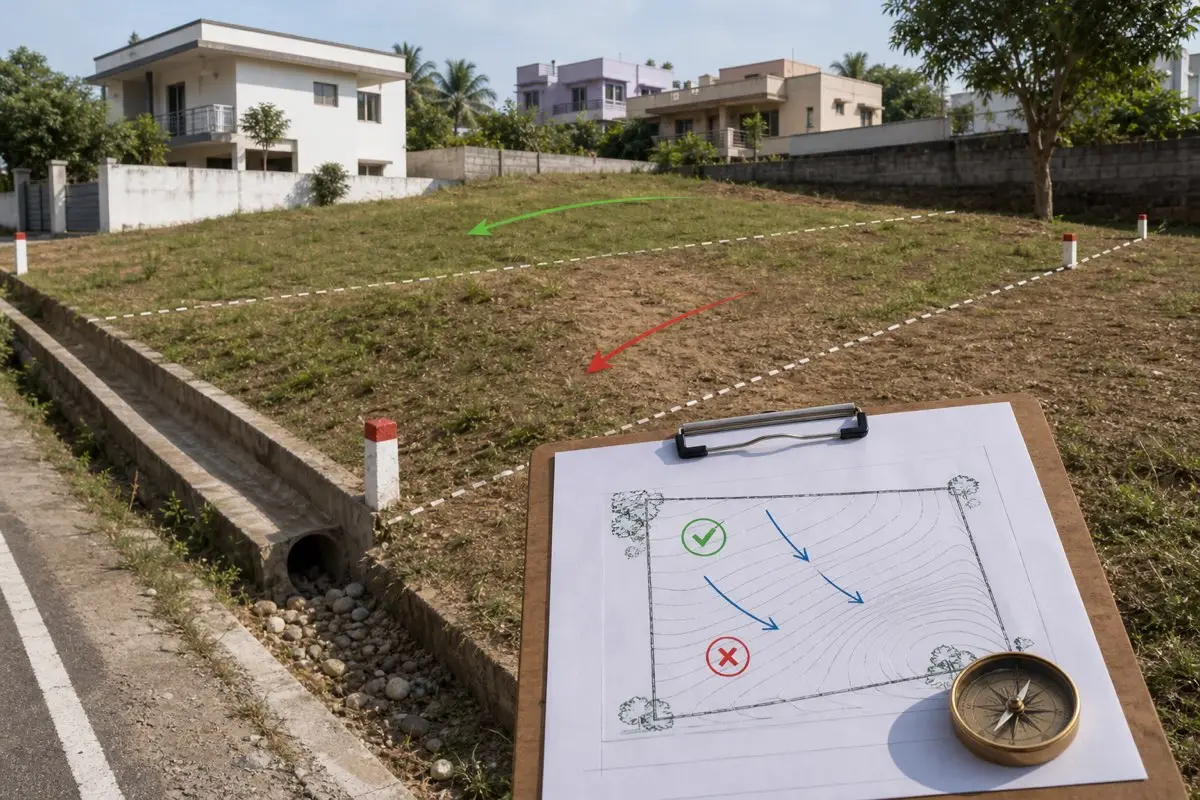
Step 3: slope and drainage (the most important “Vastu”)
Drainage is where plot Vastu becomes real. Waterlogging creates mold, mosquitoes, foundation issues, and constant stress. If a plot looks perfect but drains poorly, it will never feel premium. In traditional language, stagnant water creates heaviness. In engineering language, it creates maintenance.
Prefer a plot where rainwater naturally exits without pooling. Ensure the slope direction and storm-water outlets are planned. If you’re unsure, get a basic site level survey—small cost, big clarity.
Avoid low pockets
Low corners that collect water are expensive to fix later and can damage foundations.
Plan rainwater path
Know where water exits during heavy rain. This is more important than aesthetic landscaping.
Keep entrance dry
A dry entrance feels welcoming and safe. Ensure the gate and driveway don’t become a puddle zone.
Protect neighbors
Don’t push water into a neighbor’s plot. Good drainage plans respect boundaries and regulations.
Soak pits wisely
If you use soak pits, place them with soil and water table conditions in mind. Poor placement creates smell and dampness.
Think long-term
Drainage is not a one-time decision. Choose a design that stays reliable through seasons.
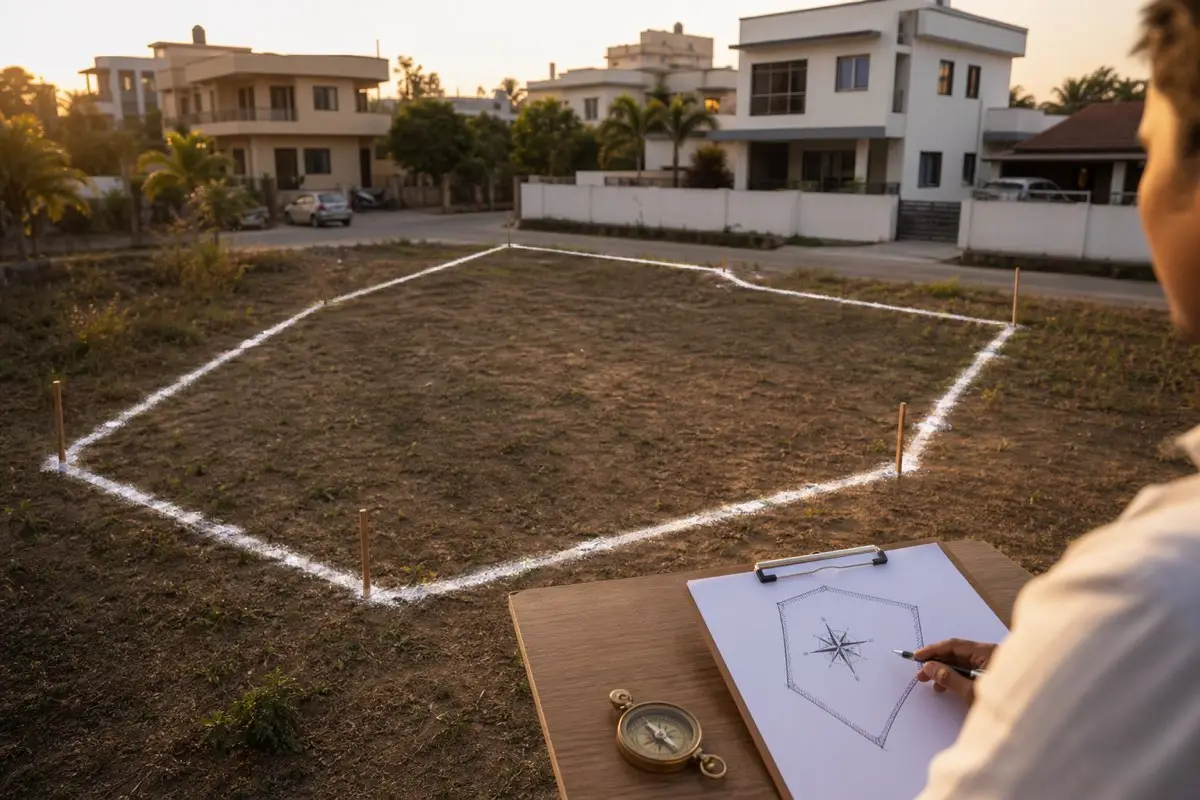
Step 4: plot shape and corners
Regular plot shapes are easier to plan. Irregular shapes can still work, but they increase design complexity and can create wasted corners, awkward room shapes, and expensive structural solutions. If you want a premium home, prefer a plot that supports simple, efficient layouts.
If you already own an irregular plot, don’t panic. Use the plot shape analyzer tool and then design intelligently: allocate awkward corners to storage, landscaping, or utility functions instead of forcing main rooms into bad proportions.
Step 5: soil and foundation basics
Vastu and engineering agree on one thing: the ground matters. Soil type, bearing capacity, and water table conditions affect foundation cost and long-term stability. A basic soil test can prevent expensive surprises. If the plot has a history of filling, check compaction quality and drainage.
Ask practical questions
Has the plot been filled recently? Does water stand after rain? Are there nearby low-lying areas?
Budget reality
A “cheap” plot can become expensive if soil needs heavy foundation work. Premium outcomes come from stable ground.
Step 6: connect plot choices to room zoning
Once you confirm facing, shape, and drainage, use a simple direction grid to plan where key rooms will go. This is where east-facing plot Vastu becomes useful: you can align natural daylight and daily activity with room placement.
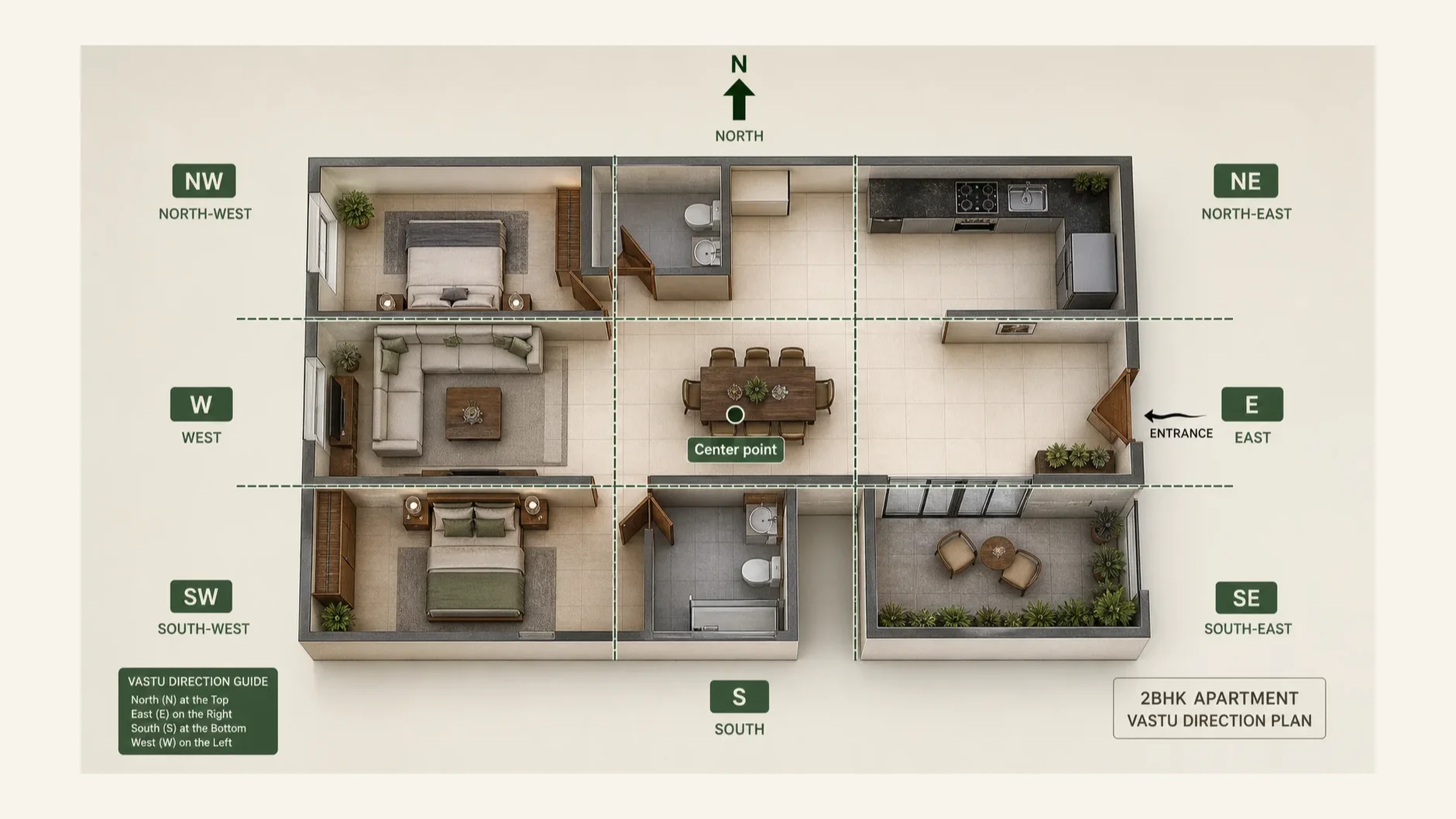
You don’t need to follow every tradition rigidly. Use the grid as a planning tool. Decide where you want the living area (often in north/east zones for daylight), place the kitchen where it ventilates well, and keep the primary bedroom in a stable zone. Then refine with real constraints like stairs, parking, and plumbing.
Utilities: water, septic, and service zones
Plot planning becomes much easier when you treat utilities as first-class design decisions. In many homes, the “Vastu problem” appears later because service zones were added at the end: the septic tank ends up too close to the entrance, the garbage area blocks a walkway, or the outdoor washing space becomes a damp corner.
Different Vastu lineages place water elements differently, and local rules also vary. The safest practical approach is: keep utilities accessible for maintenance, keep them away from the main entry experience when possible, and ensure there is a clean drainage plan for every wet area.
Overhead tank
Place where structure supports it and maintenance is safe. Hide it visually so the roofline stays premium.
Sump / underground tank
Ensure the tank location doesn’t create dampness near the entry. Prioritize clean access and leak prevention.
Septic / soak pit
Keep it planned, documented, and accessible. Poor placement causes odor and long-term maintenance issues.
Outdoor wash/utility
Design a dry-to-wet flow so wet clothes and mops don’t become a permanent damp corner.
Electrical and service access
Plan meter and service access so maintenance doesn’t disturb the main entrance or living spaces.
Waste zone
Assign one clean bin area that is easy to wash and ventilate. Odor control is a real “energy” upgrade.
Setbacks, boundaries, and usable space
A plot can look large on paper but feel small after legal setbacks, parking, and circulation are considered. Before you finalize a “Vastu plan,” confirm local regulations and understand how much buildable area you truly have. Premium homes feel spacious because circulation is not compromised.
Boundaries matter in Vastu because they define the “container” of the home. Boundaries matter practically because they control privacy, noise, and dust. If the road is busy, design a boundary and landscape buffer so the home is not directly exposed to traffic.
Keep the entry experience clean
A simple, well-lit gate path looks premium. Avoid turning the entrance into a storage or utility zone.
Corner strategy
If the plot has awkward corners, allocate them to landscape, rainwater harvesting, or storage—not the main living room.
Circulation first
Ensure there is a clear path from gate → parking → main door. Homes feel stressful when circulation is forced.
Privacy buffer
Use plants and boundary design to reduce direct road view into windows. This improves calm more than decorative items.
Daylight and ventilation planning on an east-facing plot
East-facing plots often receive pleasant morning light on the entrance side. Use that advantage: plan living spaces where you want daylight, and keep ventilation paths clear so air can move through the home. A premium home feels fresh because stale corners are minimized.
- Prefer cross-ventilation in main living and kitchen areas.
- Plan window placement early so rooms don’t depend on daytime artificial lights.
- Keep service zones ventilated so dampness and odor do not accumulate.
Before you buy or build: paperwork and site reality
Plot Vastu is not a substitute for due diligence. Confirm clear boundaries, legal access, and documentation. A plot that looks “perfect” but has unclear ownership or disputes will never feel peaceful. Practical clarity is part of a healthy environment.
Boundary clarity
Confirm markers and measurements match the plan. Avoid plots where boundaries are visually ambiguous.
Access
Ensure road access is legal and usable for construction vehicles. A narrow approach can delay projects.
Neighborhood factors
Observe noise, dust, and drainage patterns. Ask nearby residents about seasonal water issues.
Entrance and gate placement (practical guidance)
Entrance placement is a mix of tradition and real site constraints. The best entrance is the one that is safe, dry, and supports smooth circulation. Avoid placing the gate where the driveway becomes awkward or where rainwater pools.
If you prefer Vastu-style entry planning, many traditions favor the north-east and east segments for entry in east-facing plots. Use it as a guide, and always confirm with local rules and site needs.
Common mistakes (and how to avoid them)
Many plot mistakes happen because planning starts too late. People buy the plot first, then realize the staircase, parking, and room zoning don’t fit comfortably. Use this list as a pre-build audit.
Mistake: ignoring drainage
Fix: verify slope, plan storm-water exit, and keep entry/driveway dry. Drainage decides long-term comfort.
Mistake: irregular shape without a strategy
Fix: allocate irregular corners to landscape/utility/storage. Don’t force key rooms into awkward shapes.
Mistake: late parking planning
Fix: design vehicle entry and turning radius early so it doesn’t block the main entrance and walkways.
Mistake: daylight not considered
Fix: plan windows and ventilation. A premium home feels bright, not dark and dependent on daytime lights.
Mistake: utilities planned last
Fix: plan water tanks, septic/soak pits, and service zones early. Utility chaos creates daily annoyance.
Mistake: trusting marketing labels
Fix: verify facing yourself and check official documents. A small verification prevents costly assumptions.
Myths vs facts (east-facing plot edition)
Myth: east-facing means automatically lucky
Fact: a plot is “good” when it supports drainage, stability, light, and efficient planning. Facing is only one input.
Myth: plot Vastu ignores engineering
Fact: the most useful plot Vastu is engineering-friendly: soil testing, slope planning, and safe circulation.
Myth: irregular plots are always bad
Fact: irregular plots can work with smart design. The cost is higher planning complexity, not automatic failure.
Myth: one rule decides everything
Fact: prioritize big factors: drainage, road level, legal setbacks, and layout flow. Then refine details.
7-day east-facing plot evaluation plan
Use this plan to evaluate a plot with clarity before you commit to a build.
Day 1: verify facing on site
Confirm direction using a compass and compare with the plan/survey. Don’t rely on descriptions.
Day 2: road level and rain check
Ask neighbors about waterlogging. Observe after rain if possible or check marks of past flooding.
Day 3: measure slope
Do a basic level check. Identify low spots and plan how water exits the plot.
Day 4: shape and boundaries
Check for cut corners, encroachments, and boundary clarity. Irregular shapes need a design strategy.
Day 5: soil and foundation notes
Consider a soil test if building soon. Ask about filling and nearby low areas.
Day 6: rough room zoning
Use the compass grid to map living, kitchen, bedrooms, stairs, and utility zones before final design.
Day 7: finalize entry and circulation
Decide gate/parking flow and main door approach so the entry is safe, dry, and welcoming.
Bonus: run the tool check
Use the plot shape analyzer and direction finder tools to validate your plan and catch blind spots.
Plot checklist (print-friendly)
Facing verified
Compass + official plan confirm east-facing entry side.
Drainage clear
No pooling, clear storm-water exit plan, entrance stays dry.
Shape manageable
Regular shape preferred; irregular shape has a design strategy for corners.
Soil understood
Soil/fill history known; foundation approach budgeted realistically.
Zoning planned
Kitchen, bedrooms, living, stairs, parking, and utility zones mapped on a grid.
Entry flow safe
Gate placement supports turning space, visibility, and a calm approach to the main door.
If you’re comparing two east-facing plots, pick the one with better drainage and clearer boundaries, even if it is slightly smaller. A plot that stays dry and simple to build often saves money and reduces stress for years—this is the most practical meaning of a good plot for a premium home.
FAQ
Is an east-facing plot always better than other facings?
Not always. East facing can be great for morning light, but drainage, shape, soil, and design flexibility matter more for long-term comfort. A well-planned plot in any facing can become a premium home.
How do I confirm plot facing if the road is diagonal?
Use the compass to confirm the direction you face when looking out from the plot to the road at the main entry. If the road is diagonal, treat it as a mixed facing and plan entry and room zoning carefully.
What matters more: facing or slope?
Slope and drainage usually matter more day-to-day because they affect maintenance, dampness, and comfort. Facing helps with planning light and entry, but it won’t compensate for waterlogging.
Can an irregular east-facing plot be “fixed”?
Yes, often. Use design strategy: assign irregular corners to landscape or utility uses, keep main rooms in clean shapes, and avoid forcing awkward walls into living areas. A good architect can make irregular plots work beautifully.
Should I follow direction rules for every room on the plot?
Use direction rules as guidance, not obsession. Start with the big priorities (kitchen zone, primary bedroom zone, entrance flow), then adapt to structural and regulatory realities.