
What “remedy” means in Vastu
In everyday language, Vastu remedies can mean any change that aims to reduce “Vastu dosha” (imbalance) and improve comfort, peace, and prosperity. In practice, remedies fall into two categories:
1) No-demolition remedies (recommended)
These are changes you can do without breaking walls: decluttering, cleaning routines, lighting upgrades, ventilation upgrades, furniture placement, storage balancing, and small functional corrections. They improve daily life immediately and usually cost the least. Start here: Vastu remedies without demolition.
2) Object-based remedies (optional)
These include salt bowls, lamps, plants, wind chimes, copper items, pyramids, yantras, and (for some people) crystals. They can work as symbolic reminders and “mood shapers”, but they don’t replace basics like hygiene, daylight, and practical layout. If you use objects, keep them safe, minimal, and affordable.
Before you buy anything: the Vastu priority order
Many people buy remedies first and feel disappointed. A more reliable approach is to follow a priority order that matches both traditional Vastu and real-world design:
Priority A: Cleanliness & repair
Fix leaks, stop dampness, remove mold, repair broken doors/locks, and keep bathrooms dry. In Vastu language, dampness and decay are “heavy” and disruptive. In real life, they harm health and comfort. A spotless, dry home often feels “positive” even without any objects.
Priority B: Airflow & daylight
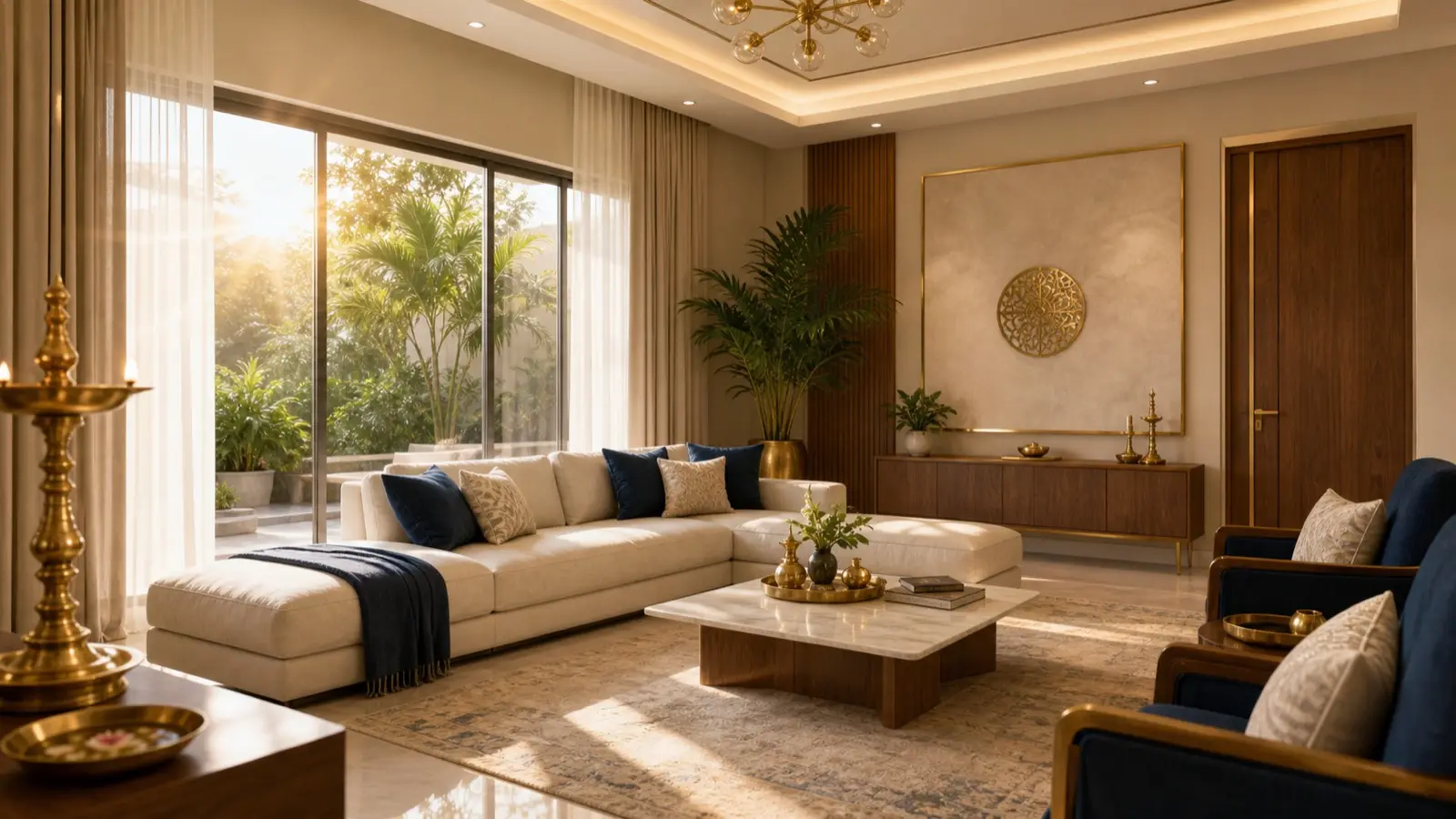
Improve cross-ventilation, use exhaust fans where needed, and add layered lighting. Traditional Vastu prefers a light, open feel in the north and east and heavier storage in the south and west. Practically, better air and light reduce stress and improve sleep.
Priority C: Layout & circulation
Clear walking paths and reduce visual clutter. Avoid pushing furniture into tight “dead ends” and avoid blocking windows. If a home is hard to walk through, it feels heavy and frustrating—this is often labeled as “energy stuck”.
Priority D: Zone alignment
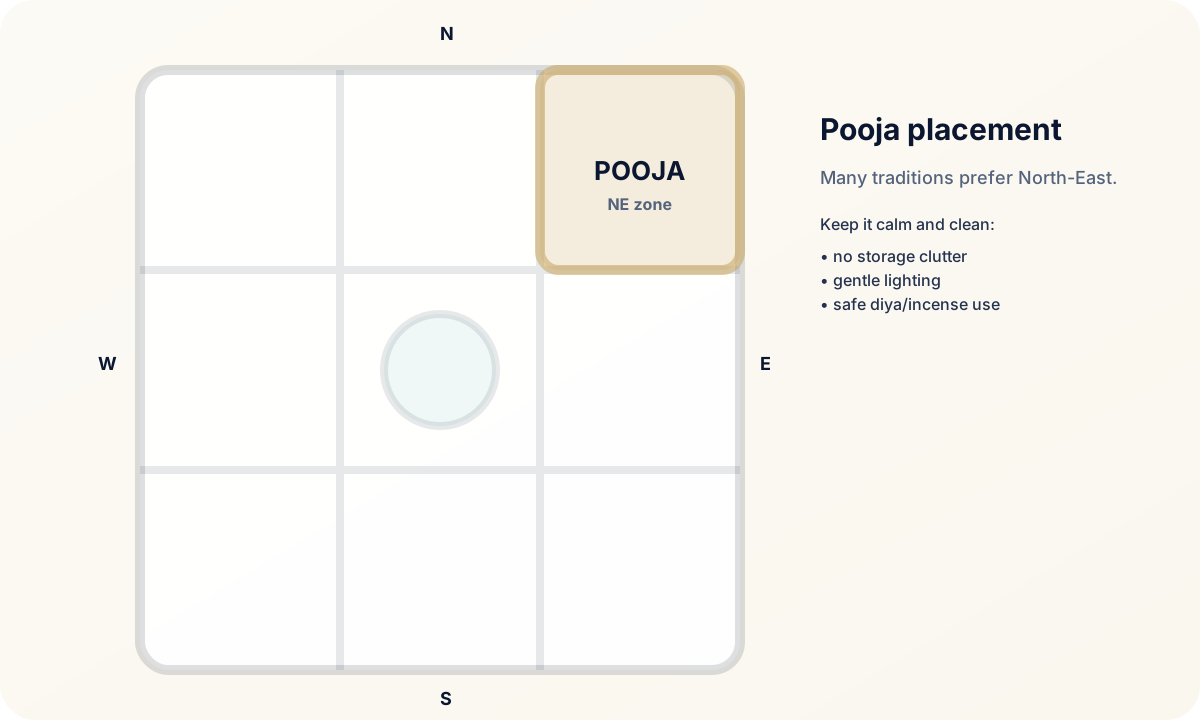
If possible, align key rooms with common zone rules: kitchen in SE, pooja in NE, master bedroom in SW, toilets away from NE. You can’t always change a fixed plan, but you can often reduce the impact with functional adjustments and habits. See Balanced Layout for visual examples.
Room-by-room “first fixes” (simple, high impact)
Use this checklist to get quick wins before trying any object-based remedy.
Entrance
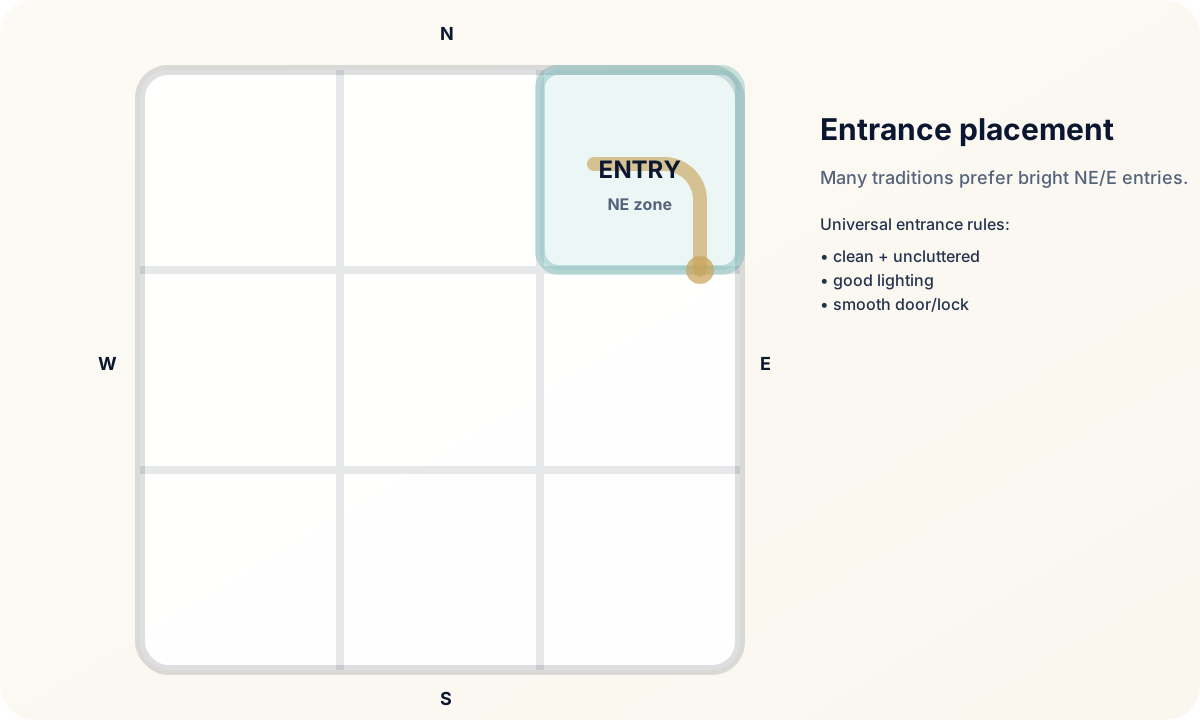
Keep the entry bright and clean. Remove shoe clutter from the visible area. Fix the door sound and lock. Add one pleasant element (a plant, a small artwork, or a clean mat). See Entrance & Main Door Vastu.
Kitchen
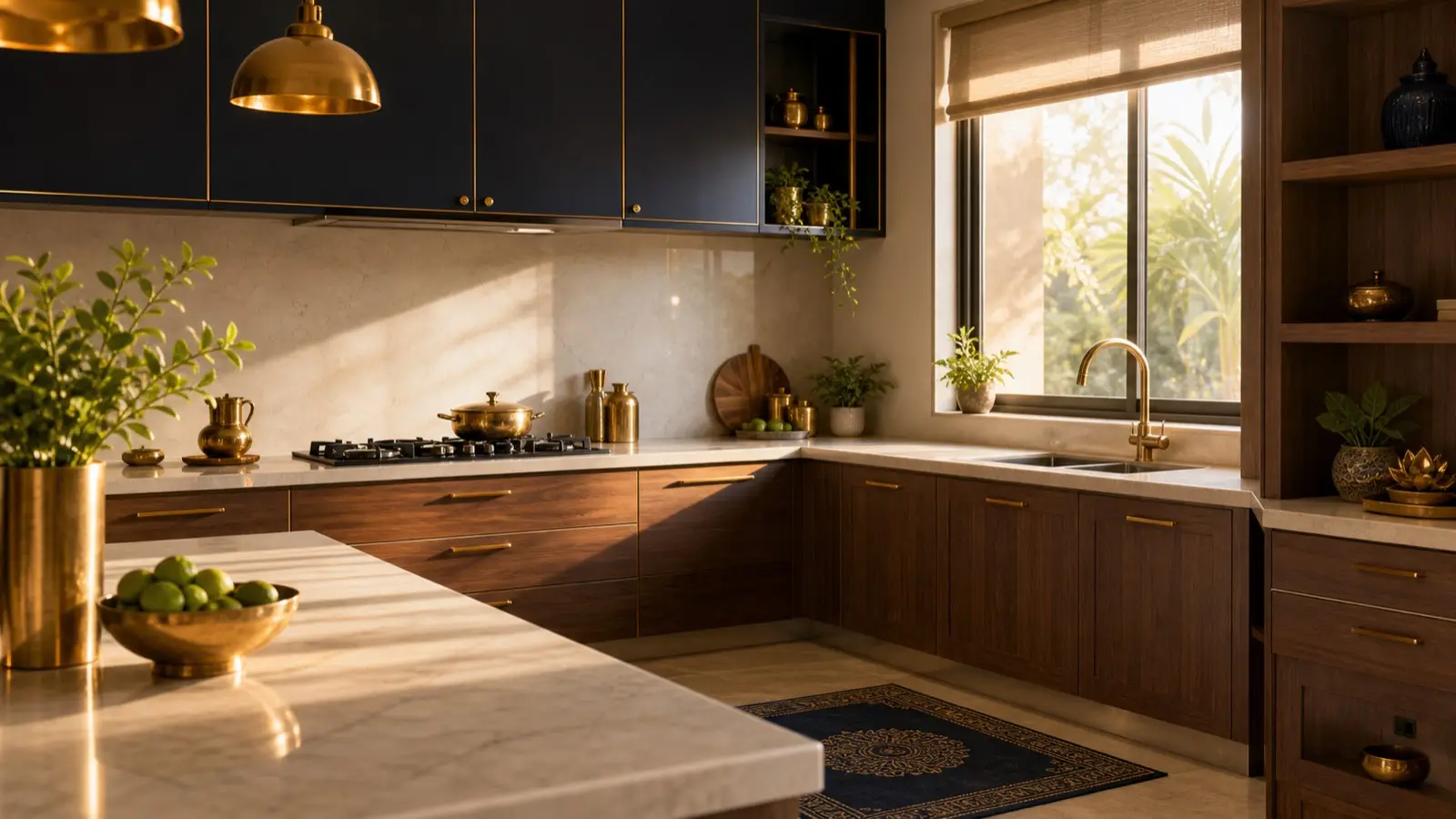
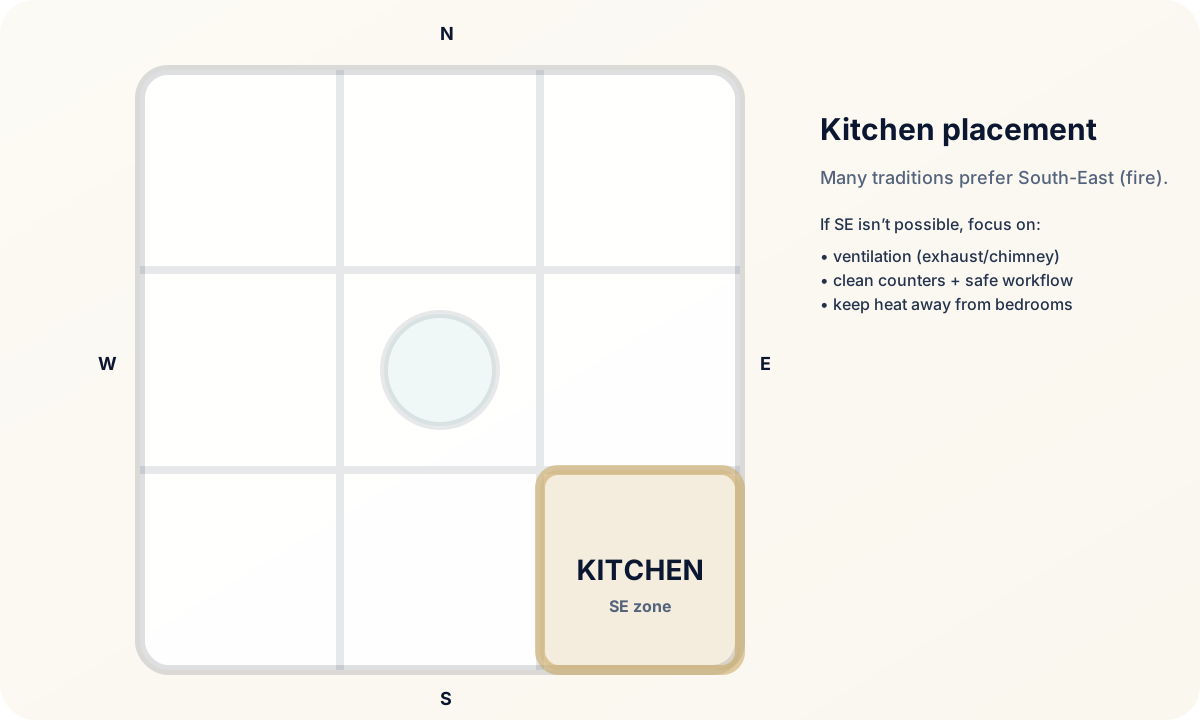
Improve ventilation and keep the stove area clean. Keep the sink and stove separated and keep the kitchen dry. If the kitchen is not in an ideal zone, the best remedy is often reducing smoke, heat stress, and clutter. See Kitchen Vastu.
Bedroom
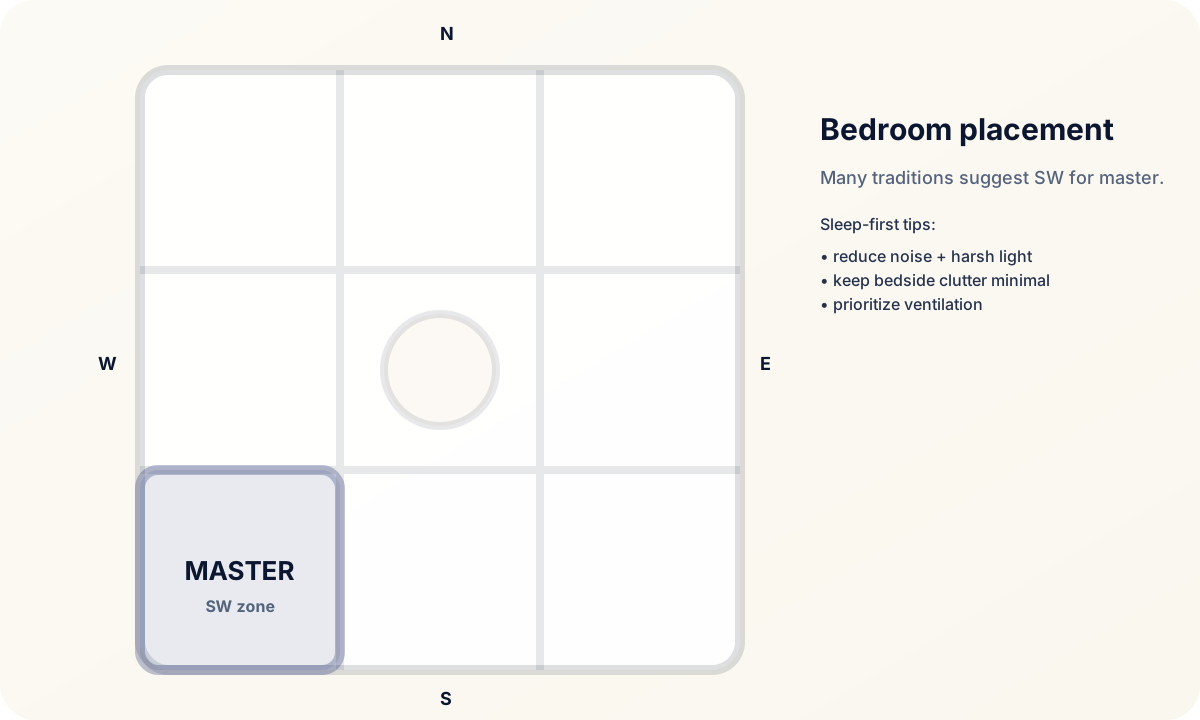
Sleep quality is the fastest “energy upgrade”. Remove bright glare, keep devices away from the bed, and reduce clutter near the headboard. Avoid mirrors facing the bed if possible. See Bedroom Vastu.
Bathroom / toilet
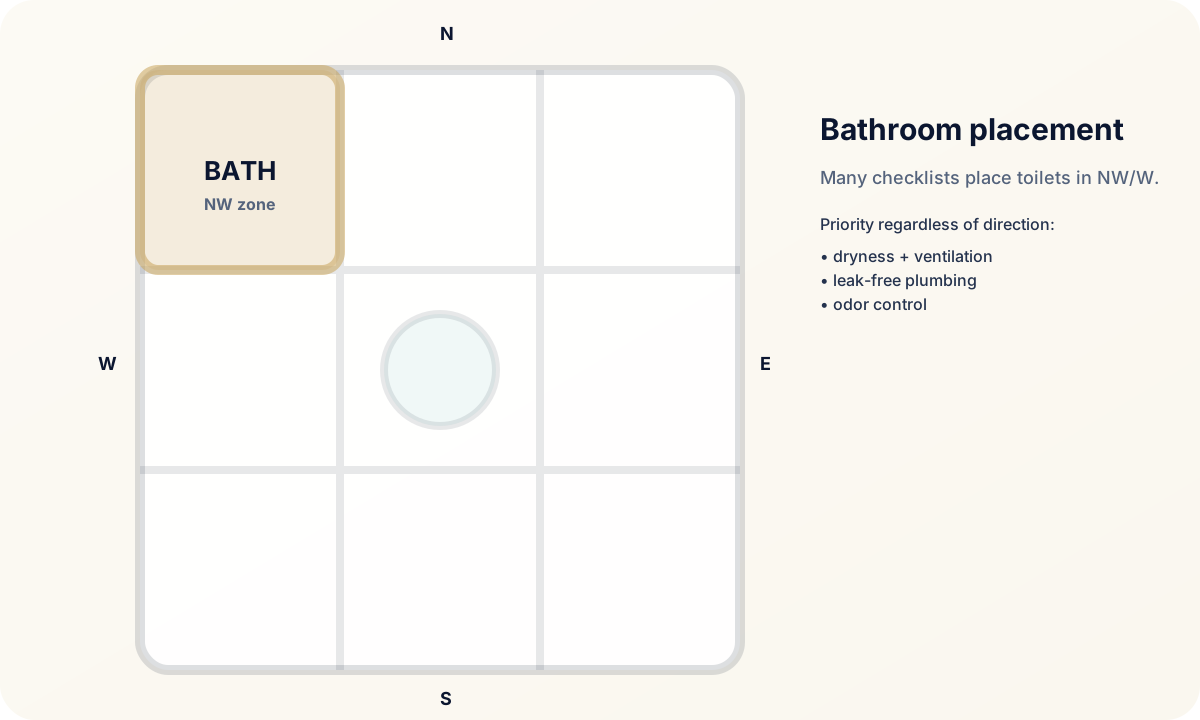
Dry floors, strong ventilation, and zero leaks matter more than any remedy. Keep it bright, clean, and well-smelling. If your toilet is in a “not ideal” zone, consistent cleanliness and dryness reduce most negative effects people feel. See Bathroom & Toilet Vastu.
Common remedies (what they mean, how to use safely)
The items below are commonly discussed. Use them only if they are safe for your home (kids, pets, allergies) and if they fit your budget. For a deeper non-demolition approach, use this page.


Salt remedies
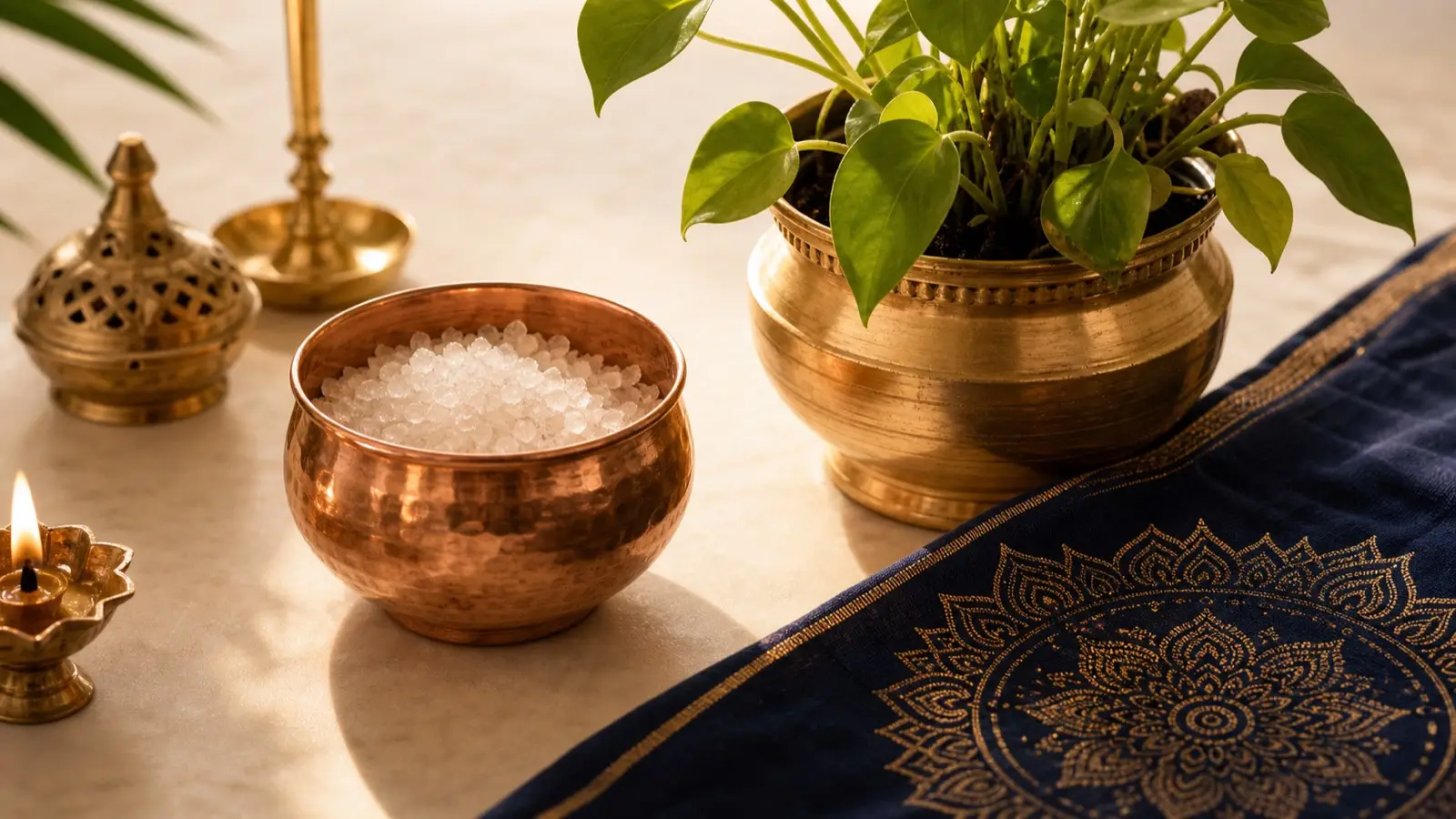
Salt is traditionally used for “absorbing negativity”. The practical version: keep a small bowl in a dry corner, replace it regularly, and never keep it where kids/pets can consume it. Salt cannot fix dampness or mold—repair those first. If you feel calmer doing it, keep it minimal and safe.
Plants for positive energy
Healthy plants improve mood and air quality. Choose plants you can keep alive. Avoid placing big plants where they block walking paths or sunlight. If a plant repeatedly dies, it becomes clutter—remove it. Many people place small plants in north/east zones simply because those areas get better daylight.
Wind chimes
Wind chimes are used to “move energy”. Use them only if you like the sound. Place them where there is airflow (often near a balcony or window), but make sure they don’t create noise stress, especially near bedrooms. A noisy remedy becomes a problem.
Copper items
Copper is traditionally linked with purification. A practical use is a clean copper vessel for water if it suits you (and you maintain it safely). Do not treat copper as a replacement for water quality or hygiene. Keep it clean and follow health guidance if you have any concerns.
Water features (use caution)
Many traditions place water in north/north-east. Practically, water features can create dampness, algae, and slips if not maintained. Only add one if you can keep it clean and quiet. If you can’t maintain it, skip it—clean air and light are safer upgrades.
Pyramid remedies
Pyramids are used symbolically for “balance”. If you like them, keep them as decor and avoid expensive claims. They won’t fix structural issues, but they can act as a reminder to keep a space tidy. Use them only as a small, optional addition after basics are handled.
Rudraksha & yantras
These are spiritual items for many people. If you use them, treat them respectfully and keep them clean. Choose simple placements rather than cluttering multiple corners. Avoid fear-based “must-buy” advice. A clean pooja corner often feels better than many items placed randomly.
Crystals (optional)
Many people enjoy crystals as decor or meditation aids. Results are subjective. If you want to explore crystals, keep it budget-friendly and don’t use them as a substitute for repairs or cleaning. You can browse the internal page: Energize With Crystals.
Common mistakes (what makes remedies “not work”)
Buying before fixing basics
If a home has dampness, clutter, and poor airflow, objects won’t change the feel. Fix leaks, clear pathways, and improve lighting first. This is also the cheapest and most “premium” upgrade you can make.
Too many items (visual clutter)
Overloading corners with remedies creates more clutter and stress. If you use an object remedy, keep one or two and maintain them. A clean home with one calm corner usually feels better than many items scattered around.
Ignoring safety and maintenance
Candles, incense, and water features can be unsafe if used carelessly. Choose safer options (LED lamps, ventilation, child-safe storage). Any remedy that creates smoke, dampness, or risk is not worth it.
Fear-based advice
Avoid advice that creates anxiety or forces expensive purchases. Traditional practices are meant to support calm living. If a “remedy” makes you worried, simplify: clean, repair, light, and breathe.
Direction-based remedy map (simple visuals)
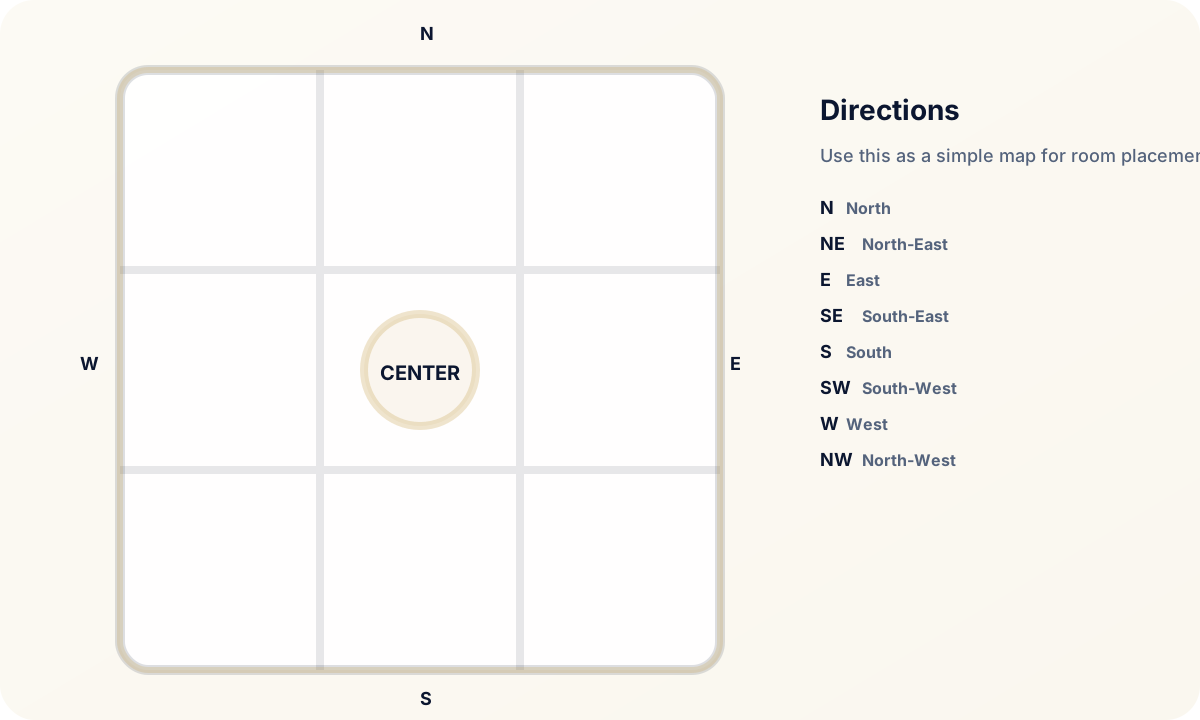
Vastu advice often sounds complicated because people mix “facing” with “zones”. To keep it simple, use a direction grid and remember four common anchor rules: Kitchen SE, Pooja NE, Master bedroom SW, and toilets away from NE. Even if your plan is fixed, these visuals help you understand what a remedy is trying to “support”.

Problem → remedy guide (no-demolition, practical)
The most useful way to think about remedies is: what exactly is the problem, and what change reduces it without creating new issues? Below are common situations and the safest starting remedies.
Problem: Toilet in North-East (NE)
Traditional guidance treats NE as a light/clean zone, so a toilet there is often labeled “not good”. If it’s fixed, do what actually helps: strong ventilation, zero leaks, bright lighting, and dry floors. Keep the toilet door closed, keep the area odor-free, and avoid storing heavy cleaning stock in the NE corner. If a pooja corner is nearby, keep strong separation (no shared wall if possible, no direct line-of-sight). Read: Bathroom & toilet Vastu.
Problem: Kitchen in a “not ideal” zone
If your kitchen is not in SE, the best remedy is often heat + smoke control: improve the chimney/exhaust, reduce grease buildup, keep the cooking counter clear, and maintain dry surfaces. If you can adjust placement inside the kitchen, keep fire (stove) and water (sink) separated and avoid a strong draft blowing the flame. Object remedies won’t beat ventilation and cleanliness. Read: Kitchen Vastu.
Problem: Cluttered entrance / bad first view
A cluttered entrance is one of the most common “energy” complaints. The remedy is simple: clear shoes and bags from the first view, add a bright light, fix the door sound and latch, and keep a clean mat. If you want an object remedy, keep it minimal: one plant or one clean decor piece. Read: Entrance & main door.
Problem: Sleep issues / restless bedroom
People often call this “negative energy”, but the remedy is usually practical: reduce glare, reduce noise, keep phones away from the pillow, and remove clutter around the headboard. If a mirror faces the bed, angle it away or cover it at night. Use calming colors and keep the room cooler and darker. Read: Bedroom Vastu.
Problem: “Heavy” center (Brahmasthan blocked)
Traditional planning keeps the center open/light. In modern homes, the remedy is to keep central circulation easy: don’t store boxes in the middle, avoid bulky furniture blocking the center walkway, and increase lighting. If there is a central staircase, keep it visually light and avoid storage underneath. Visual reference: Balanced Layout.
Problem: Dampness, mold, bad smell
This is the most important “dosha” to fix because it affects health and the whole home feel. Remedies: repair leaks, improve ventilation, use dehumidifiers where needed, keep balconies and drains clean, and dry bathrooms daily. No object remedy can replace maintenance. If you do only one thing for “Vastu”, do this.
Rental homes: remedies that work without breaking rules
If you live in a rented home, the best remedies are those that are reversible and don’t damage the property. This approach is also budget-friendly and looks premium. For a full rental checklist, visit Rental Home Vastu.
What you can safely change
- Lighting (lamps, bulbs, warm vs cool tone)
- Portable air purification and fans
- Furniture layout and storage placement
- Curtains/blinds and heat control
- Plants (only if you can care for them)
What to avoid in rentals
- Unsafe incense/candles (fire risk)
- Water features that create dampness
- Fear-based expensive products
- Permanent wall drilling without approval
- Cluttery “remedy collections”
Budget rules (to keep remedies premium, not stressful)
A premium Vastu approach should feel calm and controlled—financially and visually. Use these rules: (1) Spend on repairs and lighting first, (2) choose fewer, higher-quality items if you use objects, (3) never buy an item that creates ongoing maintenance stress, and (4) avoid any claim that a purchase is “mandatory”. When you keep remedies minimal, the home looks more modern and the routine becomes sustainable.
A simple weekly remedy plan (15 minutes per day)
This routine keeps your home aligned with the spirit of Vastu without spending money.
Daily (10–15 minutes)
- Clear one surface (entry console, kitchen counter, or desk)
- Open windows for a short cross-ventilation burst
- Dry the bathroom floor and check for leaks
- Put shoes and bags back into storage
Weekly (choose one day)
- Deep clean the kitchen and the sink area
- Declutter one storage zone (especially north/east clutter corners)
- Check drains, dampness, and balcony cleanliness
- Replace or refresh any small remedy items you use (salt bowl, etc.)
Quick FAQ: remedies
If you ever feel overwhelmed, simplify: pick one room (usually the entrance or bedroom) and improve it fully before moving to the next. Vastu works best as a step-by-step lifestyle upgrade, not as a one-day shopping list. Start with the no-demolition page and compare with the Balanced Layout diagrams. Keep it simple, safe, and consistent for best results every week.
Do remedies work instantly?
Usually, the changes you feel “instantly” are the practical ones: brighter light, better airflow, and less clutter. Object remedies may feel subtle because they are mostly symbolic. If you want instant results, focus on fixing dampness, cleaning the entry, and improving sleep comfort.
Is one remedy enough for the whole house?
A single object rarely fixes everything. A better approach is one routine: daily reset + weekly deep-clean + maintenance. This “one remedy” (consistent order) improves the entire house. If you like objects, keep one or two items only in a meaningful place instead of spreading many items everywhere.
Should I use incense or camphor?
Use caution. Smoke can irritate lungs and can be unsafe in small spaces. If you enjoy fragrance, prefer good ventilation and safer options (mild essential oils, fresh flowers, or simply keeping the home clean and dry). Never leave flames unattended and avoid strong smoke near children, elderly, or pets.
Can I follow remedies without believing in them?
Yes. Treat Vastu as a design framework: light in living areas, calm sleep zones, clean entry, and smart storage. Even if you ignore spiritual explanations, the practical routines still improve comfort. This mindset also keeps you away from fear-based spending.