
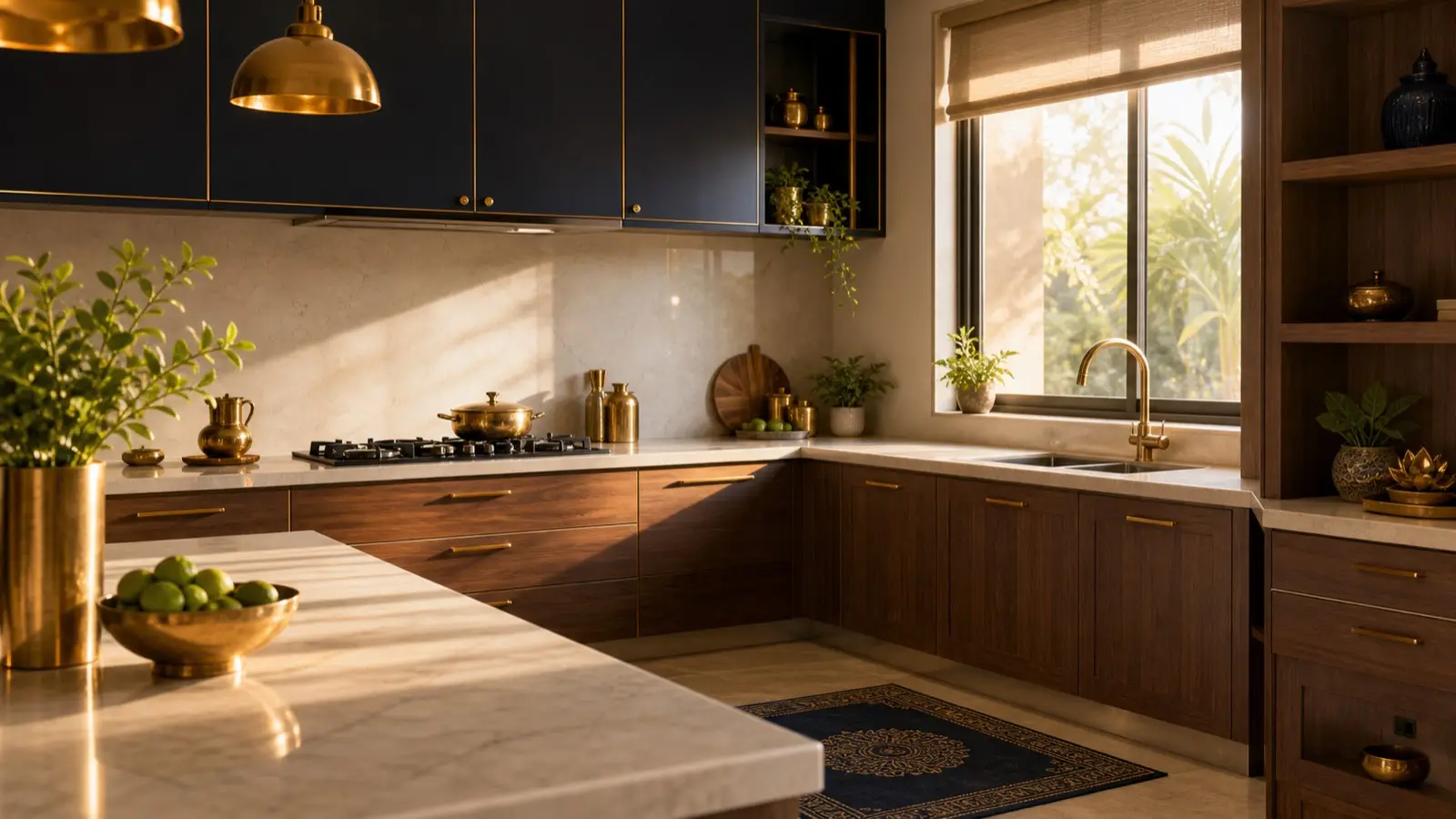
Kitchen Vastu in one sentence
Choose the best kitchen zone (South-East if possible), keep fire and water comfortably apart, and maintain a bright, hygienic, easy-to-work layout. When direction cannot be changed, improve comfort using lighting, ventilation, and a simple daily reset.
Quick direction rule
Preferred: South-East. Alternative: North-West. If your kitchen is elsewhere, keep the cook zone stable and focus on ventilation and hygiene.
Work triangle
The premium kitchen feels effortless because cook–wash–store are close but not cramped. Use this before you worry about décor.
Hygiene first
Most “Vastu defects” in kitchens are really grease + clutter + odor. Fix these and the space immediately feels better.
No demolition mindset
Start with lighting, exhaust maintenance, accessible storage, and a usable prep counter. Changes to gas, electrical, or plumbing services need appropriate professional review.
Understanding directions (so you don’t guess)
Before applying any kitchen Vastu recommendation, confirm directions accurately. In apartments especially, people assume “front is north” or “street side is east” and then make changes that don’t match the actual plan. Use a reliable compass reading (phone compass can be fine when calibrated) and a clear floor plan.

Ideal kitchen direction (and how to handle reality)
Many Vastu traditions associate cooking with the fire element and therefore suggest the South-East (Agni corner) for kitchens. If South-East is not possible, North-West is commonly considered workable in many modern interpretations because it supports airflow and activity.
Real homes are not perfect squares. Renovations, plumbing stacks, and ventilation shafts can make a “perfect” location impossible. If you can’t move the kitchen, don’t treat that as a failure. Treat it as a constraint and then optimize what you can: keep your cooking zone stable, fix ventilation, improve lighting, and reduce clutter near the stove.
If your kitchen is in the North-East
Keep it extra bright and dry. Avoid heavy storage clutter. Prioritize ventilation and keep the cooking flame controlled.
If your kitchen is in the South-West
Balance heat with good airflow and avoid making the space too dark. Use closed storage so it stays tidy.
If your kitchen is in the center
Treat ventilation and safety as non-negotiable. Use strong exhaust and keep walkways open for easy movement.
If your kitchen shares space with living/dining
Distinguish prep and dining areas with an appropriately sized counter or lighting, keeping the route past hot pans clear. Avoid a loose rug or screen that obstructs the cooking area.
Kitchen zones: cook, wash, prep, store
A kitchen works best when it follows a simple rhythm: you bring groceries in, store them, prep ingredients, cook, and finally wash and reset. In Vastu language, this is “flow.” In modern design language, it’s an efficient kitchen layout.
Your goal is not to create distance between everything. Your goal is to avoid conflict zones: water splashing onto the cooktop, a fridge blocking the walking path, or prep space so cramped that things constantly spill.
Cook zone
Stove, hob, oven, microwave. Keep oils and spices close, but keep the counter clear for safety.
Wash zone
Sink, dishwasher, drying rack. Keep it bright and dry. Fix leaks immediately to prevent odors and dampness.
Prep zone
Cutting board and main work counter. Good lighting here reduces mistakes and makes the kitchen feel premium.
Store zone
Pantry, grains, fridge. Use closed storage and labels so the space stays calm and easy to maintain.
Waste zone
Bins and compost. Keep sealed, clean, and away from the main prep counter to avoid smells. See the detailed Dustbin Vastu direction and segregation guide.
Utility zone
Washing machine or water purifier if present. Keep it organized and avoid turning corners into clutter dumps.
Stove placement and cooking direction
Many Vastu sources mention that the person cooking should ideally face East (or sometimes North) while preparing food, and that the stove is best placed in the South-East portion of the kitchen. Treat this as a preference, not a panic trigger. What matters most is that the stove is safe, stable, and easy to work around.
- Keep the stove away from the sink where possible (heat + water conflict).
- Avoid placing the stove directly under a window with strong gusts (flame safety).
- Don’t cook with a wall directly touching your shoulders—tight spaces create stress and spills.
Sink and water: keep it bright, dry, and leak-free
In Vastu, water relates to calmness and clarity. In real life, water relates to mold, damp smell, and maintenance. A single slow leak can make a kitchen feel “heavy” for months. Fix leaks, wipe wet counters, and keep the sink area ventilated.
If your stove and sink must be close, keep the available counter strip clear and reduce splashing toward the cooktop. Check the appliance instructions and ask an installer about required clearances. Do not improvise a chopping-board or loose-divider barrier beside heat; visual separation is not a safety clearance.
Fridge, pantry, and grains (organization that feels premium)
Many households store grains, oils, and heavy utensils in kitchen corners. Over time, the kitchen becomes a storage room instead of a cooking space. Premium kitchens look premium because storage is quiet: closed shelves, clear labels, and “only what you use” on the counter.
Counter rule
Keep only daily essentials visible: a kettle, a knife block, a small spice tray. Everything else gets a home inside cabinets.
Spice discipline
Use one organizer and refill weekly. Too many open packets create visual noise and attract pests.
Dry storage
Store grains in sealed jars. This reduces smell, pests, and makes the kitchen feel clean and intentional.
Fridge placement
Wherever it fits best, ensure the door opens comfortably and doesn’t block the main path. That alone reduces daily stress.
Colors and materials (kitchen palettes that stay bright)
Kitchen colors are not about superstition; they affect how clean the space feels. A very dark kitchen can look stylish in photos, but in real daily life it often feels smaller and shows grease and dust more clearly.
- Best base colors: warm whites, off-whites, light beige, soft grey.
- Warm accents: saffron, peach, muted terracotta, soft yellow (small areas).
- Balance: if cabinets are dark, keep counters and backsplash light.
Choose materials you can maintain. If the kitchen is difficult to wipe, it will slowly become cluttered and greasy. That is what people often call “bad energy.”
Ventilation, smoke, and odor control
If you want a premium kitchen, prioritize the air. Cooking smells that travel into bedrooms and wardrobes reduce comfort. Strong ventilation is a genuine remedy: it improves cleanliness, reduces humidity, and makes the home feel fresh.
Exhaust first
Use a good chimney/exhaust and clean filters regularly. A clogged filter ruins performance and increases grease.
Cross-ventilation
If possible, ensure one window/vent brings air in and another allows air out. This reduces humidity faster.
Odor sources
Bins, drains, and damp cloths are the most common sources of persistent odor. Fix these before changing colors.
Drying habits
Avoid leaving wet towels or mops in the kitchen. Dry them outside. Dampness is the fastest way to ruin the feel.
Lighting: the most underrated “Vastu remedy”
Kitchens need practical lighting: one bright general light, plus focused task lighting over prep and cook zones. If your kitchen feels dull or “heavy,” adding better lighting often gives the biggest immediate improvement—without changing layout.
- Use bright light in prep areas to reduce accidents and improve mood.
- Keep corners illuminated so clutter doesn’t hide and build up.
- If you have warm under-cabinet lighting, it adds a premium look instantly.
Common mistakes (and the fixes that actually work)
Kitchens become stressful when small problems repeat daily: hard-to-clean corners, blocked drawers, or counters overloaded with appliances. Fixing those micro-frictions creates a calm, “Vastu-correct” feeling.
Mistake: stove and sink touching
Fix: keep the intervening counter clear, control splashing, and have inadequate appliance clearances checked. Do not use a loose board or decorative divider beside the hob.
Mistake: weak exhaust
Fix: upgrade or service the exhaust, clean filters, and ensure air has a path to exit.
Mistake: cluttered counters
Fix: give every item a cabinet home. Keep only daily essentials visible.
Mistake: dark prep zone
Fix: add task lighting. Bright prep areas reduce stress and improve safety.
Mistake: sticky surfaces
Fix: simple weekly deep-clean routine. Grease film is what people often describe as “stagnant energy.”
Mistake: bins and drains smell
Fix: sealed bin, regular wash, and drain cleaning. Odor control is a premium upgrade.
Renters: kitchen Vastu without renovation
If you live in a rental, you may not be able to change cabinets, plumbing, or wall tiles. That’s okay. Focus on what you control: lighting, storage discipline, a safe work triangle, and a clean sink zone. These changes also make the home look and feel premium.
Peel-and-stick upgrades
Use removable backsplash films or shelf liners to brighten and simplify cleaning.
Portable lighting
Add under-cabinet lights or a brighter ceiling bulb (with permission). Light changes the whole mood.
Counter reset ritual
A 3-minute nightly reset keeps the kitchen calm. It’s the fastest “Vastu remedy” you can do daily.
Myths vs facts (kitchen edition)
Myth: direction alone decides everything
Fact: a well-ventilated, well-lit, hygienic kitchen supports daily comfort even if the location isn’t ideal.
Myth: one wrong item ruins Vastu
Fact: Vastu works best as a balance of priorities. Fix the big issues first (odor, clutter, safety).
Myth: you must rebuild
Fact: you can get a premium outcome using organization, lighting, ventilation, and simple buffers between zones.
Myth: dark kitchens are always bad
Fact: dark cabinetry can work if lighting is excellent and surfaces are easy to clean. Comfort is the goal.
Example: an L-shaped kitchen with fixed sink and hob
Consider an apartment kitchen where the sink and hob occupy the short leg of an L, while the refrigerator opens toward the doorway. The resident prefers cooking toward East, but turning the hob would require moving the gas connection and leave little preparation space. Keep the approved service layout unless qualified installers establish a safe alternative.
Use the longer counter for preparation and move the drying rack away from the hob. Check the refrigerator door with someone standing at the prep counter; it should not trap that person or block the exit. Give the kettle or mixer a usable position with the required socket and clearance rather than storing every appliance on the same short counter.
Traditional fire-and-water separation is a planning preference. In this kitchen, the practical questions are whether water splashes onto cooking equipment and whether the manufacturer's clearances are met. A decorative divider is not a substitute for either check.
Before changing gas, power, or extraction
Have an authorised gas/LPG technician review pipe, hose, regulator, cylinder-location, or hob changes as applicable. Use a qualified electrician for new appliance circuits or outlets, and follow appliance instructions for ventilation and clearances. Keep the gas shutoff and service points accessible. Do not extend connections or conceal them just to reach a preferred compass zone.
For an open kitchen, consider where steam and cooking odours travel toward the sofa or dining area. An enclosed kitchen still needs an appropriate extraction and replacement-air route. NFPA cooking guidance also advises keeping combustible items away from the stovetop; loose boards, cloths, and packaging are not suitable safety barriers.
30-day maintenance rhythm (so it stays “fixed”)
The kitchen is a high-traffic space, so improvements fade unless you adopt a light maintenance rhythm. A 30-day cycle keeps the kitchen feeling fresh without turning it into a stressful chore list. Think of it as a reset for air, surfaces, and storage.
Weekly
Wipe the chimney and backsplash, wash bins, check drain smell, and restock your “one spice organizer.”
Bi-weekly
Deep-clean the stove area, clear expired items from the fridge, and declutter one drawer or cabinet.
Monthly
Clean exhaust filters properly, check for slow leaks, and reorganize grains/oils so the counter stays calm.
Seasonal
Review lighting, replace dim bulbs, and refresh small color accents (mats, towels, containers) to keep it bright.
Kitchen checklist (print-friendly)
Direction
South-East preferred, North-West workable alternative; confirm with a compass and plan.
Fire vs water
Keep stove and sink separated or buffered; avoid constant splashes near the stove.
Ventilation
Strong exhaust, clean filters, no blocked vents; control odors and humidity.
Lighting
Bright general light + task light over prep/cook; avoid dark corners.
Storage
Closed storage, labeled jars for grains, one organizer for spices and oils.
Daily reset
Clear counters, wash/dry sink zone, take out waste, wipe grease-prone surfaces.
Tip: When you’re unsure, prioritize safety and cleanliness. A bright, odor-free kitchen with an easy workflow supports good habits daily. That is the simplest, most reliable Vastu result for every home always.
FAQ
Is South-East always mandatory for the kitchen?
No. South-East is a common traditional preference, but many modern homes can’t follow it perfectly. Treat it as a priority only when you are building from scratch. In an existing home, comfort improves most with ventilation, lighting, safety, and clutter control.
What if my stove and sink are next to each other?
Keep any counter space between them clear and avoid splashing the hob. Follow the appliance requirements and seek installer advice if separation is inadequate. A tray, board, or decorative divider does not make an unsafe installation safe.
Which is better: open kitchen or closed kitchen?
Both can work. Open kitchens need excellent odor control and a strict counter reset routine so the living room doesn’t constantly “see” cooking mess. Closed kitchens can hide clutter but still need ventilation and light.
Do colors really matter for kitchen Vastu?
Colors matter because they affect light and cleanliness perception. Choose a base that stays bright, and add warm accents in small amounts. If you don’t want to repaint, use towels, mats, and containers to improve the palette gradually.
Is it bad to keep medicines in the kitchen?
It’s better to store medicines in a cool, dry cabinet outside cooking heat and moisture. If you must keep basic first-aid supplies in the kitchen, keep them in a closed box away from the stove and sink.
How should I check refrigerator placement in a small kitchen?
Open the refrigerator door fully and check drawer access, the route past the prep counter, and the path out of the kitchen. Leave the ventilation and service space required by its manufacturer. Do not choose a compass position that blocks the doorway or prevents normal use.
How do I keep the kitchen premium-looking every day?
Use a nightly 3-minute reset: clear counters, set the sink to “clean,” wipe the stove area, and take out waste. Premium homes are not perfect; they’re maintained.