
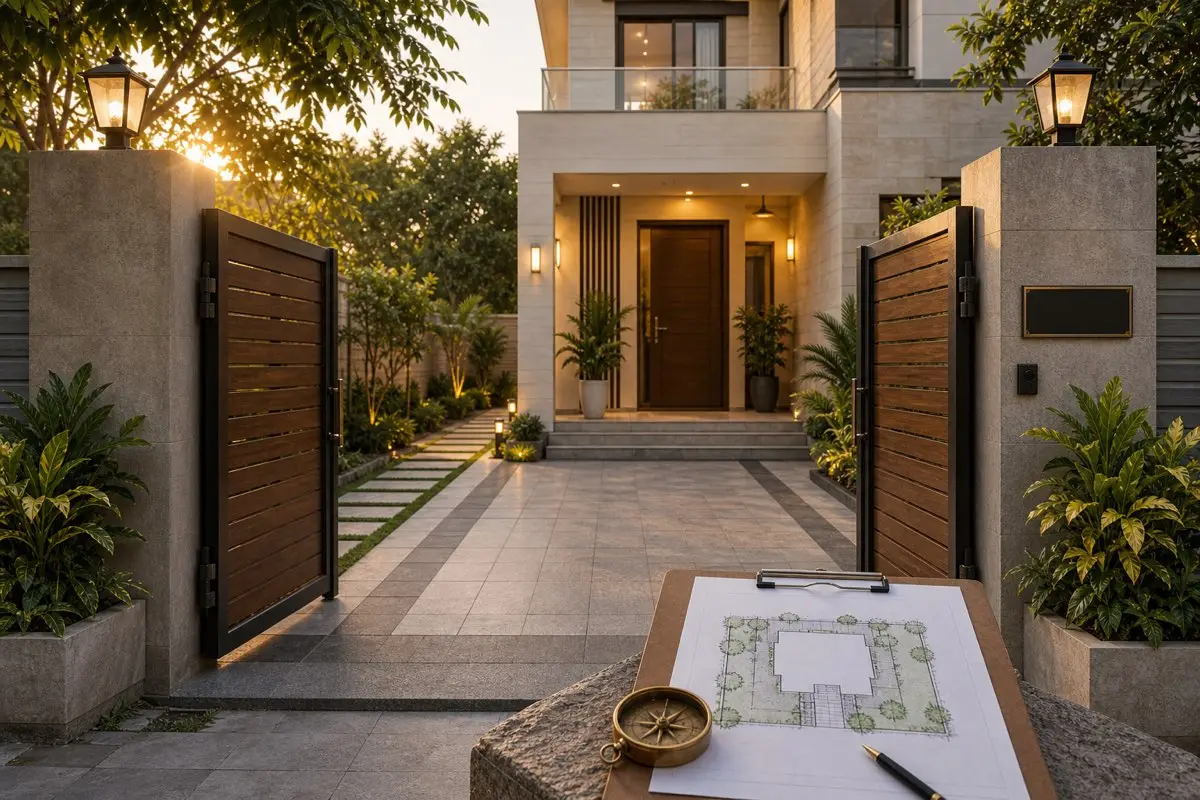
Parking Vastu in one sentence
Place parking where vehicles can enter and exit safely (often NW in many plans), keep the driveway dry and well lit, and avoid blocking the main entrance—then keep the space clean so the entrance feels calm every single day.
Top priority
Safety: turning space, visibility, lighting, and a clear pedestrian path.
Premium rule
No storage clutter in parking. A clean parking zone makes the whole property feel premium.
Drainage rule
Parking must stay dry. Water pooling creates smell, insects, and constant maintenance stress.
Direction is guidance
Many designs place parking in NW. If fixed, improve light, flow, and cleanliness.
Ideal direction (traditional guidance)
Parking and garages are heavy, movement-rich zones. Many Vastu interpretations place parking in north-west or north zones because these areas suit movement and can support airflow. Some plans also allow parking in east or north depending on plot shape and gate position.
Instead of treating direction as a strict rule, treat it as a planning hint: keep the parking zone in a place where vehicle flow is natural and where the main door approach stays clean and pedestrian-friendly.
Best colors (clean, visible, and easy to maintain)
Parking areas collect dust quickly. The best colors are those that keep visibility high and make the space feel clean. Very dark floors and walls can hide stains initially, but can also make the area feel cramped without strong lighting.
Best base colors
Light neutrals: warm white, light grey, stone tones. Clean look and good visibility.
High-contrast markers
Use clear markings for edges, pillars, and parking lines. Safety improves immediately.
Avoid visual chaos
Too many mixed paints and random signs can feel messy. Keep it simple and consistent.
Placement tips (driveway, gate, and pedestrian flow)
A parking zone should feel predictable and safe. The biggest mistakes happen when vehicle flow and walking flow compete for the same space. If pedestrians must walk behind a reversing car, stress becomes part of daily life.
Separate walking path
If possible, create a clear pedestrian path from gate to main door that doesn’t intersect vehicle turning.
Turning space
Plan turning radius. Tight turns scratch cars and create daily irritation.
Gate visibility
Ensure you can see outside when exiting. Blind exits create risk and stress.
Protect the main door
Avoid parking directly in front of the main entrance door if it blocks the welcome feel and walkway.
Lighting and security (the real premium upgrade)
A well-lit parking area feels safe and premium. Darkness creates fear and invites clutter because people don’t want to spend time there. Use bright, even lighting with minimal glare. If you have pillars, ensure corners are not shadowy.
- Use motion sensor lights for convenience and energy saving.
- Keep lights positioned so drivers can see edges and steps clearly.
- Improve security with visibility: clean sight lines matter.
Drainage and water control (don’t ignore it)
Parking zones often become water traps. Tire marks mix with water and create grime, smell, and slippery patches. Ensure the slope is correct and water exits fast. A dry parking area makes the whole property feel healthier.
Garage as storage: the common trap
Many garages become storage rooms. Over time, the car no longer fits, and the home feels cluttered from the outside. The premium rule is simple: parking is for parking. If you must store items, use closed cabinets and keep clear categories.
Closed storage only
Use cabinets, not piles. Piles create heaviness and dust.
One tool zone
If you keep tools, define one tool zone. Don’t spread items across the whole space.
No damp items
Avoid storing wet mops or chemicals that leak and smell. Odor ruins the experience.
Two-wheeler parking (bikes and scooters)
In many Indian homes, two-wheelers are the primary vehicles. Two-wheeler parking needs a slightly different plan: you need a smooth approach, but you also need a safe pedestrian zone because people walk around the vehicles frequently. If the bike blocks the path to the main door, the entrance feels cramped.
Keep two-wheeler parking neat: use one dedicated spot, keep helmets and accessories in one closed box, and avoid leaving tools, oil cans, or spare parts visible. Visual cleanliness makes the home feel premium from outside.
Dedicated spot
Mark one spot so bikes don’t drift into walkways over time.
Keep accessories contained
One box for helmets, covers, and pumps prevents slow clutter.
Avoid oil stains
Clean spills quickly. Stains attract dust and make the whole area look neglected.
Protect the walkway
Keep a clear path from gate to main door even when vehicles are parked.
Apartment parking Vastu (basement and stilt parking)
Apartment parking is usually fixed and shared. In that case, Vastu becomes a “micro-environment” practice: keep your spot clean, reduce clutter around your vehicle, and ensure safety. Many people store cartons or broken items in the parking bay; this creates dust and makes the area feel unsafe.
If your parking level feels dark or damp, add what you can: a brighter light near your vehicle (if allowed), reflective markers, and a habit of keeping the area tidy. The premium feeling comes from predictability and cleanliness, not from perfect direction.
- Visibility: keep your parking bay markings clear so you park without stress.
- Safety: keep the walking path from the lift/stairs clear.
- Odor control: avoid storing damp items, paints, and chemicals near your vehicle.
EV charging and electrical safety
Electric vehicle charging adds a new element to modern parking: cables, sockets, and electrical safety. A premium EV setup is clean and safe: cables stored neatly, outlets protected from rain, and nothing that creates a trip hazard.
If you install an EV charger, plan it so the cable does not cross the pedestrian path to the main door. Also keep the charger area well lit so charging is easy and safe at night. Electrical safety is always more important than any symbolic placement rule.
Cable discipline
Use hooks or a reel so cables don’t lie on the floor and collect dust.
Weather protection
Keep sockets protected from rain and water splashes. Dryness equals safety.
Clear walking path
Never route charging cables across the main walkway to the door.
Gate and compound wall (the “first impression” of Vastu)
For independent houses, the gate and boundary wall shape the first impression. In Vastu language, this is the “entry energy.” In practical life, it is safety, privacy, and cleanliness. A gate that is hard to open, a driveway that is messy, or an entrance that floods will make the home feel stressful no matter what the internal layout is.
If you want a premium entrance, keep the gate area clean and well lit, and avoid stacking items near the gate. If you host guests, a neat driveway and clear pedestrian path creates a calm welcome instantly.
Myths vs facts (parking edition)
Myth: parking direction decides luck
Fact: daily comfort comes from safe flow, lighting, and cleanliness. Direction is a planning hint.
Myth: garages can be junk rooms
Fact: clutter and dust reduce safety and make the home feel neglected from outside.
Myth: expensive tiles are necessary
Fact: markings, lighting, and drainage usually improve the experience more than fancy finishes.
Myth: parking doesn’t matter
Fact: parking is the start of your daily routine. If it’s stressful, the whole home feels stressful.
Mini case study: “tight parking” that felt stressful
A common city-home issue is tight parking where the car barely fits and the family feels daily frustration. People sometimes label it a “Vastu defect.” In most cases, the fix is practical: remove obstacles, mark the ideal parking line, add better lighting, and move storage into one closed cabinet.
When the parking routine becomes predictable—drive in, park on a marked line, walk on a separate path—the stress reduces quickly. This is the practical meaning of good parking Vastu: it reduces friction in daily movement.
Common mistakes
Parking areas feel “wrong” when they are dark, cluttered, or hard to navigate. Fix those issues and the entrance of the home feels calmer immediately.
Mistake: parking blocks the entrance
Fix: create a clear pedestrian path and keep the main door approach open.
Mistake: tight turning
Fix: replan the angle, remove obstacles, or reduce clutter. Turning space is daily comfort.
Mistake: dark corners
Fix: add lights and reduce shadows. Brightness improves safety and mood.
Mistake: water pooling
Fix: correct slope and drainage. Dryness is a real Vastu remedy.
Mistake: garage becomes junk room
Fix: closed storage and monthly declutter. Keep the car space respected.
Mistake: unsafe pedestrian crossing
Fix: mark paths and keep walking route separate from reversing zones.
Do’s & don’ts
Do: keep it bright
Lighting is the most powerful parking remedy for safety and comfort.
Do: keep it clean
A clean parking area makes the home feel premium from outside.
Do: keep a clear path
Ensure the walkway to the main door is clear and safe.
Don’t: store junk openly
Open piles create dust and visual heaviness. Use closed storage.
Don’t: allow water pooling
Standing water causes smell and grime. Fix drainage early.
Don’t: block visibility
Avoid blind exits. Safety and calm depend on visibility.
Remedies (no demolition)
Parking remedies are mostly practical: lighting, markings, and organization. You can improve a parking zone quickly without construction.
Add brighter lighting
Better lights reduce fear and improve navigation. Use motion sensors if possible.
Mark edges and paths
Paint lines for parking and a pedestrian path. Clarity reduces stress.
Closed storage
Use cabinets or one closed storage box to prevent clutter piles.
Drainage cleaning
Clear drains regularly and ensure water exits quickly after rain.
Myths vs facts
Myth: direction alone makes parking lucky
Fact: safety, light, and clean flow decide daily experience more than direction.
Myth: garage storage is fine anywhere
Fact: open storage creates dust and heaviness. Closed storage keeps the home feeling premium.
Myth: you need expensive materials
Fact: clear markings, good light, and cleanliness often outperform expensive finishes.
Myth: parking doesn’t affect home energy
Fact: the entry experience starts at parking. Clutter and darkness affect mood immediately.
7-day parking reset plan
Use this plan to improve parking flow quickly.
Day 1: clear clutter
Remove junk and open piles. Define what must stay in parking and store it closed.
Day 2: lighting check
Improve brightness and remove shadowy corners. Add motion lights if useful.
Day 3: drainage check
Ensure water exits. Clean drains and remove pooling points.
Day 4: mark paths
Create a pedestrian path and keep it clear. Mark edges and step changes.
Day 5: turning comfort
Remove obstacles and adjust parking angle so turning is smooth.
Day 6: storage system
Choose one closed cabinet or one closed box system for necessary parking items.
Day 7: routine
Set a weekly 10-minute reset so clutter never returns.
Bonus: security
Review locks, visibility, and camera positioning if needed. Safety supports calm.
30-day maintenance rhythm
Parking stays premium when it stays maintained.
Weekly
Sweep, wipe dust, and remove any new clutter piles.
Monthly
Deep clean corners, check drainage, and reset storage categories.
Seasonal
Adjust for rain season: ensure water exits and surfaces aren’t slippery.
Ongoing
Protect the pedestrian path to the main door—this creates calm entry energy.
Parking checklist (print-friendly)
Flow
Smooth vehicle entry/exit; clear turning.
Pedestrian path
Separate walking route to the main door.
Lighting
Bright, even, shadow-free; motion lights if possible.
Drainage
No pooling water; drains clear.
Storage
Closed storage only; no open junk piles.
Safety
Visibility at gate; edges marked; steps obvious.
Summary: 7 parking rules that always work
If you want a simple checklist, follow these seven rules. They work because they focus on real daily needs: safety, clarity, dryness, and easy movement.
1) Clear pedestrian path
Keep a safe walking route to the main door that doesn’t cross reversing zones.
2) Lighting
Bright, even lighting reduces fear and accidents. Shadowy corners feel unsafe.
3) Drainage
No pooling water. Dry parking zones feel cleaner and more premium.
4) Mark edges
Paint lines for parking, steps, and pillars so navigation is effortless.
5) Closed storage only
If you store items, store them closed and categorized. Never allow open piles.
6) Turning comfort
Remove obstacles and choose a parking angle that reduces daily friction.
7) Weekly reset
A 10-minute weekly reset prevents slow clutter. Premium is maintenance.
Direction as guidance
If you can plan, NW is a common preference. If not, these rules still deliver results.
FAQ
Is north-west parking mandatory?
No. It is a common planning preference, but plot constraints often decide. Focus on safe flow, lighting, and keeping the main entrance path clean.
What is the best remedy for cramped parking?
Remove obstacles, right-size storage, and improve turning comfort. Mark edges and keep a clear pedestrian path so the area feels less stressful.
Is it okay to store items in the garage?
Yes, if storage is closed and organized. Open piles create dust and heaviness. Keep parking respected so vehicles and people move easily.
Is it okay to park directly in front of the main door?
Sometimes layouts force it. If possible, keep a clear walkway to the door so the entrance still feels welcoming. If parking is close to the door, improve lighting, keep the area clean, and avoid stacking items near the entrance. The goal is a calm, safe approach—not a blocked feeling.
Which matters more: parking direction or drainage?
Drainage usually matters more day-to-day. A parking area that floods or stays wet creates constant maintenance issues and reduces safety. Keep the area dry and well lit first; then fine-tune direction preferences if you have choices.
Summary
Parking / garage Vastu is about safe, clean entry flow. Direction preferences can guide planning (NW is common), but daily results come from lighting, drainage, markings, and clutter control. When the parking zone is bright and organized, the home feels premium from the first step.
If you want one immediate improvement, brighten the parking area and mark the walking path. When entry feels safe and predictable, the whole home feels calmer.