

What is plot & land Vastu?
Plot & land Vastu is how people evaluate land before building or buying: facing, entry/road side, plot shape, slope, water flow, and basic suitability for a comfortable home. Different traditions interpret rules differently, but a premium approach keeps it calm: validate decisions with legality, engineering, drainage, and your real floor plan. Vastu should help you make better decisions—not stressful ones.
Start here

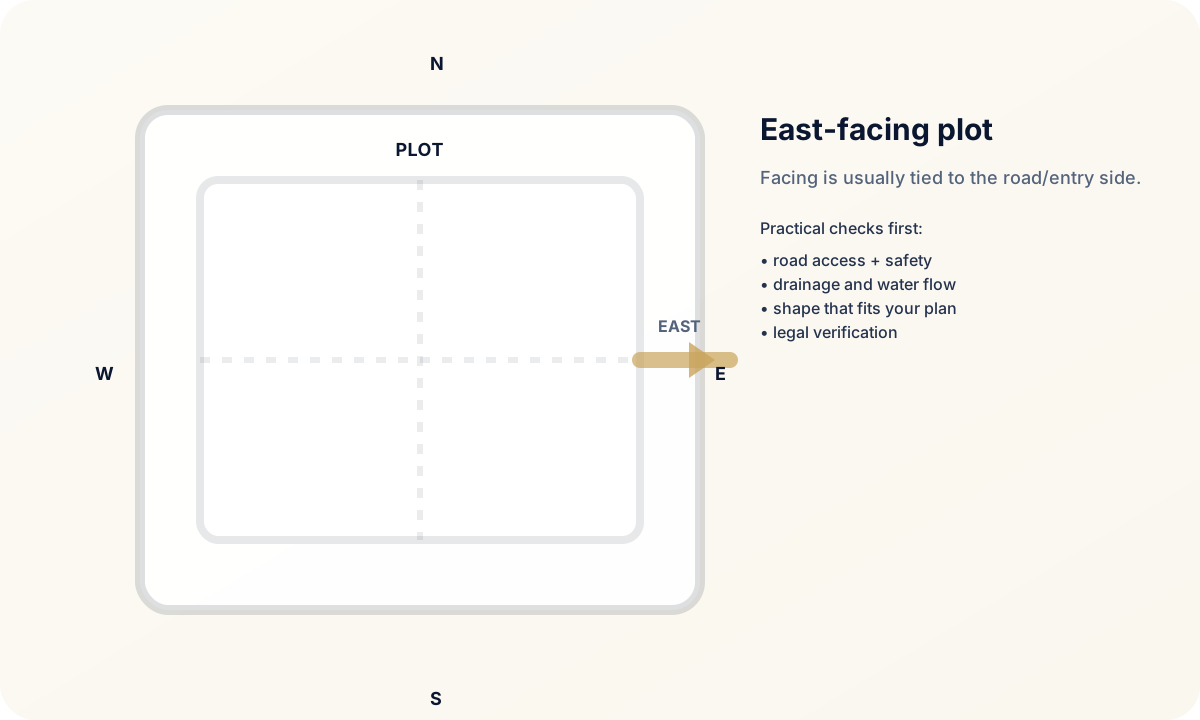
East-facing plot guide
Facing basics, common checks, and practical do’s & don’ts.
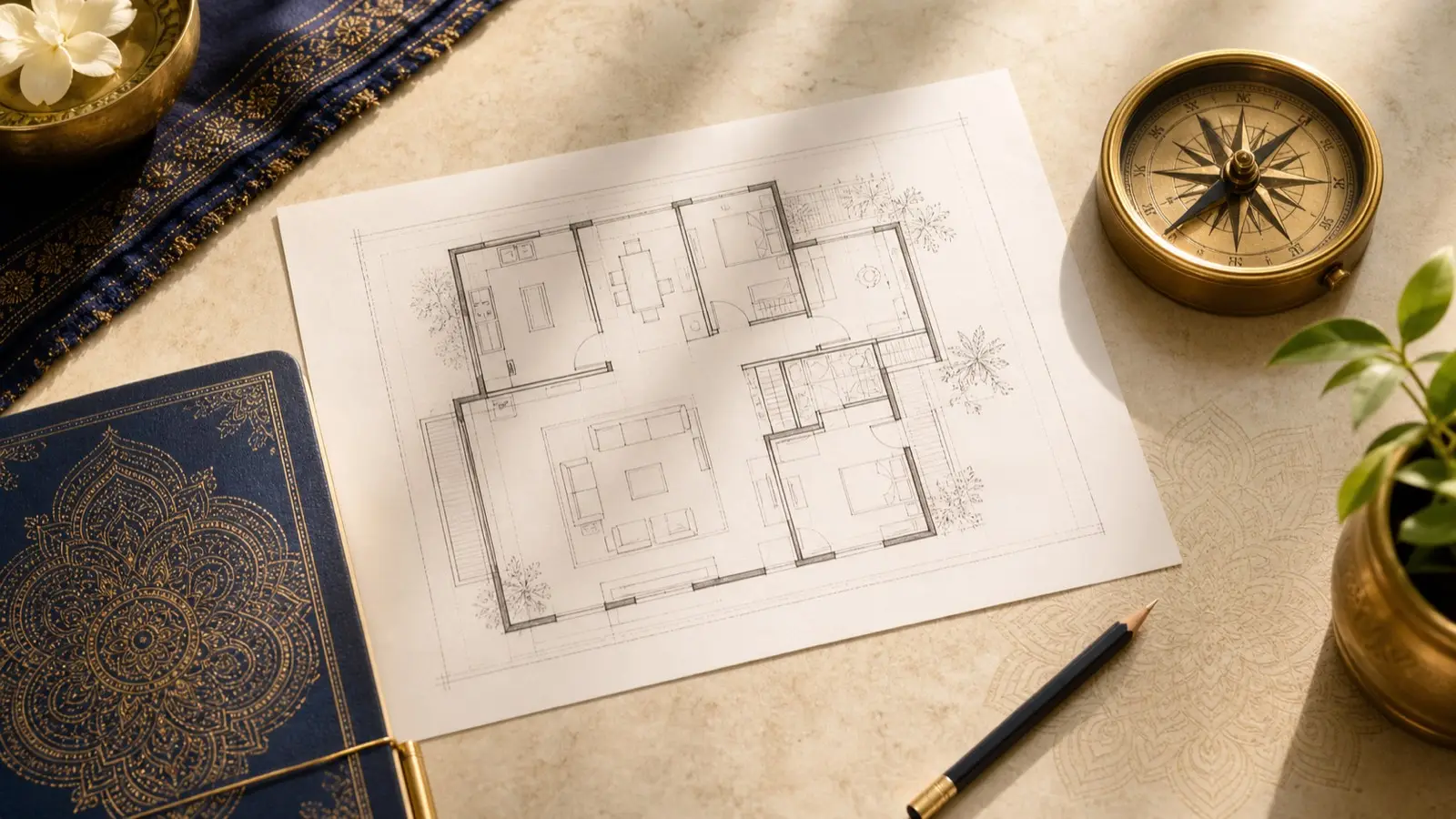
Plot Shape Analyzer (tool)
Starter tool to think through shape and basic constraints.
Plot buying priorities (what to check first)
If you want a premium, low-stress evaluation, use this order:
1) Legal verification
Title, approvals, setbacks, zoning rules, road width, and access rights.
2) Drainage & dampness
Water logging risks, nearby open drains, long-term damp smell, and slope outlets.
3) Shape that fits your plan
A shape that supports your real room layout and parking needs.
4) Facing & entry
Use facing as a planning layer after the practical checks are good.
5) Soil & foundation reality
Soil quality and engineering suitability for long-term stability.
6) Neighborhood future
Noise, traffic, future construction, and safety.
Facing plots (east, west, north, south) — practical interpretation
Facing is usually tied to the road/entry side. Many buyers ask “Which facing is best?” Traditions vary, but a practical answer is: most facings can work when the floor plan is good, the entry is welcoming, and the home gets light/air. Don’t reject a strong plot only because the facing is not your “favorite,” and don’t buy a weak plot only because the facing is “ideal.”
If you want a simple way to compare facings, do it with practical questions: Which side gets harsh afternoon sun? Where will your entry feel safe and private? How will you manage parking and noise? Facing is a planning layer—not a shortcut.
Facing quick guide (grid format)
These are general, non-fear-based notes. Your floor plan matters more than a single label.
East-facing plot
Often associated with morning light. Evaluate entry comfort, road access, and drainage first.
West-facing plot
Manage afternoon heat with shading and layout. A good plan can work very well.
North-facing plot
Often liked for softer daylight. Still prioritize documents, drainage, and shape-fit.
South-facing plot
Not “bad.” Plan for heat and light control; ensure airflow and comfortable bedroom zones.
If you’re unsure what “facing” actually means for your site, don’t guess. Use a phone compass on-site (away from metal objects), confirm the road side, and note the likely gate position. You can also use our Direction Finder to understand directions before you decide entry and room zones. Small clarity steps make the decision feel premium.
Entry and road: how to decide without stress
Many people confuse road direction with plot facing. A practical approach is: identify where you will place the gate and main door, then think about daily routine—parking, walking path, safety at night, and privacy. A premium home starts with a calm entry experience.
If the road is noisy or dusty, plan for a buffer: a small garden strip, a boundary wall, or a setback zone to reduce stress and improve air quality near the entry.
Plot shapes (regular vs irregular)
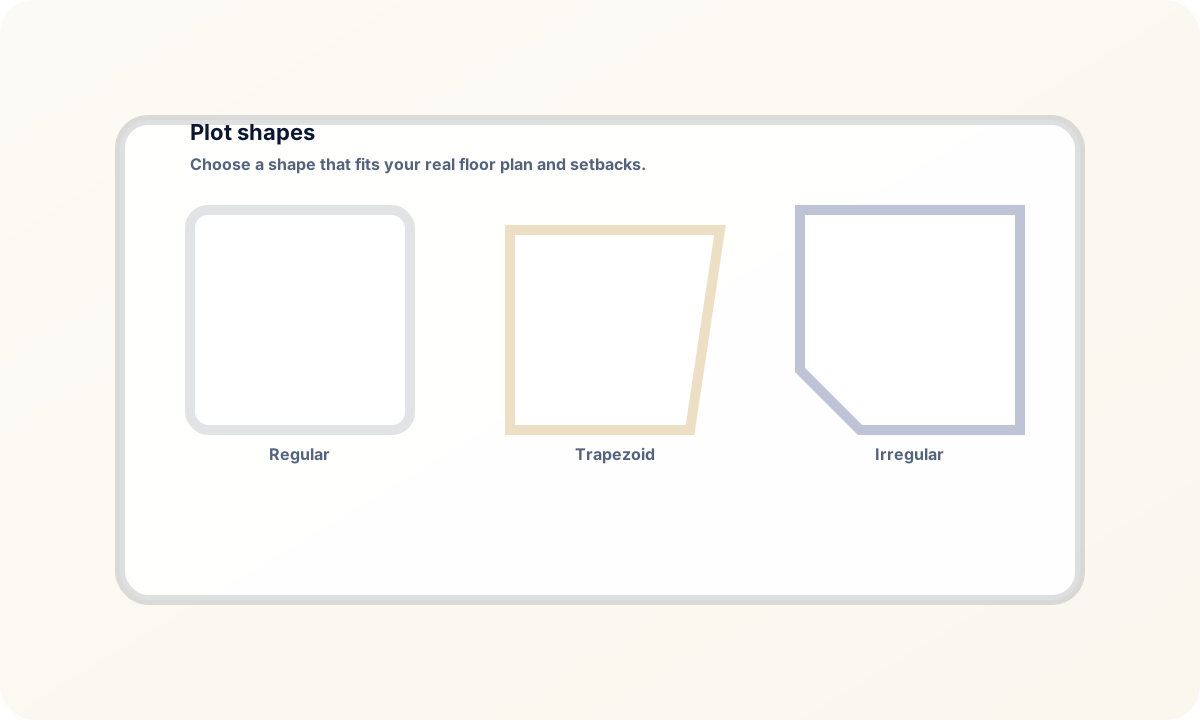
A regular plot shape makes planning easier. Irregular shapes can work, but only if they support your real floor plan and setbacks. A premium evaluation asks: can you build a comfortable layout without awkward leftover corners and cramped circulation?
Irregular plots: how to make them work (without stress)
Many buyers panic when they hear “irregular plot.” In reality, irregular land can work if your buildable footprint is usable and the plan supports everyday comfort: parking, room sizes, setbacks, and a clean circulation path. The premium question is not “Is it perfect?” but “Can I build a simple layout that is easy to maintain for 10–20 years?”
Do these first
- Mark setbacks and parking area on paper.
- Sketch a basic rectangle inside the plot (your “usable plan”).
- Ensure driveway and entry path are comfortable.
- Check if kitchen + bedrooms can fit without squeezing.
Avoid these traps
- Buying because “facing is good” while the plan becomes awkward.
- Ignoring rainwater flow and then spending years fixing dampness.
- Accepting a tiny setback that kills light and airflow.
- Assuming “remedies” will solve engineering or planning issues.
Surroundings & boundaries (what makes a plot feel premium)
A plot is not only a rectangle on paper—it is part of a neighborhood ecosystem: roads, drains, utility poles, traffic, and future construction. In Vastu language this is often discussed as “environmental energy.” In real life, it’s about long-term comfort and safety.
Light & airflow
Favor a plot that allows daylight and cross-ventilation without forcing windows to face a wall at close distance.
Noise & dust
Busy roads feel exciting on day 1 and exhausting by year 2. Plan buffers: setback, wall, trees, and a calm entry zone.
Open drains & stagnant water
A practical hygiene red flag. It affects smell, mosquitoes, and long-term maintenance more than any facing label.
Boundary clarity
Clear boundaries reduce disputes. Confirm measurements, road access, and markers with professional verification.
Corner plots (pros and cautions)
Corner plots are popular because they offer more openness and light. They can also bring more traffic and noise. A premium approach balances both: check road width and future traffic growth; ensure privacy and safe entry; plan boundary walls and landscaping to reduce visual stress.
Pros
More openness, potential for better light/air, flexible planning.
Cautions
Noise, privacy, traffic, and safety considerations increase.
Slope, elevation, and drainage (the real “energy”)
If a plot has water issues, it will affect comfort, health, and long-term maintenance. This is why drainage checks are “premium”: they prevent future stress. Look for signs of water stagnation after rain, damp smell in soil, and poor outlets. Ensure planned water exits do not create disputes with neighbors.
If you’re unsure, consult a civil/structural professional. Safety and stability come first.
A simple buyer habit: visit the plot once during/after rain if possible, or ask neighbors about water logging. One conversation can reveal issues that no online rule can predict.
Soil testing basics (simple, buyer-friendly)
Soil testing can sound complex, but a basic buyer approach is: verify the area’s foundation track record, check for long-term water logging, and understand if the soil needs special foundation solutions. This is not “Vastu,” but it strongly affects your future peace.
Avoid damp plots
Persistent dampness increases mold and foundation stress risks.
Ask local builders
Local experience often reveals common soil/drainage issues quickly.
Water elements (borewell, sump, septic): keep it practical
Many traditions discuss preferred zones for water elements. For a buyer, the premium approach is practical: place utilities where they are accessible for maintenance, do not threaten hygiene, and do not create seepage risks near the foundation. Always follow local codes and engineer guidance.
Borewell / water source
Prioritize permits, safety, and contamination protection. Keep access easy for repairs.
Underground sump
Place where waterproofing is reliable and maintenance is easy. Avoid seepage paths into the building.
Septic / soak pit
Keep hygienic distance from clean water sources. Ensure vents and access covers are safe.
Rainwater outlets
Plan outlets early so stormwater exits calmly without entering parking, neighbors’ plots, or foundations.
Quick plot checklist (grid format)
Use this as a calm, repeatable evaluation method:
Documents
Title clarity, approvals, road access, setbacks, and boundaries.
Drainage
No water logging; clear outlets; no open drains nearby.
Shape
Fits your desired plan without awkward leftover spaces.
Slope
Supports water exit and stability; verify with professionals if needed.
Facing & entry
Use as a planning layer after practical checks are strong.
Neighborhood
Noise, safety, future construction, and long-term comfort.
Quick start: 7-day plot evaluation plan
If you’re comparing multiple plots, use a simple weekly plan. This prevents rushed, emotional decisions and keeps evaluation consistent.
Day 1 — Documents
Verify title/approvals, boundaries, and road access. Don’t skip this.
Day 2 — Drainage
Check slope/outlets; ask neighbors about water logging and dampness.
Day 3 — Shape-fit
Sketch your real plan: parking, entry path, rooms, and setbacks.
Day 4 — Neighborhood
Noise, safety, future construction, and traffic patterns.
Day 5 — Soil/foundation
Understand local soil issues; consult professionals if needed.
Day 6 — Facing/entry plan
Decide gate + door placement; plan privacy and a calm entry experience.
Day 7 — Compare calmly
Compare plots using the same checklist; choose the one that fits your life.
Bonus
Use the Plot Shape Analyzer tool to think through constraints (starter).
Use the Plot Shape Analyzer (fast comparison)
If you want a consistent way to compare plots—especially irregular or corner plots—use our tool as a planning helper. The goal is to see whether the plot supports a simple, comfortable floor plan once setbacks and parking are included.
Step 1 — Outline the plot
Open the Plot Shape Analyzer and mark the plot boundary and road side.
Step 2 — Add setbacks
Overlay setbacks so you see the true buildable footprint (this is where many plots fail).
Step 3 — Try a basic plan
Place entry path + parking first, then living + kitchen + bedrooms. If it fits cleanly, it’s a strong sign.
Step 4 — Compare options
Compare two plots with the same test. Choose the one with fewer compromises and easier ventilation.
Mini glossary (plots)
Simple definitions to make plot discussions easier:
Facing
Usually the road/entry side orientation used for planning the gate and door.
Setback
Mandatory space between building and boundary—affects plan fit.
Water logging
Standing water after rain; a long-term stress and health risk.
Slope
How water flows across the plot; directly impacts drainage.
Regular shape
Easier planning with fewer leftover corners and awkward spaces.
Irregular shape
Can work if it fits your plan and setbacks; evaluate carefully.
Common plot mistakes (and the premium alternative)
Most land decisions go wrong for one reason: buyers focus on a single label (“east-facing”, “corner plot”, “good area”) and ignore the everyday systems that make a home comfortable. Use these patterns as a quick self-check.
Mistake: buy with emotions
Premium alternative: compare every plot with the same checklist (documents → drainage → shape-fit → surroundings → entry).
Mistake: skip local reality
Premium alternative: talk to neighbors about rainwater, noise, and future construction. One chat can save years of stress.
Mistake: ignore plan-fit
Premium alternative: sketch a basic plan with setbacks and parking before you commit. If the plan is awkward, the home will feel awkward.
Mistake: treat facing as destiny
Premium alternative: use facing to refine your entry and room plan after the practical checks are strong.
If you want a simple decision method, score each plot out of 10 for each category: documents, drainage, shape-fit, surroundings, and entry comfort. Then choose the plot with the best balance—not the best story.
Myths vs facts (plot & land)
Myth: “Facing decides everything.”
Fact: drainage, legality, and shape-fit often matter more.
Myth: “Remedies fix land issues.”
Fact: engineering and drainage solutions are the real fixes.
Myth: “Irregular is always bad.”
Fact: irregular plots can work if the plan is practical and setbacks allow it.
Myth: “Skip legal checks.”
Fact: documents and approvals protect you more than any rule.
Simple example: choosing between two plots
Here’s a calm way to decide. Imagine Plot A is “ideal facing” but has weak drainage and a tight setback. Plot B has an average facing but better drainage, cleaner surroundings, and a plan that fits easily. In daily life, Plot B usually feels more premium because it reduces stress, repairs, and ongoing maintenance.
Plot A (looks perfect)
Nice label, but driveway floods; plan becomes cramped after setbacks; constant damp patches near boundary.
Plot B (works better)
Good drainage; calm entry buffer; enough space for cross-ventilation; fewer compromises in room sizes.
Use facing as the final “polish” layer: once you know the plot can support a clean plan, you can optimize entry and room placement using Direction Vastu.
Recommended next steps
- Read: East-facing plot guide (starter).
- Try: Plot Shape Analyzer (starter).
- Next: Direction Vastu for facing and entrance logic.
Frequently asked questions (plots)
Traditions vary. A premium approach is to prioritize legality, drainage, and a shape that fits your floor plan. Then use facing as a planning layer.
Corner plots can offer more openness, but they can also bring more noise and privacy challenges. Evaluate road width, traffic, and safety.
Not automatically. A south-facing plot can work well with a good plan, shading for afternoon heat, and a comfortable entry path. Prioritize legality and drainage first.
Often yes—if the buildable footprint supports a simple, well-ventilated floor plan. If the only possible plan creates tiny rooms or awkward leftover corners, it may be better to choose a different plot.
Prefer any slope that helps rainwater exit safely without entering parking or foundation zones. Direction traditions vary, but good drainage is always beneficial. When in doubt, get professional guidance.
Yes—at least roughly. If the only possible gate/entry creates an uncomfortable walking path, difficult parking, or poor privacy, the home may feel stressful daily even if other factors look good.
Persistent water logging or dampness is a major long-term risk. Legal issues are also critical—never skip verification.