
What is Vastu Shastra?
Vastu Shastra is a traditional Indian knowledge system that discusses how spaces are planned—home layouts, directions, room zones, and how a place “feels” during daily life. In modern use, most people treat it like a planning checklist: where should the entrance be, which zone is better for the kitchen, how do you keep the center of the home open, and what small fixes can improve comfort without demolition.
This page is intentionally calm and practical. Vastu has many schools and traditions, and different families follow different versions. Here we focus on the ideas that help you plan better: clarity, light, airflow, hygiene, quiet sleep, and easy daily flow.
You’ll also see diagrams beside the content. Use them as a learning aid: first map your home on the direction grid, then apply only the rules that make everyday life easier. If a rule increases stress or conflicts with safety, treat it as optional. Premium Vastu is not about strictness—it’s about creating a home that feels balanced, easy to maintain, and supportive of your routine.
Where to start (the premium learning order)
If you’re new, don’t jump to advanced rules. Start with this order:
1) Directions (the map)
Learn north/south/east/west and the four corner zones (NE/SE/SW/NW).
2) Entry + daily flow
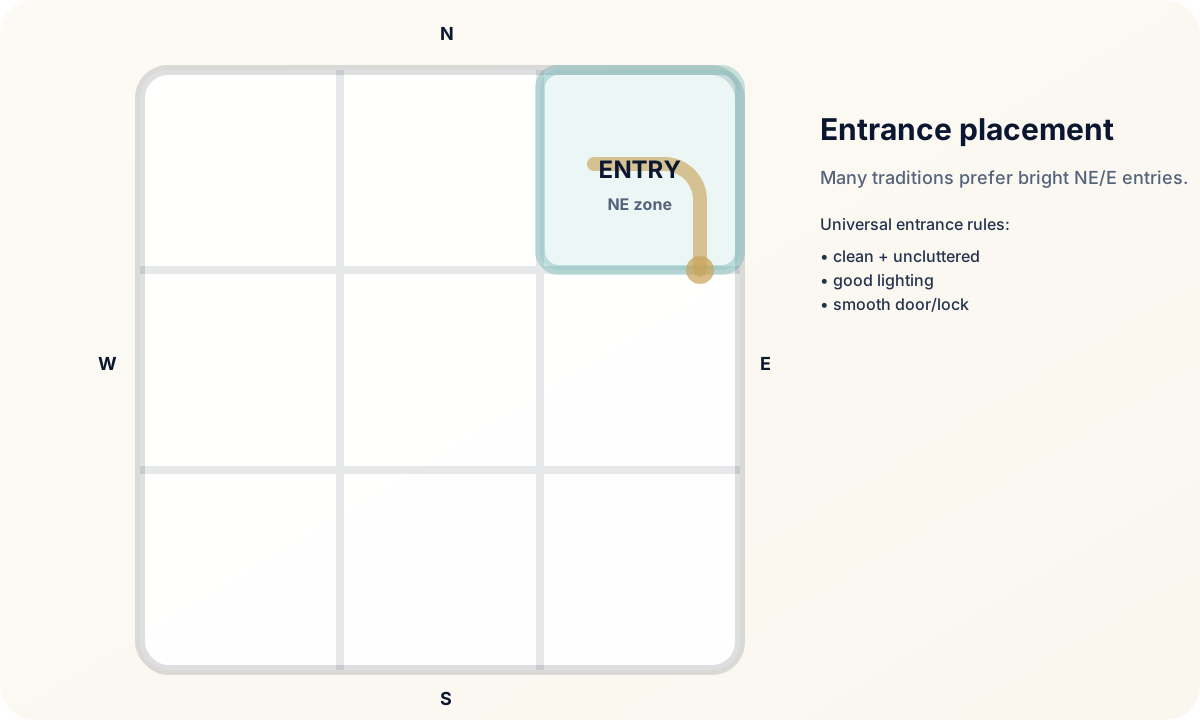
A bright, uncluttered entrance and smooth circulation makes any home feel better.
3) Kitchen + bedroom basics
Fire + water safety in the kitchen; sleep quality in the bedroom—these matter most.
4) Plot and drainage reality
If you’re buying land, drainage and legality protect you more than any “facing” label.
If you want to apply these ideas to your own plan, keep a simple habit: change one thing at a time, observe comfort for a week, and only then add the next improvement. This avoids overthinking and makes the process feel grounded. Take notes, stay consistent, and enjoy the process over time.
History & origin (a beginner-friendly view)
Vastu ideas appear across older Indian architectural traditions. Over centuries, builders and communities developed preferences about orientation, sunlight, wind, water flow, and how sacred or quiet zones should be treated. In modern life, people apply Vastu to apartments, independent houses, offices, shops, and even furniture placement—often mixing family tradition with practical design.
It’s helpful to remember: some parts of Vastu are environmental and architectural, while other parts are cultural or spiritual. Both can matter to people. A premium approach respects tradition while remaining grounded and safe.
Scientific vs traditional perspective (balanced approach)
Many questions about Vastu come from the word “science.” The best way to think about it is: some Vastu recommendations overlap with practical design principles (light, ventilation, hygiene, noise control). Others are beliefs and cultural frameworks (symbolic direction meanings, rituals, certain remedies).
Science-first angle
- Daylight and glare control
- Cross-ventilation and air quality
- Hygiene, dampness prevention, easy cleaning
- Safety: fire, structure, electrical, plumbing
- Noise control and sleep quality
Traditional angle
- Direction meanings (NE/SE/SW/NW)
- Vastu Purusha Mandala (zone-based map)
- Element associations (fire, water, etc.)
- Rituals and culturally meaningful practices
- Remedies used by different schools
Directions: the simplest Vastu “map”
Directions are the foundation of most Vastu checklists. You don’t need complex calculations to start. You only need a reliable sense of north and a way to map rooms into zones.
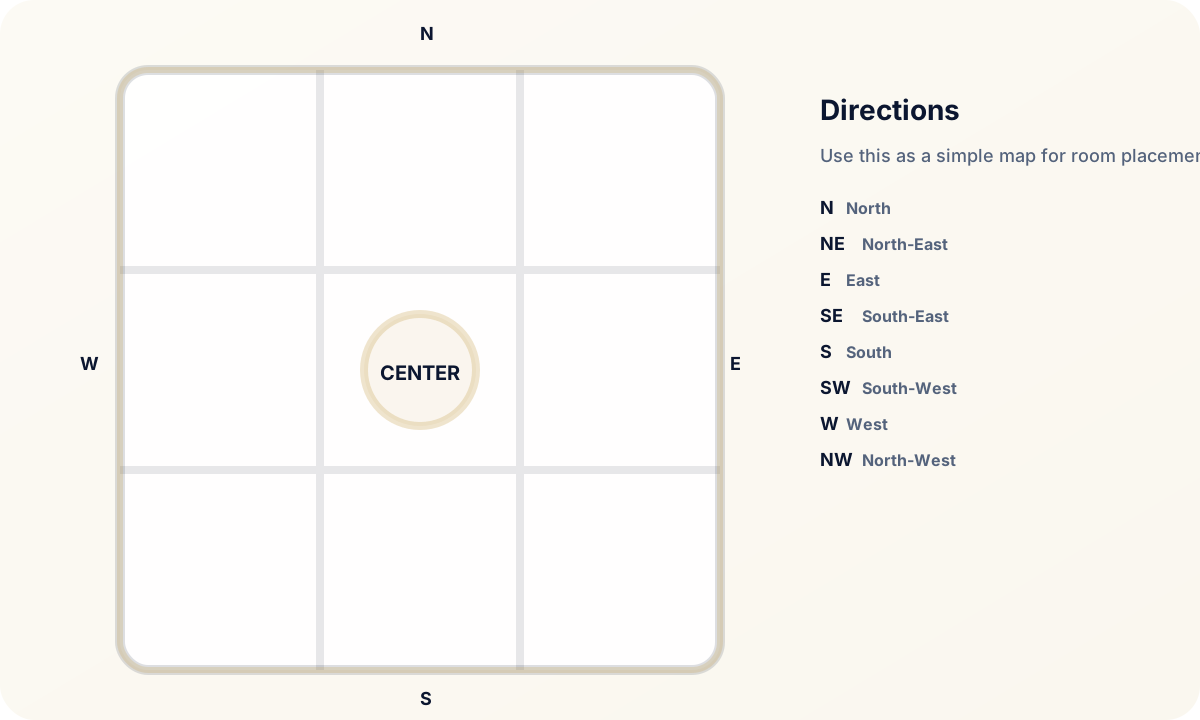
How to measure directions (beginner steps)
Most “Vastu problems” are actually measurement problems. Use these calm steps: stand away from metal grills and elevators, check the compass twice in two spots, and decide facing using the main door/gate side. Once you have north, you can place rooms on the grid.
Eight directions cheat sheet (quick meanings)
Different schools explain directions differently, but beginners can use a simple “meaning map.” Keep it flexible—your real plan and comfort always matter.
North
Often linked with steady, soft daylight. Practical tip: great for work/study if glare is controlled.
North-East (NE)
Often treated as a clean/light zone. Practical tip: keep it uncluttered, bright, and airy.
East
Associated with morning light. Practical tip: morning daylight helps routines feel energized.
South-East (SE)
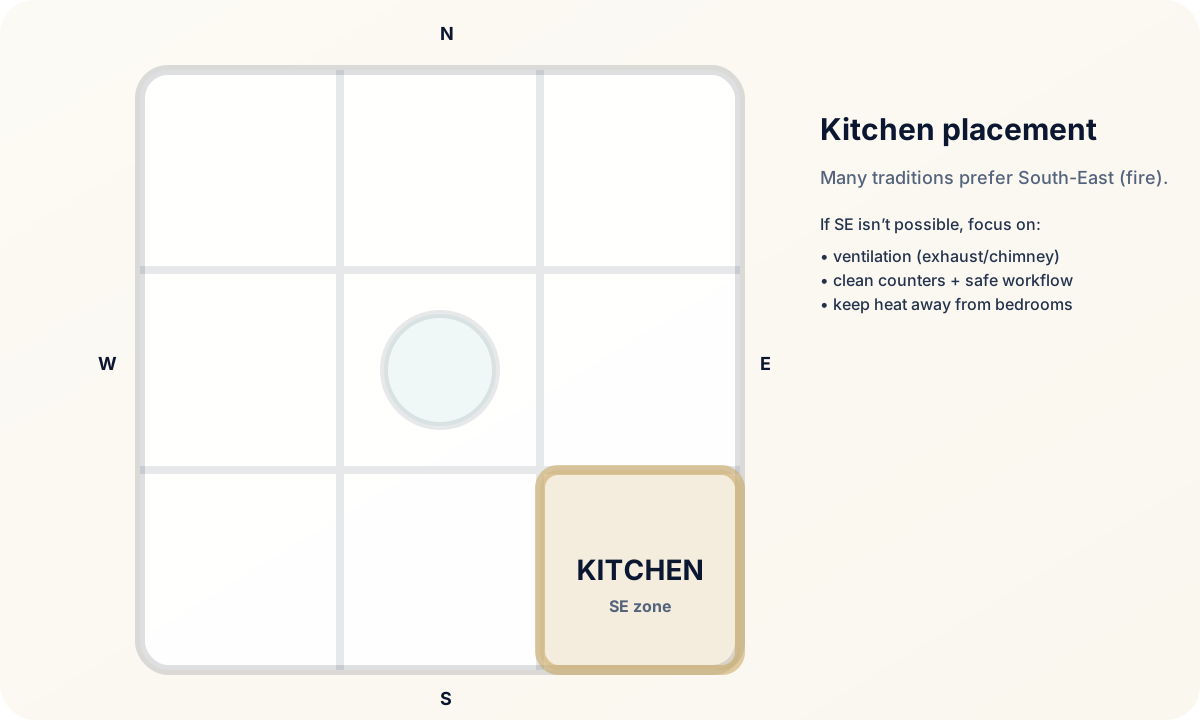
Commonly linked with fire. Practical tip: kitchen/cooking works here in many traditions; prioritize ventilation.
South
Not “bad.” Practical tip: comfort depends on shade, airflow, and how bedrooms are protected from heat/noise.
South-West (SW)
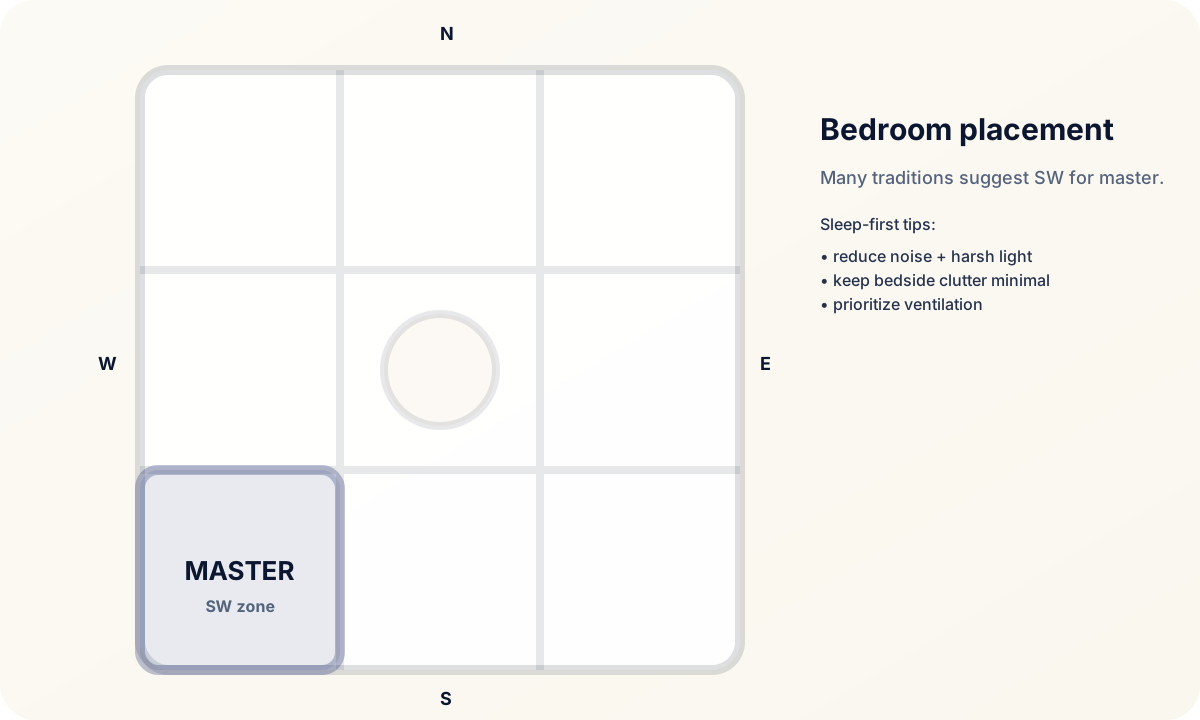
Often linked with stability/heavy zones. Practical tip: many prefer master bedroom here; focus on sleep quality.
West
Afternoon heat is real. Practical tip: use shading and curtains; keep west rooms ventilated.
North-West (NW)
Often linked with movement/air. Practical tip: can work for guest rooms, utilities, or flexible spaces.
If you want a deeper direction explanation with more diagrams, read Direction Vastu.
Room placement overview (what most people actually do)
When families say “we want Vastu,” they usually mean a small set of practical decisions: comfortable entrance, good kitchen placement, a calm master bedroom, and clean ventilation and drainage. Here is a beginner-friendly overview used by many checklists.
Living room
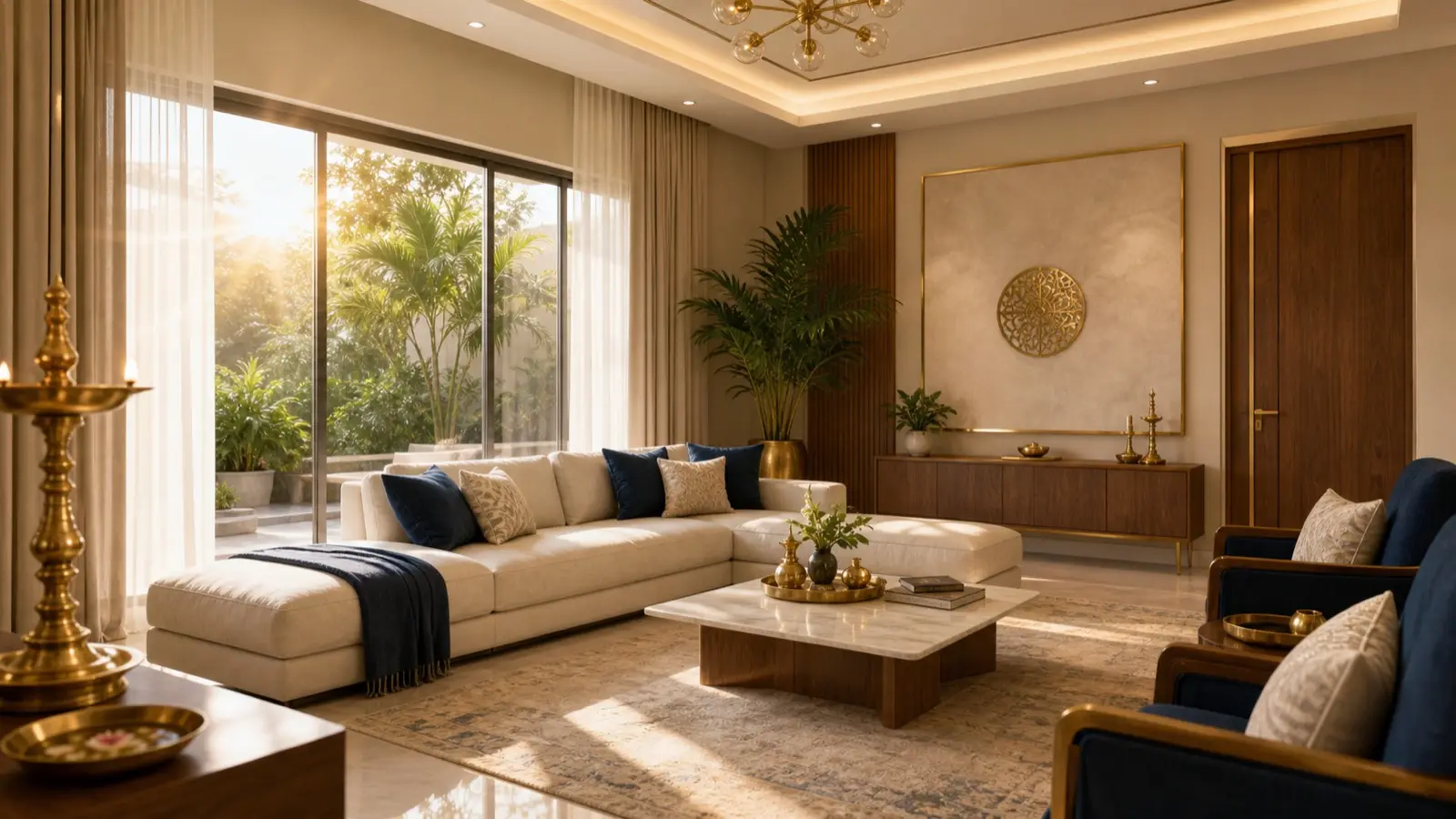
Aim for bright light and clear circulation. Read: Living Room Vastu.
Kitchen
Separate heat and water zones where practical. Read: Kitchen Vastu.
Bedroom
Sleep-first design: darkness at night, quiet, low clutter. Read: Bedroom Vastu.
Toilets
If placement is fixed, prioritize exhaust, dry floors, and leak-free plumbing.
Vastu for different property types
Vastu is used differently depending on what you can change. This section helps you apply the right mindset—otherwise people waste time chasing impossible “perfect placements.”
Independent houses (new build)
You can choose gate, entrance, room zones, stairs, and utilities. Direction planning helps most here.
Apartments and rentals
Walls are fixed. Focus on furniture placement, ventilation, lighting, and clutter control (non-demolition improvements).
Plots (before building)
Drainage, legality, and shape-fit protect you most. Then optimize entry and room plan.
Offices and shops
Prioritize productivity, safety, and customer flow. Direction rules become secondary to comfort and workflow.
Pancha Bhoota: the five elements (simple meaning)
Many Vastu explanations use the five elements (Pancha Bhoota). You don’t need to treat them as mystical. You can treat them as a design lens: stability, cooling, heat, air movement, and openness.
Earth (stability)
Storage, heavy furniture, structure. Premium tip: keep heavy storage in closed cabinets and away from entry clutter.
Water (cooling)
Hygiene, flow, plumbing. Premium tip: fix leaks fast; dampness ruins comfort and health.
Fire (heat)
Cooking, electronics, activity. Premium tip: prioritize kitchen ventilation and safe workflow.
Air (freshness)
Windows, cross-ventilation, odour control. Premium tip: open windows daily and keep exhaust fans working.
Space (openness)
Circulation and uncluttered center. Premium tip: clear pathways—flow is the easiest “remedy.”
Balance (daily life)
The goal is not perfect labels. The goal is a home that supports routine: cooking, sleeping, working, resting.
Vastu Purusha Mandala (in plain language)
You may hear the term Vastu Purusha Mandala. In simple words: it’s a zone map used to organize a plan. Different traditions use different grids (often 8x8 or 9x9). For beginners, you don’t need the full grid. You only need the idea that some zones are kept lighter/cleaner, and some zones handle heavier functions better.
A practical way to apply the mandala idea is: keep the center open, keep the entry zone bright, place the kitchen where cooking is safe and ventilated, and place the master bedroom where sleep is quiet and stable.
What matters most in real homes (the premium priorities)
If you only remember one thing, remember this: premium homes feel premium because they are easier to live in. Direction is helpful, but comfort comes from these fundamentals:
Light
Layered lighting + daylight. Dark corners increase fatigue and clutter.
Airflow
Cross-ventilation reduces smell and dampness and improves sleep.
Hygiene
Dry floors, leak-free plumbing, clean kitchens and toilets—this is the real foundation.
Flow
Clear walking paths and uncluttered entry/center. Daily movement should feel easy.
Common beginner mistakes (and what to do instead)
Beginners often feel overwhelmed because they start with “advanced” rules without building a base. Use these patterns as a calm guide. If you fix just two items—ventilation and clutter—you usually see a noticeable difference in how the home feels.
Mistake: chasing perfect placement
Do instead: map your rooms to zones, then improve comfort with lighting, airflow, and furniture layout.
Mistake: using fear-based advice
Do instead: treat Vastu as a planning lens. Choose safety and engineering first, always.
Mistake: ignoring dampness
Do instead: fix leaks, dry toilets/kitchen, and improve ventilation. Dampness is a real comfort problem.
Mistake: clutter near entry
Do instead: create a simple entry system (shoe storage, hooks, warm light). This feels premium daily.
Remedies: what “works” in a calm, modern way
Different traditions recommend different remedies. Instead of debating, use a premium filter: a remedy is useful if it improves comfort and is safe, clean, and easy to maintain. The best no-demolition remedies are often boring (but effective): light, airflow, decluttering, hygiene, and routine.
High-impact, low-cost
Warm lighting at entry, strong exhaust in kitchen/toilets, decluttered walkways, dry floors, and tidy storage.
Optional traditional add-ons
If your family prefers rituals or symbolic items, keep them clean and simple—avoid cluttering sensitive zones.
If you want structured, non-demolition steps, see Vastu Remedies Without Demolition.
Myths vs facts (beginner-friendly)
Myth: one wrong room ruins everything
Fact: comfort upgrades (light, airflow, hygiene) can significantly improve how a home feels.
Myth: south is always bad
Fact: south can be comfortable with good shading, ventilation, and a smart plan.
Myth: remedies replace planning
Fact: planning wins. Remedies should support comfort, not replace safety and layout.
Myth: facing decides everything
Fact: in apartments, furniture + ventilation + routines often matter more than a label.
Quick start: 7-day Vastu basics plan
Use this to start calmly without overwhelm.
Day 1 — Measure directions
Identify north and map your rooms to the direction grid.
Day 2 — Clean the entrance
Clear clutter, add warm light, and make the entry path welcoming.
Day 3 — Kitchen basics
Improve exhaust, keep stove area clean, and create a safe workflow.
Day 4 — Bedroom basics
Prioritize sleep: reduce noise/light at night, declutter, and make the bed area calm.
Day 5 — Airflow check
Open windows daily; fix exhaust fans; reduce damp smell in toilets/kitchen.
Day 6 — Declutter center
Clear walking paths and keep the center area open for easier movement and cleaning.
Day 7 — Choose your next page
Go deeper into Room-wise, Home, Plot, or Direction topics based on your goals.
Mini glossary (basics)
Facing
Direction associated with the road/door side used for planning entry.
Zones
Areas like NE/SE/SW/NW used for room placement guidance.
Brahmasthan
Center zone—often preferred open and uncluttered for easy circulation.
No-demolition remedies
Comfort upgrades like light, airflow, decluttering, and hygiene improvements.
Next steps (pick your path)
Room-wise Vastu
Room-by-room checklists with diagrams.

Direction Vastu
Facing, entrance, and zone map explained.

Plot & Land
Drainage, shape, and buyer checklists.