

Office Vastu in one sentence
A Vastu-friendly office is one where the entrance and reception are clear, the decision-maker sits in a stable, low-disturbance zone, the workstations have light and clean circulation, storage is disciplined, and toilets/pantry do not pollute the customer-facing experience.
How to use this guide
If you are planning a new office
Start with zones: reception, work floor, meeting room, owner cabin, accounts/cash, pantry, toilets, and storage. Then pick the best available zone for each. Don’t force a rule that breaks operations or safety.
If your office is already fixed
Focus on no-demolition improvements: lighting, ventilation, decluttering, signage, desk orientation, storage discipline, and a calm “decision corner”. These changes give the fastest results.
Step 1: Verify directions (don’t guess)
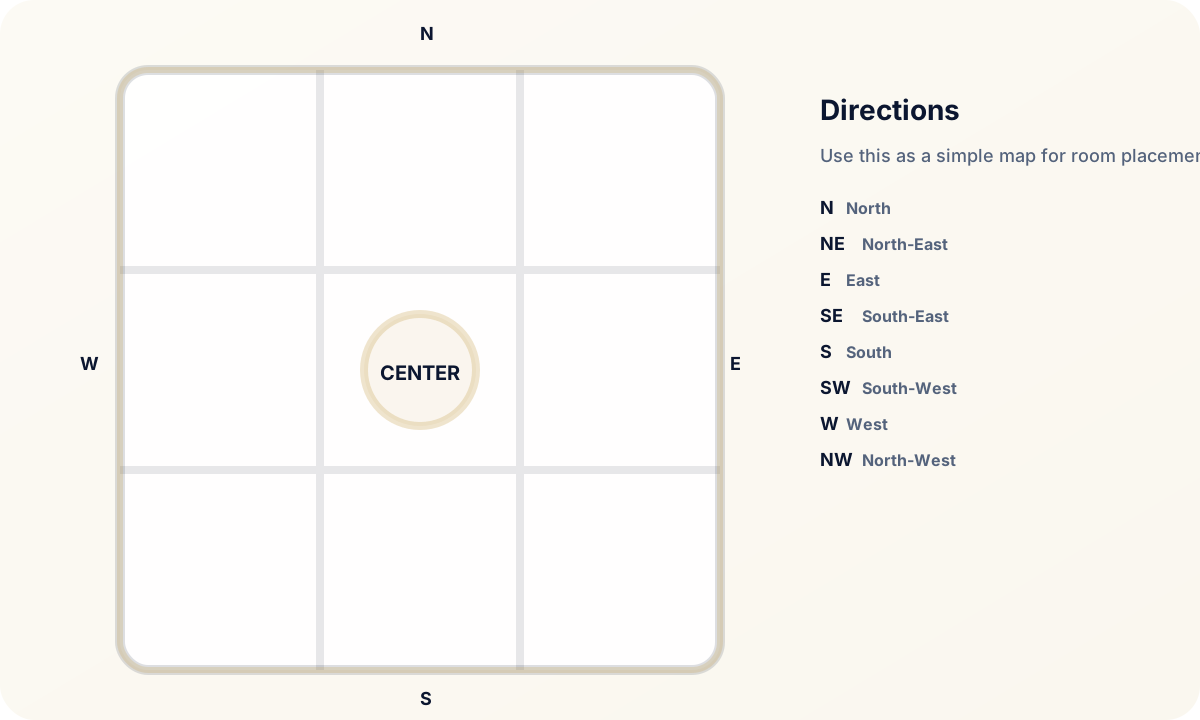
Many Vastu disagreements come from one problem: people don’t measure directions the same way. Use one consistent reference: a compass reading at the office entrance, a reliable phone compass (calibrated), or your building plan with north marking. Once you decide your north reference, stick to it for all decisions.
The goal is not perfection; it’s consistency. Even a simple north reference helps you apply zone logic without confusion. If you want a quick help, use the Direction Finder.
Step 2: Understand zone logic (simple)
Commercial Vastu often follows a simple theme: keep North/East relatively open and welcoming, and keep South/West
Common “good” placements (office)
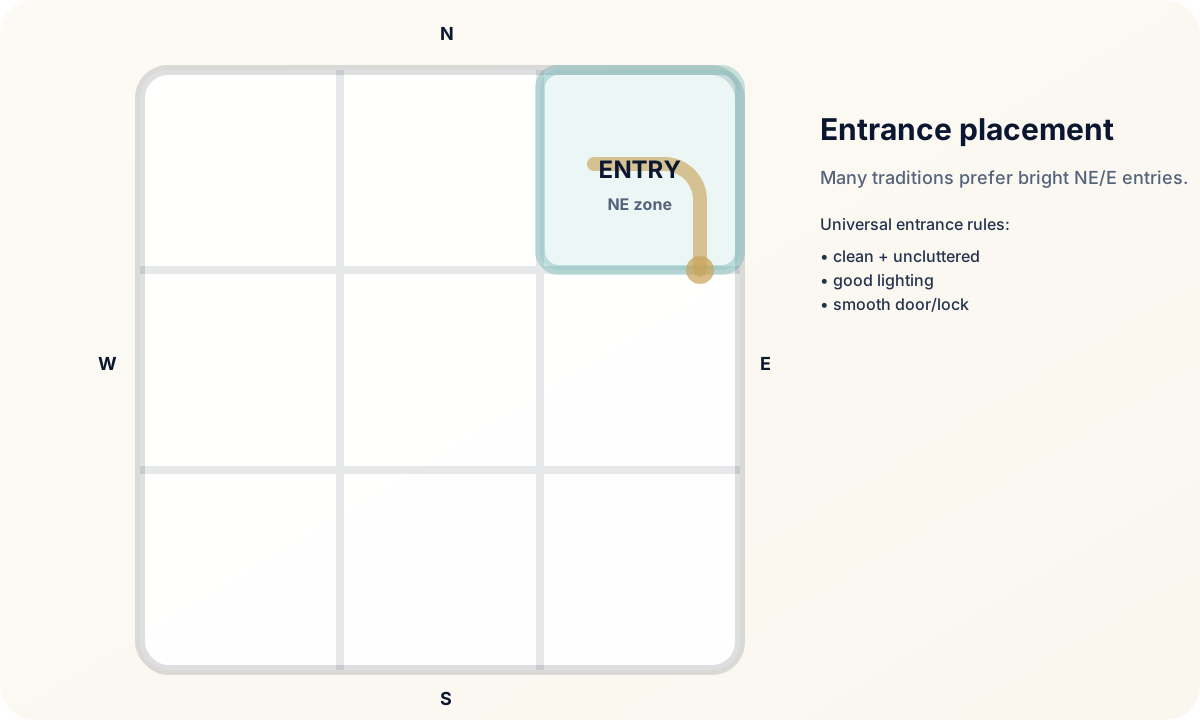
- Reception / welcome: North / East side where possible
- Owner/manager cabin: South-West / West / South (stable, private)
- Accounts / safe: South / West zones with security
- Workstations: bright, ventilated zones with clean circulation
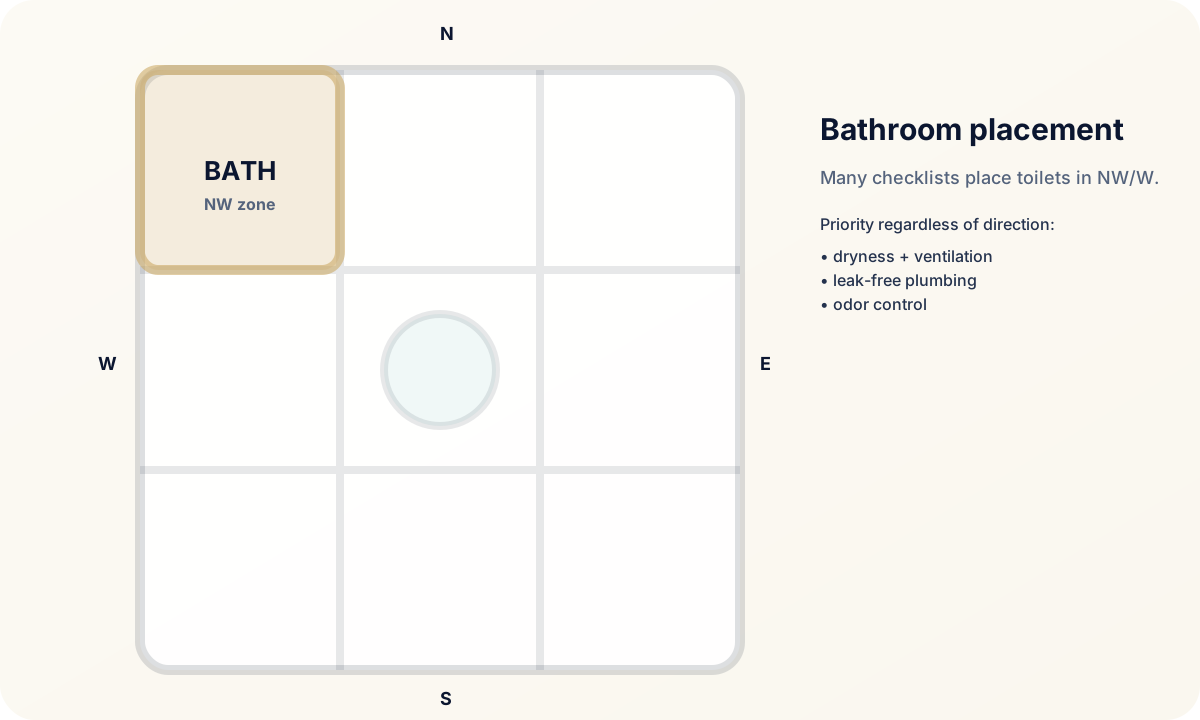
- Toilets: away from the cleanest “welcome” corner; ventilated
Common “not good” patterns
- Clutter at entrance (bad first impression)
- Toilet door visible from reception
- Owner desk with walkway behind (constant disturbance)
- Storage spilling into meeting/reception (cheap feel)
- Poor ventilation (stale air = low comfort)
Entrance & reception (trust starts here)
The “energy” of an office is often just the first impression: clarity, cleanliness, light, and calm. Reception should be easy to find, not blocked by boxes or clutter, and should have a clear next step (where to sit, where to sign in, where to go).


Reception desk placement
Choose a spot where the receptionist can see the entry and guide visitors without shouting across the office. Keep a clean counter: hide wires, paperwork, and boxes. A simple rule: the visitor’s view should be your best view. If you follow traditional logic, keep reception toward a lighter/open zone (often north/east).
Waiting area
Provide comfortable seating and reduce noise. Avoid placing waiting seats facing a toilet door or a messy pantry corridor. Use soft lighting, readable signage, and enough walking space for accessibility. A calm waiting area is one of the most “Vastu-correct” and premium features.
Owner/manager cabin (stability + decision-making)
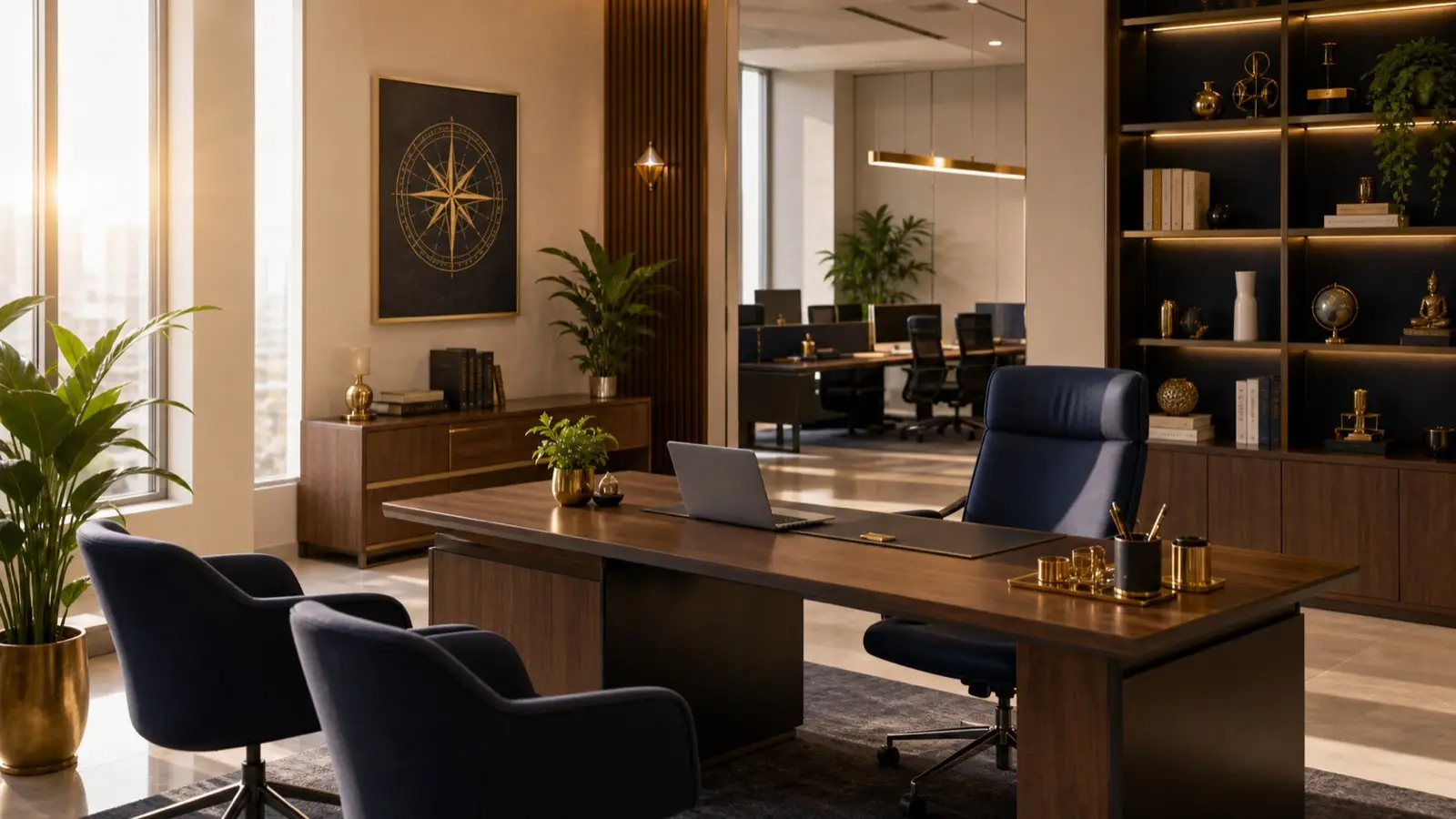
Vastu recommendations often prioritize the decision-maker’s seat because leadership stability affects the whole team. In practical terms, the best leader seat has: a solid wall behind, minimal interruption, controlled lighting, and a clear view of the room or the door.
Traditional recommendation (common)
Many practitioners place the owner/manager in the South-West (or west/south zones) and suggest facing North or East while working. If this is not possible, keep the practical intent: quiet corner, solid backing, minimal disturbance, and tidy storage.
Practical upgrades that feel premium
- Reduce glare on screens; add soft ambient light
- Keep one clean surface (desk reset daily)
- Organize cables and documents out of sight
- Use sound control (carpet, curtains, acoustic panels)
Workstations (productivity + flow)
The most important “Vastu remedy” for an office floor is a clean, safe workflow. This means: clear walkways, easy access to shared resources, good lighting, and sensible noise control. If you pack desks too tightly or block exits, the office will feel stressful regardless of direction rules.
Desk orientation
Traditional guidance often suggests facing North or East while working. If that’s hard, aim for comfort: avoid direct glare, keep a stable background (not a busy walkway), and keep the workstation tidy. People work better when they feel less interrupted.
Circulation paths
Keep the main walkway wide and uncluttered. Avoid placing printers, trash bins, or storage boxes in the pathway. In Vastu language, blocked paths are “stuck energy.” In reality, it causes stress and safety risks.
Meeting room (clarity + respect)
A meeting room should support clear communication: good lighting, comfortable seating, and minimal echo. Keep the room easy to enter and exit. Don’t use the meeting room as a storage room—this makes it feel chaotic and reduces the quality of decisions.
Accounts, cash counter, safe/locker (security)
Even if your business is mostly digital, there is always something valuable: devices, documents, contracts, customer files, keys, or cash. Place valuable storage in a controlled zone with privacy. Keep it dry, secure, and away from casual visitor access. If you use Vastu logic, many place safes in south/west zones with the working person facing north/east.
Pantry & toilets (odor control is a “remedy”)
Toilets and pantries are the fastest way to ruin an office vibe if they smell or feel damp. Vastu recommendations often try to keep toilets away from the cleanest “welcome” corner. Practically, you should also keep toilet doors out of direct view from reception, use strong ventilation, and maintain dryness. For pantry, focus on hygiene: clean sink, dry counters, no open trash smell.
Colors, materials, and light (make it premium)
A premium office is not about expensive paint—it's about calm visual hierarchy. Use a clean base palette (light neutrals), and keep brand colors as accents. Improve lighting in layers: ambient (overall), task (desk), and accent (reception/branding). Avoid harsh glare and dark corners.
Lighting checklist
- Reception: brighter than corridors
- Desks: task light without screen glare
- Meeting rooms: dimmable or controllable light
- Toilets/pantry: strong ventilation + bright light
- Remove dark “dead corners” that become clutter zones
Color basics that feel premium
Choose a neutral base (off-white, warm gray, beige), then use one brand accent color consistently (reception wall, signage, small decor). Avoid mixing too many loud colors across departments. When color is calm, the office feels organized; when color is chaotic, it feels busy and stressful.
Department-wise placement ideas (common office needs)
Every office has different teams, but the functions are similar: customer-facing areas, focus work areas, decision areas, support areas, and “messy” areas (storage, pantry, toilets). Use the placements below as a practical map. If you cannot follow a zone, follow the intent: keep important areas calm and clean, and keep messy areas controlled and ventilated.
Sales / customer teams
Place sales near reception or near meeting rooms for easy visitor handling. Keep the team’s background tidy (customers judge professionalism instantly). If the zone is noisy, add soft surfaces and keep phone noise controlled. In Vastu terms, keep “welcome and interaction” zones open and bright.
Finance / accounts
Choose a stable, quiet space with good security. Keep documents off open shelves in visitor view. Lockers should sit on solid walls, away from dampness. From a traditional lens, south/west zones are used for stability; from a practical lens, privacy and security are the real goals.
HR / people ops
HR needs privacy and calm conversation zones. Avoid placing HR desks in the loudest walkway. Use a small meeting booth or corner room for sensitive discussions. A calm HR zone reduces tension and supports workplace harmony.
IT / server / networking
Keep server/network gear in a secure, ventilated area with stable power—never cramped behind a desk. Cable clutter creates constant stress and safety risk. If you can, keep this equipment out of reception and meeting rooms. The best “Vastu” for IT is neat cable management and reliable cooling.
Toilets and pantry: the “invisible” productivity factor
Offices lose energy (and reputation) when toilets smell, pantry sinks are dirty, or trash is visible. This is true in Vastu language and in reality. If a client can smell a toilet near reception, the business loses trust. Prioritize these two zones like a brand asset: ventilation, dryness, and consistent cleaning.

Small office vs large office (how rules change)
In a small office, you can’t separate every function. In a large office, you can. Use this simple approach: in small spaces, prioritize clean circulation and one calm leadership corner. In large spaces, design zones like a map: reception, meeting, focus work, support work, pantry, toilets, storage. Vastu becomes easier in a large office because you can place functions where they fit best.
If your office is small
- Use vertical storage to keep floors clear
- Keep one “clean counter” rule for the whole office
- Use signage and a tidy entry tray (no visitor confusion)
- Control noise (one small rug or curtain helps)
If your office is large
- Separate visitor flow from staff flow
- Keep meeting rooms near reception
- Keep storage and service zones away from welcome zones
- Create quiet focus zones away from pantry/toilets
Common mistakes (and fixes)
Many “Vastu issues” are really management issues: clutter, poor cleaning routines, confusing layout, and bad lighting. Fix those first. Use this list as a troubleshooting guide.
Mistake: meeting room becomes a storage room
Fix: move boxes into labeled storage; keep meeting surfaces clear; schedule a weekly reset. A clean meeting room improves decision quality.
Mistake: messy entrance / unclear visitor flow
Fix: clear signage, one clean reception counter, and a clear waiting spot. The first view should be clean and bright.
Mistake: glare on screens and harsh lighting
Fix: adjust lighting direction, add task lights, use blinds/curtains, and reduce reflective surfaces. Comfort improves focus instantly.
Mistake: toilets smell or feel damp
Fix: exhaust, dry floors, regular deep cleaning, and quick leak repairs. Odor control is the strongest no-demolition “remedy”.
Mini FAQ (office)
Do I need perfect Vastu for office success?
No. Most success-related improvements come from clarity, cleanliness, safe flow, and disciplined storage. Use Vastu as a planning guide, not as fear.
What is the fastest Vastu improvement?
Make reception and toilets excellent: clean, bright, odor-free, and easy to navigate. These two zones change the “feel” of the entire office immediately.
Do’s & don’ts (quick grid)
Do
- Keep entry/reception bright, clean, and easy to understand
- Fix leaks, odors, and dampness immediately
- Keep walkways clear (safety + comfort)
- Give leaders and teams quiet focus zones
- Use storage systems and label inventory/documents
Don’t
- Let clutter accumulate on reception desks or in meeting rooms
- Allow toilets to be visible from entry or dining areas
- Block windows with heavy cabinets
- Ignore glare and noisy distractions near workstations
- Buy “remedies” before fixing ventilation and cleanliness
No-demolition remedies that actually help
If your office Vastu is “not perfect”, don’t panic. Most improvements are operational: cleaning routines, storage discipline, better lighting, and better ventilation. Start with the simplest: reduce clutter at the entry, keep a daily desk reset, and keep toilets odor-free. For general remedy mindset, see Vastu Remedies.
A useful mindset is: treat the office like a customer product. Every day you “ship” the experience of the workplace to clients and to your team. If the experience is confusing, noisy, or messy, people call it “bad energy.” When it is clean, clear, and calm, they call it “good Vastu.” You can achieve that without changing a single wall.
The 5-minute entry reset
- Clear reception counter (no papers visible)
- Remove any trash/odor source
- Switch on a bright welcome light
- Align chairs and keep the path open
- Make the first view “clean and confident”
The 10-minute focus reset
- Desk reset for leaders and key teams
- Close unused tabs, reduce screen glare
- Put cables into one channel/clip
- Move boxes into labeled storage
- Silence noisy alerts in meeting zones
Weekly “office energy” routine (simple)
If you want one routine that keeps the office consistently Vastu-friendly, do a weekly reset. Pick one day (Friday evening or Monday morning) and rotate through: reception cleaning, pantry deep-clean, toilet ventilation check, storage declutter, and lighting check. This routine prevents buildup—so you never need emergency “remedies.” Teams feel calmer when the environment is predictable and clean.
Example zoning (quick model)
Imagine a simple 3-zone office: (1) entry + reception, (2) workstations + meeting corner, (3) support zones (pantry/toilet/storage). A Vastu-friendly setup keeps the entry/reception clean and open, keeps leadership seating in a quiet stable corner, and keeps support zones ventilated and out of direct visitor view. If you like visuals, compare your plan with Balanced Layout and then label your office zones on a direction grid.
Ideal “first view”
Reception branding, clean floor path, comfortable waiting seat, and zero visible storage boxes.
Hidden “mess view”
Trash, pantry sink, packaging, and toilets stay behind a corridor/partition with strong ventilation and cleaning routines.
This approach makes the office feel premium because visitors and staff experience clarity first and never feel embarrassed by messy corners. If your lease limits renovation, focus on reversible fixes: a slim partition, better lighting, labeled storage, and a strict daily reset routine. Those are “Vastu remedies” that also improve real performance. Keep it simple, safe, and consistent every week.
Quick checklist (print this)
Daily
- Clear reception counter and payment desk
- Ventilate key zones (especially toilets/pantry)
- Keep walkways open and safe
- Do a quick desk reset for leaders and teams
Weekly
- Deep clean pantry and toilets
- Declutter one storage zone
- Replace dead bulbs; reduce glare
- Review signage and customer flow