
Why washing machine placement matters
The washing machine is usually treated as a practical appliance, but its placement affects hygiene, noise, vibration, drainage, and daily movement. In Vastu, laundry is connected with cleaning and removal of dirt. That makes the utility area important, especially in compact Indian apartments where washing machines are placed in balconies, bathrooms, kitchens, or service yards.
Good placement should keep wet work away from food preparation, protect electrical safety, allow proper drainage, and keep the home looking organised. If Vastu advice ignores leakage, slope, earthing, and ventilation, it is incomplete. If the same utility area also holds backup power, read Inverter Battery Vastu to keep wet and electrical zones separated.
Best direction for washing machine
Many Vastu traditions consider south-east, north-west, or west suitable for washing and utility activity, depending on the layout. South-east relates to electrical energy and heat, while north-west supports movement and change. West can also work when the utility line, drain, and ventilation are practical.
Avoid placing the washing machine in the north-east prayer-like zone if it creates clutter, wetness, or noise. If your apartment already has a utility balcony in a fixed location, do not worry. Keep the machine clean, dry, ventilated, and safely connected.
Utility placement grid
Ideal zones
South-east, north-west, or west are commonly used for laundry and utility activity.
Keep away
Avoid unsafe wet electrical points, poor drainage, uneven floors, and open dirty-laundry piles.
Best remedy
Keep the machine level, dry, ventilated, and connected to a clean drain.
Balcony, bathroom, and kitchen placement
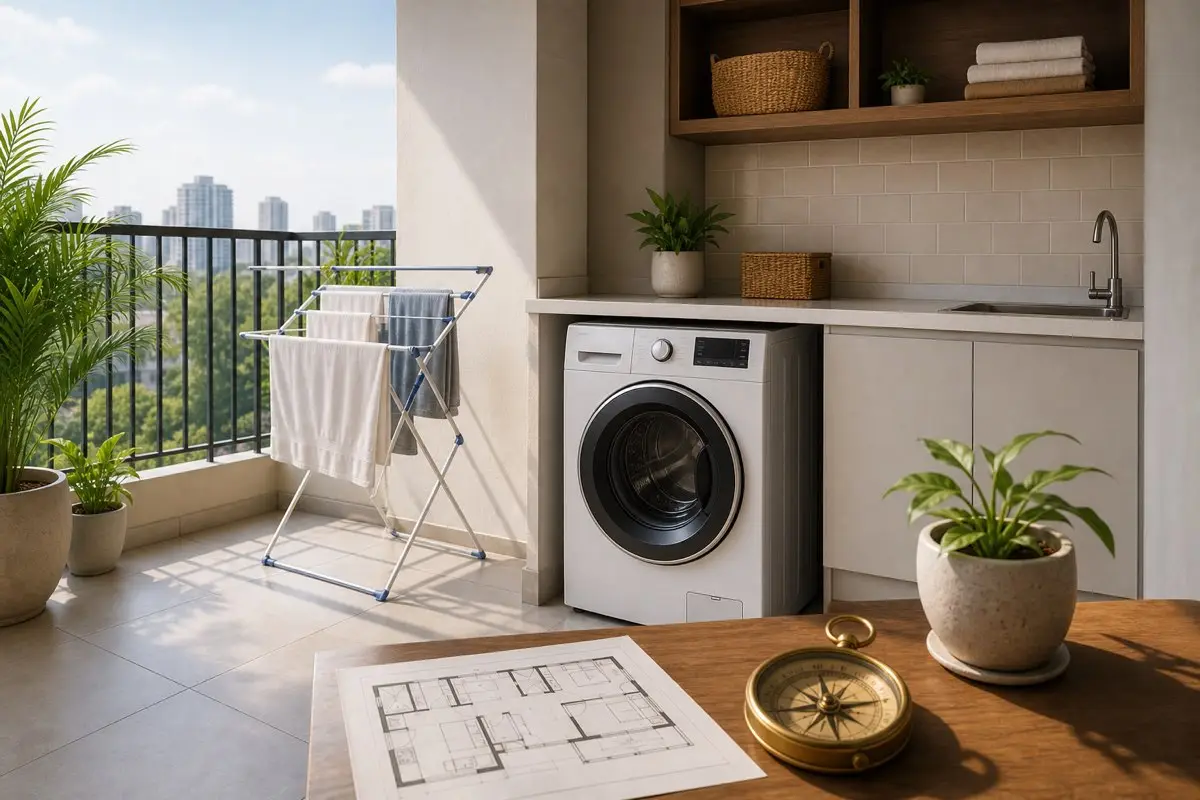
A utility balcony is often the best option because it separates washing from cooking and living. Make sure rainwater does not enter the electrical point and that the machine sits level. If the washing machine is in a bathroom, keep the plug protected, prevent water pooling, and maintain ventilation.
In very small flats, the machine may be placed near the kitchen. Keep it away from the stove and food storage. Use a clean partition or cabinet planning so laundry and cooking do not visually mix. For broader layout guidance, use the room-wise Vastu guide.
Drainage, slope, and vibration
Drainage is more important than many decorative remedies. A badly sloped floor can create smell, dampness, insects, and leakage complaints. The outlet pipe should not remain bent or blocked. Water should leave quickly and cleanly after each wash.
Vibration also matters. A shaking washing machine creates noise and stress for the family and neighbours. Level the appliance, use proper anti-vibration pads if required, and do not overload it. A stable machine feels calmer and lasts longer.
Colours and storage around laundry
Light grey, white, beige, blue, and soft green work well for utility zones because they feel clean and practical. Avoid turning the laundry corner into a dumping area for broken buckets, old mops, and unused plastic containers. If storage is needed, use closed cabinets or baskets.
Keep detergent, fabric softener, clips, and cleaning tools neatly arranged. A tidy utility area improves the home’s overall feel immediately. In Vastu terms, removing dirty clutter is one of the simplest remedies.
Common mistakes to avoid
Common mistakes include placing the machine on an uneven surface, using unsafe extension cords, ignoring drainage smell, leaving wet clothes overnight, and storing dirty laundry in open piles near the entrance or kitchen. These mistakes affect both practical comfort and the subtle feel of the home.
Do not keep a broken washing machine in the house for months. If it is beyond repair, sell, recycle, or remove it. Non-working appliances create visual heaviness and occupy useful space.
Flat and rental home tips
For rented apartments, avoid permanent plumbing changes without permission. Use safe hose extensions only when necessary and check for leakage regularly. Keep the washing area dry after use because rental utility corners often have limited waterproofing.
If the machine is in an unavoidable direction, correct the experience: keep it clean, maintain airflow, use good lighting, hide clutter, and ensure safe wiring. These improvements matter more than fear-based changes.
Maintenance checklist
Clean the lint filter, wipe the rubber gasket, keep the door slightly open after washing, check the drain pipe, and clean detergent residue. Maintenance prevents smell and makes the laundry area feel fresh. A fresh utility corner supports the home better than a neglected appliance in an ideal direction.
Also review drying arrangements. Clothes drying in the living room for long hours can make the home feel damp. A balcony, ventilated utility, or foldable drying rack used neatly is better.
Laundry habits that improve home energy
Laundry habits matter as much as direction. Avoid allowing unwashed clothes to pile up for many days in bedrooms, bathrooms, or behind doors. In Indian weather, especially during monsoon, damp clothes can create smell and heaviness quickly. Use a closed laundry basket, wash regularly, and dry clothes where air can move properly.
After washing, do not leave wet clothes inside the machine overnight unless unavoidable. This creates odour and makes the utility area feel neglected. Fold and store clean clothes instead of letting them sit in baskets for days. These habits may look ordinary, but they make the home feel lighter and more organised.
No-demolition correction ideas
If the washing machine is in a difficult direction, improve the experience around it. Add brighter lighting, keep detergents in a closed shelf, use a drain cover, wipe water after every wash, and maintain a small clear zone in front of the machine. A neat laundry corner often feels better immediately.
If the machine creates noise, check levelling before assuming a Vastu defect. If water smell appears, clean the trap and drain line. If the utility balcony looks messy from the living room, use a simple screen or organised storage. These fixes are inexpensive and suitable for flats and rental homes.
Real-life Indian flat scenarios
In many Indian apartments, the washing machine is placed in the utility balcony beside the kitchen. This is usually practical because water inlet, drainage, and drying space are nearby. The main risk is clutter: buckets, detergent packets, mops, and wet footwear can quickly make the area look heavy. Closed storage and regular cleaning solve much of the problem.
In older flats, the machine may be inside the bathroom. This can work if the plug is safe, the floor slope is correct, and ventilation is good. In compact homes, the machine may sit under the kitchen counter. In that case, keep laundry routines separate from cooking time so the kitchen does not feel crowded.
Independent houses may have a separate utility room, which is ideal when well ventilated. Keep the washing machine, drying area, ironing board, and laundry baskets in a clear sequence. This creates a smooth cleaning routine and prevents laundry from spreading into bedrooms and living rooms.
Quick comparison table
| Check | Good practice | Avoid |
|---|---|---|
| Direction | Choose a suitable zone after checking the full room layout. | Following direction blindly while ignoring safety. |
| Maintenance | Keep the appliance clean, working, and easy to service. | Keeping broken, leaking, noisy, or dusty appliances. |
| Daily use | Support smooth movement and family routine. | Blocking doors, passages, windows, or furniture. |
Expert checklist before final placement
Before finalising the appliance position, stand in the room and test the real experience. Open the appliance door fully, walk around it, check nearby switches, look at the view from the entrance, and confirm that cleaning is easy. Then check whether the placement affects heat, water, airflow, sound, privacy, or daily movement. This simple test prevents most mistakes.
If the appliance is already installed, observe it for one week. Notice where clutter collects, whether anyone bumps into it, whether noise disturbs sleep or study, and whether maintenance access is easy. Vastu becomes useful when it improves real living, not when it creates fear. A calm, safe, clean, well-maintained appliance placement supports the home better than a theoretically perfect but uncomfortable arrangement.
Finally, take one photo of the room from the doorway. Photos reveal crowding, awkward gaps, dark corners, and visual imbalance that the eye may ignore in daily use. If the appliance looks too dominant, soften the area with cleaner storage, better lighting, and simpler surrounding décor.
Frequently asked questions
Which direction is best for washing machine?
South-east, north-west, and west are commonly used, but drainage, safety, ventilation, and floor slope are equally important.
Can washing machine be kept in bathroom?
Yes, if electrical safety, plug protection, ventilation, and drainage are properly handled.
Is washing machine in kitchen bad?
It is not ideal in many homes, but it can be managed with separation, cleanliness, safe wiring, and good drainage.
What is the easiest washing machine Vastu remedy?
Keep the area dry, clean, ventilated, level, and clutter-free. Repair leaks quickly.
Related guides
Laundry Room Vastu
Read the full guide here: Laundry Room Vastu.
Balcony Vastu
Read the full guide here: Balcony Vastu.
Apartment Vastu
Read the full guide here: Apartment Vastu.
Vastu Remedies Without Demolition
Read the full guide here: Vastu Remedies Without Demolition.
Final thoughts
Appliance Vastu works best when tradition and practical planning agree. Choose a sensible position, keep the area clean, fix maintenance issues quickly, and avoid fear-based changes. A safe, neat, well-used appliance supports a more peaceful and premium home.