
On this page
Quick answer: where should a geyser be placed?
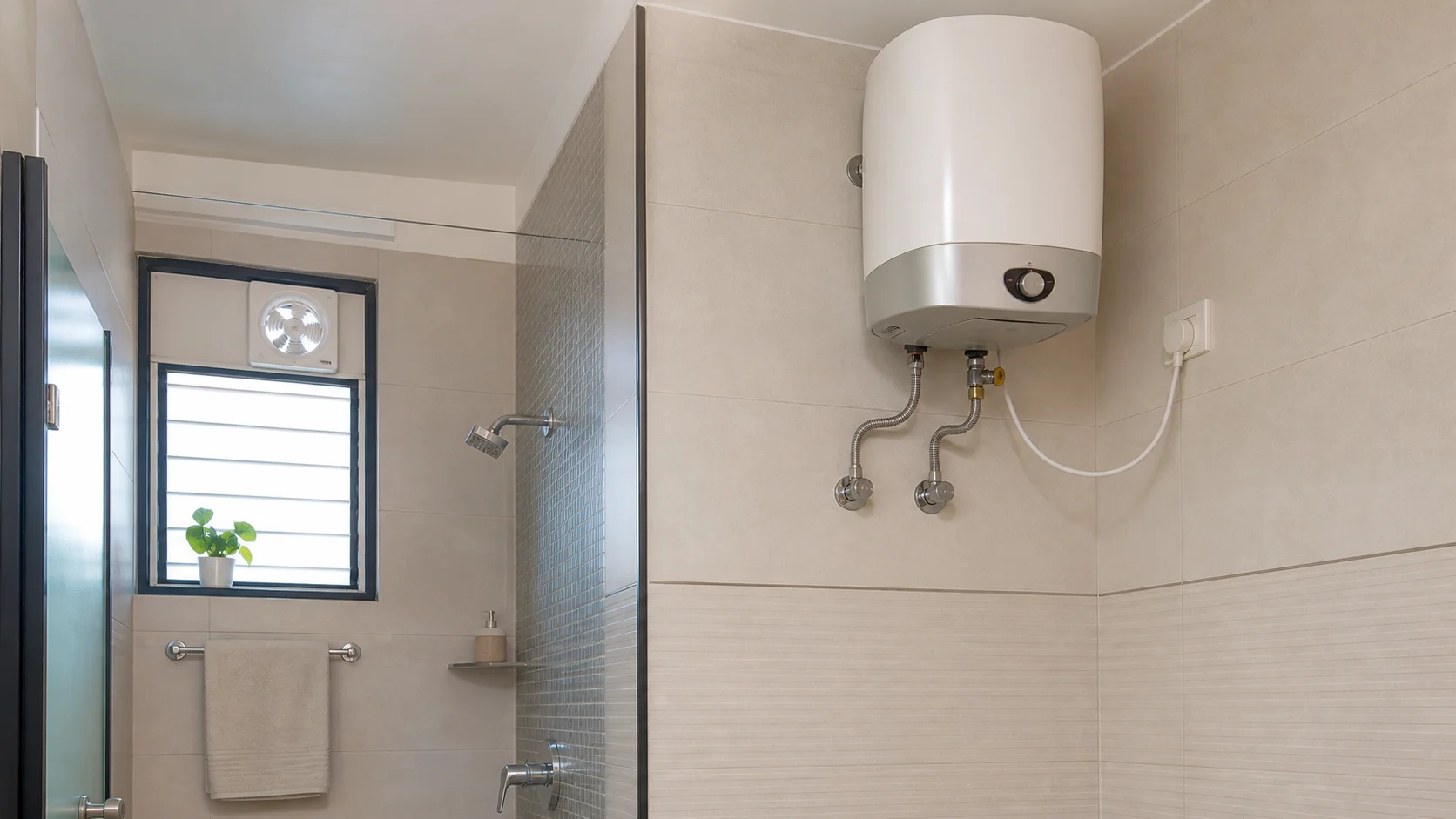
In many Vastu traditions, south-east is preferred for heat and electrical appliances, so a geyser on a safe south-east wall can feel directionally appropriate. North-west or west can also work when the bathroom layout, plumbing line, ventilation and service access are better there. The best location is the one that keeps the heater dry, reachable, correctly supported, safely wired and easy to maintain.
Do not place a geyser only by direction. A directionally preferred point can still be wrong if it is directly above the shower spray, too close to a wet switch, mounted on a weak wall, hidden inside a closed cabinet, or impossible for a technician to inspect. Vastu should support daily comfort and safety, not create risk.
For a full room review, use this article with Bathroom Vastu, Electrical Switchboard Vastu, Water Tank Vastu and the Balanced Layout guide.
Best direction for geyser placement
South-east is commonly connected with fire, heat and electrical activity in Vastu discussions. Because geysers heat water and often use high electrical load, many homeowners prefer the south-east part of the bathroom, utility balcony or service wall. This can be a good choice when the wall is dry, strong and properly wired.
North-west is another practical zone in many homes because it supports movement, utility activity and ventilation. If the bathroom has a window or exhaust near north-west, a geyser placed nearby may be easier to maintain and less likely to trap damp air. West can also work when plumbing and structural conditions are better there.
North-east is usually treated as a lighter, cleaner and more prayer-like direction in traditional Vastu. Heavy heating appliances, clutter and damp storage are often avoided there. In apartments, however, plumbing shafts and builder points are fixed. If the only safe geyser point is in a less preferred direction, do not panic. Keep it clean, dry, ventilated and professionally installed.
Bathroom and utility placement zones
Within the bathroom, divide the space into wet, damp and dry zones. The shower area is the wettest zone. The basin and toilet side may be damp. The wall above a dry counter, near an exhaust, or outside direct spray is usually safer for a water heater. This simple zoning is more useful than placing the geyser wherever there is an empty patch of wall.
For electric geysers, keep the switch and socket away from splash. The circuit should be rated for the load, properly earthed and handled by a qualified electrician. For gas geysers, ventilation is critical. A gas unit in a sealed bathroom can become unsafe, so installation must follow manufacturer instructions and local safety rules. Vastu advice should never override carbon monoxide, fire or electrical safety.
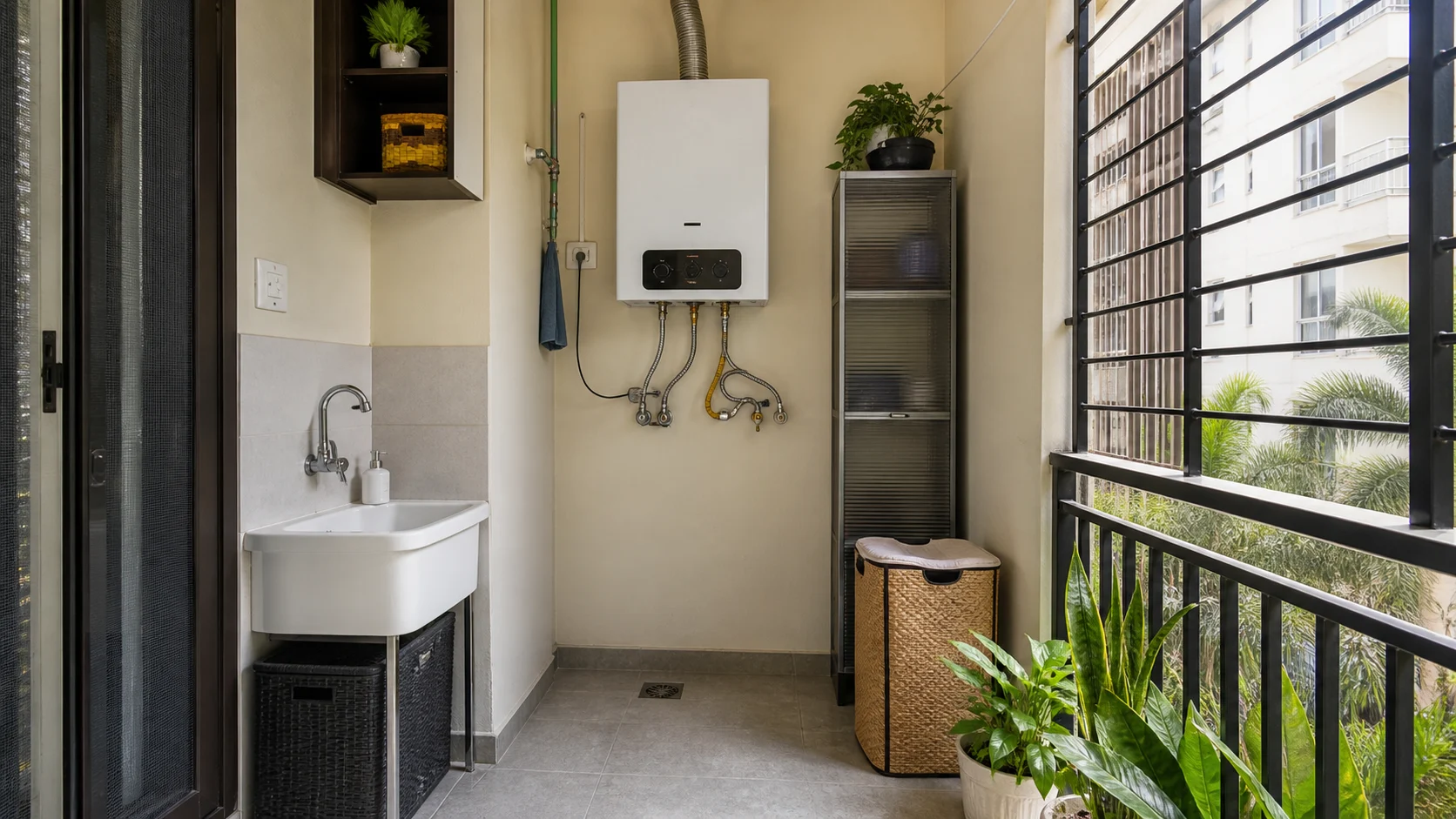
In a utility balcony, place the heater where service access is easy and rainwater cannot reach electrical components. Keep it away from detergent clutter, wet mops and dripping clothes. If the same utility holds a washing machine, read Washing Machine Vastu so water, drainage and electrical zones are separated.
Geyser safety checklist before Vastu correction
Dry wall
Choose a wall that is not hit by shower spray, rainwater or constant dampness.
Strong support
Confirm wall strength, anchors, height and service clearance before installation.
Safe switch
Use correct wiring, earthing, load rating and splash-safe switch placement.
Ventilation
Keep exhaust, window or airflow active, especially for gas or high-humidity bathrooms.
Leak watch
Check pipes, valves, stains, ceiling marks and dripping around the unit regularly.
Access
Do not block the unit with shelves, false panels, lofts or permanent cabinets.
This checklist is not separate from Vastu. It is the foundation of good Vastu practice. A clean, safe and well-maintained water-heating corner feels more balanced than a hidden or leaking heater placed in a supposedly perfect direction.
Geyser placement comparison table
| Location | When it works | What to avoid | Best practical remedy |
|---|---|---|---|
| South-east bathroom wall | Dry wall, safe wiring, good access and no direct spray. | Heat trapped in a closed cabinet or switch near water. | Use proper clearance, earthing and ventilation. |
| North-west utility wall | Good airflow, service shaft nearby and easy maintenance. | Rain splash, wet laundry and clutter touching pipes. | Keep a dry service zone and covered wiring. |
| Above toilet area | Only if height, wall support and service access are comfortable. | Low head clearance, leaks over fittings and difficult repair. | Move to a side wall during renovation if feasible. |
| Near shower wall | Rarely ideal unless fully outside splash and professionally protected. | Direct water spray, slippery service access and exposed switches. | Use another dry wall whenever possible. |
| Rental flat fixed point | Existing installation is safe, dry, stable and allowed by owner. | DIY rewiring, overloaded plugs or concealed leakage. | Improve cleaning, ventilation and switch discipline. |
Practical examples for Indian homes
Example 1: Compact apartment bathroom. The builder has placed the geyser above the toilet in a west-side bathroom. The owner worries because the direction is not south-east. In this case, first check practical safety: wall strength, clearance, wiring, leakage and ventilation. If everything is safe, keep the bathroom dry and uncluttered instead of making an expensive change only for direction.
Example 2: Utility balcony with water heater. A family installs a heater near the washing machine and sink. The direction feels acceptable, but detergent bottles, wet buckets and clothes touch the service wall. The correction is simple: create a dry electrical side, closed storage for laundry items, a clear floor drain and a rule that wet cloths never hang over pipes or switches.
Example 3: Independent house renovation. The bathroom is being tiled again, so this is the right moment to move the geyser to a better wall. The family chooses a south-east service side, places the switch outside the splash area, leaves technician access and improves exhaust. This is a good blend of traditional preference and modern safety planning.
Common geyser Vastu mistakes
The most common mistake is treating a geyser as a decorative object instead of a service appliance. It needs load calculation, secure mounting, pipe clearance, drainage thought and maintenance access. Hiding it behind a beautiful but sealed panel can look neat for a month and become a problem when a leak starts.
The second mistake is placing storage around the heater. Old buckets, cleaning liquids, cartons and plastic stools make the corner heavy and unsafe. If the bathroom is small, use wall hooks and closed shelves away from the heater. Keep the area around pipes visible so leaks can be detected early.
The third mistake is ignoring smell, dampness and ventilation. A bathroom that stays wet after bathing will feel uncomfortable regardless of direction. Clean exhaust grills, open windows when possible and repair seepage. For more bathroom-specific corrections, read Bathroom Smell and Leak Vastu and Water Leakage Vastu.
Maintenance routine for a calm service corner
Once a month, look at the geyser wall in daylight. Check for rust marks, water stains, loose pipe joints, discoloured switches, unusual sound, low pressure or burning smell. Switch off the unit before cleaning nearby tiles. Do not place wet towels or clothes over pipes. Small maintenance habits prevent bigger repair bills.
Before winter, get older geysers inspected. Many families use hot water heavily for only part of the year, so problems appear when the unit is suddenly used daily. A seasonal check is a practical Vastu remedy because it restores reliability, safety and confidence.
In hard-water areas, scaling can reduce performance. Follow the brand service schedule and use professional descaling when required. Do not attempt internal repair unless qualified. A well-maintained heater supports comfort; a neglected one creates anxiety every morning.
Apartment and rental home tips
Apartment owners often inherit fixed plumbing from the builder. If the shaft, switch and pipe route are already set, judge the installation by safety and usability first. Do not break walls without checking society rules, waterproofing risk and cost. In many flats, a neat dry corner, better exhaust and proper switch placement are enough.
Renters should avoid permanent changes without written permission. They can still improve the experience: keep the bathroom dry, remove clutter, use brighter bulbs, clean the exhaust, report leaks quickly and avoid overloading extension cords. If a geyser looks unstable, sparks, leaks or smells burnt, stop using it and inform the owner immediately.
For new construction, coordinate geyser points early with the architect, plumber and electrician. Also plan inverter battery backup, exhaust fans and water pressure together so the utility systems do not compete for one cramped wall.
Related guides
For complete planning, continue with Bathroom and Toilet Vastu, Utility Room Vastu, Electrical Switchboard Vastu, Water Tank Vastu, Washing Machine Vastu, Toilet Vastu for Apartments and the full Vastu blog archive.
Frequently asked questions
Which direction is best for geyser as per Vastu?
South-east is commonly preferred because geysers use heat and electricity, while north-west or west may also work if safety, plumbing and ventilation are better there.
Can geyser be installed in north-east bathroom?
Traditional Vastu usually avoids heavy heating appliances in the north-east, but in fixed apartments the practical priority is safe wiring, leak control, ventilation and a clean dry bathroom.
Is electric geyser better than gas geyser for Vastu?
Vastu does not make one technology universally better. Electric geysers need safe wiring and earthing; gas geysers need strict ventilation and professional installation.
Can geyser be above the toilet seat?
Avoid it where possible because maintenance access, head clearance, leakage and visual heaviness can become problems. Use a safer dry wall with service space.
Can geyser be above the shower?
It is usually better to avoid direct shower splash. Keep electrical fittings away from wet spray zones and follow professional electrical safety standards.
Where should geyser switch be placed?
Place the switch outside the wet splash area, at a reachable height, with proper rating, earthing and protection as advised by a qualified electrician.
Can renters improve geyser Vastu without changing plumbing?
Yes. Keep the area dry, ventilated, uncluttered and well lit. Do not make plumbing or wiring changes without owner and professional approval.
What colour is good around a bathroom geyser?
Light neutral tiles, warm white, soft grey or pale earthy shades keep the bathroom clean and calm. Avoid dark cluttered corners around the unit.
Is a leaking geyser a Vastu problem?
A leak is first a safety and maintenance problem. Repair it immediately because dampness, staining and electrical risk weaken both practical comfort and Vastu balance.
Should geyser be hidden inside a cabinet?
Only use a cabinet if ventilation, heat clearance and service access remain excellent. Do not trap heat or hide leaks behind closed storage.
Can one geyser serve two bathrooms?
It can if plumbing design supports pressure, distance and safety. Long hot-water lines waste energy, so check practicality before choosing a central unit.
What is the simplest geyser Vastu remedy?
Keep the geyser area dry, safe, ventilated, accessible and clutter-free, then use direction preference as a secondary planning layer.
Conclusion
Geyser Vastu works best when direction, heat, water, electricity and maintenance are considered together. South-east may be traditionally preferred, but the final choice must protect safety, ventilation, waterproofing and service access. A dry, clean, well-installed heater in a practical location is better than a risky installation made only to satisfy a direction rule.
Use Vastu as a calm planning lens. Fix leaks, protect switches, keep the bathroom ventilated and choose changes that make daily life safer and easier.