
Introduction
Water leakage should be treated as a repair and hygiene issue first; Vastu remedies work best after the source is fixed.
This guide is written for modern Indian apartments, independent homes, and rental properties. It avoids fear-based claims and focuses on practical, beginner-friendly improvements that support cleanliness, order, safety, and comfort.
Table of contents
Direction
Find the suitable zone and realistic alternatives.
Examples
Apply the idea to flats, homes, and rented spaces.
Checklist
Review mistakes, maintenance, and no-demolition fixes.
Why water leakage matters in Vastu
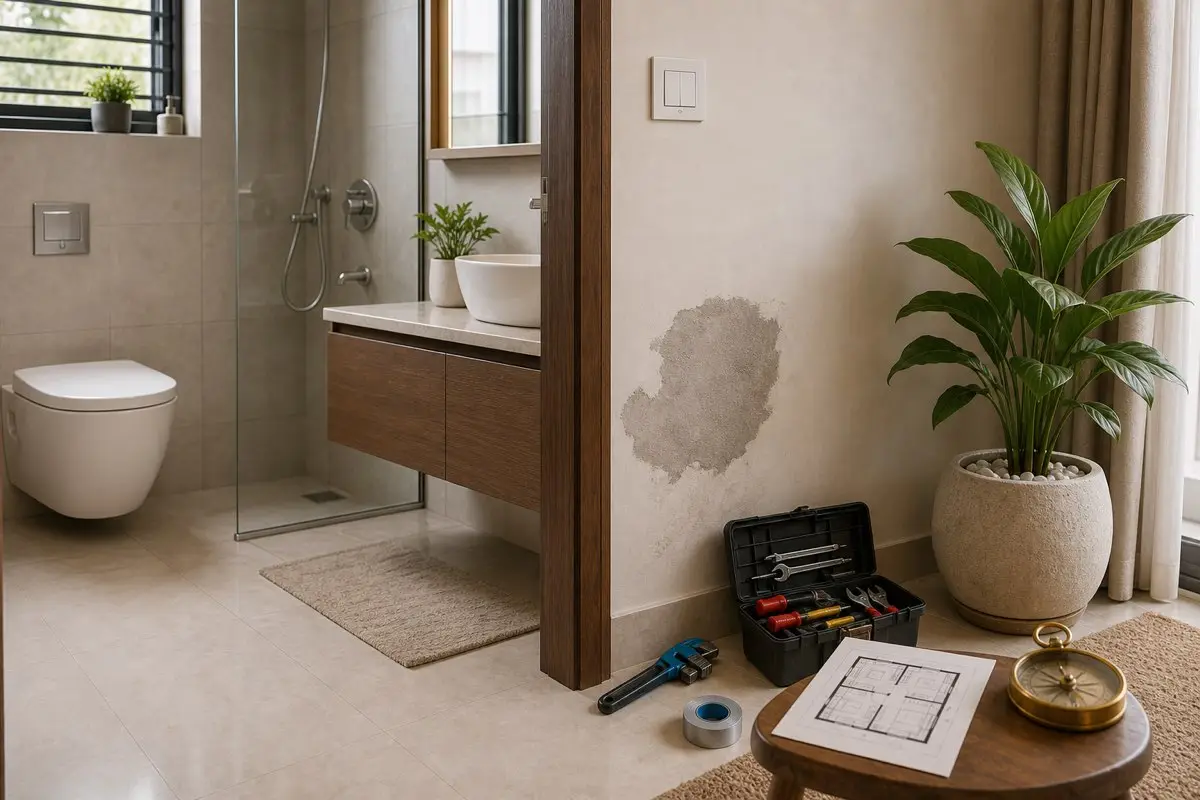
Water leakage is one of the most practical issues in Indian apartments and independent houses. It affects smell, wall paint, furniture, wiring, neighbour relations, hygiene, and long-term property value. In Vastu discussions, water leakage is often described as energy drain, but the first step is always technical: identify the source and repair it.
A leaking bathroom, kitchen sink, overhead tank, balcony drain, or concealed pipe should never be ignored for symbolic remedies alone. Dampness can damage walls, create mould, attract insects, and make the home feel neglected. Good Vastu begins with a dry, safe, healthy home.
Common leakage areas in Indian homes
The most common leakage areas are bathroom floors, shower walls, toilet pipe joints, kitchen sink cabinets, balcony slopes, terrace waterproofing, water tanks, and external walls. In apartments, leakage may come from the flat above, a common shaft, or old plumbing lines. In independent houses, terrace cracks and rainwater slope are frequent causes.
Before assuming a Vastu defect, inspect the pattern. Is the damp patch near a pipe? Does it appear after rain? Is it below an upstairs bathroom? Does it smell like drainage? Practical diagnosis prevents wasted money and anxiety.
Direction-wise understanding
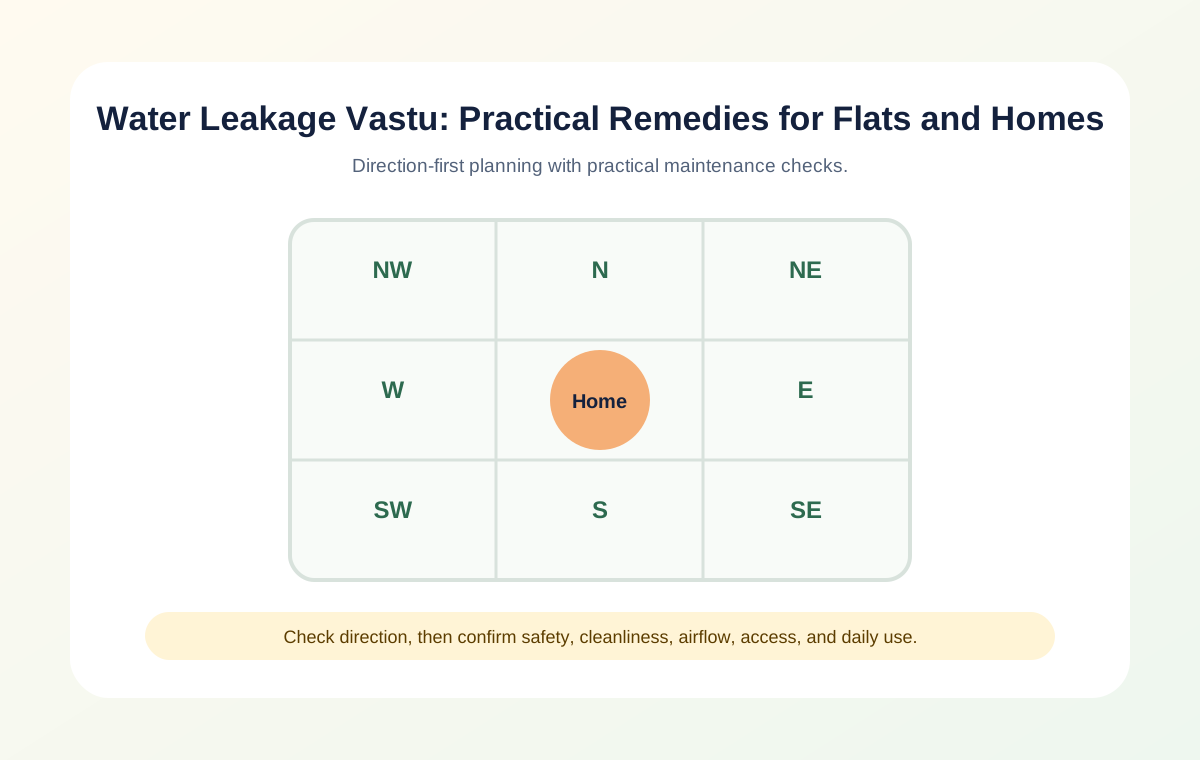
If leakage happens in the north, north-east, or east, many people worry because these zones are often treated as light and fresh areas. If leakage happens in the south-west, people worry about stability. Instead of fear, use direction as a reminder to fix the issue quickly and keep the zone dry.
The direction can guide how you maintain the area after repair. North and east zones should feel light and clean. South-west should remain stable and dry. Bathrooms and utilities should be ventilated. But the technical repair is always the priority.
Bathroom leakage remedies
Bathroom leakage often comes from failed waterproofing, cracked tile joints, pipe leakage, or poor slope. Fix grout, silicone edges, trap connections, and waterproofing where needed. Keep exhaust fans working and dry the floor after use. A bathroom that remains wet all day can create smell and dampness even without a major leak.
Vastu-friendly bathroom care includes closed toilet lids, clean drains, dry mats, light colours, proper ventilation, and organized storage. Avoid storing old bottles, broken buckets, and cleaning clutter in wet corners.
Kitchen and sink leakage
Kitchen leakage may start below the sink, behind the water purifier, near the drain pipe, or around a washing area. Check the cabinet base regularly. A slow leak can damage wood and create smell before it becomes visible outside. Keep the sink area dry and avoid stuffing the cabinet with plastic bags and unused items.
If the kitchen sink and stove are close, water leakage becomes even more irritating because the fire and water functions are already cramped. Create separation, repair plumbing, and keep the counter clean.
Balcony, terrace, and tank leaks
Balcony and terrace leaks are common during monsoon. Check slope, drain blockage, cracks, railing joints, and waterproofing. Do not allow planters to block drains. If water collects after rain, the slope needs attention. In Vastu and architecture, stagnant water is never ideal.
Overhead tank leaks and sump leaks should be repaired promptly. Water storage systems must be clean, covered, and accessible. A tank in the right direction but poorly maintained is still a problem.
No-demolition remedies after repair
After the technical leak is fixed, use no-demolition improvements. Repaint with breathable paint where needed, improve ventilation, use brighter lighting, keep the area dry, and remove damaged materials. Replace swollen boards, rusty shelves, and mouldy mats. These changes restore the room's freshness.
If a direction concerns you, keep that zone especially clean and active in a practical way. For example, a repaired north wall can be repainted in a light shade and kept uncluttered. A repaired south-west corner can be kept stable and dry with closed storage.
Common mistakes
Common mistakes include hiding dampness behind furniture, repainting without fixing the source, using only fragrance to cover smell, ignoring neighbour leakage, and delaying waterproofing until monsoon becomes severe. Another mistake is buying remedies while the pipe is still leaking. This wastes time and money.
Avoid fear-based language around leakage. Treat it as a maintenance priority. The sooner you repair, dry, clean, and ventilate, the better the home feels.
Modern apartment examples
In a high-rise apartment, a bathroom ceiling patch may come from the upstairs flat. Coordinate through the society and document the issue with photos. In a rental flat, inform the owner early and avoid making hidden changes yourself. In an independent house, terrace waterproofing before monsoon can prevent repeated interior damage.
For buyers, inspect bathrooms, balconies, and external walls before booking a resale flat. Fresh paint can hide dampness temporarily. Visit during or after rain if possible. Practical inspection is a strong Vastu habit because it protects health and money.
Comparison table
| Home type | Best approach | Avoid |
|---|---|---|
| Apartment | Use no-demolition fixes, compact storage, and regular maintenance. | Blocking doors, shafts, balconies, or common passages. |
| Independent house | Plan direction, access, repair, and long-term maintenance together. | Ignoring plumbing, structure, safety, and drainage. |
| Rental home | Choose portable, reversible changes and inform owners for repairs. | Permanent drilling or hidden fixes without approval. |
Practical examples for Indian homes
Example one: a compact 2BHK flat has limited entrance or storage space. Instead of forcing a textbook rule, identify the cleanest side wall, keep movement clear, and use a solution that does not block doors, windows, or daily cleaning. In a flat, the best Vastu correction is often the one that the family can maintain every day.
Example two: an independent house has more flexibility, but also more responsibility. Before final placement, check direction, sunlight, drainage, wall strength, privacy, and access. A larger home can still feel unbalanced if one zone becomes a dumping area. Keep the selected area purposeful, not decorative for one week and neglected afterward.
Example three: a rental home needs reversible fixes. Use movable furniture, portable storage, better lighting, cleaning routines, plants, mats, or curtains instead of permanent alterations. If repair work is needed, inform the owner early and document the issue. This protects both comfort and deposit value.
Best practices for long-term results
Good Vastu is strongest when it becomes a habit. Review the area once a month. Remove dust, old papers, broken items, expired products, unused objects, and anything that makes the space difficult to clean. If the area needs water, wiring, ventilation, or storage, check those systems before buying symbolic remedies.
Use a simple rule: the space should be easy to see, easy to reach, easy to clean, and easy to explain. If family members do not understand where things belong, clutter returns quickly. Labelling shelves, assigning zones, and creating a weekly reset routine often helps more than adding new décor.
When planning your home, avoid extreme claims. A Vastu change should support better decisions, calmer routines, and a more organised home. It should not promise instant wealth, guaranteed health, or impossible outcomes. This balanced approach is more trustworthy and more useful for real homeowners.
Common mistakes to avoid
The first mistake is checking only one rule and ignoring the full home. A direction may be preferred, but if the area is dark, unsafe, blocked, leaking, or inconvenient, the result will not feel good. The second mistake is hiding problems behind decoration. A plant, curtain, cabinet, or lamp cannot replace repair, cleaning, or ventilation.
The third mistake is overcorrecting. Many people add too many objects after reading different advice online. The home then becomes visually crowded. Choose fewer, better changes. The fourth mistake is not reviewing the result after daily use. A solution that looks good on the first day may become annoying if it blocks movement, collects dust, or needs constant adjustment.
Final review before making changes
Before finalising any change, take photos from the room entrance and from the main daily-use angle. Photos reveal crowding, dark corners, awkward storage, blocked passages, and visual imbalance that the eye often ignores. Then ask one practical question: will this change still look clean and useful after thirty normal days?
If the answer is yes, the change is likely sensible. If the answer is no, simplify it. Choose a smaller item, lighter colour, better storage, improved repair, or easier maintenance routine. Long-term Vastu value comes from repeatable habits and a home that remains calm during ordinary busy weeks. This is the most practical test for families, tenants, and busy homeowners.
Quick checklist
- Confirm direction correctly before changing anything.
- Keep the area clean, dry, bright, and easy to access.
- Repair broken, leaking, dusty, or unsafe elements first.
- Prefer simple no-demolition changes before expensive renovation.
- Review the space in morning, afternoon, and evening light.
Related internal guides
- Homepage
- Bathroom Smell and Leakage
- Bathroom Vastu
- Toilet Vastu Apartment
- No-Demolition Remedies
- Septic Tank Vastu
- Water Tank Vastu
- Vastu FAQ
Summary
The most useful Vastu improvements are usually practical. Direction gives a starting point, but cleanliness, maintenance, airflow, safety, and family routine decide whether the space works in real life. Start with the visible problem, solve it calmly, and then refine the placement or décor.
Frequently asked questions
Is water leakage bad in Vastu?
It is treated as undesirable because it affects hygiene, maintenance, and the feeling of the home. Repair the source first.
What is the first remedy for water leakage?
Find and fix the technical source: pipe, waterproofing, drain, slope, tank, or neighbour leakage.
Can I use Vastu remedies without repair?
No. Symbolic remedies should not replace plumbing or waterproofing repairs.
What if leakage is in north-east?
Repair immediately, dry the area, improve ventilation, and keep the zone clean and light.
How do I prevent bathroom seepage?
Maintain grout, waterproofing, traps, exhaust, slope, and regular cleaning.
Can balcony plants cause leakage?
They can block drains or trap water if unmanaged. Keep drains clear.
Is damp smell a Vastu issue?
It is mainly a hygiene and ventilation issue that should be fixed quickly.
What should buyers check?
Look for damp patches, swollen wood, smell, ceiling marks, terrace cracks, and bathroom slope problems.
Conclusion
Use this Vastu guidance as a practical review tool. Avoid panic, avoid exaggerated promises, and avoid unnecessary demolition. A home that is clean, organized, safe, and thoughtfully arranged supports better daily living and creates the premium feeling readers want.