
Introduction
Keep the north zone clean, bright, light, and purposeful rather than overcrowded with symbolic items.
This guide is written for modern Indian apartments, independent homes, and rental properties. It avoids fear-based claims and focuses on practical, beginner-friendly improvements that support cleanliness, order, safety, and comfort.
Table of contents
Direction
Find the suitable zone and realistic alternatives.
Examples
Apply the idea to flats, homes, and rented spaces.
Checklist
Review mistakes, maintenance, and no-demolition fixes.
What is Kubera corner in Vastu?
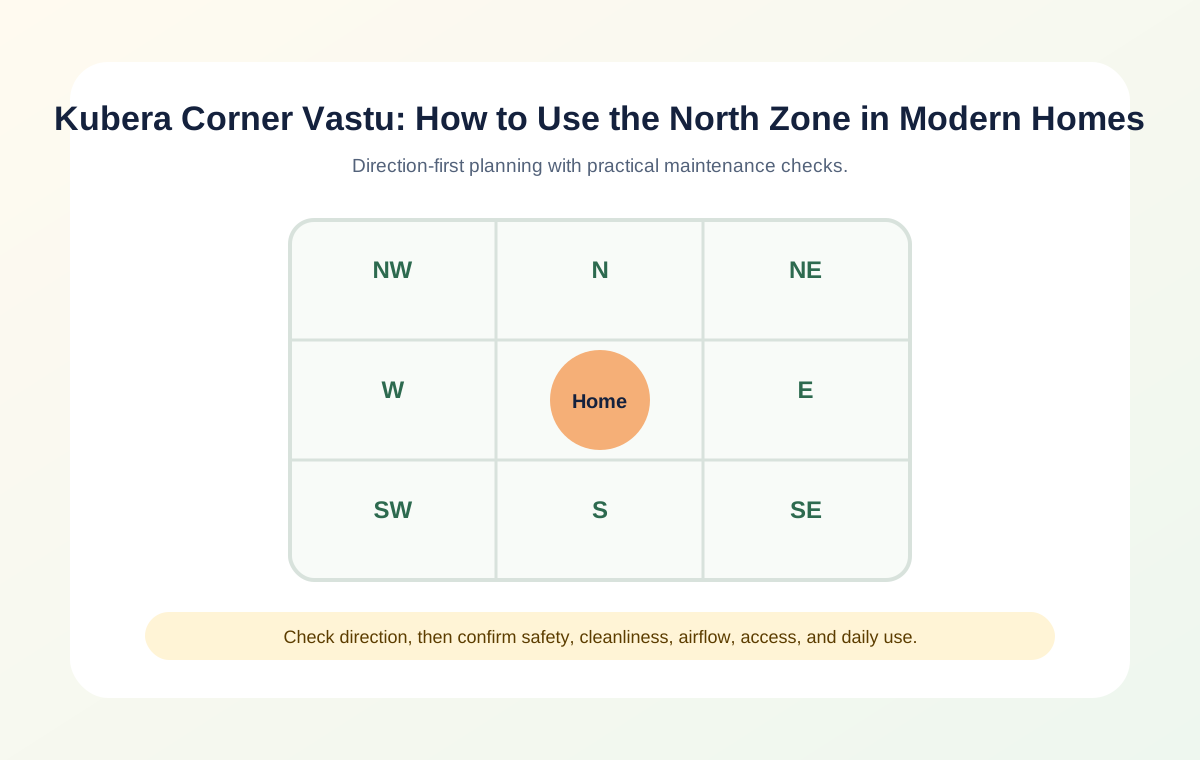
In many Vastu traditions, the north direction is associated with Kubera, prosperity, opportunities, career flow, and organized financial thinking. In modern homes, the Kubera corner is usually understood as the north or north-east influenced part of the home, depending on the floor plan and exact compass reading. This does not mean the corner magically creates wealth. It means the area is treated as a clean, open, well-managed zone that supports clarity and responsible handling of money-related items.
For Indian apartments, the north zone may be part of a living room, entrance passage, balcony, bedroom wall, or even a compact utility area. Because layouts are fixed, the practical approach is to identify the north zone, understand how it is being used, and improve cleanliness, light, storage, and movement. A bright, uncluttered north zone feels better than a dark corner packed with old cartons, broken electronics, and unused furniture.
How to identify the north zone correctly
Start by checking directions from the floor plan and then verify with a compass away from metal grills, lift shafts, large appliances, and electrical panels. Stand in the center of the house if possible and mark the directions calmly. Do not rely only on the road, balcony, or building gate. Your flat or home layout matters.
If you are unsure, check the direction at different points and average the reading. Builder plans sometimes show north, but the printed orientation may be unclear. Use direction checking as a practical step before buying lockers, shifting furniture, or making design changes. A wrong direction reading can lead to unnecessary confusion.
Best use of the north zone
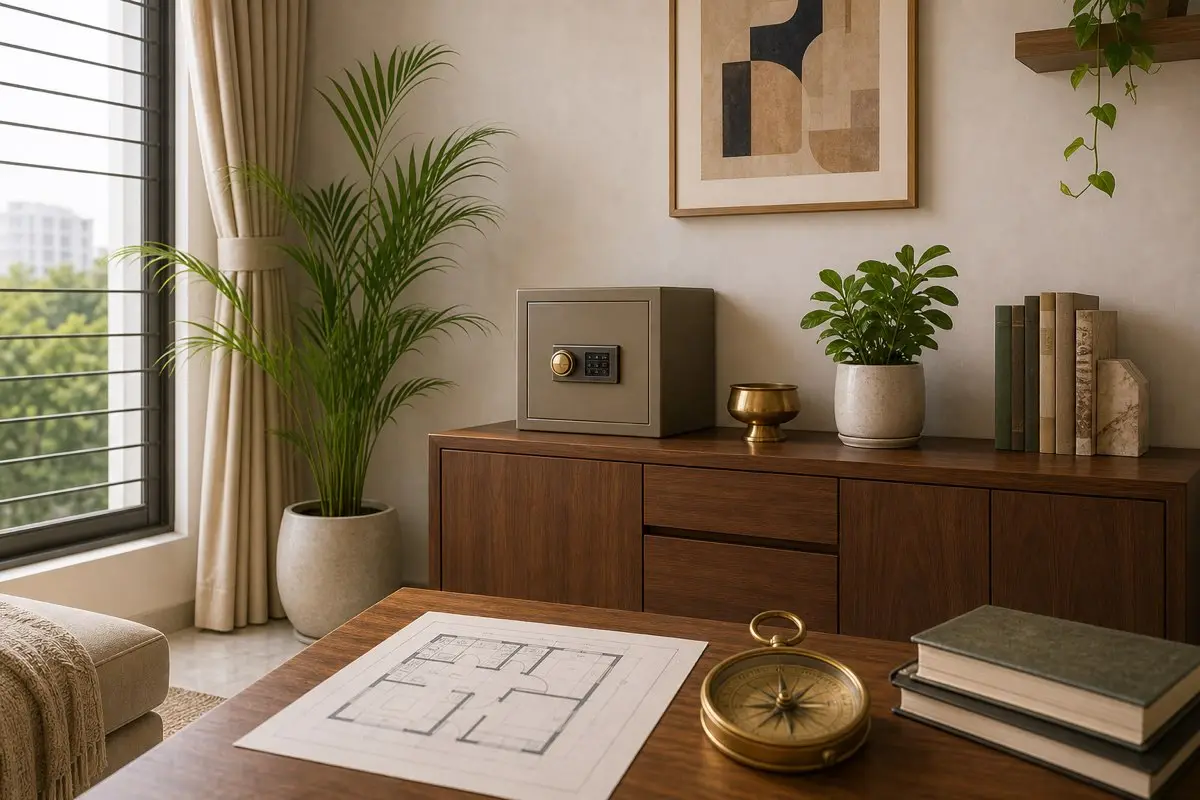
The north zone works well when it remains relatively light, clean, open, and purposeful. It can hold a neat console, document organizer, work desk, indoor plant, subtle lighting, or carefully placed locker depending on the room. Avoid dumping heavy storage in the north just because the corner is unused. Heavy clutter can make the area feel blocked.
If the north zone falls in the living room, keep it visually calm. If it falls in a bedroom, avoid placing piles of unused bags or broken items there. If it falls near a balcony, keep the balcony fresh and well-maintained. The principle is simple: the area should feel active, fresh, and organized.
Locker and money storage in the Kubera zone
Many homeowners ask whether the locker should be placed in the north. A common practical rule is that money storage should be safe, private, dry, and secure first. Some traditions prefer a locker placed in the south-west opening toward north; others use north-related zones for financial organization. Rather than arguing over one rule, review the room, wall strength, privacy, and security.
For apartments, a small safe may be inside a wardrobe. Keep jewellery, documents, cash, and important papers organized. Avoid keeping expired cards, torn envelopes, broken keys, and random receipts with valuable items. Vastu for money storage begins with order and respect.
Kubera corner in apartments
In a flat, you may not have a perfect north corner. The north may fall in a common wall, toilet wall, kitchen wall, or passage. Do not panic. Improve what you can. Keep that area dry, clean, light, and uncluttered. If a toilet or utility area falls there, focus on ventilation, smell control, leak repair, and closed storage.
Apartment Vastu is about adapting fixed conditions. A bright lamp, clean storage, organized documents, and regular decluttering can improve the feel of the zone without demolition. Avoid overloading a small flat with too many symbolic wealth objects. Simplicity looks more premium and is easier to maintain.
Colours and materials for north zone
Soft white, light green, pale blue, cream, and gentle neutrals can work well in the north zone. Reflective but not harsh surfaces may help brighten the area. Wood, brass accents, and clean metal finishes can be used carefully. Avoid making the entire north wall black, dusty, or visually blocked.
If the north zone is part of a modern living room, choose a calm palette and keep the wall breathable. If using shelves, keep them curated. A few meaningful items look better than many scattered items. If using a plant, choose one that survives in the available light.
Common mistakes
Common mistakes include treating Kubera corner as a superstition corner, overcrowding it with coins and objects, keeping broken lockers, storing old bills forever, and ignoring dampness or leakage. Another mistake is assuming wealth Vastu can replace budgeting, work, skill, and disciplined financial habits. A clean corner supports intention; it does not replace action.
Avoid fear-based claims. If your north zone has a fixed bathroom or wall, solve practical issues first. Ventilate, clean, repair, organize, and use subtle design improvements. Panic-based renovation is rarely the first solution.
Modern home examples
In a 2BHK apartment, the north wall of the living room can hold a neat console with documents, a small plant, and warm lighting. In a villa, a north-facing home office can be kept open and organized for work and accounts. In a rental home, a portable document box inside a clean wardrobe may be the best practical solution.
For shops or small offices, keep the north side tidy and avoid blocking customer movement. A reception desk, clean billing zone, or organized file area can work better than decorative clutter. The real effect comes from order, visibility, and ease of use.
Comparison table
| Home type | Best approach | Avoid |
|---|---|---|
| Apartment | Use no-demolition fixes, compact storage, and regular maintenance. | Blocking doors, shafts, balconies, or common passages. |
| Independent house | Plan direction, access, repair, and long-term maintenance together. | Ignoring plumbing, structure, safety, and drainage. |
| Rental home | Choose portable, reversible changes and inform owners for repairs. | Permanent drilling or hidden fixes without approval. |
Practical examples for Indian homes
Example one: a compact 2BHK flat has limited entrance or storage space. Instead of forcing a textbook rule, identify the cleanest side wall, keep movement clear, and use a solution that does not block doors, windows, or daily cleaning. In a flat, the best Vastu correction is often the one that the family can maintain every day.
Example two: an independent house has more flexibility, but also more responsibility. Before final placement, check direction, sunlight, drainage, wall strength, privacy, and access. A larger home can still feel unbalanced if one zone becomes a dumping area. Keep the selected area purposeful, not decorative for one week and neglected afterward.
Example three: a rental home needs reversible fixes. Use movable furniture, portable storage, better lighting, cleaning routines, plants, mats, or curtains instead of permanent alterations. If repair work is needed, inform the owner early and document the issue. This protects both comfort and deposit value.
Best practices for long-term results
Good Vastu is strongest when it becomes a habit. Review the area once a month. Remove dust, old papers, broken items, expired products, unused objects, and anything that makes the space difficult to clean. If the area needs water, wiring, ventilation, or storage, check those systems before buying symbolic remedies.
Use a simple rule: the space should be easy to see, easy to reach, easy to clean, and easy to explain. If family members do not understand where things belong, clutter returns quickly. Labelling shelves, assigning zones, and creating a weekly reset routine often helps more than adding new décor.
When planning your home, avoid extreme claims. A Vastu change should support better decisions, calmer routines, and a more organised home. It should not promise instant wealth, guaranteed health, or impossible outcomes. This balanced approach is more trustworthy and more useful for real homeowners.
Common mistakes to avoid
The first mistake is checking only one rule and ignoring the full home. A direction may be preferred, but if the area is dark, unsafe, blocked, leaking, or inconvenient, the result will not feel good. The second mistake is hiding problems behind decoration. A plant, curtain, cabinet, or lamp cannot replace repair, cleaning, or ventilation.
The third mistake is overcorrecting. Many people add too many objects after reading different advice online. The home then becomes visually crowded. Choose fewer, better changes. The fourth mistake is not reviewing the result after daily use. A solution that looks good on the first day may become annoying if it blocks movement, collects dust, or needs constant adjustment.
Final review before making changes
Before finalising any change, take photos from the room entrance and from the main daily-use angle. Photos reveal crowding, dark corners, awkward storage, blocked passages, and visual imbalance that the eye often ignores. Then ask one practical question: will this change still look clean and useful after thirty normal days?
If the answer is yes, the change is likely sensible. If the answer is no, simplify it. Choose a smaller item, lighter colour, better storage, improved repair, or easier maintenance routine. Long-term Vastu value comes from repeatable habits and a home that remains calm during ordinary busy weeks. This is the most practical test for families, tenants, and busy homeowners.
Quick checklist
- Confirm direction correctly before changing anything.
- Keep the area clean, dry, bright, and easy to access.
- Repair broken, leaking, dusty, or unsafe elements first.
- Prefer simple no-demolition changes before expensive renovation.
- Review the space in morning, afternoon, and evening light.
Related internal guides
- Homepage
- Vastu for Money Flow
- Locker and Safe Vastu
- Direction Vastu
- Direction Checking
- Apartment Vastu
- Vastu Remedies
- Vastu FAQ
Summary
The most useful Vastu improvements are usually practical. Direction gives a starting point, but cleanliness, maintenance, airflow, safety, and family routine decide whether the space works in real life. Start with the visible problem, solve it calmly, and then refine the placement or décor.
Frequently asked questions
What is Kubera corner in Vastu?
It is commonly associated with the north direction and the idea of prosperity, opportunities, and organized financial flow.
How do I find Kubera corner?
Mark the north zone using a floor plan and compass reading, avoiding metal interference.
Can a locker be kept in the north?
It can be managed, but privacy, safety, dryness, wall strength, and practical access matter first.
What colour is good for the north zone?
Soft white, pale blue, light green, cream, and gentle neutral tones are commonly used.
What if toilet is in north zone?
Focus on ventilation, dryness, leak repair, smell control, and cleanliness rather than fear.
Can plants be kept in Kubera corner?
Yes, if the plant gets suitable light and does not create clutter.
Should I keep money symbols in the north?
Use minimal, tasteful items if you like, but avoid crowding the area.
Does Kubera corner guarantee wealth?
No. It supports order and intention, but financial growth also needs practical action.
Conclusion
Use this Vastu guidance as a practical review tool. Avoid panic, avoid exaggerated promises, and avoid unnecessary demolition. A home that is clean, organized, safe, and thoughtfully arranged supports better daily living and creates the premium feeling readers want.