
On this page
Locker Safe Vastu — Quick Answer
Traditionally preferred zone: South-West, South or a stable West-side location.
Common opening direction: North is widely preferred; East is a common alternative.
Useful room options: master bedroom wardrobe, private dressing area, secure home office or apartment closet.
If South-West is unavailable: choose security, structural support, dryness, privacy and access before direction.
Practical priority: follow safe-manufacturer instructions and any insurance, fire-safety, building or lease requirements.
Locker Location vs Locker Opening Direction
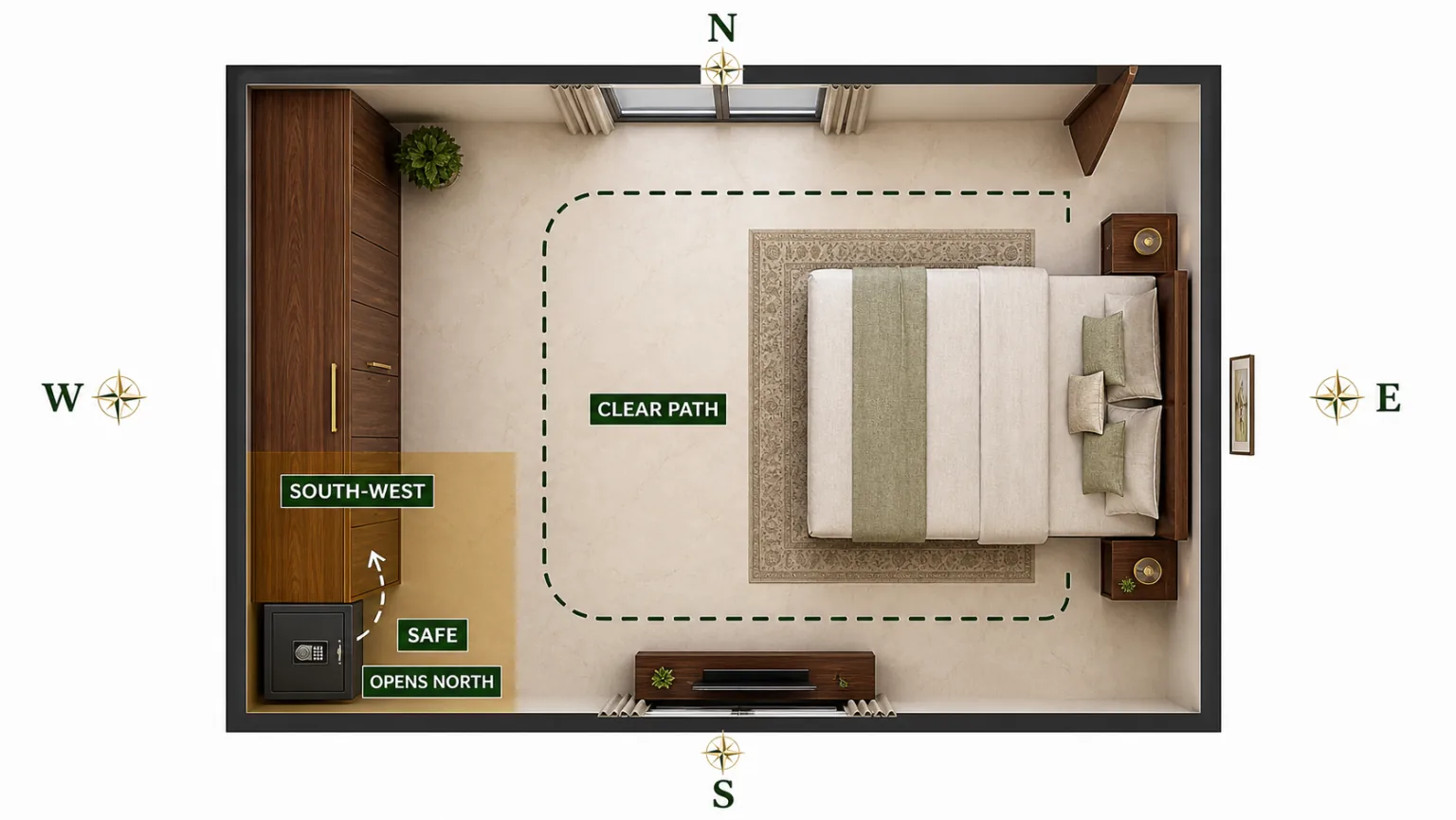
These two ideas are frequently confused. Locker location means the physical zone or wall where the safe stands. Locker opening direction means the direction toward which the front of the safe faces or its door opens when accessed.
For example, a safe can be installed in the South-West corner with its front facing North. It is therefore located in South-West but opens toward North. Before applying either rule, confirm the room’s orientation using the methods in How to Check Directions Correctly.
Best Direction for Locker According to Vastu
Traditional Vastu commonly associates the South-West with stability and heavier storage. This is why substantial wardrobes, lockers and safes are often placed there. South and West are also discussed as alternatives when they provide a stable private wall.
These are traditional planning principles, not scientifically proven effects on wealth. A safe in a preferred direction does not guarantee financial growth, and an alternative direction does not cause financial loss. Use the tradition as one input after verifying security, construction and daily access.
South-West
South-West is the first traditional preference when the room has a dry strong wall and sufficient door clearance. Avoid the zone if it contains plumbing, dampness or an exposed location visible from shared areas.
South
A South wall may work for a wardrobe-integrated or freestanding safe when installation is stable. Protect the safe from direct heat and maintain access for service.
West
West can be a reasonable alternative for a heavy storage wall. Check that the safe does not conflict with wardrobe shutters, bedroom doors or the walking route.
Which Direction Should the Locker Open?
A North-facing safe opening is a common traditional preference. East-facing opening is also widely accepted when North-facing access is impossible. The front of the locker should remain accessible, well lit and free from furniture or stored boxes.
Door mechanics matter. A right-hinged or left-hinged safe door may need different side clearance. Do not rotate a heavy safe only to chase an opening direction if that creates an unstable base, visible position or blocked access.
Locker Placement in the Master Bedroom
The master bedroom is frequently chosen because it is private and controlled by the family. A South-West wardrobe wall may combine traditional preference with concealment. Use the Master Bedroom Vastu guide to coordinate the safe with the bed, doors, windows and heavy storage.
Keep enough clearance from the bed for the safe and wardrobe doors to open. The safe should not force someone to stand in a tight gap or block access around the bed. Avoid direct visibility from the bedroom entrance, yet preserve comfortable authorized access and sufficient lighting.
Check the wall for dampness, air-conditioner condensation and concealed plumbing. A private location is useful only when it also protects the safe and contents.
Can a Locker Be Kept Inside a Wardrobe?
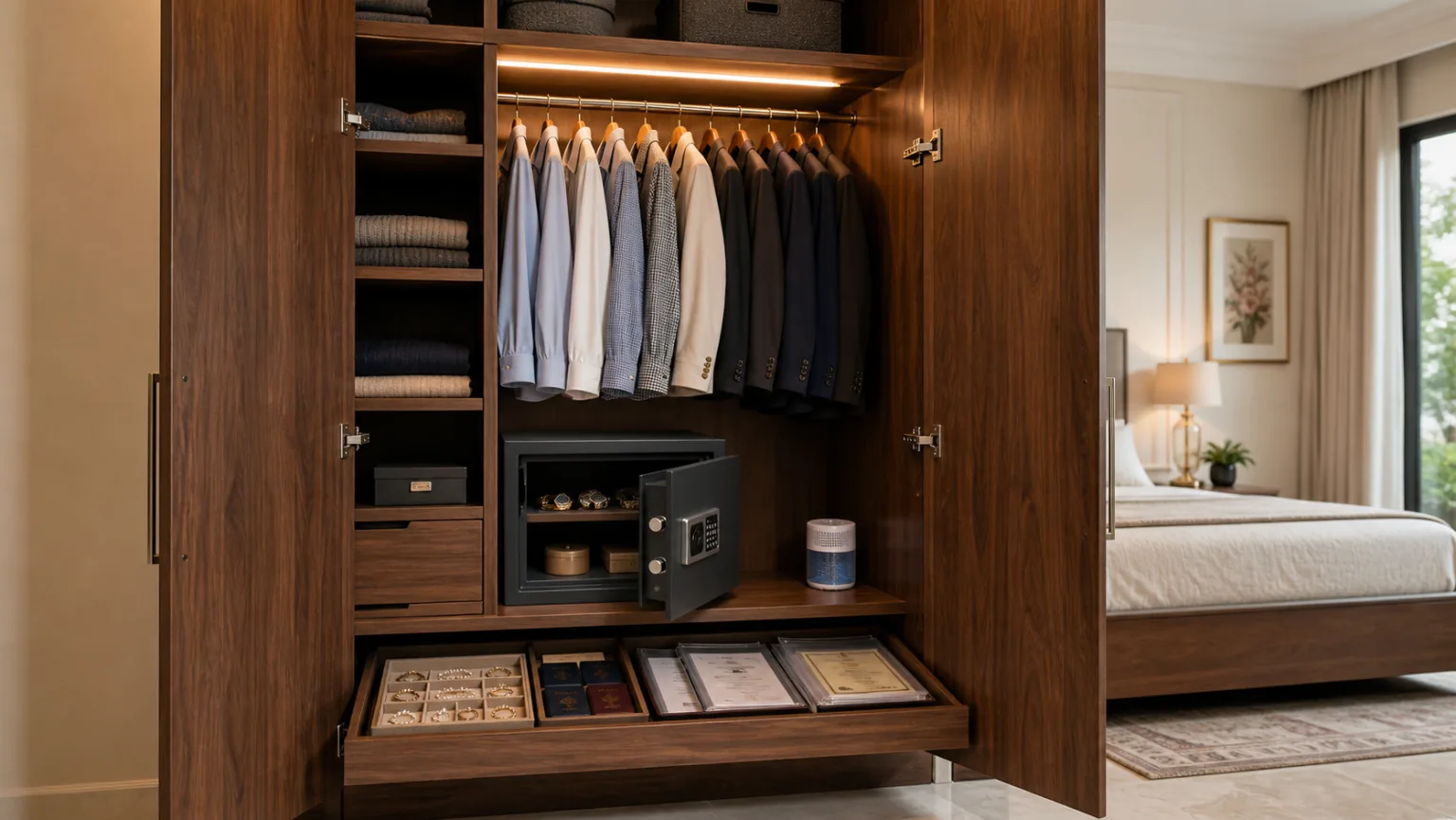
Yes. An integrated wardrobe safe is common in Indian apartments. It can conceal the unit and keep jewellery, passports and documents near organised storage. However, ordinary wardrobe shelves may not support a heavy safe.
Confirm load capacity, reinforcement and the safe manufacturer’s installation requirements. The wardrobe door and safe door must open without colliding. Leave ventilation space where specified, avoid loose clothing around vents and keep the base dry. Anchoring should use manufacturer-approved points and a qualified installer where needed.
A built-in safe is planned with the cabinetry; a freestanding safe placed inside a wardrobe still needs stable support and may need anchoring. Compare the full storage wall with Wardrobe Placement Vastu and Wardrobe Mirror Vastu.
Cash, Jewellery and Important Document Storage
Cash
Keep only the amount appropriate for your household needs, organised in a discreet pouch or compartment. Review it periodically. This article does not provide financial advice.
Jewellery
Separate pieces in soft-lined trays or pouches to reduce scratching and tangling. Frequently worn items may need accessible internal organisation, but valuables should not be left visible on a dressing table.
Property documents
Use clearly organised protective folders and preserve any copies required elsewhere. Title documents, insurance papers and agreements should remain easy for authorised family members to identify during an emergency.
Passports and certificates
Store these in protective pouches, away from moisture and folding. Maintain secure backups where legally and practically appropriate.
Digital backup drives
Drives can be damaged by heat, moisture and hardware failure. A safe may form part of a backup plan, but it should not be the only copy of irreplaceable digital data.
Fire-Resistant Safe Considerations
Not every security safe offers the same fire protection. Review the manufacturer’s tested claims, intended contents, installation requirements and warranty. Paper, digital media and jewellery may have different protection needs.
Do not assume a fire-resistant document pouch or safe makes contents indestructible. Keep the unit away from heaters, cooking equipment and direct heat sources, and follow applicable insurance and fire-safety requirements. A qualified security or fire-safety professional can help where risk is significant.
Locker Placement by Room
| Location | Traditional Vastu view | Practical advantages | Possible concerns | Best for |
|---|---|---|---|---|
| Master bedroom | South-West often preferred | Privacy and family access | Bed clearance, visibility, damp walls | Jewellery and personal documents |
| Wardrobe | Works with stable storage zones | Concealed and organised | Shelf strength and door collision | Compact home safe |
| Home office | West or South storage may suit | Document access and lighting | Visitor visibility and shared use | Business and property papers |
| Study room | Use a stable private wall | Organised records | Children or guests may use room | Certificates and backups |
| Utility/storage room | Direction varies | Low visibility | Moisture, plumbing and poor access | Only a dry secure service room |
| Apartment closet | Adapt to fixed layout | Space-efficient concealment | Shared wall, loading and lease limits | Small flats |
Locker Safe Vastu for Apartments
Apartments have fixed walls, built-in wardrobes and limited choices. Start by identifying private dry walls, then consider direction. Avoid shared plumbing shafts, bathroom-adjacent walls and positions visible from the entrance or living room.
A heavy safe may require review of floor loading, wardrobe construction and anchoring options. Do not assume a decorative cabinet shelf can carry it. Society rules may restrict drilling or structural changes. The Apartment Vastu guide helps place this decision within the full flat layout.
Locker Placement in Rental Homes
Portable safes can suit renters, but portability also affects security. Use a discreet stable location and follow the lease. Do not drill without written permission. Choose only manufacturer-supported reversible security methods.
Plan for moving: retain the manual and authorised access information, protect the unit during transport and never leave keys or codes with ordinary packing paperwork. See Rental Home Vastu for reversible planning.
What If South-West Placement Is Not Possible?
Use this calm priority order:
- Security: choose a controlled, discreet room.
- Stable location: use a level floor or properly supported base.
- Dry environment: avoid leaks, dampness and plumbing.
- Structural support: verify load and installation needs.
- Privacy: reduce casual visibility.
- Practical access: preserve door clearance and lighting.
- Traditional direction: apply South-West, South, West or opening preferences where the earlier conditions remain satisfied.
An imperfect direction is not a prediction of negative outcomes. A secure, dry and correctly installed safe in an alternative zone is a more responsible choice.
Safe Installation and Anchoring
Safes should rest on a stable surface. Wall or floor anchoring may improve security and anti-tip protection when the model supports it. Follow manufacturer guidance; do not improvise structural drilling. A qualified installer should identify suitable fixing points and avoid plumbing, wiring and weak partitions.
Record the model number, installation date and authorised service contact separately from the safe. After installation, test whether the door opens fully without rubbing against wardrobe shutters, skirting, drawers or the bed. Families should also decide who is authorised to access the safe and how emergency access information will be handled without leaving codes or keys in an obvious nearby place.
Keep the Safe Away From Moisture and Heat
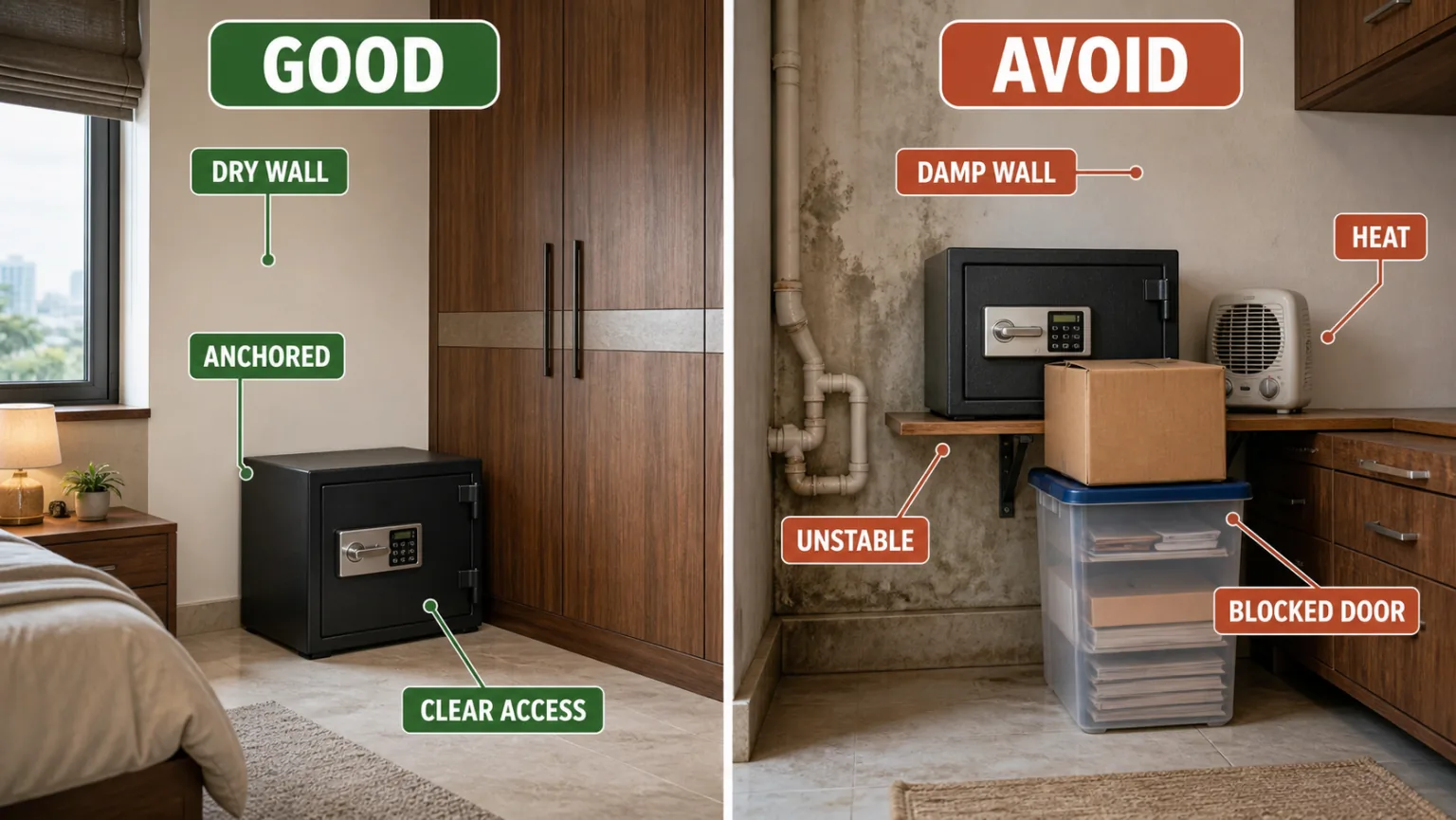
Keep the safe away from bathrooms, plumbing walls, damp corners, kitchen heat, heaters, direct sunlight and air-conditioning condensation. Humidity can damage documents, jewellery finishes and electronics. Inspect the surrounding wall periodically rather than sealing the safe into inaccessible cabinetry.
Look for peeling paint, a musty smell, condensation or discoloured shelf boards during regular cleaning. If any of these appear, remove vulnerable contents to a suitable temporary location and address the source of moisture. Do not rely on fragrance, decorative panels or symbolic objects to conceal a leak. Documents and digital drives may need separate protective sleeves or cases compatible with the safe manufacturer’s guidance.
Plan authorised access and periodic review
A safe should be secure without becoming impossible for the household to manage during an emergency. Keep an up-to-date inventory of categories stored inside—without exposing sensitive details—and review access arrangements after a move, renovation or change in family responsibility. Replace depleted batteries where the model requires them and arrange servicing according to its manual. This practical routine supports the same order and calm emphasised throughout Room-wise Vastu.
15 Common Locker Safe Vastu & Placement Mistakes
1. Visible to visitors
Privacy is weakened when the safe is obvious from shared areas.
2. Near moisture
Dampness and concealed leaks can damage the unit and contents.
3. Unstable shelf
Ordinary wardrobe boards may not support concentrated weight.
4. No anchoring review
Skipping approved anti-tip or security installation can increase risk.
5. Blocked door
Furniture and boxes can prevent complete safe-door opening.
6. Poor lighting
Dark access encourages disorganisation and errors.
7. No service space
An inaccessible unit is difficult to inspect or maintain.
8. Mixed contents
Unlabelled cash, jewellery and papers become difficult to manage.
9. Humid documents
Paper needs protection from moisture and condensation.
10. Near heat
Heaters, appliances and sunlight can harm contents.
11. Ignoring instructions
Installation must follow the manufacturer’s requirements.
12. Obvious concealment
An unusual exposed cover may attract attention rather than reduce it.
13. Direction over security
A compass preference should not create a vulnerable position.
14. Symbolic-only remedy
Objects and colours cannot fix weak installation or dampness.
15. Surrounding clutter
Clutter blocks access and makes regular review difficult.
No-Demolition Locker Vastu Improvements
Reposition the safe within the same room if a drier and more private wall is available. Reorganise the wardrobe so the safe door clears shelves and clothing. Add safe task lighting, protective document pouches and labelled internal trays.
Clear the opening area, move heaters and inspect nearby moisture. Where permitted, arrange professional anchoring rather than attempting unsuitable drilling. These practical changes complement the broader approach in Vastu Remedies.
Which Locker Location Should You Choose?
| Your situation | Priority | Practical choice |
|---|---|---|
| Master-bedroom wardrobe | Privacy and support | Integrated lower safe with verified structure |
| South-West unavailable | Security and dryness | Best stable alternative wall |
| Rental home | Lease compliance | Reversible manufacturer-approved setup |
| Important documents | Fire and moisture protection | Appropriate safe and protective organisation |
| Jewellery | Concealment and separation | Private safe with soft-lined trays |
| Home office papers | Controlled access | Discreet anchored cabinet safe |
Locker Safe Placement Checklist
- ☐ Secure room selected
- ☐ Stable surface confirmed
- ☐ Manufacturer installation requirements checked
- ☐ Anchoring considered
- ☐ Door opens fully
- ☐ Moisture avoided
- ☐ Heat avoided
- ☐ Privacy considered
- ☐ Important documents protected
- ☐ Lighting adequate
- ☐ Access convenient
- ☐ Traditional direction considered where practical
Traditional Vastu Guidance vs Practical Security
The directional recommendations in this article represent traditional Vastu planning beliefs. They should not replace safe installation, security practices, fire protection, building safety, insurance requirements or manufacturer instructions.
Do not interpret a different direction as a cause of financial loss. The trustworthy approach is to protect valuables through appropriate equipment, controlled access, safe installation and organised records, while respecting traditional preferences where they fit.
Frequently Asked Questions
Which direction is best for a locker according to Vastu?
South-West, South or a stable West-side location is traditionally preferred. Security, dryness, structural support and privacy should determine the final position.
Which direction should a locker open?
A North-facing opening is commonly preferred, with East-facing opening also accepted in many traditions. The safe door must still open fully and safely.
Can a locker be kept in the South-West?
Yes. South-West is a traditional preference for heavier secure storage when the wall is dry, private and structurally suitable.
Can a safe be kept inside a wardrobe?
Yes, if the shelf supports the load, ventilation is adequate, doors clear each other and the safe is installed according to manufacturer guidance.
Can a locker be kept in the master bedroom?
Yes. A private master bedroom is a common choice. Keep the safe discreet, away from moisture and heat, and clear of the bed and walking route.
Which wall is best for a locker?
A dry, stable South-West, South or West wall is commonly considered. Avoid plumbing walls, dampness, weak partitions and locations visible from shared areas.
What if South-West placement is unavailable?
Choose the most secure, stable, dry and private alternative. Do not create poor access or weaken security merely to follow a directional preference.
Is a North-facing locker opening preferred?
It is a common traditional preference. Here, North-facing refers to the direction toward which the safe opens, not necessarily the room zone containing it.
Is an East-facing locker opening acceptable?
Yes. East-facing opening is commonly treated as a practical traditional alternative when North-facing opening is not possible.
Where should jewellery be stored?
Keep jewellery in separated soft-lined trays or pouches inside a discreet secure safe, protected from moisture and casual visibility.
Where should important documents be stored?
Store documents in organised protective folders or pouches inside a safe appropriate for the required fire and moisture protection, following manufacturer specifications.
Can renters use portable safes?
Yes. Choose a discreet stable position and follow lease restrictions. Use only manufacturer-approved reversible security methods where drilling is not permitted.
Should a home safe be anchored?
Anchoring can improve security and anti-tip stability when the safe supports it. Follow manufacturer instructions and use a qualified installer where appropriate.
Can a safe be kept near a bathroom wall?
Avoid bathroom-adjacent or plumbing walls when possible because concealed leaks and humidity may damage the safe and its contents.
Does locker direction matter more than security?
No. Direction is traditional guidance; secure installation, privacy, fire protection, dryness, insurance requirements and manufacturer instructions come first.
Related Guides
Master Bedroom Vastu
Coordinate bed, privacy and heavy storage.
Wardrobe Placement Vastu
Plan the full bedroom storage wall.
Home Office Vastu
Organise business records and secure cabinets.
Apartment Vastu
Adapt safe placement to a fixed flat layout.
Complete Home Planning
Review directions and rooms together.
Conclusion
Locker safe Vastu is most useful when it separates three decisions: a secure physical location, a practical opening direction and responsible protection of valuables. South-West with a North- or East-facing opening is a common traditional preference, not a guarantee.
Choose a dry, private, stable position; follow installation instructions; protect documents appropriately; and organise access for authorised family members. Traditional guidance should support these priorities, never replace them.