
Topic
Septic tank Vastu for direction, placement, slope, and remedies.
Best for
House owners, plot buyers, villa planners, and families building a new home.
Main rule
Never let Vastu advice override structural safety, legal rules, or plumbing basics.
On this page
- Best septic tank direction as per Vastu
- Placement rules for houses and plots
- Apartment and builder-floor realities
- Comparison table
- Construction checklist
- Common mistakes
- FAQ
Why septic tank Vastu matters
A septic tank is not a decorative feature. It is a hidden service system that handles waste, moisture, smell, access, and long-term maintenance. That is why Vastu discussions around septic tanks are sensitive. A poorly planned tank can create leakage, dampness, blocked drains, foul smell, unsafe covers, mosquito issues, and expensive repair work. A well-planned tank remains quiet in the background and lets the house function smoothly.
Traditional Vastu gives direction preferences because different zones of the home are associated with different qualities. The north-east is kept light and clean. The centre is kept open. The south-west is often treated as heavy and stable. Service functions are usually placed where they do not disturb sacred, central, or high-use family areas. This logic can be useful, but it must be applied with modern plumbing knowledge.
In modern Indian homes, the septic tank also has to respect municipal rules, soil condition, groundwater level, slope, road access, inspection chambers, and the plumber's route. A perfect direction with poor pipe slope can fail. A technically correct system in a slightly less preferred direction may perform better than a forced placement that creates leakage. Good Vastu should make the home cleaner and more comfortable, not technically weaker.
Best septic tank direction as per Vastu
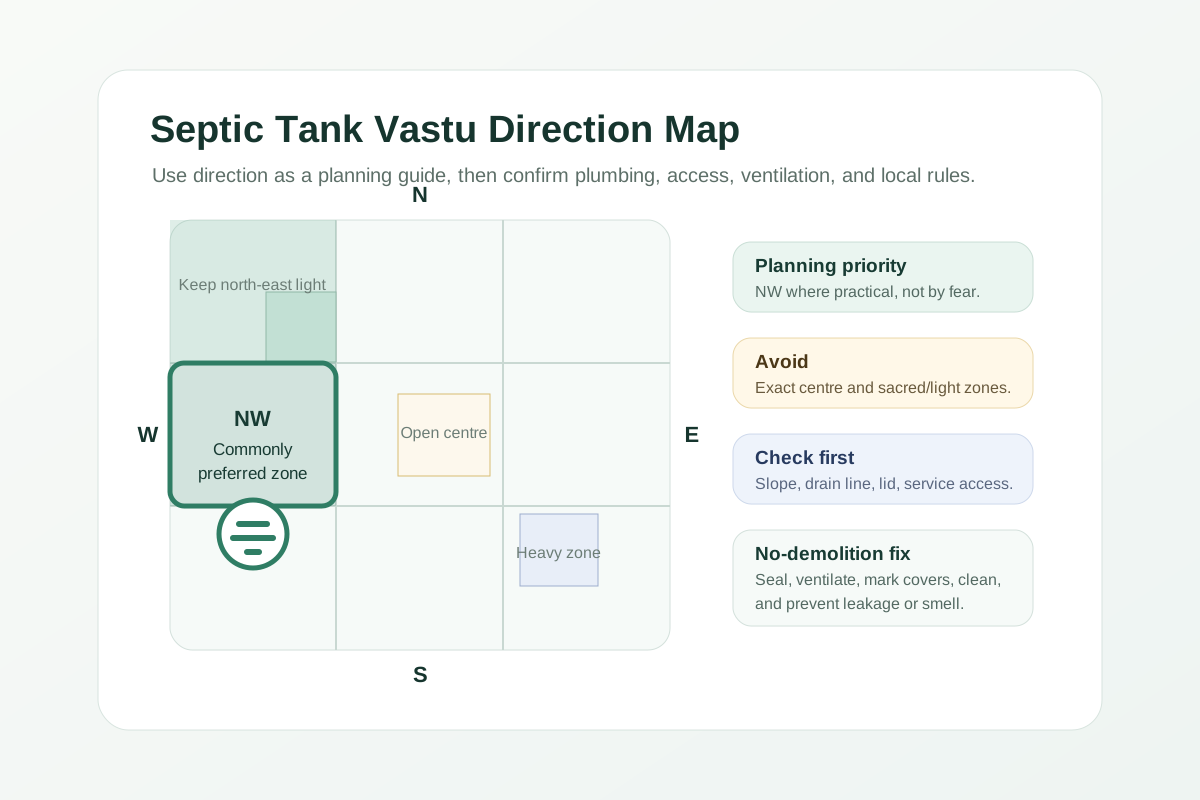
Many Vastu practitioners prefer the north-west zone for septic tank placement when the plot allows it. North-west is often treated as a suitable service and movement zone, so waste-processing systems are commonly guided there. Some traditions also allow careful placement in the west or south of north-west depending on the exact plot, but north-east, centre, and important sacred zones are generally avoided.
Use this as a planning preference, not as a blind rule. First mark true north on the approved site plan. Then divide the plot into directional zones. Check where the house footprint, compound wall, driveway, garden, borewell, underground sump, kitchen, pooja area, and bedrooms fall. The tank should not be placed where opening the inspection cover becomes difficult, where a vehicle may damage it, or where roots from large trees can enter the line.
If you are still at the design stage, discuss the Vastu preference with both the architect and plumber before the foundation plan is locked. That timing matters. Once drain pipes, plinth beams, slope, and chambers are finalized, moving a septic tank becomes costly. Early coordination is the most practical remedy.
Placement rules for independent houses and plots
For independent houses, the septic tank should be outside the main built-up living area where possible, with clear service access. Avoid placing it below the exact centre of the house, below a pooja room, below a kitchen platform, or below a bedroom headboard area in new construction. These placements are difficult both symbolically and practically because maintenance, smell, and leakage become emotionally harder for the family.
Keep the tank away from drinking-water sources such as borewells, open wells, and underground sumps as per local health and engineering norms. Vastu preference is not enough here. Water safety is non-negotiable. If your plot has limited space, ask a qualified professional to check distance, waterproofing, soil absorption, and legal requirements. Do not depend on a mason's casual estimate for such a critical system.
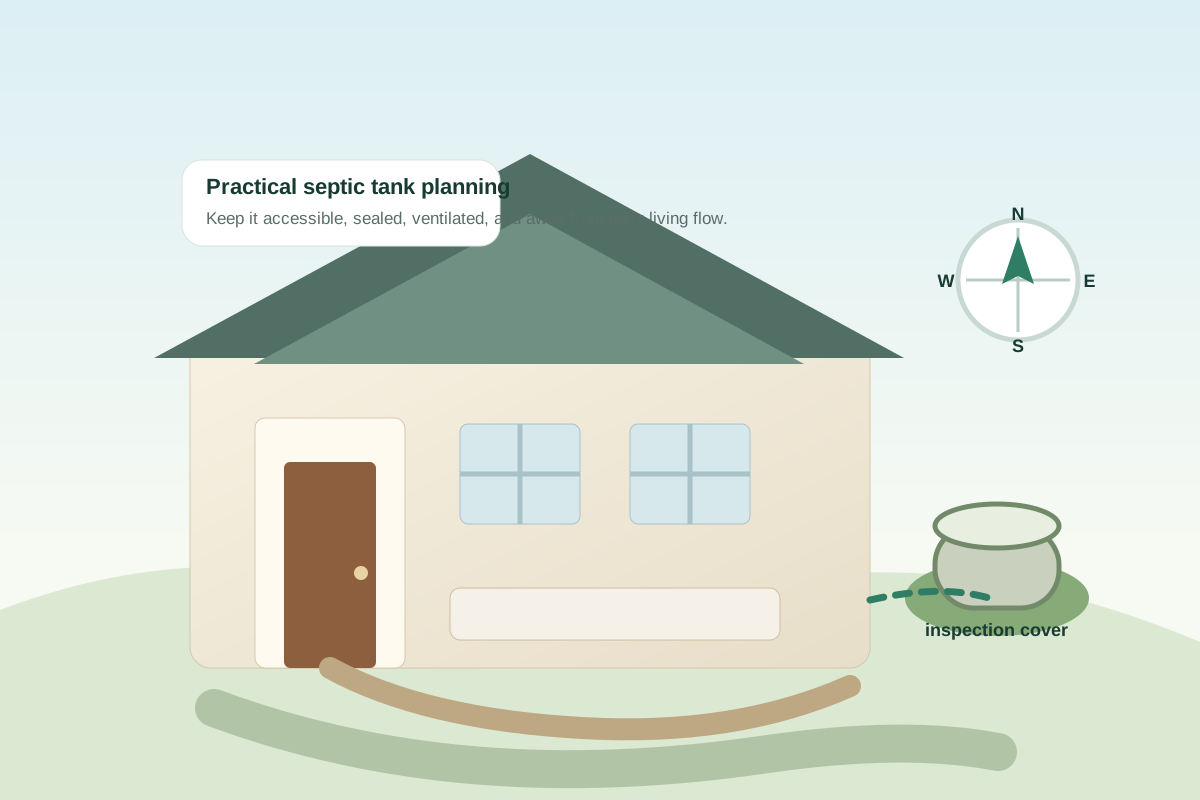
The inspection cover should be reachable. Many homeowners hide septic covers under heavy planters, tiled platforms, parked vehicles, or permanent landscaping because they do not like the look. That creates trouble when cleaning or inspection is needed. A neat, flush, well-marked cover is better than a hidden one. Vastu values clean maintenance. A neglected hidden tank is not a remedy.
Drainage slope, pipes, and technical checks
Septic tank Vastu must work with gravity. Wastewater lines need the right slope, pipe size, bends, venting, and inspection chambers. If the tank is forced into a direction that makes the pipe route too long or poorly sloped, blockages can become frequent. This is why practical planning should happen on the drawing board, not after construction starts.
Ask your plumber or engineer to explain the route from toilets to chambers to septic tank to soak pit or approved disposal system. Check whether cleaning machines can access the line. Avoid unnecessary sharp bends. Keep vent pipes functional and away from windows where smell may enter living spaces. The best Vastu result is a system that remains dry outside, sealed, ventilated, and easy to service.
If your site slopes naturally, do not ignore it. Rainwater flow, drain line slope, and tank placement should be reviewed together. Also check whether monsoon water can collect over the septic cover. Standing water around the cover can create smell, seepage, and safety issues.
What about apartments and builder floors?
Apartment owners usually do not control the building's sewage or septic system. In most urban projects, drainage connects to municipal lines, sewage treatment plants, or common systems planned by the builder. In such cases, do not panic because the common tank is outside your individual control. Focus on what you can control inside your flat: bathroom dryness, exhaust, floor traps, leakage prevention, and clean drain habits.
If you are buying a builder floor or small apartment block where the septic tank is within the property, ask for the drainage plan. Check smell near parking, staircase, ground-floor rooms, and garden areas. A low price should not make you ignore repeated overflow or poor maintenance. Also ask who is responsible for cleaning costs and access rights. Shared systems need shared discipline.
For apartment bathrooms, combine this article with Toilet Vastu for Apartments and Bathroom Smell and Leakage Vastu. Those guides are more relevant for daily flat living than worrying about a common service system you cannot move.
Septic tank placement comparison table
| Check | Better choice | Avoid | Why it matters |
|---|---|---|---|
| Direction | North-west where technically practical | North-east, exact centre, sacred zones | Keeps disposal systems away from light and sacred zones |
| Access | Clear inspection and cleaning path | Permanent cover-up with tiles or planters | Maintenance becomes simple and less expensive |
| Water safety | Safe distance from well, sump, borewell | Too close to drinking-water sources | Protects health and prevents contamination risk |
| Technical design | Correct slope, chambers, venting, waterproofing | Forced direction with bad pipe route | Prevents smell, blockage, dampness, and overflow |
Construction checklist before finalizing the tank
Use this checklist before construction begins. Mark true north on the site plan. Identify the preferred north-west service zone. Check the toilet line route and slope. Mark the borewell, sump, rainwater harvesting pit, compound wall, driveway, and large trees. Confirm tank size for family use. Confirm cleaning access. Confirm cover level so rainwater does not collect. Confirm vent pipe position. Confirm waterproofing and structural safety. Confirm local authority rules.
During construction, photograph the tank, pipe route, chambers, and cover position before everything is covered. Keep those photos with property documents. Five years later, when a blockage occurs or a new owner asks questions, these records are extremely useful. Documentation is a modern Vastu practice because it reduces confusion and supports responsible maintenance.
No-demolition remedies for existing septic tank issues
If the septic tank is already built in a less preferred direction, do not rush into demolition. First inspect the actual problem. Is there smell? Is the cover broken? Is rainwater entering? Is the area damp? Is the tank overflowing? Are pipes blocked? Is a tree root damaging the line? Practical correction should begin with the real defect.
Useful no-demolition steps include replacing unsafe covers, sealing gaps, improving venting, clearing blocked pipes, keeping the area dry, scheduling professional cleaning, removing heavy clutter above the cover, and ensuring the service path is not blocked. If the tank is near a sensitive zone, create visual separation with neat landscaping that does not block access. Use shallow-rooted plants, gravel, or clean paving instead of deep-rooted trees.
Avoid decorative remedies that hide the problem. A symbol placed near a leaking septic cover will not solve smell or contamination. The most respectful remedy is maintenance. In Vastu, cleanliness and order are not secondary. They are the foundation.
Common septic tank Vastu mistakes
The first mistake is choosing direction without checking plumbing slope. The second is placing the tank too close to water sources. The third is covering the inspection lid permanently. The fourth is planting large trees near septic lines. The fifth is ignoring smell until it becomes a serious issue. The sixth is allowing rainwater to pool above or around the cover.
Another common mistake is treating every online rule as compulsory. Real plots have constraints. A narrow city plot, a corner plot, a sloping plot, and a farmhouse cannot be solved with the same diagram. Use the direction map to guide the discussion, then let safety and engineering finalize the solution.
Families also make emotional mistakes during resale purchases. They may reject a good property because one service area is not textbook-perfect, or accept a poor property because the entrance direction looks good. A balanced review looks at the full home: entrance, kitchen, bathrooms, bedrooms, light, ventilation, drainage, structure, legal papers, and maintenance history.
Practical examples for Indian homes
A family building a 30 by 40 house wanted the septic tank in the north-west, but the initial plumber had routed pipes toward the south-east. Because they reviewed the plan early, the architect adjusted the chamber locations before construction. The tank stayed accessible and the slope remained correct. This is the ideal time to solve the issue.
Another homeowner had an old septic tank near the front garden. The direction was not ideal, but the bigger problem was a cracked cover and blocked vent. After repair, cleaning, and proper marking, the smell stopped. Demolition was not needed. In a third case, a builder-floor buyer noticed damp patches near parking and asked for the drainage plan before paying token money. That single question revealed a recurring overflow problem.
Best practices for long-term maintenance
Keep septic tank records. Know the location of every inspection chamber. Do not pour construction debris, grease, sanitary products, plastic, paint, or harsh chemicals into drains. Watch for slow drains, gurgling sounds, damp patches, flies, and smell. These are early warning signs. Schedule professional cleaning based on tank size and use rather than waiting for an emergency.
Keep the area around the cover visible enough for inspection. If the cover is in a garden, use a neat marker or removable landscaping. If it is near parking, ensure the cover is traffic-rated and properly supported. If it is near a boundary, keep enough clearance for workers. Maintenance access is not an aesthetic compromise. It is part of good home planning.
Related guides for deeper reading
Plot planning
Water and bathrooms
Home layout
Summary
Septic tank Vastu is best handled as a combined Vastu, plumbing, safety, and maintenance decision. North-west is commonly preferred when practical, while north-east, the exact centre, sacred zones, and major living spaces are generally avoided. But the final position must also satisfy pipe slope, access, waterproofing, water safety, local rules, and future cleaning.
If you are building, solve it early on the plan. If you are buying, inspect smell, dampness, access, and drainage records before paying token money. If you already live in the home, start with no-demolition maintenance: seal, clean, ventilate, repair, mark, and keep access clear.
Frequently asked questions
Which direction is best for septic tank as per Vastu?
North-west is commonly preferred when the plot and plumbing allow it. Still, slope, access, legal rules, and water safety must be checked before final placement.
Can a septic tank be in the north-east?
North-east is traditionally kept light, clean, and open, so a septic tank there is generally avoided. If it already exists, focus on sealing, ventilation, leakage prevention, and professional inspection.
Is septic tank Vastu relevant for apartments?
Apartment owners usually do not control the common sewage system. Focus on bathroom hygiene, drainage, ventilation, and leakage prevention inside the flat.
Should the septic tank touch the compound wall?
Do not force it against a wall if that hurts access, waterproofing, or structural safety. Follow service-clearance and local-rule requirements.
What is the best remedy for a wrong septic tank location?
Fix real issues first: leakage, smell, unsafe covers, poor venting, hidden inspection lids, and neglected cleaning. Practical maintenance is the strongest remedy.
Can septic tank be under the kitchen or pooja room?
It is better to avoid this in new construction. Existing layouts should be reviewed by plumbing and structural professionals before any major change.
What slope is good for septic tank drainage?
Drainage slope should be designed by a qualified plumber or engineer. Vastu should not override gravity flow, pipe size, inspection chambers, or municipal rules.
How often should a septic tank be inspected?
Frequency depends on tank size and household use. Watch regularly for smell, dampness, slow drains, unsafe covers, and overflow signs, then schedule professional cleaning when needed.
Can plants be kept near a septic tank?
Use shallow-rooted landscaping only if service access remains clear. Avoid large trees near septic lines because roots can damage pipes and tanks.
Conclusion
A septic tank is a hidden part of the home, but it has a strong effect on comfort. Plan it with respect. Use Vastu direction as one layer, then verify engineering, safety, access, and hygiene. A clean, sealed, accessible, correctly sloped tank supports the home quietly for years.
The right mindset is simple: do not create fear, and do not ignore practical defects. Good Vastu helps a home become easier to live in, easier to maintain, and safer for the family. For septic tank planning, that means north-west preference where possible, clear service access, proper distance from water sources, and disciplined maintenance after construction.