
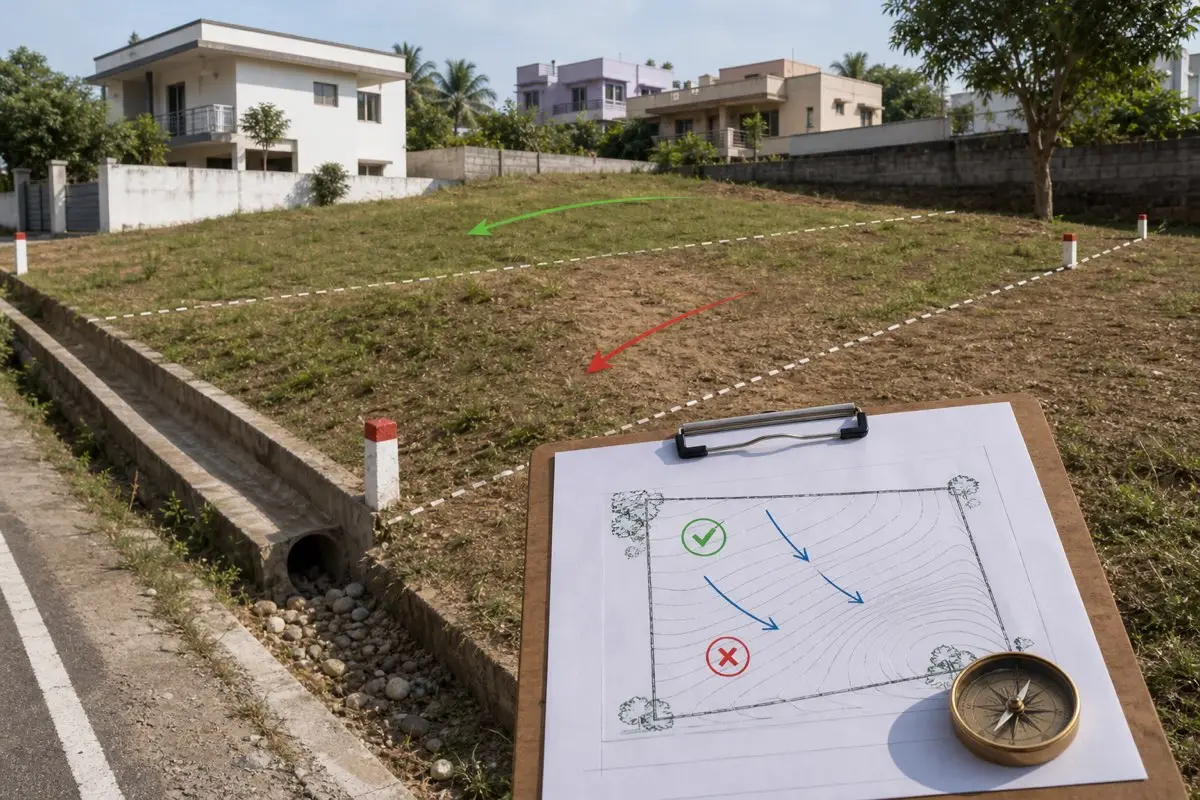
Why plot slope matters in Vastu and construction
In Vastu discussions, slope is often explained as the way energy, water, and movement settle on land. In construction, slope decides where rainwater travels, how high the plinth must be, whether the plot floods, and how much filling or cutting is needed. Both views lead to the same practical truth: land level should be checked carefully before buying.
A plot can have a good facing but poor slope. If rainwater enters the site, sits near the foundation, or flows toward the main door, everyday life becomes stressful. Damp walls, mosquito breeding, driveway problems, and repeated repairs can follow. This is why slope must be judged before room planning, gate selection, or decorative remedies.
Best slope according to common Vastu practice
Many Vastu traditions prefer a site that is lower, lighter, or more open toward the north and east, especially north-east, and higher or more protected toward south and west, especially south-west. This idea is usually linked with light, clarity, stability, and controlled weight. In practical terms, it also encourages the house to receive softer light and safer drainage when the site conditions support it.
However, do not apply this as a blind rule. If the municipal drain is on the opposite side, the road is much higher, or the neighbourhood floods, engineering advice becomes essential. The goal is not to fight gravity but to shape the site intelligently so water exits safely without damaging the house.
Problematic slopes buyers should notice
A sharp slope from north-east toward south-west is often considered less desirable in traditional Vastu because it can make the lighter zone heavy and the stability zone weak. A slope that sends water toward the main entrance, basement, septic area, or neighbour’s wall is also risky. Very steep land may need retaining walls, steps, ramps, and stronger drainage.
The worst slope is not always the one that sounds wrong in theory; it is the one that cannot be corrected within budget and legal limits. If correction needs deep filling, retaining structures, or changes beyond approval rules, the land may become expensive after purchase.
Road level, plinth height, and monsoon check
Road level is as important as plot slope. If the road is higher than the land, water may enter the plot during heavy rain. If the road is lower, the driveway may need careful gradient so vehicles do not scrape or water does not collect at the gate. Always compare plot level with road crown, drain invert, neighbouring plinths, and the final finished floor height.
Visit during monsoon if possible. If that is not possible, ask neighbours about waterlogging and check stains on compound walls. Look for low pockets, blocked drains, broken culverts, and areas where soil remains wet. A fifteen-minute inspection after rain can reveal what a polished sales visit hides.
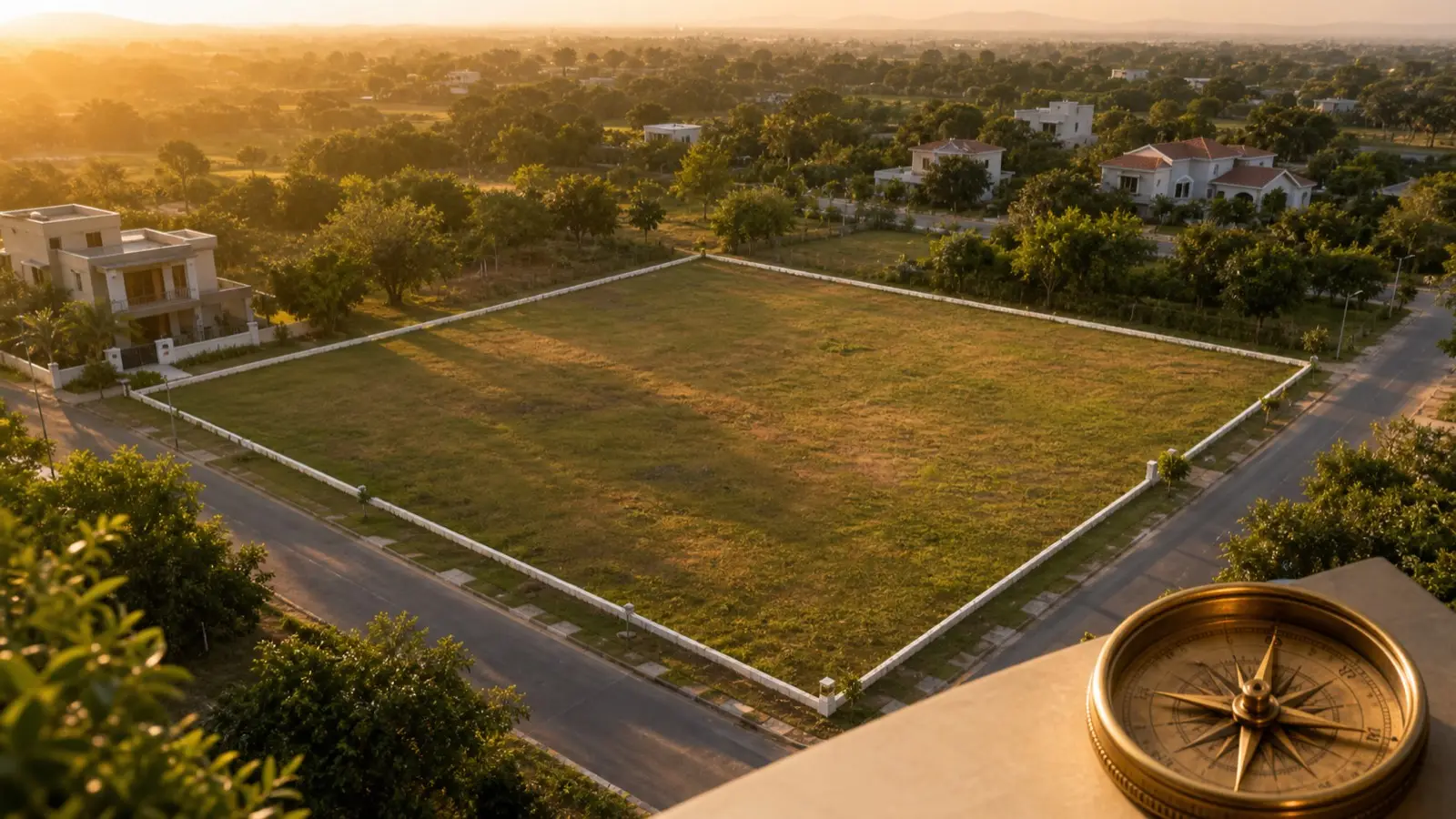
Slope inspection grid
Use this simple grid before paying an advance. It keeps the discussion clear when family members, brokers, engineers, and Vastu consultants use different words for the same land condition.
Direction
Confirm north, facing, road line, slope, and the affected zone before judging the plot.
Practical Risk
Check safety, drainage, legal approvals, parking, privacy, and construction cost.
Correction
Prefer clean planning, buffers, boundaries, levels, lighting, and useful open spaces.
Comparison table: good, manageable, and risky slopes
The following comparison is a practical starting point. It is not a replacement for a surveyor or civil engineer, but it helps you understand what to ask before finalising a plot.
| Condition | What to check | Best response |
|---|---|---|
| Minor issue | Small level, shape, or road concern with legal clarity. | Manage through design and maintenance. |
| Moderate issue | Affects entrance, parking, drainage, or one major room. | Get concept plan and correction cost before buying. |
| High risk | Legal uncertainty, flooding, unsafe road, or unusable shape. | Pause purchase and seek professional advice. |
Practical remedies for difficult slope
If the slope is only mildly difficult, corrections may include proper filling, compacted layers, surface drains, rainwater harvesting, garden grading, a higher plinth, and carefully placed paving. Keep the north and east visually lighter where possible, and use heavier planting or boundary treatment toward south and west when it suits the site.
Avoid quick cosmetic fixes. A copper strip, pyramid, plant, or colour cannot solve water entering the house. First fix drainage, levels, waterproofing, and safe access. Traditional remedies can be added later as supportive measures, not as substitutes for engineering.
How slope affects room planning
Slope influences where parking, stairs, kitchen, bedrooms, toilets, and water systems can be placed. A low area may look convenient for a garden but may flood if drainage is poor. A high area may be good for stability but expensive if it requires retaining walls. Room placement should be drawn only after levels are known.
For a new house, ask your architect to show spot levels on the concept plan. Mark where stormwater will move, where rainwater pipes will discharge, where underground tanks can sit, and how the driveway meets the road. This makes the Vastu plan practical rather than theoretical.
Common mistakes with plot slope
The biggest mistake is judging the land by eye. Many sites look flat until a survey reveals a meaningful level difference. The second mistake is filling the plot without compaction, which can lead to settlement and cracks. The third mistake is blocking natural water flow without creating a legal and safe alternative.
Another mistake is copying the neighbour’s plinth height. Their plot may have a different foundation, drain connection, or finished floor level. Your own survey and drainage plan matter more than roadside assumptions.
Frequently asked questions
Is north-east low and south-west high always best? It is a common traditional preference, but real drainage and local rules must be respected. Can slope be corrected after purchase? Sometimes, through grading, filling, drains, and plinth planning. Is a sloping plot bad? Not always. It depends on direction, steepness, water flow, and correction cost.
Before booking: the buyer checklist
A useful blog page should help the reader take action, not only read rules. Before booking any plot, create one folder with the sale deed copy, approved layout, survey sketch, tax receipt, encumbrance certificate, road width information, zoning details, and any builder or developer brochure. Then add your own photos from all four sides of the land. This simple folder makes it easier to compare Vastu advice with legal and physical reality.
Next, ask for a concept drawing before paying a large non-refundable amount. The drawing does not need expensive final detail. It should only show the north line, road, gate, main door, living room, kitchen, main bedroom, toilets, staircase, parking, borewell or water sump, septic tank, and overhead tank. If these basics fit comfortably, the land is easier to develop. If every function feels forced, the plot may create stress after purchase.
Think about your family’s real use
Many land decisions are made emotionally. A buyer likes the location, the broker says the price will rise, and family members feel pressure to decide quickly. Vastu should slow this moment down. Ask who will live there in five years: parents, children, guests, tenants, pets, or a home-office user. A plot that looks good today should still support sleep, study, cooking, parking, storage, and maintenance later.
For example, if older parents may live on the ground floor, the plot must allow a bedroom with safe bathroom access. If you expect two cars, parking should not block the main entrance. If you work from home, the plan should allow a quiet study or office. These practical needs do not dilute Vastu; they make it meaningful in daily life.
How to discuss this with an architect or Vastu consultant
Take measurements, photos, and questions to your consultation. Avoid asking only, “Is this plot good or bad?” A better question is, “What are the risks, what can be corrected, and what will it cost?” Ask the architect to explain structure, drainage, setbacks, and buildability. Ask the Vastu consultant to explain direction, entrance, open-space balance, and room placement. When both answers support each other, confidence improves.
If advice conflicts, do not panic. Safety, legality, and water management should come first. Then refine the entrance, zoning, colours, rituals, and remedies. This order keeps the home grounded. Google also rewards content that is clear, helpful, and trustworthy, so each page on your site should encourage responsible decisions rather than fear-based shortcuts.
Quick answers for search readers
Can remedies replace a good plot plan?
No. Remedies can support a home, but they should not replace drainage, legal verification, safe access, structural planning, and comfortable room sizes.
Should I decide only by facing direction?
No. Facing is only one part. Shape, slope, road condition, entrance position, services, and the final layout are equally important.
What is the safest first step?
Verify the north direction, documents, dimensions, road level, drainage, and a basic concept plan before making a major payment.
Related guides
Plot basics
Start with Plot & Land Vastu, Plot Shape Analyzer, and Balanced Layout.
Direction checks
Use Direction Vastu, Direction Finder, and How to Check Directions Correctly.
Room planning
Connect land decisions with Kitchen Vastu, Bedroom Vastu, and Vastu Remedies.
Final thoughts
Good Vastu content should help a buyer make a safer, calmer decision. Do not judge any plot from one word, one direction, or one fear-based comment. Verify the land, draw the plan, check the services, and then apply Vastu principles in a practical way. That is how a plot becomes a strong foundation for a peaceful home.