
Introduction
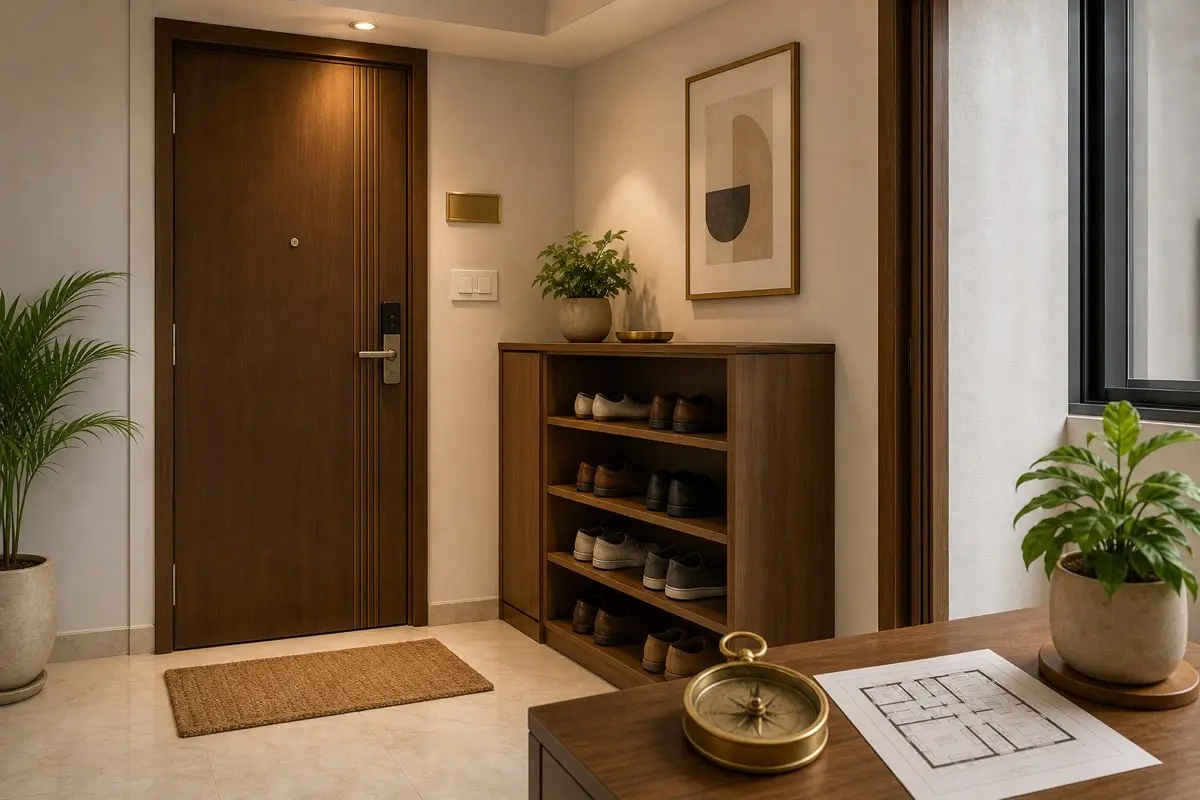
A shoe rack should support a clean entrance, not block the door or become a clutter zone.
This guide is written for modern Indian apartments, independent homes, and rental properties. It avoids fear-based claims and focuses on practical, beginner-friendly improvements that support cleanliness, order, safety, and comfort.
Table of contents
Direction
Find the suitable zone and realistic alternatives.
Examples
Apply the idea to flats, homes, and rented spaces.
Checklist
Review mistakes, maintenance, and no-demolition fixes.
Why shoe rack placement matters
The entrance is the first daily experience of a home. Shoes, slippers, parcels, keys, helmets, umbrellas, and bags often collect there. If the shoe rack is badly placed, the main door feels crowded even if the rest of the house is beautiful. In Vastu, the entrance should feel clean, open, and welcoming.
Shoe rack Vastu is not about fear. It is about hygiene, smell control, movement, and first impression. Footwear carries dust from outside, so storage should be practical and contained. A neat shoe rack can improve the entrance immediately without renovation.
Best direction for shoe rack
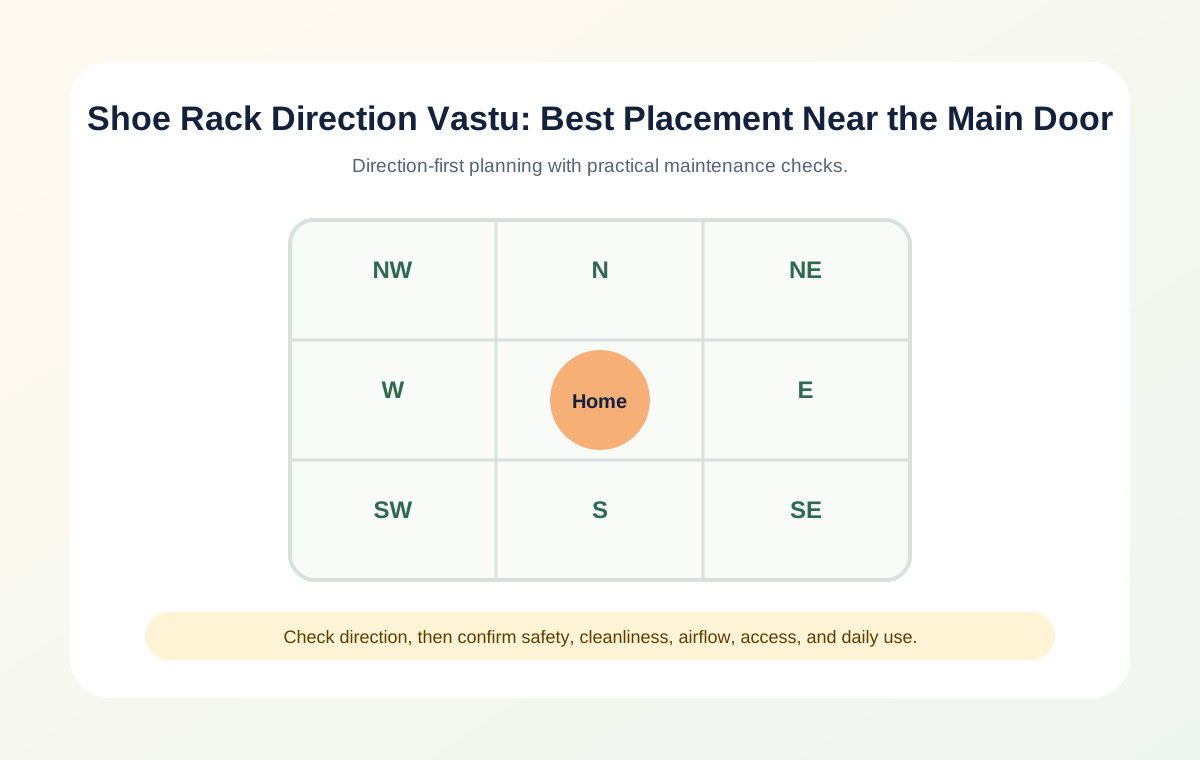
Many Vastu traditions prefer keeping shoe racks toward the west, south-west, or south side of the entrance area when practical. These zones can handle heavier storage better than north-east or pooja-like areas. However, apartments often have fixed foyer shapes, so the best placement is the one that keeps the door clear and the rack ventilated.
Avoid placing the shoe rack in the north-east corner if that area is used for pooja, meditation, or a clean spiritual zone. Avoid blocking the main door. Avoid placing footwear directly in the center of the entrance path.
Shoe rack near main door
A shoe rack near the main door is practical for most flats, but it should be to the side, not directly blocking entry. The main door should open fully. The first view should not be a pile of shoes. Use closed or semi-closed storage if the entrance is visible from the living room.
If the corridor outside the flat belongs to the society or common area, do not spread footwear there. It can look untidy and may violate building rules. Keep footwear inside a neat rack where possible.
Closed vs open shoe rack
Closed shoe racks look cleaner and are better when the entrance opens into the living room. But they need ventilation to avoid smell. Open racks are convenient but can look messy if shoes are not aligned. A louvered or ventilated closed rack is often a good compromise.
Do not store wet shoes inside a closed rack immediately. Let them dry first. Use removable trays or mats to make cleaning easier during monsoon. Practical hygiene is the strongest remedy.
Shoe rack for apartments
Apartment entrances are often small. Choose a slim rack that fits the wall without blocking movement. Avoid oversized cabinets that make the foyer narrow. If there is no space near the door, use a nearby side wall, utility corner, or wardrobe section, but keep daily footwear easy to access.
For rental flats, use a movable shoe cabinet. Avoid drilling heavy wall-mounted units without permission. A clean portable rack is better than a permanent but awkward installation.
Colours and materials
Wood, beige, brown, grey, cream, and muted tones work well for shoe racks. Avoid very bright colours that draw too much attention to footwear storage. The rack should blend with the entrance, not dominate it. Good handles, smooth shutters, and easy cleaning make the unit feel premium.
Metal racks can work if they are stable and rust-free. Plastic racks are budget-friendly but should be kept clean. Broken racks, bent shelves, and dusty corners reduce the entrance quality.
Common mistakes
Common mistakes include keeping shoes directly in front of the main door, allowing footwear to overflow, storing broken shoes, placing the rack beside a pooja corner, and ignoring smell. Another mistake is using the shoe rack top as a dumping surface for bills, keys, masks, and random tools.
Avoid hiding clutter inside a closed rack forever. Review footwear every few months. Donate, repair, or discard what is not used. A small entrance needs discipline.
No-demolition remedies
If the shoe rack is in a less ideal direction, improve cleanliness and organization first. Add ventilation, use a mat, clean the rack, remove unused shoes, and keep the main door line open. Use a small plant or warm light nearby if it does not block movement.
If the first view from the entrance is footwear, shift the rack slightly, add a screen, or use a closed unit. If the rack is near the living room, choose a design that looks like furniture rather than storage clutter.
Modern home examples
In a 1BHK flat, a slim vertical shoe cabinet beside the door can work well. In a 3BHK apartment, a built-in foyer cabinet with ventilation looks premium. In an independent house, footwear may be kept in a side verandah or mudroom-style area if protected from rain.
For families with children, label shelves or assign zones. For monsoon, keep a washable tray. For guests, leave a small clean space instead of forcing shoes into a full rack. These small systems make the entrance feel more welcoming.
Comparison table
| Home type | Best approach | Avoid |
|---|---|---|
| Apartment | Use no-demolition fixes, compact storage, and regular maintenance. | Blocking doors, shafts, balconies, or common passages. |
| Independent house | Plan direction, access, repair, and long-term maintenance together. | Ignoring plumbing, structure, safety, and drainage. |
| Rental home | Choose portable, reversible changes and inform owners for repairs. | Permanent drilling or hidden fixes without approval. |
Practical examples for Indian homes
Example one: a compact 2BHK flat has limited entrance or storage space. Instead of forcing a textbook rule, identify the cleanest side wall, keep movement clear, and use a solution that does not block doors, windows, or daily cleaning. In a flat, the best Vastu correction is often the one that the family can maintain every day.
Example two: an independent house has more flexibility, but also more responsibility. Before final placement, check direction, sunlight, drainage, wall strength, privacy, and access. A larger home can still feel unbalanced if one zone becomes a dumping area. Keep the selected area purposeful, not decorative for one week and neglected afterward.
Example three: a rental home needs reversible fixes. Use movable furniture, portable storage, better lighting, cleaning routines, plants, mats, or curtains instead of permanent alterations. If repair work is needed, inform the owner early and document the issue. This protects both comfort and deposit value.
Best practices for long-term results
Good Vastu is strongest when it becomes a habit. Review the area once a month. Remove dust, old papers, broken items, expired products, unused objects, and anything that makes the space difficult to clean. If the area needs water, wiring, ventilation, or storage, check those systems before buying symbolic remedies.
Use a simple rule: the space should be easy to see, easy to reach, easy to clean, and easy to explain. If family members do not understand where things belong, clutter returns quickly. Labelling shelves, assigning zones, and creating a weekly reset routine often helps more than adding new décor.
When planning your home, avoid extreme claims. A Vastu change should support better decisions, calmer routines, and a more organised home. It should not promise instant wealth, guaranteed health, or impossible outcomes. This balanced approach is more trustworthy and more useful for real homeowners.
Common mistakes to avoid
The first mistake is checking only one rule and ignoring the full home. A direction may be preferred, but if the area is dark, unsafe, blocked, leaking, or inconvenient, the result will not feel good. The second mistake is hiding problems behind decoration. A plant, curtain, cabinet, or lamp cannot replace repair, cleaning, or ventilation.
The third mistake is overcorrecting. Many people add too many objects after reading different advice online. The home then becomes visually crowded. Choose fewer, better changes. The fourth mistake is not reviewing the result after daily use. A solution that looks good on the first day may become annoying if it blocks movement, collects dust, or needs constant adjustment.
Final review before making changes
Before finalising any change, take photos from the room entrance and from the main daily-use angle. Photos reveal crowding, dark corners, awkward storage, blocked passages, and visual imbalance that the eye often ignores. Then ask one practical question: will this change still look clean and useful after thirty normal days?
If the answer is yes, the change is likely sensible. If the answer is no, simplify it. Choose a smaller item, lighter colour, better storage, improved repair, or easier maintenance routine. Long-term Vastu value comes from repeatable habits and a home that remains calm during ordinary busy weeks. This is the most practical test for families, tenants, and busy homeowners.
Quick checklist
- Confirm direction correctly before changing anything.
- Keep the area clean, dry, bright, and easy to access.
- Repair broken, leaking, dusty, or unsafe elements first.
- Prefer simple no-demolition changes before expensive renovation.
- Review the space in morning, afternoon, and evening light.
Related internal guides
- Homepage
- Entrance Main Door Vastu
- Main Door Mistakes
- Name Plate Vastu
- Entrance Lighting Vastu
- Shoe Rack Vastu
- Direction Vastu
- Vastu FAQ
Summary
The most useful Vastu improvements are usually practical. Direction gives a starting point, but cleanliness, maintenance, airflow, safety, and family routine decide whether the space works in real life. Start with the visible problem, solve it calmly, and then refine the placement or décor.
Frequently asked questions
Which direction is best for shoe rack?
West, south, or south-west side areas are commonly preferred when practical, but the rack must not block the entrance.
Can shoe rack be kept near main door?
Yes, if it is neat, ventilated, and placed to the side without blocking the door.
Should shoe rack be open or closed?
Closed or semi-closed racks look cleaner, but ventilation is important to avoid smell.
Can shoe rack be kept outside flat?
Only if society rules allow and it does not obstruct common passage. Inside storage is usually cleaner.
What should be avoided in shoe rack Vastu?
Avoid clutter, broken shoes, smell, blocked doors, and placement near pooja corners.
Which colour is good for shoe rack?
Wood, beige, brown, grey, cream, and muted tones are practical.
Can shoe rack face living room?
It is better to use a closed unit or shift it so footwear is not the first visual focus.
How often should shoe rack be cleaned?
Clean it regularly and review unused footwear every few months.
Conclusion
Use this Vastu guidance as a practical review tool. Avoid panic, avoid exaggerated promises, and avoid unnecessary demolition. A home that is clean, organized, safe, and thoughtfully arranged supports better daily living and creates the premium feeling readers want.