
On this page
- Why passages and corridors matter in Vastu
- Main door to passage: the first internal flow
- Lighting, width and colours for corridors
- Mirrors and wall decor in passages
- Storage, shoe racks and clutter control
- Room-wise corridor examples for Indian homes
- Common corridor Vastu mistakes
- Quick checklist
- Examples table
- FAQ
Why passages and corridors matter in Vastu
Passages and corridors are often ignored during home planning because they are not considered main rooms. Yet in Indian apartments, they connect the main door, living room, bedrooms, kitchen, bathrooms, balcony and sometimes the pooja corner. Every family member uses these spaces many times a day. A dark, narrow or cluttered passage can make the entire home feel smaller than it really is.
Passage and corridor Vastu is about movement. Traditional Vastu speaks about flow, direction and balance. In a modern flat, flow becomes very practical: can people walk easily, can elders move safely, can children run without hitting sharp corners, can guests understand where to go, and does the home feel open after entering? These questions matter more than decoration alone.
A corridor does not need expensive renovation to feel better. Better lighting, lighter colours, cleaner storage, safer edges and thoughtful mirrors can transform the feeling of the space. The goal is not to fear a passage; the goal is to make it bright, clean, purposeful and easy to maintain.
Main door to passage: the first internal flow
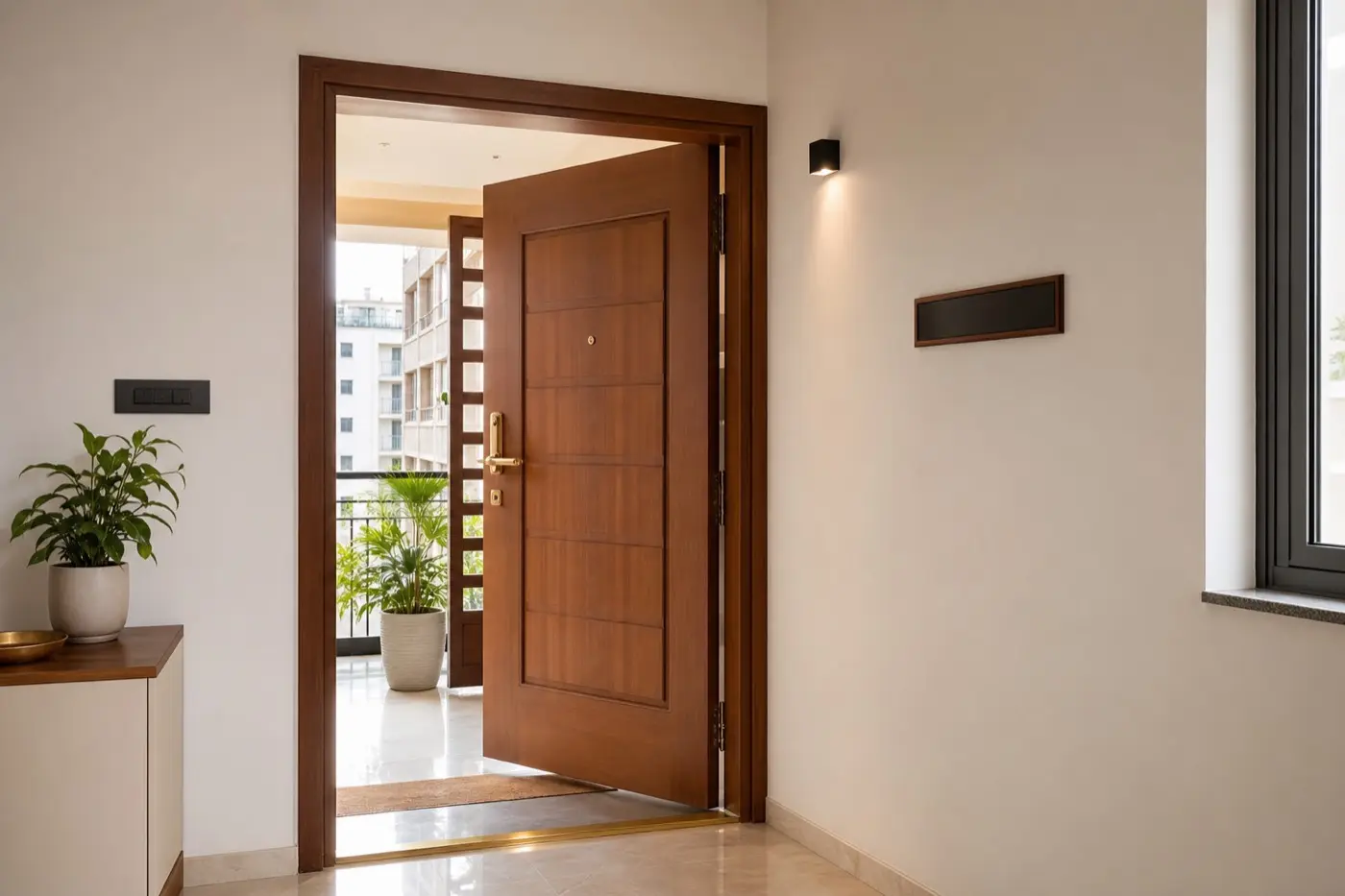
In many flats, the main door opens directly into a short passage before the living room appears. This first internal view is important. If the first view is a pile of footwear, delivery boxes, old bags or a dark wall, the home feels heavy even if the living room is beautiful. The entrance passage should look clear and welcoming.
Keep the door swing free. Do not place a stool, shoe rack, plant stand or storage basket where the door cannot open comfortably. If the corridor begins immediately after the entrance, use slim storage and warm light rather than bulky furniture. A neat threshold and clear walking line create a calmer start.
For related guidance, read Main Door Vastu, entrance lighting Vastu, entrance plants Vastu, and shoe rack Vastu. These pages help you treat the entrance and passage as one connected experience.
Lighting, width and colours for corridors
Lighting is the quickest corridor remedy. A passage with poor light can feel unsafe at night and dull during the day. Use warm white lights, wall washers, ceiling lights or motion lights depending on the layout. Avoid harsh blue-white light that makes the passage feel clinical. A soft glow is usually better for Indian homes.
If the passage is narrow, use light wall colours such as cream, ivory, beige, warm white, pale green or soft grey. Dark colours can look stylish in large homes, but in a narrow apartment corridor they often make the space feel smaller. Use deeper shades only as a small accent if there is enough light.
Width should be respected. Do not reduce a narrow corridor further with open shelves, protruding cabinets or oversized art frames. Movement should remain easy, especially if children, elders or guests use the space frequently. Practical Vastu always supports safe circulation.
Mirrors and wall decor in passages
Mirrors can make a corridor feel wider, but they should be used carefully. A mirror that creates confusing reflections at night or reflects clutter doubles the problem. A mirror near a passage should reflect light, art, plants or a clean wall, not shoes, dustbins or messy storage.
Avoid placing a mirror where people are startled by their reflection while walking in from a dark entrance. Also avoid mirrors that directly face the main door if the reflection feels harsh or visually restless. If a mirror improves light and spaciousness, use it with a simple frame and keep it clean.
Wall decor should be minimal. A corridor is a movement zone, not a gallery that needs every inch filled. Use one or two calm artworks, family photos, a slim console or a soft wall texture. For more ideas, see mirror Vastu and wall painting Vastu.
Storage, shoe racks and clutter control
Corridors often become storage zones because they are empty strips of space. This is where clutter begins. Old newspapers, unused chairs, courier parcels, school bags, cleaning tools and footwear slowly gather in the passage. Once this happens, the home feels blocked and untidy.
Closed storage is better than open clutter. If a shoe rack must be in the passage, choose a slim closed unit and keep it away from the exact door swing. Do not let footwear spill into the walking line. If the passage is too narrow, move the shoe rack to a better location instead of forcing it.
Avoid storing broken items in corridors. Broken frames, unused appliances or old cartons create visual heaviness. For a deeper reset, read declutter home Vastu and positive energy Vastu.
Room-wise corridor examples for Indian homes
Example 1: A 2BHK flat has a dark passage leading to two bedrooms. Use warm ceiling lights, light wall colour and avoid large cabinets. Add one framed artwork or family photo, but keep the passage mostly open.
Example 2: A 3BHK apartment has a passage visible from the main door. Keep the first wall clean and well lit. A slim console may work, but only if it does not create a bumping hazard. Place shoes in a closed unit and avoid leaving delivery parcels in the entry line.
Example 3: A villa has a long corridor with rooms on both sides. Use repeated soft lighting, indoor plants only where light is available, and avoid making the corridor look like a storage wing. Long corridors need rhythm, not clutter.
Common corridor Vastu mistakes
The biggest mistake is ignoring the corridor until it becomes a dumping area. Because passages are not glamorous, people postpone them. But the passage quietly shapes how the home feels every day. A clean passage can make an ordinary flat feel more premium.
Another mistake is using dark paint in a narrow corridor without enough light. Dark colours need space, contrast and careful lighting. Otherwise they make the passage feel smaller and heavier. Use light colours first, then add accents through frames or runners.
A third mistake is adding too many remedies. Bells, crystals, mirrors, plants, lamps and wall stickers all together can become visual noise. The best remedy is often simpler: remove clutter, improve light, clean the floor, repair damage and keep the walking path open.
Quick checklist for passage and corridor Vastu
Clear path
Keep the walking line open from entrance to living room, bedrooms and kitchen.
Warm light
Use soft lighting so the passage feels safe and welcoming at night.
Light colours
Choose cream, beige, warm white or soft tones for narrow corridors.
Closed storage
Use slim closed storage only if it does not reduce movement.
Careful mirrors
Use mirrors only where they reflect light and clean views, not clutter.
No dumping
Remove parcels, old items, broken frames and unused furniture from passages.
Practical examples for Indian homes
| Home type | Common issue | Vastu-friendly correction |
|---|---|---|
| 1BHK flat | Short dark passage after entrance | Add warm light, keep shoes closed and use a light wall colour. |
| 2BHK apartment | Passage to bedrooms collects bags and cartons | Add one closed storage unit or remove unnecessary items weekly. |
| 3BHK family home | Long corridor feels empty and dull | Use repeated soft lights, one artwork series and clean flooring. |
| Rental home | No drilling or painting allowed | Use plug-in lamps, removable hooks, slim shoe storage and decluttering. |
Related guides
For deeper planning, read Home Vastu, Room-wise Vastu, Main Door Vastu, entrance lighting Vastu, shoe rack Vastu, mirror Vastu, declutter home Vastu, positive energy Vastu, and the complete Vastu blog archive.
Before buying decor for a corridor, walk through it slowly during morning, evening and night. Notice where shadows appear, where people leave items, where the floor feels narrow and where the wall looks empty. This small observation habit helps you choose useful corrections instead of random decorative pieces.
Passages are successful when they disappear into good daily flow. You should not have to think about them constantly. A well-planned corridor quietly supports movement, safety, cleaning and visual calm. That is exactly the kind of practical Vastu modern Indian homes need.
Frequently asked questions
Is a long passage bad as per Vastu?
A long passage is not automatically bad. It needs good lighting, clear movement, clean walls and no clutter.
What colour is best for a corridor?
Light colours such as cream, warm white, beige, pale green or soft grey usually make corridors feel wider and brighter.
Can mirrors be used in passages?
Yes, but avoid placing mirrors where they create confusing reflections, face the main door harshly or make the passage feel restless.
Should shoe racks be kept in corridors?
Only if the corridor is wide enough and the rack is closed, neat and does not block movement.
How can I improve a dark corridor without renovation?
Use warm wall lights, lighter paint, clean flooring, minimal storage and reflective but not harsh decor.
Can a pooja corner be placed in a passage?
It is better to avoid busy passage zones unless the corner is calm, clean and respectful.
What should be avoided in a narrow passage?
Avoid bulky cabinets, open shoe shelves, dark paint, sharp furniture corners and poor lighting.
Is corridor lighting important in Vastu?
Yes. A bright, safe and welcoming passage improves movement and the feeling of the whole home.
Conclusion
Passage and Corridor Vastu: Lighting, Width, Mirrors, and Movement Tips works best when you focus on clear movement, warm light, clean walls, careful storage and safe daily use. A passage does not need to be dramatic; it needs to be bright, open and easy to maintain.
For more help, continue with room-by-room Vastu guides and the full VastuEssentials blog.