
For buyers
Check direction, door placement, passage flow, and entry cleanliness before booking.
For flats
Focus on the flat entrance, not only the building gate or tower direction.
For houses
Check compound gate, main door, steps, slope, and what the door opens into.
Why the main door matters in Vastu and daily life
In Indian homes, the main door is more than a physical entry. It is where guests arrive, family members return, deliveries come, children run in, elders pause, and daily energy shifts from outside to inside. Vastu calls this entry point important because it shapes the flow of prana, or life-supporting energy. Modern planning says something similar in practical words: the entrance affects light, security, circulation, smell, noise, and how calm the home feels.
A beautiful property can feel uncomfortable if the entry is cramped, dark, blocked, noisy, or poorly aligned. A modest property can feel peaceful if the entrance is clean, bright, easy to move through, and well connected to the living space. This is why main door Vastu is important before buying a house. It helps you notice what the marketing brochure may not show.
The first mistake many buyers make is asking only, "Is this north-facing or east-facing?" Direction matters, but it is not the whole story. A north-facing flat with a dark, blocked, dirty entrance can feel weaker than a west-facing flat with excellent light, clear movement, and well-planned rooms. Good Vastu looks at direction plus placement, proportion, cleanliness, and flow.
Step 1: Check the main door direction correctly
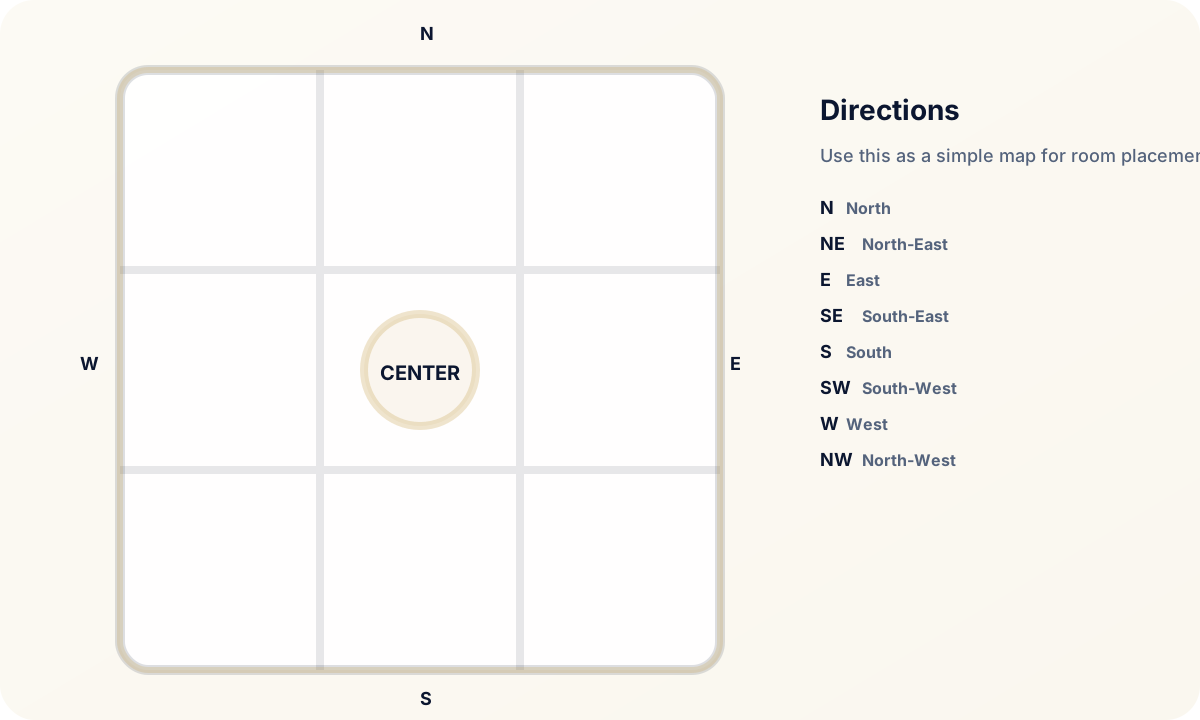
For Vastu, the facing direction of a home is commonly understood as the direction you face when you stand inside the home and look out through the main door; verify this using How to Check Directions Correctly. In flats, this means the flat's own entrance, not necessarily the road-facing side of the apartment tower. In independent houses, check both the compound gate and the main door because both influence arrival flow.
Do not depend only on the broker's words. Use a floor plan with a north arrow, Google Maps for the building orientation, and a compass reading away from strong metal interference. If you are checking a flat, avoid taking the reading near lifts, electrical panels, heavy grills, or refrigerators because phone compasses can be unreliable near metal and wiring.
Buyer method
- Ask for the floor plan with north arrow
- Mark the flat entrance or house main door
- Stand inside and face outward
- Cross-check direction using compass or map
Do not rely on
- Only verbal claims from broker or seller
- Only the tower direction in an apartment project
- One phone compass reading near metal
- A plan where north is not marked clearly
Helpful guide: How to Check Directions Correctly.
21 main door Vastu mistakes to check before buying
Use this list during a site visit. Take photos, sketch the entry, and check each point calmly. Some mistakes are serious because they affect safety or usability. Others are manageable with lighting, storage, cleaning, or interior planning. The best decision comes from understanding the difference.
1. Wrong direction claim
The seller says "north-facing" but the flat door faces another direction. Always verify.
2. Door opens into clutter
A door that opens into shoes, storage, or a tight wall creates daily pressure.
3. Dark entrance
A gloomy entry feels unwelcoming and can be unsafe at night.
4. Door cannot open fully
Restricted opening is a practical problem and a Vastu flow concern.
5. Toilet directly visible
If the bathroom is immediately visible from the main door, privacy and freshness suffer.
6. Kitchen flame visible
A direct view of stove from entry can feel exposed and restless in many homes.
7. Mirror facing door
A mirror directly reflecting the door may create visual disturbance for some families.
8. Shoe rack dominates entry
Shoes are normal, but they should be closed, neat, and not the first visual feature.
9. Main door faces lift
In flats, direct lift-facing doors can bring noise, movement, and privacy concerns.
10. Door faces staircase sharply
A staircase rushing toward the door can feel forceful and visually uneasy.
11. Broken threshold
Cracked tiles, loose frames, or damaged steps weaken the entrance impression.
12. Sloping entry toward door
Water or dust moving toward the door is poor hygiene and poor planning.
13. Very narrow passage
A cramped entry passage makes moving furniture and daily entry uncomfortable.
14. Dustbin near entrance
Avoid waste bins, old delivery bags, and cleaning tools at the main entry.
15. Door under heavy beam
A heavy beam over the entry can make the arrival zone feel compressed.
16. Harsh external noise
A door beside pumps, service shafts, or busy lobbies may disturb home peace.
17. Poor door quality
Weak locks, gaps, or poor frame alignment affect safety and confidence.
18. No nameplate or identity
A simple, clean nameplate gives order and dignity to the entry.
19. Entry opens to bedroom
Direct bedroom visibility from entrance can reduce privacy in compact flats.
20. Dead corner beside door
Unused dark corners collect dust and make the entry feel neglected.
21. No remedy space
If there is no place for light, storage, or visual correction, fixes become harder.
Direction-wise main door notes
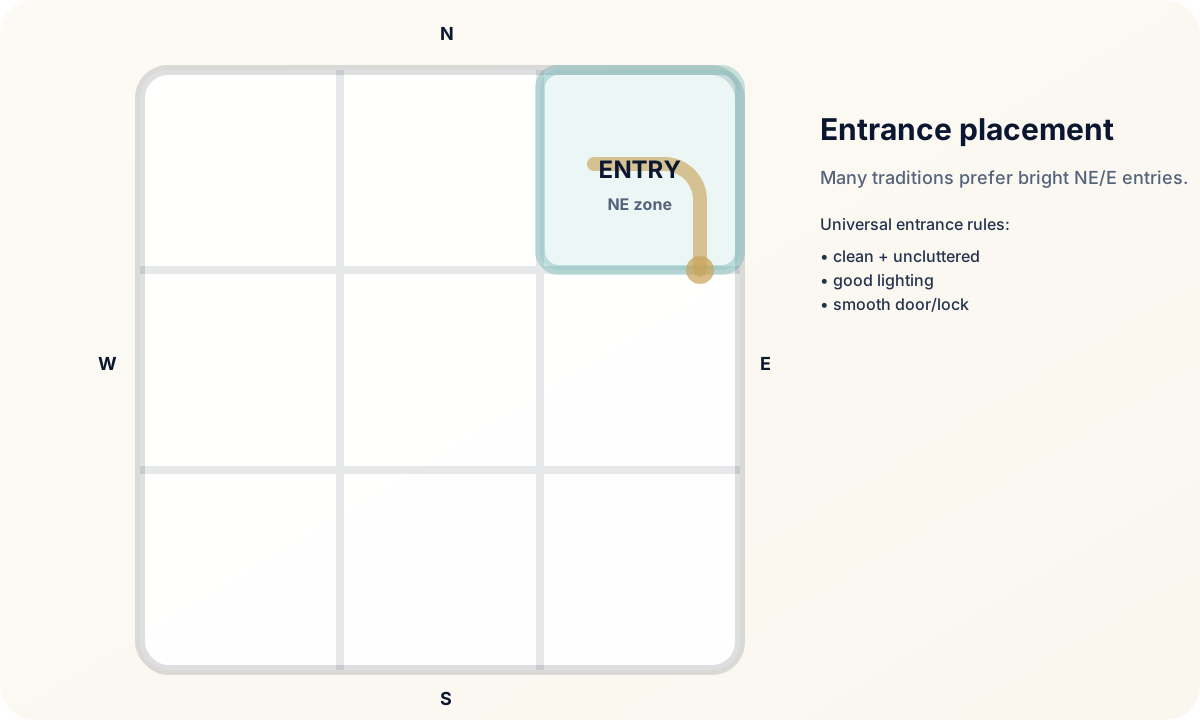
Different Vastu traditions discuss door directions in detail, and some use pada systems with specific zones within each side. For a beginner or buyer, keep the first-level approach simple: north and east entrances are often preferred, west can work with good planning, and south needs more careful assessment. But never judge by direction alone. Look at the whole layout.
Usually easier to work with
- North-facing doors with clean, bright entry
- East-facing doors with morning light and open flow
- North-East shifted entry when privacy and layout are good
Needs careful checking
- South-facing doors with poor room placement
- Doors directly facing lift, toilet, or clutter
- Entries with no light, no ventilation, or narrow movement
A south-facing house is not automatically bad, and a north-facing house is not automatically good; compare South-Facing House Vastu and North-Facing House Vastu. Read the full home layout, the entrance condition, and the room placement. For more on facing myths, see North Facing House Vastu.
Comparison table: Major red flags vs manageable issues
This table helps you decide what to worry about during a property visit. Some issues may affect safety, privacy, and resale value. Others can be improved with lighting, furniture, cleaning, and small design choices.
| Entrance issue | Concern level | Why it matters | Possible fix |
|---|---|---|---|
| Door direction misrepresented | High | Trust issue and wrong buying decision | Verify before booking; ask for marked plan |
| Door faces lift or staircase | Medium | Noise, privacy, and fast movement | Use screen, better door seal, entry lighting |
| Toilet visible from entrance | Medium | Privacy and freshness problem | Keep door closed, add divider, improve ventilation |
| Dark entry corner | Low to medium | Feels dull and neglected | Add warm light, clean wall, simple nameplate |
| Shoe clutter at entrance | Low | Creates smell and visual mess | Use closed shoe cabinet and daily reset |
Flat entrance vs independent house entrance
Flat buyers often confuse the apartment tower entrance with the flat entrance. Both matter, but your flat's own main door is the most relevant for your daily home Vastu. The tower gate influences common movement, security, and building experience. The flat door influences your private home.
In an independent house, you must check more layers: road approach, compound gate, steps, slope, main door, foyer, and what the door opens into. A beautiful main door loses strength if the approach is dirty, blocked, or sloping poorly. A good entrance is a complete sequence, not one isolated door.
For flats
- Check flat door direction from inside looking out
- Check lift, staircase, garbage chute, and corridor noise
- Check privacy when the door opens
- Check if the entry can hold neat shoe storage
For houses
- Check gate, path, steps, and main door alignment
- Check slope and drainage near entry
- Check if the door opens into a calm foyer or living area
- Check wall cracks, threshold, frame, and lighting
Simple main door remedies without demolition
If the property is otherwise good but the entrance has manageable issues, use simple fixes from No-Demolition Remedies. Add warm lighting, clean the door frame, repair damaged tiles, use a closed shoe cabinet, keep the threshold clean, and create a visual pause if the door opens directly toward a toilet, kitchen, or bedroom. A divider, plant, console table, curtain, or artwork can soften direct visibility.
Avoid overloading the entrance with many decorative items. A good entry should feel dignified, not crowded. Choose one clean nameplate, one warm light, one neat storage solution, and one pleasant visual element. Keep the door hardware strong and quiet. If the door squeaks every day, fix it. Small details shape daily energy more than people realise.
Light
Use a warm entry light so the door never feels dull at night.
Storage
Choose closed shoe storage that does not block the door path.
Cleanliness
Keep the threshold, mat, frame, handle, and nameplate clean.
Buyer checklist before paying token amount
Property visits can feel rushed. Brokers may show multiple units in one day, and buyers often focus on price, carpet area, view, and amenities. Use the checklist below so the entrance does not get ignored. A five-minute entry check can save months of regret.
Direction
- Facing verified
- Plan has north arrow
- Flat door checked separately
Flow
- Door opens fully
- No cramped first step
- No harsh direct view
Condition
- Frame is strong
- Threshold is not broken
- Lock feels secure
Surroundings
- No garbage chute smell
- Lift noise is acceptable
- Corridor is clean
Interior
- Entry can be lit well
- Shoe storage has space
- Living area feels open
Decision
- Issues listed clearly
- Fixes are realistic
- Cost is understood
Related guides for deeper reading
Entrance help
Entrance & Main Door Vastu, Direction Vastu, Check Directions
Buying guidance
Layout planning
More answers
FAQ: Main Door Vastu
Which direction is best for the main door as per Vastu?
North and east entrances are commonly preferred in many Vastu traditions, but the full layout matters. A clean, bright, uncluttered entrance with good room placement can be more supportive than a preferred direction with poor flow and clutter.
How do I check the facing direction of a flat?
Stand inside your flat at the main door and face outward. The direction you face is commonly treated as the flat's facing direction. Cross-check this with the floor plan and compass or map reading.
Is it bad if the main door faces a lift?
It is not always a deal-breaker, but it can create noise, privacy, and movement concerns. Check how busy the lift lobby is, whether the door has privacy, and whether a screen, better seal, or entry lighting can improve the situation.
Can a south-facing main door be good?
A south-facing entrance is not automatically bad. It needs careful checking of exact placement, room layout, light, ventilation, and daily flow. Avoid fear-based decisions and review the complete property.
Should a mirror face the main door?
Many people avoid a mirror directly opposite the main door because it can create visual restlessness. If a mirror is needed, place it where it reflects light, space, or a pleasant wall, not clutter or the door directly.
What should not be kept near the main entrance?
Avoid dustbins, broken shoes, old cartons, cleaning tools, dead plants, and cluttered delivery bags near the entrance. Keep the entry dignified, clean, and easy to move through.
Is a toilet visible from the main door a Vastu problem?
It can be a concern because of privacy, freshness, and visual comfort. If the property is otherwise good, use practical fixes: keep the bathroom door closed, improve ventilation, and add a screen or visual divider if possible.
What is the easiest main door Vastu remedy?
Clean the threshold, repair the door, add warm lighting, use closed shoe storage, and keep the entrance free from clutter. These simple changes improve the first impression and daily energy without demolition.
More Vastu guides to read next
Home and layout
Home Vastu, Apartment Vastu, Balanced Layout, Small Apartment Vastu
Directions and buying
Check Directions, Main Door Vastu, East-Facing House, North-Facing House
Room-wise help
Kitchen Vastu, Bedroom Vastu, Bathroom Vastu, Pooja Room Vastu
Focus and work
Study Room Vastu, Home Office Vastu, Wealth Vastu, Office Vastu
Remedies and support
Vastu Remedies, No-Demolition Remedies, Vastu FAQ, Trust and Support
Popular blog topics
Kitchen Do's and Don'ts, Mirror Vastu, Vastu Plants, Brahmasthan Vastu
Conclusion
Main door Vastu is not only about choosing north or east. It is about verifying the true direction, checking what the door faces, understanding how the entry feels, and deciding whether problems are structural or manageable. Before buying a house, do not rush this step. Stand at the door, observe the first view, listen for noise, check light, inspect the threshold, and imagine daily life.
A good entrance should feel clean, secure, bright, and respectful. If the door has small issues, many can be improved with lighting, storage, repair, and no-demolition remedies. If the entrance has major privacy, safety, or misrepresentation issues, pause and evaluate carefully before paying.