Quick rule
Keep the zone clean, functional, bright, and easy to maintain.
Best for
Indian homeowners, flat buyers, renters, plot investors, and families planning interiors.
First step
Verify the direction and layout on a plan before applying any rule.
What is Brahmasthan?
Brahmasthan refers to the central zone of a home or plot. Traditionally, it is treated as a calm, open, balanced area through which energy can distribute. In older courtyard homes, the centre often remained open to light and air. Modern flats rarely have a literal courtyard, so the principle must be adapted. The centre should not feel overloaded, blocked, damp, or chaotic.
How to identify the centre
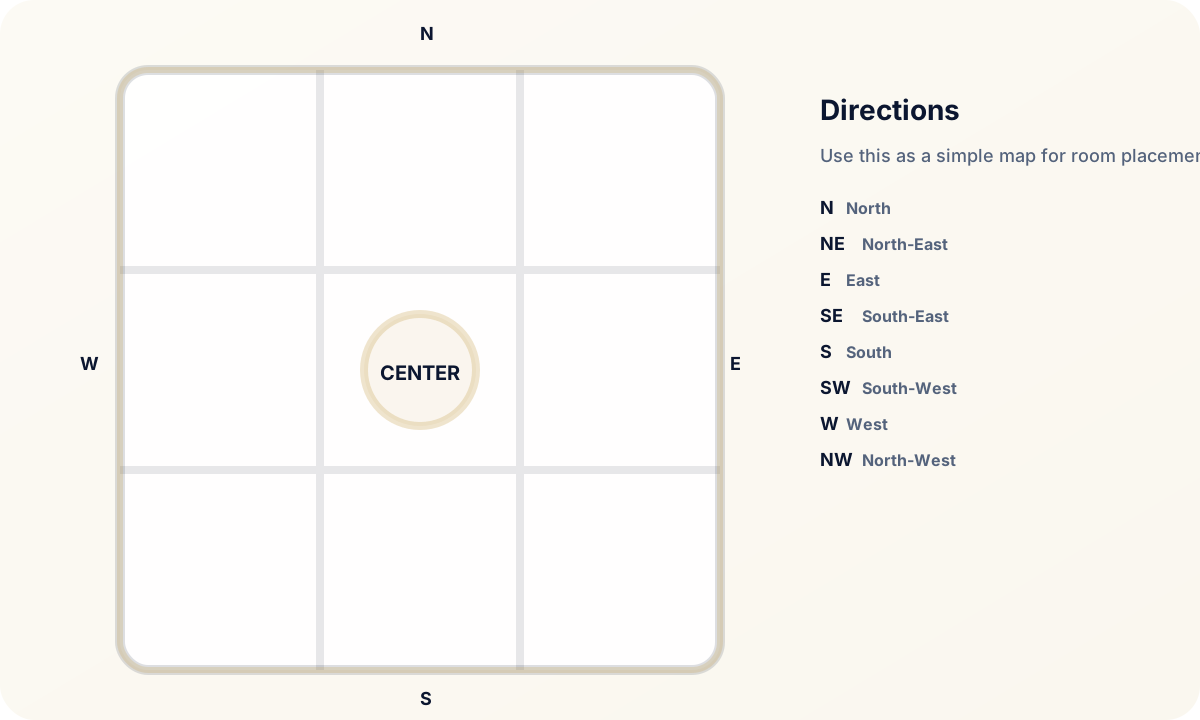
Use the floor plan and confirm directions with How to Check Directions Correctly. Draw the outer shape of the home, then find the central zone. In rectangular flats, this is easier. In irregular homes, approximate the usable centre. Do not guess by standing in the living room. Mark the plan with directions and room boundaries. The centre may fall in a passage, living area, dining space, or even near a wall depending on layout.
What to avoid in the centre
Avoid heavy storage, toilets, staircase pressure, clutter, broken furniture, dark partitions, and unused boxes in the central zone; staircase cases are explained in Staircase Vastu. If a toilet or staircase is already there, do not panic. Improve cleanliness, ventilation, lighting, and visual lightness. The goal is to reduce heaviness.
Brahmasthan in apartments
In flats, the centre may be a passage or part of the living room. Keep it easy to walk through. Avoid loading it with oversized dining tables, shoe racks, storage trunks, or decorative partitions. If the centre is a passage, keep lighting strong and walls clean. If the centre is near a dining area, keep furniture proportionate.
No-demolition fixes
Declutter the central zone, improve lighting, choose lighter furniture, remove broken items, and avoid storing heavy boxes there. Use rugs carefully so they do not become tripping hazards. If the centre feels dark, add ceiling or wall lighting. If it feels crowded, reduce furniture before buying remedies.
Real-life examples
A 2BHK had its centre blocked by a large dining table and extra chairs. After shifting to a compact table and clearing the pathway, the home felt larger. A villa had a staircase dominating the centre; better lighting, clean under-stair storage, and lighter wall colour reduced heaviness. A rental flat had cartons in the central passage; removing them changed the home immediately.
Do's and don'ts
Do
Start with light, air, safety, cleanliness, and practical placement before buying decorative remedies.
Avoid
Do not let fear-based advice override legal checks, structural safety, ventilation, or family comfort.
Improve
Use no-demolition fixes first: declutter, repair, brighten, ventilate, organise, and maintain.
Comparison table
| Check | Good sign | Warning sign | Practical fix |
|---|---|---|---|
| Direction | Verified on plan and cross-checked | Based only on broker words | Use floor plan, compass, and observation |
| Maintenance | Clean, dry, bright, and organised | Damp, cluttered, broken, or smelly | Repair, clean, ventilate, and simplify |
| Daily flow | Easy movement and clear purpose | Blocked path or confused use | Remove excess items and resize furniture |
| Remedy | Supports real function | Adds clutter without solving issue | Choose simple fixes that improve daily life |
7-day practical action plan
Day one is for observation. Walk through the space slowly and write down what feels heavy, dark, blocked, noisy, damp, or difficult to clean. Day two is for decluttering. Remove broken, expired, duplicate, and unrelated items. Day three is for light. Replace weak bulbs, clean windows, and open curtains where privacy allows. Day four is for air and smell. Check exhaust, drains, damp corners, and closed storage. Day five is for placement. Move small items before considering large changes. Day six is for safety: locks, steps, slippery floors, wiring, and sharp corners. Day seven is for maintenance. Create a weekly routine so the improvement does not disappear.
This action plan works because most Vastu issues in modern Indian homes are not solved by one object. They are solved by a steady relationship with the home. When a family keeps important areas clean, bright, and purposeful, the home begins to feel more supportive. If a structural issue remains, you can then decide whether a professional consultation or renovation is worth it.
Buyer checklist
Before buying or renting, visit the property at different times if possible. Morning light, afternoon heat, evening noise, and monsoon dampness can change your opinion. Ask for the floor plan, check the north arrow, and compare the plan with the actual site. Do not rely only on sample-flat styling. A staged flat may hide storage problems, ventilation issues, or weak natural light. Take photographs, measure important areas, and discuss practical fixes with family before paying token money.
Also check whether the issue is personal, practical, or structural. Personal preferences can be adjusted. Practical issues may need small fixes. Structural issues need serious evaluation. This distinction protects you from rejecting good homes unnecessarily and from accepting homes that will be expensive to correct.
Detailed Brahmasthan guide for modern layouts
Brahmasthan is easy to misunderstand because modern homes rarely have an open courtyard. In a compact flat, the centre may be a small passage, part of the living room, or the edge of a dining area. The principle is not that every apartment must have an empty central square. The principle is that the central area should not feel suffocated, overloaded, dirty, or impossible to move through.
To find the centre, use the plan. Do not guess emotionally. Draw the outer boundary of the flat or house, then mark the central zone. If the home is irregular, use the main usable rectangle as a guide and note cut-outs separately. Once found, observe the area. Is it blocked by furniture? Is it dark? Is it used for dumping bags? Is there a toilet, staircase, or heavy storage there? Is movement easy?
If the centre contains a dining table, choose proportion carefully. A compact table that supports family meals can be fine. A large table that blocks all movement is not. If the centre is a passage, keep it bright and clean. If it has a ceiling beam, use lighting and colour to reduce heaviness. If it has unavoidable fixed features, improve everything around them.
Realistic Brahmasthan examples
A 2BHK apartment had its centre filled with a large storage unit because the family lacked cupboards. The home felt cramped. After shifting rarely used items to loft storage and replacing the unit with a smaller console, movement improved. Another home had a central dining table with six bulky chairs in a space meant for four. Changing chair size made the centre breathe again.
A villa had a staircase near the centre. The family could not relocate it. They improved lighting, removed under-stair clutter, painted the area lighter, and kept the landing clean. The structural condition remained, but the central heaviness reduced. Brahmasthan Vastu often works through subtraction: remove what is blocking the home.
Most searched Brahmasthan concerns
Readers often ask whether a toilet in the centre is bad. Traditionally, toilets in the centre are avoided because the centre is treated as a balancing zone. If already present in an apartment, focus on dryness, ventilation, door discipline, and excellent maintenance. Another common question is whether heavy furniture can be kept in the centre. Occasional furniture may be fine, but heavy storage and clutter should be avoided.
People also ask whether a living room can occupy the Brahmasthan. Yes, if it remains open and easy to move through. A clean living area in the centre may work better than an empty but dark, neglected passage. The real test is whether the centre distributes movement and light or blocks them.
Monthly centre-of-home reset
The centre of the home tends to collect temporary items: bags, laundry, toys, delivery parcels, extra chairs, school projects, and boxes waiting to be moved. A monthly Brahmasthan reset keeps this from becoming permanent. Stand in the centre and turn slowly. Ask whether the area feels open, bright, and easy to cross. If not, remove what does not belong there.
If the centre is part of the living room, choose furniture that fits the room rather than furniture that looked good in a showroom; see Living Room Vastu for more. Oversized sofas, bulky dining sets, and heavy partitions can make the heart of the home feel blocked. If the centre is a passage, keep wall hooks minimal and avoid storing shoes, bags, or cleaning tools there. If the centre has unavoidable structure, reduce visual heaviness with light colour and clean lighting.
Before buying a flat, mark the centre on the plan and imagine daily movement. Will children run through safely? Can elders walk without obstacles? Will guests sit comfortably? Can the area be cleaned easily? These practical questions reveal whether the Brahmasthan supports the home or becomes a pressure point.
Decision framework for Indian homeowners
Use a three-level decision framework before making any change. Level one is health and safety. If there is leakage, smell, poor light, unsafe movement, broken hardware, or electrical risk, fix that first. Level two is daily comfort. Ask whether the space is easy to use, easy to clean, and emotionally comfortable for the family. Level three is Vastu refinement. Once the practical foundation is strong, use direction, placement, colour, and symbolic remedies to improve balance.
This order prevents expensive mistakes. Many families spend money on decorative remedies while ignoring the actual problem: a dark corner, a blocked path, a damp wall, or an overcrowded room. Vastu should make the home more liveable. If an advice makes the home harder to maintain, more cluttered, or more fearful, pause and rethink it.
For buyers, write every concern in two columns: fixed and fixable. Fixed issues include structure, shaft location, major room position, and building orientation. Fixable issues include lighting, furniture, storage, colour, curtains, screens, cleaning, and minor repairs. A property with many fixable issues may still be good. A property with serious fixed issues needs deeper review.
For renters, choose reversible improvements. Lamps, curtains, movable cabinets, rugs, plants, organisers, and cleaning routines can change the feel of a home without damaging it. For owners, plan changes in stages. Start with the least expensive improvement and observe the result before renovating. This patient approach is often more successful than a dramatic one-time correction.
Final centre-of-home notes
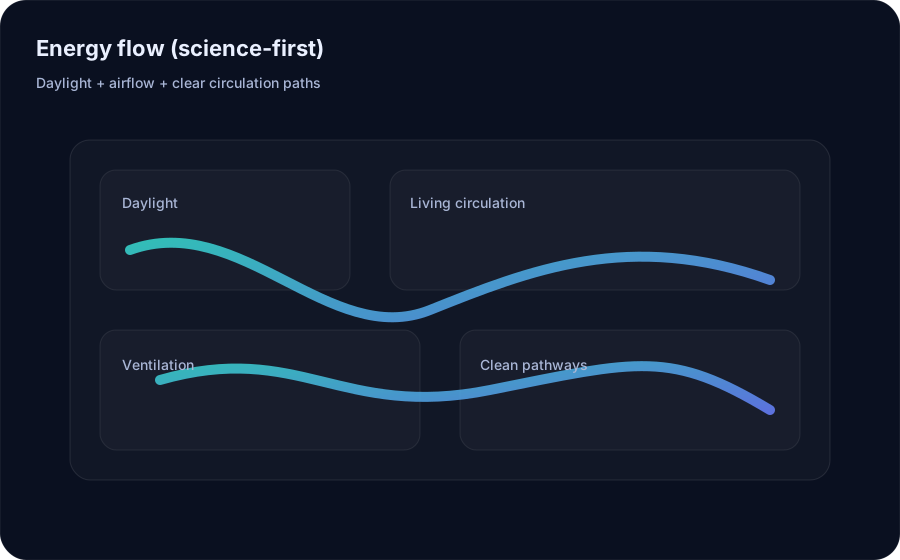
The centre of the home silently affects every room because people cross it repeatedly. If it is blocked, the whole home feels smaller. If it is clean and easy to move through, even a compact flat can feel more open. This is why Brahmasthan Vastu is relevant for apartments, not only traditional houses.
Do not obsess over making the centre empty if your home is small. Instead, make it light, purposeful, and easy to maintain. A clean dining corner, a clear passage, or a simple living area can all work when proportion and movement are respected.
FAQ
Is this Vastu rule compulsory?
No single rule should be used without reading the full layout. Use Vastu as a planning guide along with safety, hygiene, legal checks, and practical comfort.
What if I cannot change the layout?
Use no-demolition improvements first: better light, ventilation, cleaning, storage, curtains, screens, and disciplined maintenance.
Should I use remedies?
Use remedies only after fixing the practical issue. A remedy should support the home, not add clutter or fear.
Is this suitable for apartments?
Yes. Apartment Vastu is about improving fixed layouts through smart placement, cleanliness, lighting, and routine.
Internal links for deeper reading
Home planning
Room-wise help
More answers
More Vastu guides to read next
Home and layout
Home Vastu, Apartment Vastu, Balanced Layout, Small Apartment Vastu
Directions and buying
Check Directions, Main Door Vastu, East-Facing House, North-Facing House
Room-wise help
Kitchen Vastu, Bedroom Vastu, Bathroom Vastu, Pooja Room Vastu
Focus and work
Study Room Vastu, Home Office Vastu, Wealth Vastu, Office Vastu
Remedies and support
Vastu Remedies, No-Demolition Remedies, Vastu FAQ, Trust and Support
Popular blog topics
Kitchen Do's and Don'ts, Mirror Vastu, Vastu Plants, Brahmasthan Vastu
Conclusion
Vastu is most useful when it helps a family make calmer decisions and maintain a healthier home. Use the direction rules as a guide, but also check light, air, hygiene, safety, storage, privacy, and daily routine. The best home is not the one that sounds perfect in a brochure. It is the one that supports the people living in it every morning and every night.
Before buying, renting, or renovating, write down what can be changed and what cannot. Fix the basics first: leaks, clutter, lighting, ventilation, broken items, noisy corners, and unsafe placement. Then use Vastu refinements to make the home feel more balanced, respectful, and easy to maintain.