VastuEssentials.com Complete guide to Vastu Shastra
Home Blog Staircase Vastu
Blog

Staircase Vastu: Best Direction, Placement, and Mistakes to Avoid

Staircase Vastu is highly searched by duplex owners, villa buyers, and families building independent houses; compare staircase location with Balanced Layout examples. Stairs carry weight, movement, height, and daily circulation, so their placement affects safety and the feeling of balance. This guide explains direction, mistakes, under-stair use, and no-demolition improvements.

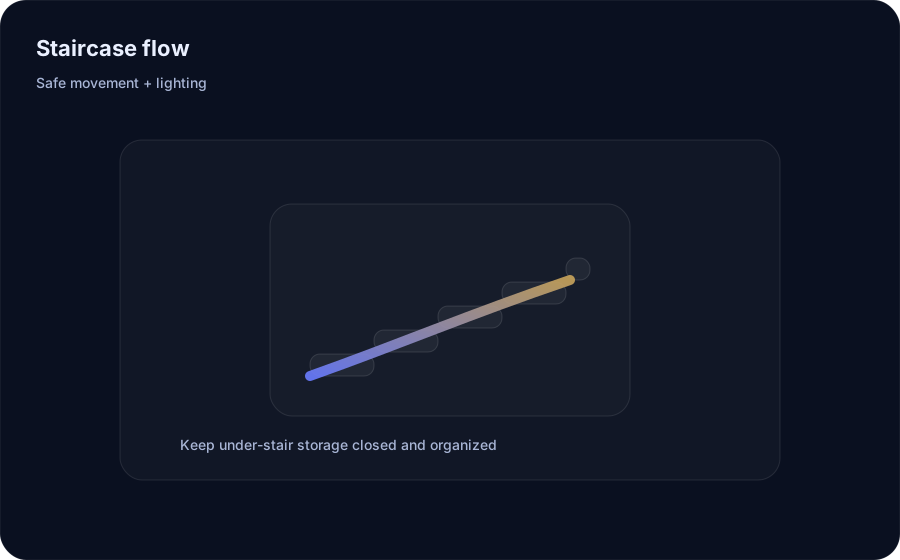
Staircase flow illustration for Indian home planning
A staircase should feel stable, safe, and easy to climb.
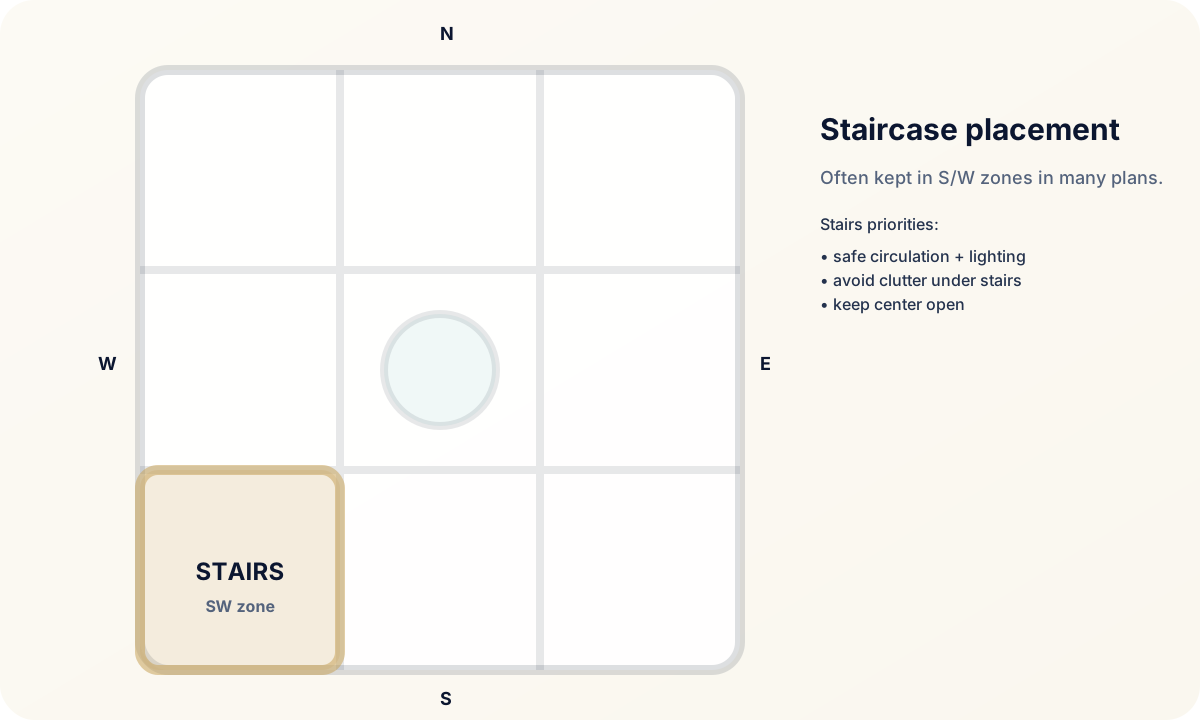
South-West staircase direction diagram for Vastu
Heavy movement is often planned in stronger zones.

Quick rule

Keep the zone clean, functional, bright, and easy to maintain.

Best for

Indian homeowners, flat buyers, renters, plot investors, and families planning interiors.

First step

Verify the direction and layout on a plan before applying any rule.

Why staircase placement matters

A staircase is not just a set of steps. It is a vertical path that moves people, sound, light, and attention between floors. If it is placed badly, it can cut the centre of the home, block light, create unsafe corners, or dominate the living space. In Vastu, stairs are often treated as a heavy element, so many traditions prefer them in stronger zones such as South, West, or South-West, depending on the plan. The practical reason is also clear: stairs need structural support and should not disturb calm, open areas.

Best direction and movement

Many Vastu practitioners prefer staircases that rise clockwise and are placed away from the exact centre or North-East. The South-West, South, or West zones are often considered workable for heavier structures. But each house must be judged with the full plan. A staircase that is technically in a preferred zone but poorly lit, unsafe, or too narrow is still a problem. Safety and comfort come first.

Staircase Vastu for duplex homes and villas

In duplex flats and villas, the staircase often becomes a design feature. It may sit in the living room, lobby, or side passage. Before finalising, check whether it blocks the main door view, cuts the living area, or makes the home noisy. A central dramatic staircase may look premium but can divide the home if not designed carefully. Keep railings safe, steps even, and lighting strong.

Under-stair storage and usage

Under-stair space is tempting for storage, pooja shelves, toilets, or work desks, but check Pooja Room Vastu before using it as a prayer space. Use it carefully. Storage of shoes, cleaning tools, or heavy household items can work if closed and organised. Avoid using a dark under-stair area as a pooja space or a cramped study corner. If a toilet is planned under stairs, check ventilation and usability seriously. A hidden wet zone with poor airflow can create long-term problems.

Common staircase mistakes

Common mistakes include stairs in the centre, poor lighting, uneven riser height, clutter under stairs, weak railing, sharp staircase facing the main door, and dark corners collecting dust. In Vastu and architecture, all these affect movement. A staircase should not feel like a threat or obstacle. It should feel steady and predictable.

No-demolition improvements

If the staircase is already built, improve lighting, clean under-stair clutter, repair railings, add non-slip strips, and keep the landing clear. If the staircase faces the main door directly, soften the line with a plant, screen, console, or lighting depending on space. Do not crowd the remedy area. The aim is to calm movement, not create more blockage.

Do's and don'ts

Do

Start with light, air, safety, cleanliness, and practical placement before buying decorative remedies.

Avoid

Do not let fear-based advice override legal checks, structural safety, ventilation, or family comfort.

Improve

Use no-demolition fixes first: declutter, repair, brighten, ventilate, organise, and maintain.

Comparison table

CheckGood signWarning signPractical fix
DirectionVerified on plan and cross-checkedBased only on broker wordsUse floor plan, compass, and observation
MaintenanceClean, dry, bright, and organisedDamp, cluttered, broken, or smellyRepair, clean, ventilate, and simplify
Daily flowEasy movement and clear purposeBlocked path or confused useRemove excess items and resize furniture
RemedySupports real functionAdds clutter without solving issueChoose simple fixes that improve daily life

7-day practical action plan

Day one is for observation. Walk through the space slowly and write down what feels heavy, dark, blocked, noisy, damp, or difficult to clean. Day two is for decluttering. Remove broken, expired, duplicate, and unrelated items. Day three is for light. Replace weak bulbs, clean windows, and open curtains where privacy allows. Day four is for air and smell. Check exhaust, drains, damp corners, and closed storage. Day five is for placement. Move small items before considering large changes. Day six is for safety: locks, steps, slippery floors, wiring, and sharp corners. Day seven is for maintenance. Create a weekly routine so the improvement does not disappear.

This action plan works because most Vastu issues in modern Indian homes are not solved by one object. They are solved by a steady relationship with the home. When a family keeps important areas clean, bright, and purposeful, the home begins to feel more supportive. If a structural issue remains, you can then decide whether a professional consultation or renovation is worth it.

Buyer checklist

Before buying or renting, visit the property at different times if possible. Morning light, afternoon heat, evening noise, and monsoon dampness can change your opinion. Ask for the floor plan, check the north arrow, and compare the plan with the actual site. Do not rely only on sample-flat styling. A staged flat may hide storage problems, ventilation issues, or weak natural light. Take photographs, measure important areas, and discuss practical fixes with family before paying token money.

Also check whether the issue is personal, practical, or structural. Personal preferences can be adjusted. Practical issues may need small fixes. Structural issues need serious evaluation. This distinction protects you from rejecting good homes unnecessarily and from accepting homes that will be expensive to correct.

Detailed staircase Vastu for modern Indian homes

Staircases are especially important in duplex apartments, row houses, and villas because they influence both movement and structure. A staircase that is too steep, too narrow, poorly lit, or placed awkwardly can make the home feel tiring. In Vastu terms, stairs represent weight and upward movement. In daily life, they represent safety, sound, and circulation. These two views meet in one practical rule: stairs should feel stable and should not disturb the calmest parts of the home.

When designing a new home, avoid treating the staircase only as a showpiece. A floating stair in the living room may look premium, but ask whether elders and children can use it safely. Check railing height, step depth, lighting, and landing space. If the staircase cuts through the centre of the home, the house may feel divided; this connects directly with Brahmasthan Vastu. If it dominates the entrance, arrival may feel rushed. If it is hidden in a dark corner, daily use may feel unsafe.

For duplex flats, the staircase often sits near the living area. Keep the area under and around it organised. Do not let it become a dumping zone for old shoes, bags, tools, or cartons. If you use under-stair storage, keep it closed and labelled. If you place a small console or decor below, keep it simple. A staircase already has visual weight; the surrounding area should not become heavier.

Realistic staircase examples

A duplex owner had a staircase facing the main door directly. The family felt the entry was too forceful. They did not demolish anything. They softened the direct line with a slim console, warm light, and a plant placed without blocking movement. Another villa had an under-stair toilet with poor ventilation. The real issue was smell and dampness, not only location. Better exhaust, sealing, and cleaning improved it.

In one independent house, a central staircase made the living and dining areas feel disconnected. The family improved the experience with brighter central lighting, lighter wall colour, and removal of heavy storage from the landing. The staircase remained where it was, but the heaviness reduced. This is often the practical path in existing homes.

Most searched staircase Vastu concerns

People often ask whether stairs should be clockwise. Many traditions prefer clockwise rise, but safety and structure are still essential. A clockwise stair with uneven steps is not good. Another common question is whether a staircase can be in the North-East. Many Vastu practitioners avoid heavy structures there because the zone is traditionally kept light. If already built, keep the area clean, bright, and visually light, and avoid loading it with extra storage.

Readers also ask what can be kept under stairs. Closed storage for household items is usually more practical than pooja, study, or sleeping use. Avoid turning under-stair space into a cramped prayer corner or work desk. If the space is dark and compressed, use it only for organised storage or leave it open.

Monthly staircase maintenance plan

A staircase should be reviewed monthly because small safety issues become serious over time. Check whether any tile is loose, whether the railing shakes, whether the light works, and whether the landing is being used for storage. In many Indian homes, staircase landings slowly collect paint cans, old toys, delivery boxes, and unused furniture. This blocks movement and makes the stair feel heavy. Clear it before it becomes normal.

For homes with elders, add handrail support on the side that feels natural to use. For children, make sure railings do not have unsafe gaps. For duplex homes, keep the stair light on during evening hours. A dark stair is not only a Vastu concern; it is a safety concern. If the staircase is visible from the living room, maintain it like a design feature: clean wall, simple decor, no clutter below.

If you are buying a duplex or villa, climb the stairs slowly during the visit and use Main Door Vastu to check the entry-stair relationship. Notice whether the rise feels tiring, whether the landing is comfortable, and whether furniture can be moved between floors. A beautiful staircase that is impossible to use comfortably will irritate the family for years.

Decision framework for Indian homeowners

Use a three-level decision framework before making any change. Level one is health and safety. If there is leakage, smell, poor light, unsafe movement, broken hardware, or electrical risk, fix that first. Level two is daily comfort. Ask whether the space is easy to use, easy to clean, and emotionally comfortable for the family. Level three is Vastu refinement. Once the practical foundation is strong, use direction, placement, colour, and symbolic remedies to improve balance.

This order prevents expensive mistakes. Many families spend money on decorative remedies while ignoring the actual problem: a dark corner, a blocked path, a damp wall, or an overcrowded room. Vastu should make the home more liveable. If an advice makes the home harder to maintain, more cluttered, or more fearful, pause and rethink it.

For buyers, write every concern in two columns: fixed and fixable. Fixed issues include structure, shaft location, major room position, and building orientation. Fixable issues include lighting, furniture, storage, colour, curtains, screens, cleaning, and minor repairs. A property with many fixable issues may still be good. A property with serious fixed issues needs deeper review.

For renters, choose reversible improvements. Lamps, curtains, movable cabinets, rugs, plants, organisers, and cleaning routines can change the feel of a home without damaging it. For owners, plan changes in stages. Start with the least expensive improvement and observe the result before renovating. This patient approach is often more successful than a dramatic one-time correction.

FAQ

Is this Vastu rule compulsory?

No single rule should be used without reading the full layout. Use Vastu as a planning guide along with safety, hygiene, legal checks, and practical comfort.

What if I cannot change the layout?

Use no-demolition improvements first: better light, ventilation, cleaning, storage, curtains, screens, and disciplined maintenance.

Should I use remedies?

Use remedies only after fixing the practical issue. A remedy should support the home, not add clutter or fear.

Is this suitable for apartments?

Yes. Apartment Vastu is about improving fixed layouts through smart placement, cleanliness, lighting, and routine.

More Vastu guides to read next

Conclusion

Vastu is most useful when it helps a family make calmer decisions and maintain a healthier home. Use the direction rules as a guide, but also check light, air, hygiene, safety, storage, privacy, and daily routine. The best home is not the one that sounds perfect in a brochure. It is the one that supports the people living in it every morning and every night.

Before buying, renting, or renovating, write down what can be changed and what cannot. Fix the basics first: leaks, clutter, lighting, ventilation, broken items, noisy corners, and unsafe placement. Then use Vastu refinements to make the home feel more balanced, respectful, and easy to maintain.