
Main point
South-facing is not automatically bad. Exact door placement and layout decide quality.
Best for
Buyers comparing flats, villas, plots, and independent houses.
Check first
Main door, kitchen, master bedroom, slope, toilets, and entry light.
Why south-facing houses create confusion
South-facing homes carry a strong reputation in popular Vastu discussions. Some families avoid them completely because they have heard that south brings heat, stress, or financial pressure. Other families ignore the concern and say facing does not matter at all. Both extremes are incomplete. Vastu is a planning system, and planning depends on exact placement, proportion, direction, and use of space.
A home is not judged by one label. A south-facing house can be well planned if the entrance falls in a suitable zone, the kitchen is placed thoughtfully, the master bedroom has stability, and the centre remains open and calm. A north-facing house can feel poor if the entry is cluttered, kitchen is badly placed, and toilets dominate sensitive zones. Direction is important, but it is one part of a larger reading.
How to check a south-facing house correctly
Stand inside the home at the main door and look outward. If you face south, the home is commonly called south-facing. In apartments, check the flat entrance, not only the tower gate. In independent houses, check the compound gate and the main door as separate layers. Use the floor plan with north arrow, then cross-check with compass or maps.
Before booking
- Verify direction on the plan
- Check exact door position
- Observe light and heat
- Check what the door opens into
Avoid relying on
- Broker claims only
- One phone compass reading
- General fear statements
- Facing direction alone
Room placement checklist
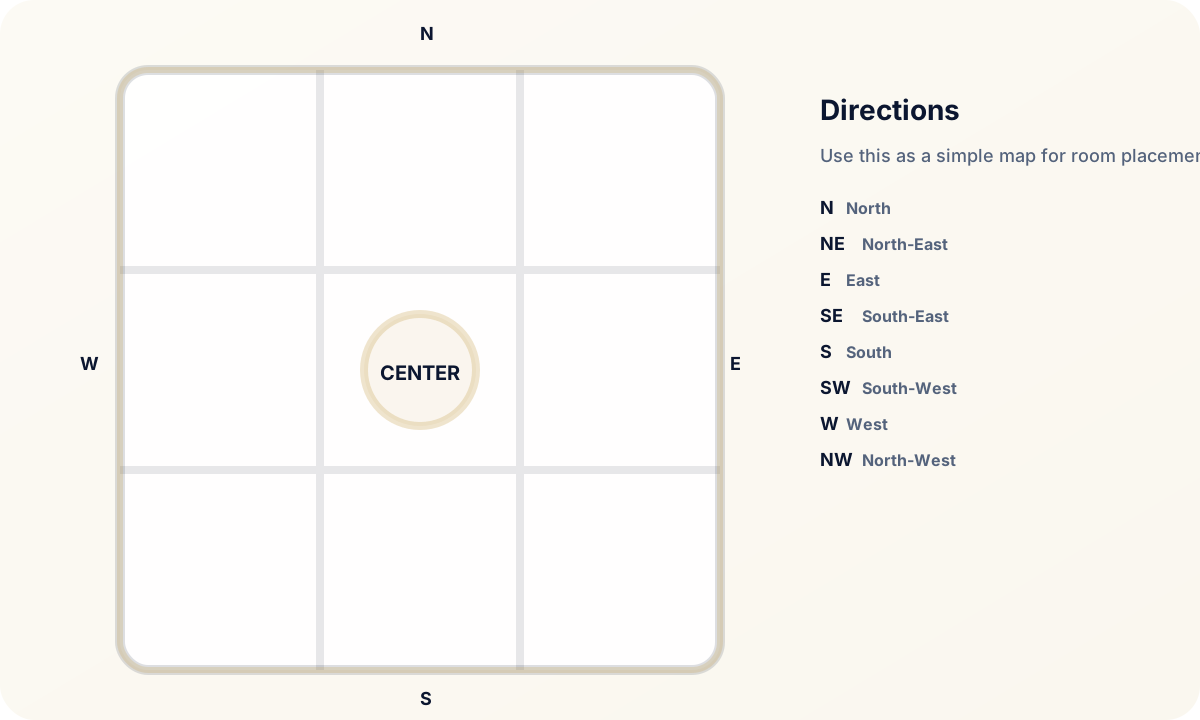
For a south-facing house, room placement becomes especially important. Many Vastu traditions prefer the master bedroom in the South-West because it gives weight and stability. The kitchen is often preferred in the South-East because of the fire element. The North-East should ideally feel light, clean, and open, especially if it receives morning light.
Entrance
Keep it bright, uncluttered, secure, and correctly measured.
Kitchen
Prefer South-East or a workable fire-zone arrangement.
Bedroom
South-West works well for the main bedroom when possible.
Toilets
Check ventilation, dryness, and distance from kitchen or pooja areas.
North-East
Keep lighter, cleaner, and visually calmer.
Centre
Avoid loading the middle with heavy storage or partitions.
Common myths about south-facing homes
The biggest myth is that every south-facing house brings bad luck. This is not a useful way to evaluate property. Another myth is that a small remedy item can correct a badly planned layout without improving the practical issues. If the entry is dark, fix lighting. If heat is strong, improve shading and ventilation. If the kitchen is poorly arranged, improve stove-sink separation and exhaust.
Comparison table: Reject, review, or accept?
| Situation | Decision | Reason |
|---|---|---|
| South-facing but bright, clean, and well planned | Review positively | Facing alone is not a defect |
| Entry dark, cramped, and opens to toilet | Be cautious | Flow, privacy, and hygiene concerns |
| Broker cannot prove direction | Pause | Verify before token payment |
Detailed buyer walkthrough for south-facing homes
When you visit a south-facing property, do not start with fear. Start with observation. Stand outside the property and look at the approach road, gate, slope, drainage, and entry light. Then stand inside the home at the main door and look outward. Confirm that you are truly facing south. In many apartment projects, buyers are told that a flat is south-facing because the tower, balcony, or road faces south, but the actual flat entrance may face another direction. This difference matters because Vastu evaluation begins with the usable entry of the home.
After confirming the direction, enter slowly and notice the first view, then use Main Door Vastu to assess the entrance. Does the door open into a calm foyer, a bright living room, or a cramped passage? Is a toilet door visible immediately? Is the kitchen flame visible from the entrance? Is there a shoe rack, dustbin, broken item, or unused storage pile near the first step? A south-facing home with a dignified entrance may feel better than a supposedly preferred-direction home with a neglected entry.
Next, check the southern wall and the South-West zone. Many Vastu traditions prefer this area to carry stability and weight. In an independent house, the South-West is often suitable for the master bedroom, heavier storage, or a stable family zone. In an apartment, you may not have full control, but you can still avoid making this area excessively weak, cluttered, damp, or unused. If the South-West has a bedroom, check whether the bed placement is comfortable, whether the attached toilet is dry, and whether the wardrobe can sit without blocking light.
The South-East also needs attention because it is commonly associated with fire; review Kitchen Vastu Dos and Don'ts. A kitchen in the South-East often works well when ventilation is strong, the stove and sink are separated, and heat does not dominate the entire house. If the kitchen is not in South-East, do not panic. Check whether the cooking zone inside the kitchen can be arranged better. A good exhaust, clean counters, safe stove placement, and clear separation between water and fire are practical improvements.
Strong signs
- Entrance is clean, bright, and easy to use
- Living room has comfortable movement
- South-West has stability or useful weight
- Kitchen has ventilation and safe fire placement
- North-East is not overloaded with clutter
Weak signs
- Main door opens into a dark blocked passage
- Toilet, dustbin, or clutter dominates the entry
- South-West is cut, damp, or heavily disturbed
- Kitchen is smoky, cramped, or poorly exhausted
- Centre of home is blocked by heavy storage
How the advice changes for flats, villas, and plots
For flats, the main concern is the unit entrance, corridor environment, ventilation, and internal room placement. A south-facing flat in a clean, quiet corridor with good light can be comfortable. Check lift noise, garbage chute smell, privacy when the door opens, and whether the entry has space for a neat shoe cabinet. Because apartment layouts are fixed, the best Vastu corrections are often interior corrections: lighting, storage, curtains, furniture placement, and hygiene routines.
For villas and independent houses, you have more layers to check. The road approach, compound gate, main door, porch, steps, and slope all matter. If the gate is in one direction and the main door is in another, note both. A good compound entry should not create water stagnation, drainage problems, or harsh movement directly into the door. Check whether sunlight heats the entrance excessively in summer and whether shading can be added without making the entry dark.
For plots, do not judge only by facing; read Plot and Land Vastu before buying. Plot shape, slope, road level, drainage, corner cuts, nearby structures, and future room placement matter. A south-facing plot may be workable if the building is designed carefully from the beginning. Before buying, ask whether the plot allows a balanced layout with a stable South-West, a workable kitchen zone, a clean North-East, and a properly placed entrance.
No-demolition improvements for existing south-facing homes
If you already live in a south-facing home, the best first improvements are simple. Clean the entrance thoroughly. Repair the doorbell, lock, handle, threshold, and light. Use a closed shoe cabinet. Remove broken objects, old cartons, and unused items from the entry. Add warm lighting so the entrance feels welcoming in the evening. These changes improve daily experience and reduce anxiety around the facing direction.
Inside the home, keep the centre open and easy to walk through. Reduce heavy clutter in the North-East. Make the kitchen clean and well ventilated. Keep the bedroom calm, especially if it sits in the South-West. If the home receives strong southern heat, use curtains, blinds, shading plants, or heat-control films where appropriate. Vastu and practical comfort should support each other.
Be careful with fear-based remedies. Buying many objects without improving light, air, hygiene, and movement rarely helps. If a remedy item makes the home crowded or visually noisy, it may reduce the calmness you want. A dignified, clean, well-maintained entrance is often more powerful than decorative excess.
Realistic examples Indian buyers can relate to
Example one: A 2BHK flat is south-facing, but the entry is wide, the living room is bright, the kitchen is ventilated, and the master bedroom is in a stable zone. This property should not be rejected only because of direction. It deserves a full review. If the price, ventilation, legal papers, and layout are good, the Vastu concern may be manageable.
Example two: A villa is south-facing and impressive from outside, but the main door opens into a cramped passage, the North-East is used as a store room, the kitchen is smoky, and the South-West has a large cut. This needs caution. The issue is not just south-facing; it is a combination of layout weaknesses.
Example three: A south-facing plot has good dimensions, proper drainage, and enough space for a carefully planned entrance, kitchen, bedrooms, and open North-East. For someone building from scratch, this may be better than buying a ready-made house with a poor internal plan. Design freedom changes the decision.
Final 15-minute checklist before saying yes
Before you say yes to a south-facing home, spend fifteen quiet minutes at the property without rushing. First, check the entrance direction and take a photo of the floor plan. Second, stand at the main door and observe the first view. Third, walk to the kitchen and check smoke, exhaust, sink-stove placement, and natural light. Fourth, check the master bedroom and South-West area for stability. Fifth, look at the North-East area and ask whether it is light, clean, and usable.
Then ask practical questions. Will the entry become too hot in summer? Can a shade, curtain, or plant soften heat without blocking light? Is there space for a neat shoe cabinet? Does the door open fully? Is there any drainage issue near the gate or entrance? Can the home be improved with small interiors, or does it need expensive changes? If the answers are calm and manageable, the property deserves consideration. If every answer creates a new problem, pause.
A south-facing home should be judged with maturity. Vastu is not a single label printed on a listing. It is the relationship between direction, function, movement, light, and maintenance. For Indian buyers, this matters because property decisions are expensive and emotional. A clear checklist protects you from both blind fear and blind excitement.
Green signal
Verified direction, clean entry, balanced rooms, and realistic fixes.
Yellow signal
Some layout issues, but lighting, storage, and ventilation can improve them.
Red signal
Unverified direction, cramped entry, major dampness, and expensive corrections.
Most searched concerns about south-facing houses
Many readers ask whether south-facing homes affect money, health, marriage, or career. It is better to avoid direct fear-based conclusions. A home affects life through comfort, routine, light, sleep, hygiene, privacy, and emotional ease. If a south-facing home has poor ventilation, harsh heat, cluttered entry, and weak bedroom planning, residents may feel stressed. But the cause is not one direction alone. It is the lived experience of the layout.
Another common concern is resale value. In some Indian markets, south-facing homes may face buyer hesitation because of popular beliefs. This is worth considering practically. If you buy such a property, make sure its strengths are clear: good location, legal clarity, ventilation, attractive entrance, sensible interiors, and a well-maintained building. A strong property can overcome hesitation better than a weak one.
People also ask whether remedies can make a south-facing house perfect. Remedies can improve experience, but they cannot replace structural common sense. If the home has severe leakage, poor safety, illegal construction, bad ventilation, or unusable room sizes, those are real problems. Use Vastu as one lens, not the only lens. Combine it with legal checking, engineering inspection, sunlight observation, and family needs.
FAQ
Is a south-facing house always bad?
No. It needs careful checking of exact entrance position, room placement, light, heat, ventilation, and daily flow.
Should I buy a south-facing flat?
Check the flat door direction, kitchen, bedroom, toilet placement, corridor quality, and ventilation. If these are strong, do not reject it only because it faces south.
What is the best remedy for a south-facing entrance?
Start with practical fixes: bright light, clean threshold, strong door, neat shoe storage, and clear entry movement. Then review specific remedies if needed.
Related guides
Read Main Door Vastu, Direction Vastu, Home Vastu, and Balanced Layout before finalising a property.
More Vastu guides to read next
Home and layout
Home Vastu, Apartment Vastu, Balanced Layout, Small Apartment Vastu
Directions and buying
Check Directions, Main Door Vastu, East-Facing House, North-Facing House
Room-wise help
Kitchen Vastu, Bedroom Vastu, Bathroom Vastu, Pooja Room Vastu
Focus and work
Study Room Vastu, Home Office Vastu, Wealth Vastu, Office Vastu
Remedies and support
Vastu Remedies, No-Demolition Remedies, Vastu FAQ, Trust and Support
Popular blog topics
Kitchen Do's and Don'ts, Mirror Vastu, Vastu Plants, Brahmasthan Vastu