
On this page
Why lighting matters in pooja room Vastu
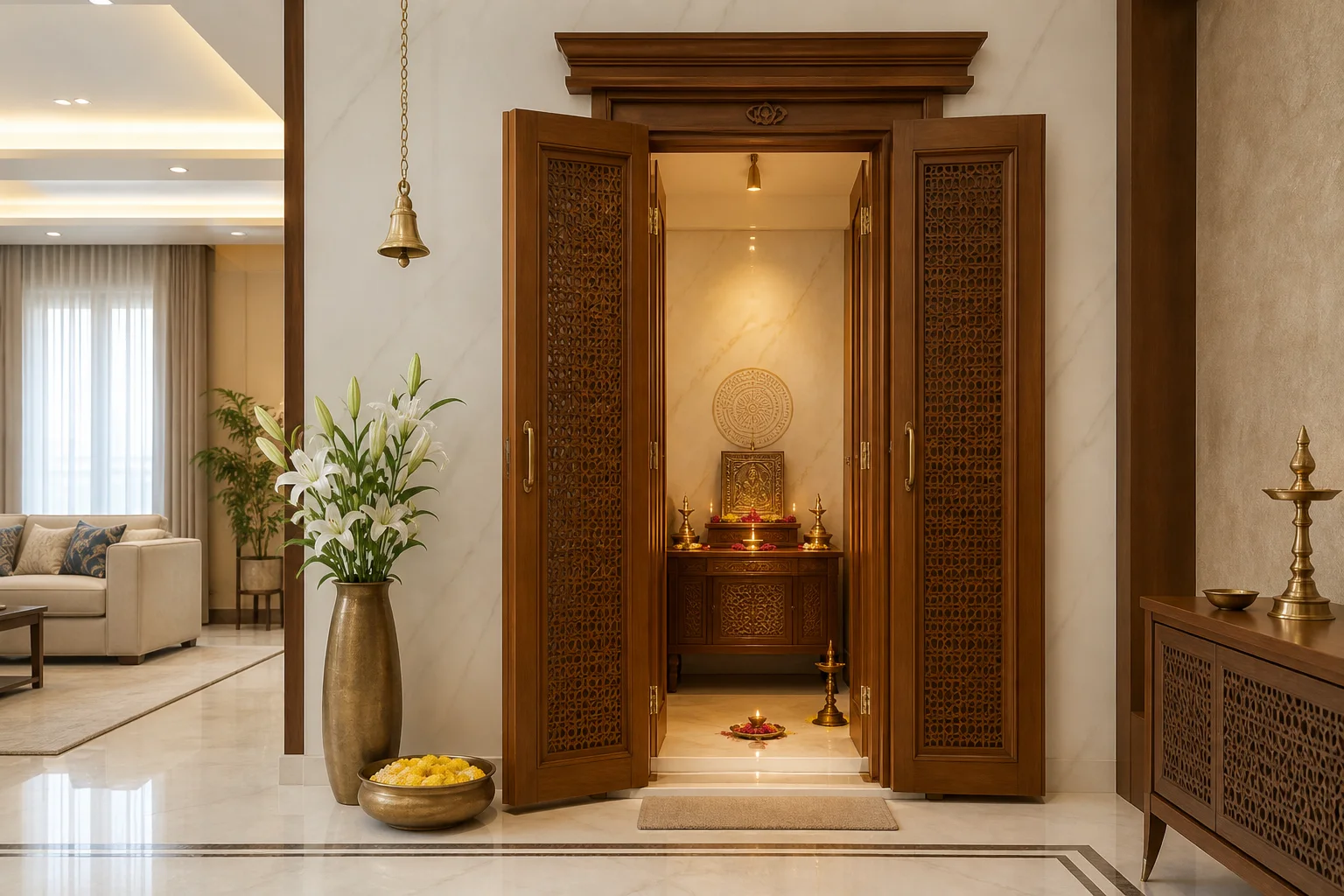
A pooja room or prayer corner is one of the most sensitive spaces in an Indian home. Lighting decides whether it feels peaceful, respectful and easy to maintain. Pooja room lighting Vastu is not only about where to keep a diya; it is also about glare, heat, safety, visibility and the feeling of calm.
Many modern flats do not have a separate pooja room. Families use a wall cabinet, corner shelf, mandir unit or compact niche. In these homes, lighting becomes even more important because the prayer area may be part of the living room, dining room or passage.
The best lighting is soft, warm, clean and safe. It should highlight the deity or sacred items without creating harsh shadows, tangled wires or fire risk. Practical Vastu respects devotion and daily maintenance together.
Best direction and type of light
North-East, East and North are commonly preferred zones for pooja placement where practical. Lighting should support that placement. A warm lamp, soft wall light or gentle cabinet light can make the space peaceful without making it look like a showroom display.
Avoid harsh white light directly on the eyes. Very bright LED strips can make the prayer space feel cold. Warm white light usually feels more devotional and homely. If the pooja cabinet has glass or glossy surfaces, check for reflections.
Natural light is beautiful if it is gentle. Direct harsh sunlight may fade photos, heat the cabinet or dry flowers quickly. Use curtains or filtered light if needed.
Diya, lamp and fire safety
A traditional diya brings warmth and meaning, but it must be placed safely. Keep it on a stable surface away from curtains, paper, plastic flowers and loose cloth. If children or pets are at home, use extra care.
Do not place an open flame inside a closed wooden cabinet without ventilation. Heat and smoke can stain the cabinet and create risk. If the mandir is compact, use a small diya only when someone is nearby, or choose a safe electric lamp for daily use.
For kitchen fire placement, see gas stove Vastu. For prayer room layout, read Pooja Room Vastu and pooja room door Vastu.
Apartment prayer corner examples
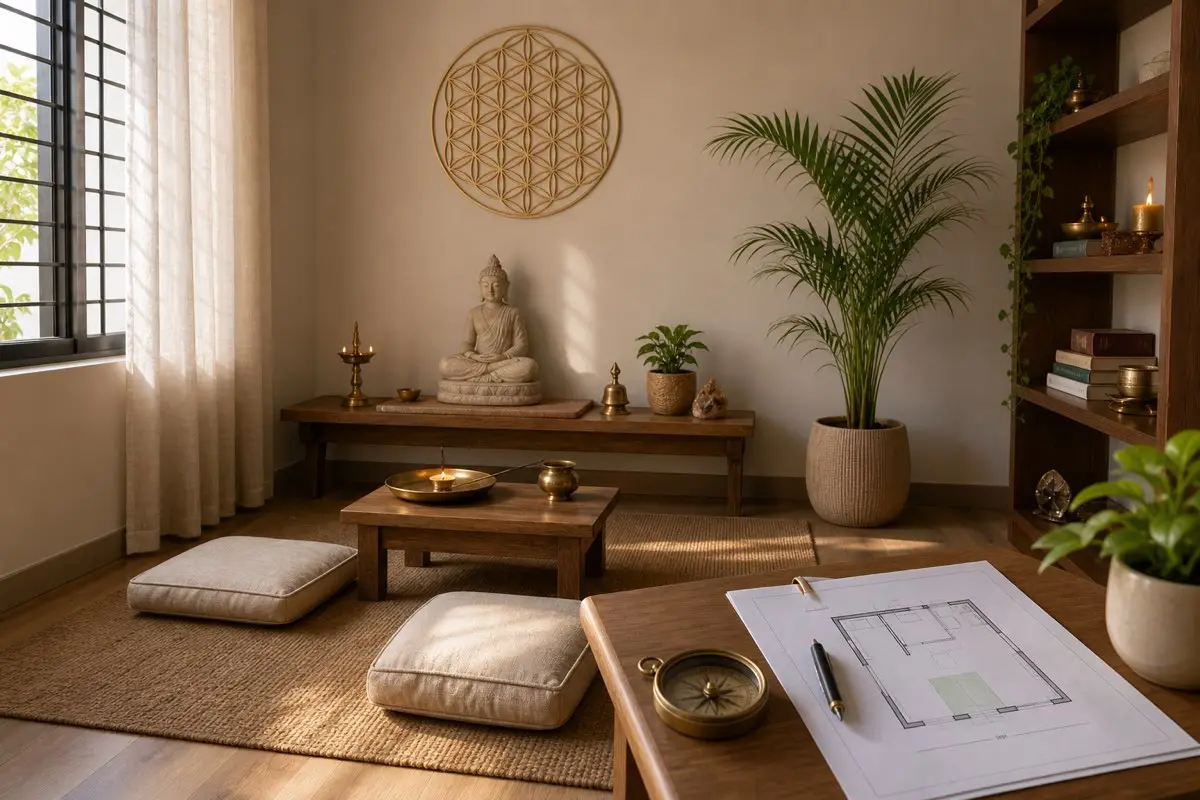
Example 1: A 2BHK flat has a pooja cabinet in the living room. Use a warm cabinet light, keep wires concealed and avoid placing the unit below a heavy storage loft. The prayer space should feel dignified, not squeezed.
Example 2: A rental apartment has no fixed pooja room. Use a movable wooden mandir near a clean wall with a plug point nearby. Use a small lamp and avoid drilling if not allowed.
Example 3: A compact dining corner has space for a prayer shelf. Keep it slightly elevated, clean and away from direct dining clutter. Use a simple warm light rather than decorative flashing lights.
Common pooja lighting mistakes
The first mistake is using too many colourful lights. Flashing or multi-colour strips may look festive, but for daily prayer they can feel distracting. Calm lighting is usually better.
The second mistake is leaving wires visible around sacred items. Loose wires, adapters and overloaded plugs reduce the clean feeling of the space. Use safe concealed wiring wherever possible.
The third mistake is ignoring smoke marks. If you light diya or incense daily, clean the wall, ceiling and cabinet regularly. A blackened, dusty prayer space does not feel peaceful.
Best practices for peaceful lighting
Use one main warm light and one small accent if needed. Keep the switch easy to reach but not visually dominant. For electrical placement, read electrical switchboard Vastu.
Keep flowers, oil, matchbox, incense and cleaning cloth organized. Storage near the pooja room should be neat and respectful. For smaller spaces, read small pooja corner Vastu.
Combine light with silence, cleanliness and simplicity. A peaceful prayer corner does not need expensive decoration. It needs care.
Quick practical checklist
Check direction
Use direction guidance as one planning lens, then compare it with real room use.
Check safety
Never compromise wiring, drainage, fire safety, structure, access or maintenance.
Check clutter
Remove items that block movement, light, cleaning or daily comfort.
Check light
Prefer clean daylight and soft evening lighting over harsh or gloomy corners.
Check upkeep
Choose materials, plants, lights and fittings that your family can maintain.
Check flexibility
Try simple, reversible changes before permanent renovation or expensive purchases.
Practical examples for Indian homes
| Home type | Typical issue | Balanced response |
|---|---|---|
| Compact flat | Limited space and fixed builder points | Use neat placement, lighter colours, organized storage and practical corrections. |
| Independent house | More layout freedom | Plan direction, maintenance and service access before final finishing work. |
| Rental home | No structural changes allowed | Use movable items, cleaning, lighting, curtains, organizers and simple no-drill fixes. |
| Family home | Different needs for elders, children and guests | Prioritize safety, comfort, hygiene and easy daily routines. |
Related guides
For deeper planning, read Home Vastu, Room-wise Vastu, Balanced Layout, Vastu Remedies, Vastu FAQ, positive energy Vastu, Vastu remedies without renovation, flat buying Vastu checklist, and the complete Vastu blog archive.
When applying any Vastu idea, avoid judging the home by one rule alone. A room may need a combination of better cleaning, more natural light, improved airflow, simpler storage, safer wiring, calmer colours and more sensible furniture placement. This is especially true in Indian apartments, where builder layouts are fixed and every inch must be used carefully.
The best approach is to observe the space for a few days before making permanent changes. Notice where people naturally walk, where clutter gathers, which corners feel dark, where maintenance is difficult and which changes would improve daily comfort. Practical Vastu is not about panic; it is about making the home feel more balanced, clean, safe and supportive for normal family life.
Frequently asked questions
Which light is best for pooja room?
Warm, soft and steady lighting is usually best. Avoid harsh glare and distracting flashing lights.
Can LED lights be used in pooja room?
Yes, warm LED lights can be used if they are safe, subtle and easy to maintain.
Where should diya be placed?
Keep diya on a stable, heat-safe surface away from cloth, paper, curtains and children.
Can pooja room have colourful lights?
Small festive lights are fine occasionally, but daily prayer spaces usually feel better with calm warm light.
Is natural light good for pooja room?
Gentle natural light is good, but avoid harsh sunlight that heats the cabinet or damages photos.
Can electric diya be used?
Yes, especially in apartments or homes where open flame safety is a concern.
Should pooja light remain on all day?
That is a personal choice. If kept on, use safe low-heat lighting and check wiring.
What is the simplest pooja lighting remedy?
Clean the space, use warm light, hide wires and keep diya placement safe.
Conclusion
Pooja Room Lighting Vastu: Lamp, Diya, and Soft Light Tips for Peaceful Homes works best when it combines traditional direction awareness with modern safety, maintenance and family comfort. Start with simple observations, make practical corrections first, and avoid fear-based decisions.
For more guidance, continue with room-by-room Vastu guides and the full VastuEssentials blog.