
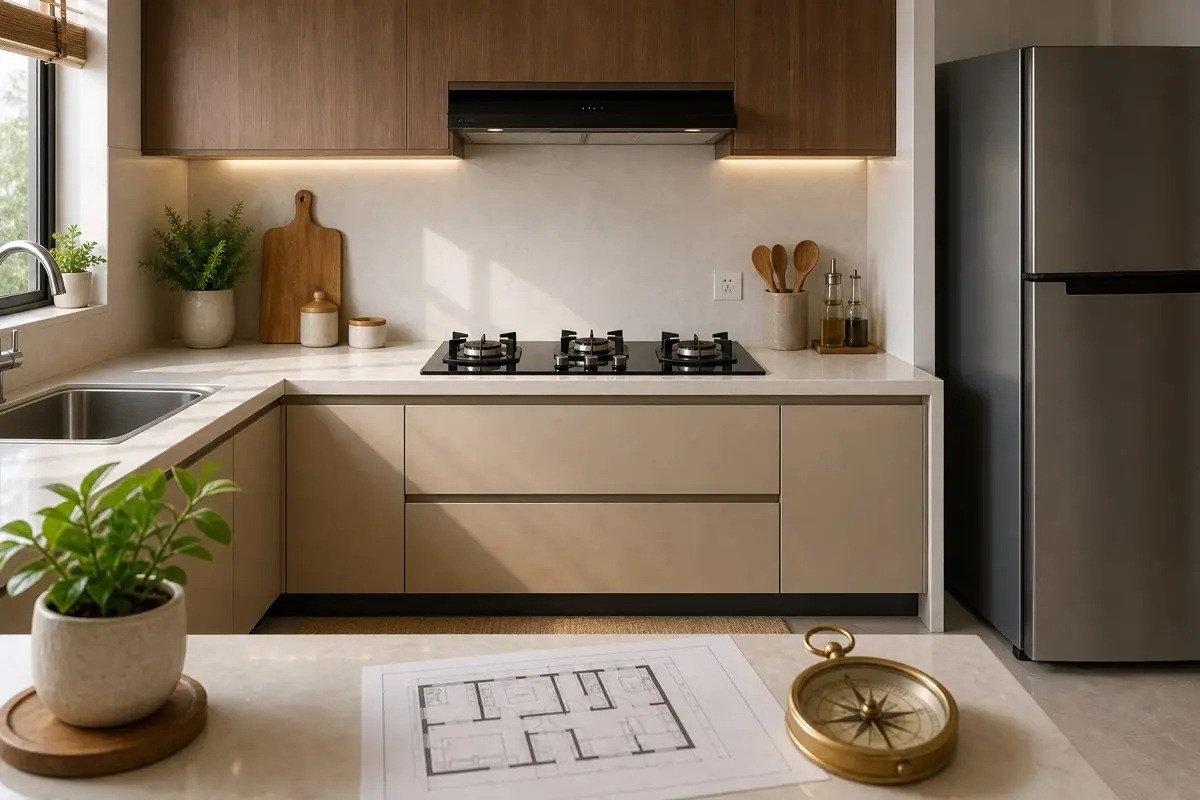
Quick Vastu grid
South-East
Many Vastu traditions prefer the south-east for cooking because it represents the fire element.
Cook facing East
Where possible, the person cooking may face east; north can be considered in some layouts.
Avoid
Avoid stove directly beside sink, under a toilet line, or in a cramped unsafe corner.
Why gas stove placement matters
In Indian homes, the stove is used for tea, breakfast, lunch, dinner, snacks, festival sweets, and daily family nourishment. It carries both practical and symbolic importance. In Vastu, the stove connects with Agni, the fire element, and should be placed with care.
At the same time, kitchen safety is non-negotiable. Gas pipe routing, ventilation, chimney position, cylinder safety, counter height, and distance from water must be correct. A Vastu-friendly stove that is unsafe is not truly Vastu-friendly.
Best direction for gas stove
The south-east zone is traditionally preferred for the stove because it represents fire. If the kitchen is in the south-east and the cook faces east while cooking, many Vastu consultants consider it a strong arrangement. In some homes, north-west kitchens are also managed well with careful placement.
If your kitchen is already fixed, do not panic. Place the stove where it is safe, ventilated, and easy to use. Then use no-demolition corrections such as keeping the counter clean, separating sink and stove, improving lighting, and maintaining proper airflow.
Cooking direction and daily routine
Facing east while cooking is commonly recommended. It symbolically connects cooking with morning energy and freshness. If east is not possible, some layouts allow north-facing cooking. Avoid cooking in a position where the person feels cramped, has their back awkwardly exposed to a busy entrance, or cannot move safely.
A good kitchen should make cooking peaceful. If the cook constantly bumps into cabinets, stands too close to heat, or struggles with poor lighting, the kitchen will feel stressful even if the direction looks correct on paper.
Fire and water balance
One of the most repeated kitchen Vastu rules is to avoid placing the stove and sink directly together. Fire and water are opposing functions. Practically, water splash near a flame is unsafe and messy. Keep some counter gap between stove and sink whenever possible.
If the stove and sink are already close, use a divider, chopping zone, or dry counter space between them. Keep the area clean and dry. Do not allow leaking taps, wet cloths, or dirty vessels to crowd the cooking zone.
Cylinder, chimney, and ventilation
A gas cylinder should be stored safely according to local safety guidance. Do not hide it in a closed, unventilated cabinet without proper provision. Gas safety matters more than decoration. Keep the regulator, pipe, and cylinder checked regularly.
A chimney or exhaust fan helps remove heat, smoke, and oil. Good ventilation makes the kitchen healthier and more comfortable. In Vastu language, smoke and stale smell should not remain trapped in the home.
Common mistakes to avoid
Avoid placing the stove directly below a beam if it makes the cooking position feel pressed. Avoid placing it under a toilet line in independent-house planning. Avoid a stove facing a bathroom door or cluttered utility zone. Avoid keeping broken burners, blackened spills, or unused vessels on the stove.
Another common mistake is treating the stove top as a storage shelf. Keep the cooking area clear. A clean stove gives an immediate sense of order and respect for food.
Small kitchen and apartment tips
In apartments, the builder often fixes the kitchen platform. If the south-east ideal is not possible, make the best safe arrangement. Keep the stove away from the sink, maintain the chimney, and use lighting to make the cooking zone feel clear.
For very small kitchens, avoid oversized appliances near the stove. Keep oil, spices, and utensils organised. A compact kitchen can feel balanced when every object has a place.
No-demolition stove remedies
Clean the stove daily, repair weak flames, replace damaged knobs, fix gas leakage immediately, and keep the counter dry. These are more powerful than decorative remedies because they directly improve the fire zone.
If the stove direction bothers you, use practical corrections first. Improve lighting, shift movable appliances, clear clutter, separate fire and water, and keep the cook comfortable. Avoid fear-based demolition.
Buying and modular kitchen checklist
Before finalising a modular kitchen, mark the stove, sink, refrigerator, microwave, cylinder, chimney, and storage zones together. Do not design each item separately. The stove needs enough side counter space for hot vessels and safe cooking.
Check that cabinet shutters do not hit the cook, drawers open freely, and the chimney aligns with the stove. A beautiful kitchen can become irritating if daily movement is not tested.
Daily cooking habits that support the fire zone
The stove area should begin and end the day clean. Wipe spills, remove burnt food, keep the lighter in a fixed place, and avoid leaving oily pans on the burners overnight. These habits sound simple, but they strongly affect how the kitchen feels in the morning. A clean stove invites cooking; a greasy stove creates resistance.
Many Indian kitchens handle strong spices, oil, steam, and frequent cooking. Because of this, the fire zone needs more regular care than a rarely used show kitchen. Keep exhaust filters clean, remove stale oil smell, and maintain a dry counter. In Vastu terms, this keeps the fire element respectful and controlled.
Planning for different home types
In a small flat, the gas stove may be forced into a straight counter. In that case, keep the sink and stove separated by at least some working space and avoid placing the refrigerator door where it blocks the cook. In a larger independent house, plan the stove earlier with the architect so chimney ducting, gas line, and windows are properly aligned.
In rental homes, do not shift gas lines without professional approval. Use the safest available position, keep the cylinder ventilated, and maintain the pipe. If a platform direction is not ideal, cleanliness, safety, and correct cooking habits become the best remedies.
Do’s and don’ts table
| Do | Don’t |
|---|---|
| Check direction with the full room layout and daily use. | Follow a rule blindly while ignoring safety, comfort, or scale. |
| Keep the area clean, bright, maintained, and proportionate. | Keep broken, dusty, unsafe, or emotionally heavy items. |
| Use simple no-demolition corrections first. | Rush into expensive changes for movable décor or appliances. |
Expert checklist before final placement
Before finalising the placement, stand at the room entrance and look at the full scene. Check whether the item looks balanced with the wall, furniture, window, lighting, and movement path. Then use a compass or building plan to confirm the direction. This two-step method prevents the common mistake of checking direction but ignoring how the room actually feels.
Next, test daily use. Can the family clean the area easily? Does the placement create heat, water, noise, glare, clutter, or awkward movement? Does it make the room feel premium and peaceful, or does it make the space look crowded? If a placement fails these practical tests, use a simple correction before considering any major change.
Finally, review the placement after one week. Homes are living spaces, not showroom displays. A Vastu-friendly choice should continue to feel comfortable during busy mornings, cooking time, cleaning time, guest visits, and night use. If it creates stress in daily life, adjust it calmly.
Frequently asked questions
Which direction is best for gas stove?
South-east is traditionally preferred because it represents fire. The final placement should also be safe and ventilated.
Should we face east while cooking?
Facing east is commonly recommended where possible. If not possible, choose the safest and most practical cooking position.
Can stove and sink be side by side?
It is better to keep a gap. If they are close, maintain dry counter space and avoid water splash near flame.
What is the easiest stove Vastu remedy?
Keep the stove clean, burners working, area dry, and fire-water functions separated as much as possible.
Related guides
Kitchen Vastu
Read the full guide here: Kitchen Vastu.
Refrigerator Vastu
Read the full guide here: Refrigerator Vastu.
Microwave Vastu
Read the full guide here: Microwave Vastu.
Vastu Remedies Without Demolition
Read the full guide here: Vastu Remedies Without Demolition.
Final thoughts
Good Vastu works best when it improves the way a home actually feels and functions. Choose the right direction where possible, but also respect safety, cleanliness, proportion, light, movement, and maintenance. Small corrections often create a big improvement without renovation.