
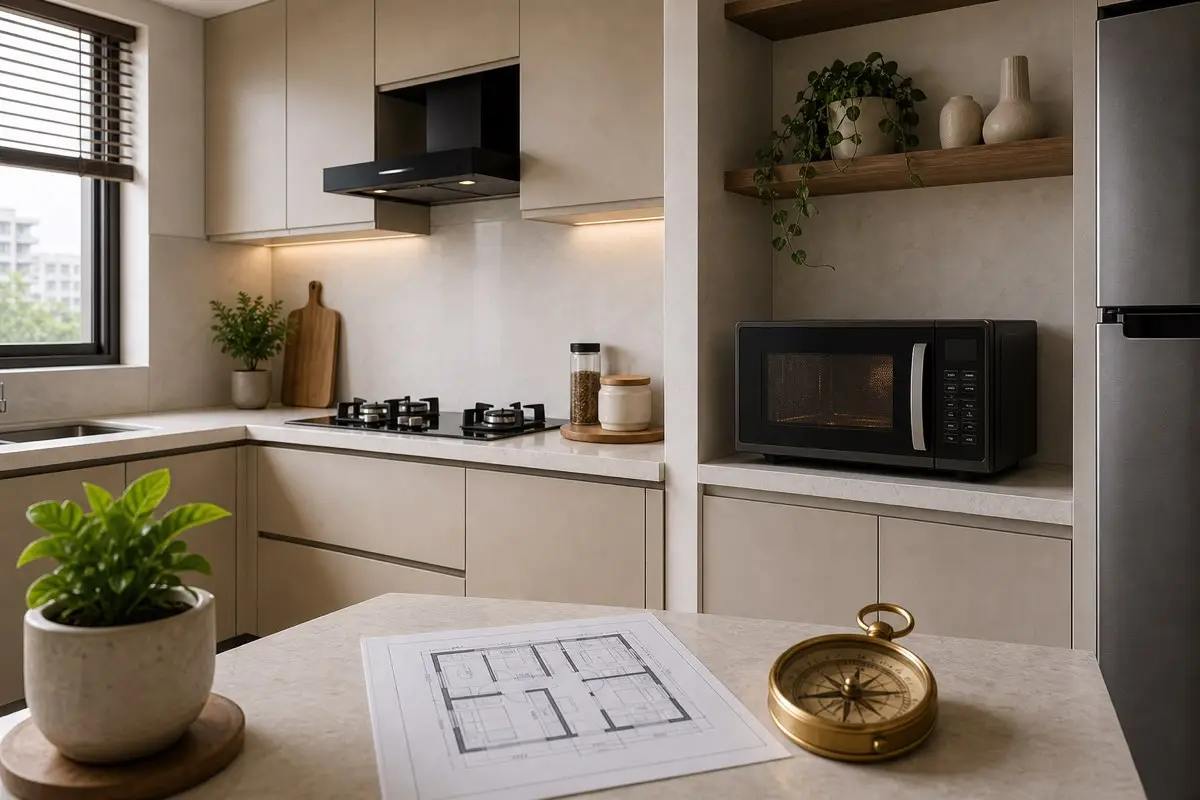
Quick Vastu grid
South-East
Because microwave and oven use heat, south-east is often preferred when the layout allows.
West / North-West
These can work for appliance storage and movement when the kitchen plan is fixed.
Avoid
Avoid wet counters, blocked ventilation, unsafe extensions, and placement too close to sink.
Why microwave placement matters
A microwave oven is a heat-based electrical appliance, so it connects with both fire and electricity. It may be used for reheating, baking, grilling, defrosting, and quick cooking. Its placement affects safety, counter space, ventilation, and ease of use.
In Vastu, heat appliances should not be scattered randomly. In practical kitchen design, they should not block work surfaces or sit near water. The best placement respects both principles.
Best direction for microwave oven
South-east is commonly preferred for heat appliances because it supports the fire element. If the microwave is part of a baking zone, south-east can feel especially suitable. West or north-west can also work in many modern kitchens when the electrical point and counter are practical.
Avoid placing the microwave in the north-east if it makes that zone hot, cluttered, or heavy. If the builder has fixed the appliance tower elsewhere, focus on safe use, clean storage, and proper ventilation.
Counter, shelf, or built-in placement
A microwave can sit on the counter, inside an appliance garage, on a strong open shelf, or in a built-in tower. The key is ventilation. Do not push it into a tight closed cabinet unless the model and carpenter design allow heat release.
The height should be comfortable. If it is too high, removing hot bowls becomes risky. If it is too low, bending becomes inconvenient. Vastu should support safe daily use, not create awkward movement.
Distance from sink and stove
Keep the microwave away from water splash and steam. Avoid placing it directly beside the sink unless there is enough dry counter space and safe wiring. Also avoid placing it so close to the gas stove that heat, oil, and smoke affect the appliance.
A separate appliance corner works well in many Indian kitchens. Keep the microwave, toaster, kettle, or mixer arranged neatly rather than spreading them across every counter.
Electrical safety and ventilation
Use a proper plug point with suitable load capacity. Avoid permanent loose extension boards for high-use appliances. Ensure the cord is not stretched, crushed, or exposed to water. Electrical safety is a major part of practical Vastu.
Keep the vents clear. A microwave that overheats or smells burnt should be checked. Do not ignore sparks, damaged doors, or unusual sounds. A broken appliance should not remain in daily use.
Common mistakes to avoid
Common mistakes include placing the microwave on a wet counter, stacking heavy items on top, using it as storage, blocking vents, and placing it too high for children or elders to use safely. Another mistake is keeping an unused broken oven for years because it was expensive.
Avoid clutter around the appliance. A clean microwave corner makes the kitchen feel more organised and premium.
Apartment and rental home tips
In a rental kitchen, use existing plug points safely and avoid drilling heavy shelves without permission. A sturdy microwave stand can work if it is stable and does not block the kitchen passage. Keep it away from the edge of the counter.
In small flats, the microwave may share space with the dining unit. This can work if the area is clean, safe, and not visually messy. Avoid placing it near the main entrance or in a bedroom-like zone just because there is a spare socket.
No-demolition remedies
If the microwave is in a less preferred zone, keep the area bright, dry, and uncluttered. Shift nearby water bottles, wet cloths, and cleaning liquids away. Keep the door clean and remove burnt smell quickly.
Use a tray, organised shelf, or appliance corner to give the microwave a defined place. When an appliance has a clear home, the kitchen feels calmer.
Buying checklist
Before buying, measure the counter depth, shelf strength, door swing, plug point distance, and ventilation space. Choose the size based on actual cooking habits. A large oven in a tiny kitchen may reduce counter usability.
If you bake often, plan a proper oven zone. If you only reheat food, a simple microwave at comfortable height is enough. Buying correctly is also a Vastu decision because oversized appliances create unnecessary heaviness.
Daily usage habits
Keep the microwave clean after reheating curries, gravies, and snacks. Food splatter, burnt smell, and sticky residue make the appliance feel neglected. Use microwave-safe containers and avoid storing random items inside when it is not in use. The appliance should be ready for use, not treated as hidden storage.
If children or elders use the microwave, keep it at a safe height and explain basic safety. Hot bowls should come out easily without stretching. A placement that looks neat but causes burns or spills is not practical Vastu. Comfort and safety must guide the final decision.
Planning with other appliances
Microwave placement should be planned with the refrigerator, gas stove, mixer, water purifier, and storage shelves. When every appliance is placed separately, the kitchen becomes crowded. A clear appliance zone keeps counters open for cutting, serving, and cleaning.
In modular kitchens, ask the carpenter about ventilation gaps before creating a built-in microwave cabinet. In small flats, use a strong shelf or counter stand only if it does not block the window, passage, or cabinet shutters. A neat appliance corner can make even a compact kitchen feel premium.
Do’s and don’ts table
| Do | Don’t |
|---|---|
| Check direction with the full room layout and daily use. | Follow a rule blindly while ignoring safety, comfort, or scale. |
| Keep the area clean, bright, maintained, and proportionate. | Keep broken, dusty, unsafe, or emotionally heavy items. |
| Use simple no-demolition corrections first. | Rush into expensive changes for movable décor or appliances. |
Expert checklist before final placement
Before finalising the placement, stand at the room entrance and look at the full scene. Check whether the item looks balanced with the wall, furniture, window, lighting, and movement path. Then use a compass or building plan to confirm the direction. This two-step method prevents the common mistake of checking direction but ignoring how the room actually feels.
Next, test daily use. Can the family clean the area easily? Does the placement create heat, water, noise, glare, clutter, or awkward movement? Does it make the room feel premium and peaceful, or does it make the space look crowded? If a placement fails these practical tests, use a simple correction before considering any major change.
Finally, review the placement after one week. Homes are living spaces, not showroom displays. A Vastu-friendly choice should continue to feel comfortable during busy mornings, cooking time, cleaning time, guest visits, and night use. If it creates stress in daily life, adjust it calmly.
Frequently asked questions
Which direction is best for microwave oven?
South-east is commonly preferred for heat appliances. West or north-west can also work when the kitchen layout requires it.
Can microwave be near sink?
It is better to keep it away from water splash. If nearby, maintain dry counter space and safe wiring.
Can microwave be kept outside kitchen?
Yes, in a pantry or dining side unit if the area is clean, safe, and not blocking movement.
Should microwave vents be covered?
No. Keep vents open for safe heat release and longer appliance life.
Related guides
Kitchen Vastu
Read the full guide here: Kitchen Vastu.
Gas Stove Vastu
Read the full guide here: Gas Stove Vastu.
Refrigerator Vastu
Read the full guide here: Refrigerator Vastu.
Apartment Vastu
Read the full guide here: Apartment Vastu.
Final thoughts
Good Vastu works best when it improves the way a home actually feels and functions. Choose the right direction where possible, but also respect safety, cleanliness, proportion, light, movement, and maintenance. Small corrections often create a big improvement without renovation.