
Introduction
Pooja room door Vastu for Indian homes and flats: direction, size, threshold, material, privacy, apartment prayer corners, common mistakes, and FAQs. This article is written for Indian homeowners, flat buyers, tenants, and design-conscious families who want Vastu guidance without panic or exaggerated promises.
The focus is simple: understand the traditional direction logic, check the actual room, and choose improvements that make the home cleaner, safer, calmer, and easier to maintain.
Table of contents
Direction
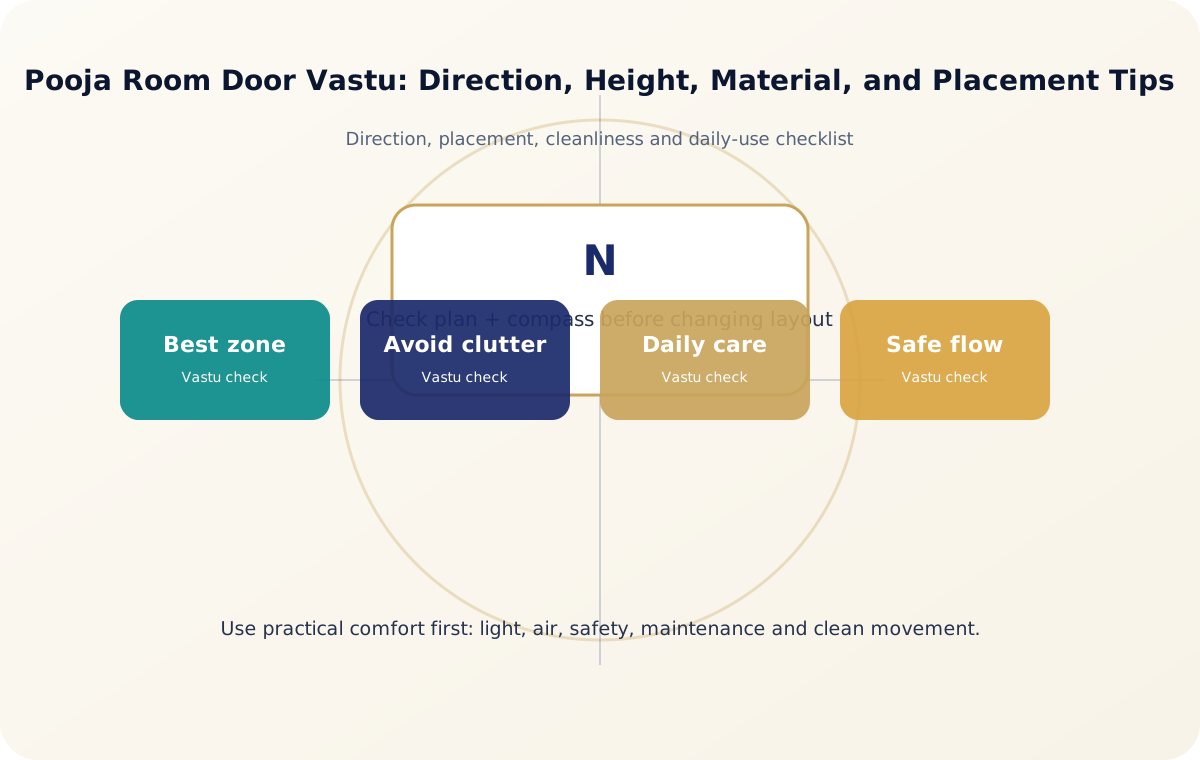
Use the building plan and compass together before deciding.
Daily use
Comfort, cleaning and safety are part of good Vastu.
No fear
Prefer practical corrections before costly changes.
Why the pooja room door matters
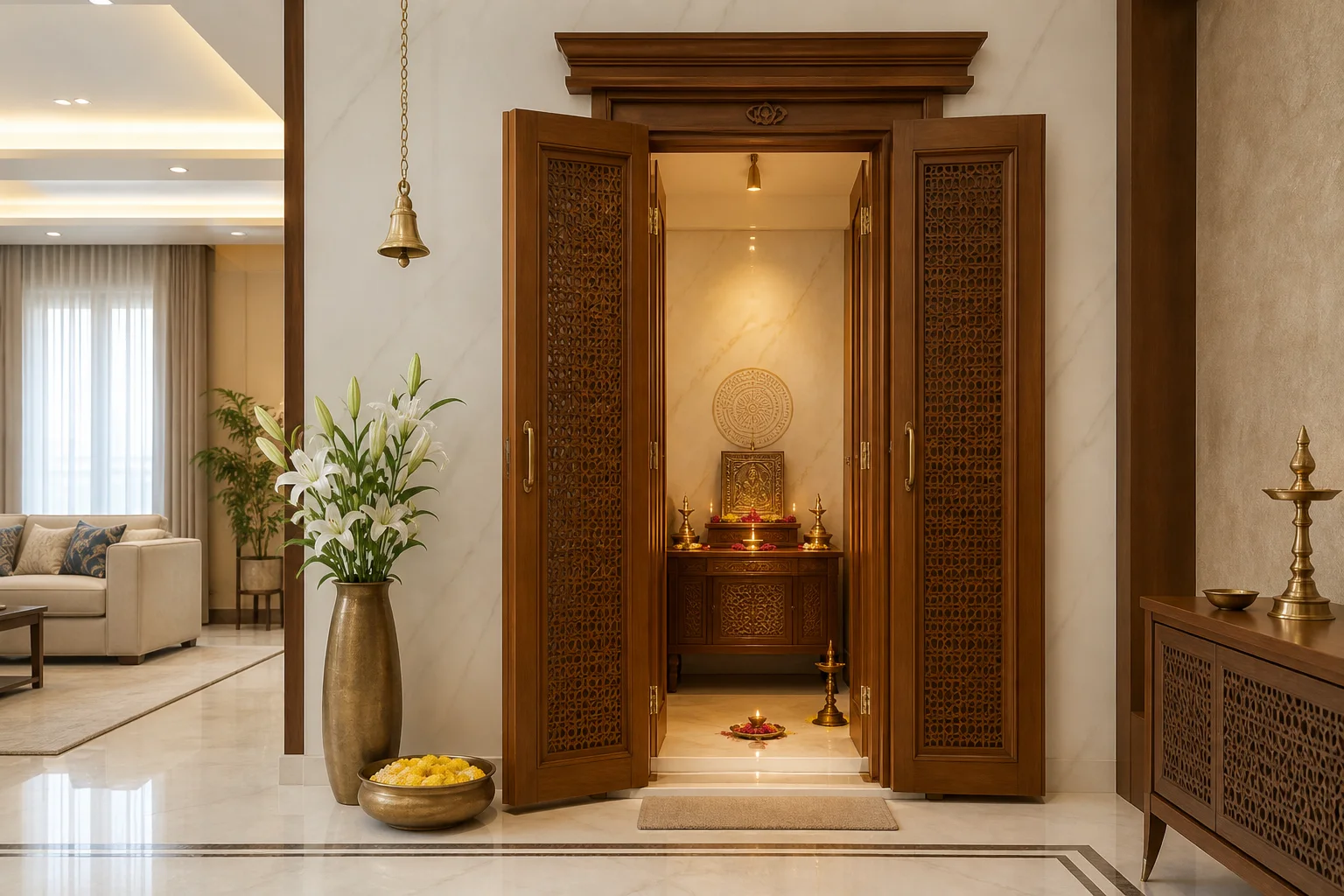
The pooja room door is more than a wooden panel. It marks the boundary between everyday activity and prayer. In traditional homes, the pooja room had a clear doorway, threshold, and quiet approach. In modern apartments, the same idea may appear as a cabinet door, sliding partition, jaali panel, or small prayer niche. The purpose is the same: create respect, cleanliness, privacy, and a gentle transition.
A good pooja door should make the space feel peaceful without becoming difficult to use. If the door blocks movement, hits the lamp shelf, traps smoke, or makes cleaning hard, the design needs correction. Vastu is strongest when devotion and daily practicality work together.
Best direction for pooja room and door
North-East is commonly preferred for pooja spaces in many Vastu traditions because it is associated with clarity and spiritual focus. East and North are also widely used, especially in apartments where the North-East is unavailable. The door should allow a clean approach and should not open directly into clutter, toilets, or noisy utility areas if avoidable.
If the pooja room is a cabinet, place it where family members can pray comfortably without standing in a passage. The door should open smoothly and should not force people to twist awkwardly. If a dedicated room exists, keep the entrance bright, clean, and uncluttered.
Door material, style, and height
Wood is a classic choice for pooja doors because it feels warm and traditional. Glass, jaali, or mixed wood-glass doors can also work if they maintain dignity and privacy. Avoid flimsy, broken, noisy, or damaged doors. The door should close properly but should not make the shrine feel sealed and airless.
Height and proportion matter. A very tiny door can make the space feel cramped, while an oversized decorative door may dominate a small flat. Choose proportion based on the room. For cabinets, use shutters that open fully and do not block lamps or offerings. For rooms, ensure enough ventilation, especially if incense or diyas are used.
Threshold, cleanliness, and approach
Many traditional homes use a small threshold at the pooja room entrance. In apartments, this may not be possible, and that is fine. The more important rule is to keep the approach clean. Avoid placing shoes, laundry, dustbins, or random storage near the pooja door. The first view should feel respectful.
Lighting should be soft and steady. Keep oil, matchboxes, flowers, and prayer books organised. If the door has glass, clean fingerprints regularly. A neglected pooja door weakens the feeling of devotion even if the direction is correct.
Apartment prayer corners
In flats, the pooja area may be in the living room, dining side, or a bedroom corner. Use a small door or shutter if you want privacy. A jaali partition can separate the prayer space without making the room feel smaller. If the shrine is in the living room, place it away from the television and shoe rack.
Do not create a prayer cabinet above a toilet wall, below heavy storage, or in a cramped spot where people bump into it. If options are limited, choose the cleanest and calmest wall. The goal is sincere daily use, not a forced location that nobody enjoys.
Common mistakes and corrections
Common mistakes include placing the pooja door beside shoes, using a broken latch, allowing dust to collect on carved panels, or keeping too many objects in the shrine. Another mistake is choosing an ornate door that looks premium but is hard to clean. Simplicity often feels more sacred.
If the existing door is not ideal, start with cleaning, repair, and organisation. Add a soft light, keep the approach clear, and reduce visual clutter. If smoke stains the door, improve ventilation or use safer practices. If the door opens into a busy passage, use timing and layout discipline so prayer does not feel disturbed.
Quick checklist
Do
Keep the area clean, bright, dry, safe and easy to use every day.
Check
Confirm direction from the plan and verify with a compass away from metal.
Avoid
Do not create fear, clutter, unsafe wiring, water leakage or blocked movement.
Traditional Vastu vs practical home planning
| Vastu point | Modern planning check | Best result |
|---|---|---|
| Direction preference | Room size, door swing and fixed services | Balanced placement that works daily |
| Element logic | Light, heat, water, smoke, privacy and movement | Cleaner and calmer experience |
| Remedy | Repair, cleaning, storage and maintenance | No-demolition improvement |
Related Vastu guides
Home Vastu
Continue with Home Vastu.
Room-wise Vastu
Continue with Room-wise Vastu.
Kitchen Vastu
Continue with Kitchen Vastu.
Pooja Room Vastu
Continue with Pooja Room Vastu.
Dining Room Vastu
Continue with Dining Room Vastu.
Living Room Vastu
Continue with Living Room Vastu.
Bedroom Vastu
Continue with Bedroom Vastu.
Apartment Vastu
Continue with Apartment Vastu.
Vastu Remedies
Continue with Vastu Remedies.
Frequently asked questions
Which direction is best for pooja room door?
The pooja space is often preferred in the North-East, East, or North. The door should open into a clean and calm area.
Can pooja room have a glass door?
Yes, if it is dignified, clean, and safe. Frosted or patterned glass can provide privacy.
Should pooja room door have two shutters?
Two shutters are traditional and beautiful, but a single shutter or cabinet door can work in flats.
Can pooja cabinet be in living room?
Yes, if it is away from shoes, television distraction, and clutter.
What material is best for pooja door?
Wood is commonly preferred, but clean, stable, well-finished materials matter most.
Can pooja door face toilet?
Avoid it where possible. If unavoidable, keep the toilet door closed and the prayer area clean.
Should pooja room have ventilation?
Yes. Ventilation is important when using incense, camphor, or lamps.
How to improve existing pooja door?
Repair damage, clean regularly, add soft light, and keep the approach clutter-free.
Conclusion
Good Vastu guidance should make the home easier to live in, not harder. Start with direction, but finish with cleanliness, comfort, safety, proportion and maintenance.
Use this article as a calm checklist. Make one sensible change, observe how the space feels for a week, and then improve the next detail.