
On this page
Quick answer: what lighting is best for a bedroom?
The best bedroom lighting is soft, warm, layered and easy to control from the bed. Use one general light for cleaning and dressing, one or two bedside lamps for evening use, and focused task lighting only where needed. Avoid a single harsh ceiling light that floods the bed, creates shadows on the face, or makes the room feel like an office.
In practical Vastu, light is linked with clarity and freshness, but a bedroom also needs rest. That means the right bedroom light is not the brightest light. It is the light that helps you enter, change, read, pray, care for children, move safely at night and then sleep without visual stress.
Why bedroom lighting matters in Vastu
Bedrooms are private recovery spaces. The colour of light, height of the fixture, shadow near the bed, and switch access can influence how the room feels every evening. A dark, dusty bedroom can feel heavy even if the bed direction is technically good. A clean room with warm layered light usually feels more settled.
Traditional Vastu often values natural light and a bright, fresh environment. The practical version is simple: let morning light enter when possible, avoid stale corners, and use artificial lighting to support the room after sunset. Bedrooms should not remain gloomy all day, but they also should not be overstimulating at night.
Lighting also affects safety. Many Indian bedrooms include wardrobes, attached bathrooms, study corners, cradles, dressing mirrors and charging points. If night movement is poorly lit, the room becomes inconvenient. If every light is too bright, the room becomes uncomfortable before sleep. Vastu works best when it solves both problems calmly.
Lamp direction and placement guidance
East and north are often considered pleasant directions for light because they connect with freshness, clarity and morning energy in many Vastu traditions. A lamp on a clean east or north side wall can work well when the room layout supports it. However, do not force a lamp into a bad spot simply for direction.
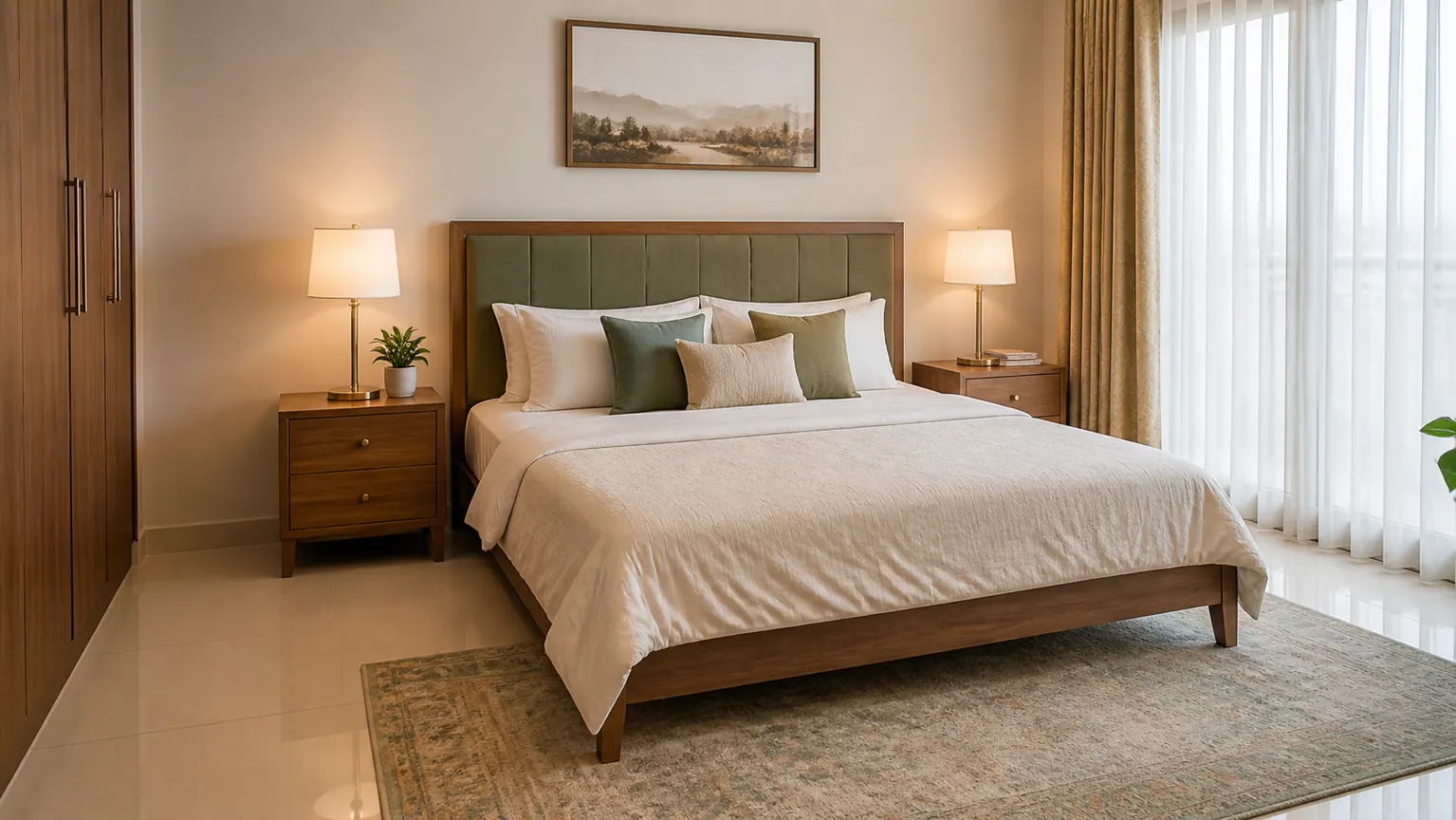
For bedside lamps, balance matters more than perfection. If two people use the bed, two similar lamps or wall lights create visual stability. If space allows only one lamp, keep it on the side where it is most useful and safest. The bedside setup should not block drawers, curtains, wardrobe shutters or walking space. See the Bedside Table Vastu guide for table height, storage and wiring details.
Avoid placing a bright lamp directly behind the pillow where it creates glare. Avoid exposed bulbs near the face. Avoid tall unstable lamps beside children or elders. If a lamp sits near a window, make sure curtains do not touch hot bulbs or tangled cables.
Use three layers: general, task and mood light
A good bedroom should not depend on one tube light. Use general light for cleaning and dressing. Use task light for reading, study or dressing mirror use. Use mood light for winding down. This layered approach lets the room change through the day without moving furniture or doing major renovation.
General light can be a ceiling fixture, recessed light, cove light or ceiling fan light, as long as it is not harsh. Task light can be a bedside lamp, study lamp, wardrobe light or dressing mirror light. Mood light can be a low lamp, dimmable wall light or warm cove strip. Each layer should have a clear purpose.
If you are planning a new interior, ask the electrician to place switches near the entrance and near the bed. If you are renting, use plug-in lamps, smart bulbs or safe extension planning instead of drilling permanent fixtures. The goal is control. A bedroom feels more restful when you do not have to get out of bed to switch off a glaring light.
Colour temperature and bulb choice
Warm white light is usually best for the bedroom in the evening. It softens the room and supports a slower routine. Neutral white can be useful near wardrobes or dressing mirrors because clothes and skin tones are easier to see. Cool white or very bright daylight bulbs may be useful for cleaning, but they often feel too sharp before sleep.
For many homes, a warm bulb around the bed and a neutral light near the wardrobe is enough. If you use only one light point, choose a bulb that is not too bright and add a bedside lamp for night use. Avoid flickering bulbs, buzzing fixtures and cheap adapters that heat up. A technically small electrical issue can disturb the whole room.
Dimmer switches and smart bulbs can help, but keep them simple. If every light requires an app, guests, elders or children may find the room confusing. Practical Vastu favors easy daily use. The best system is the one the family can operate without frustration.
Common bedroom lighting mistakes
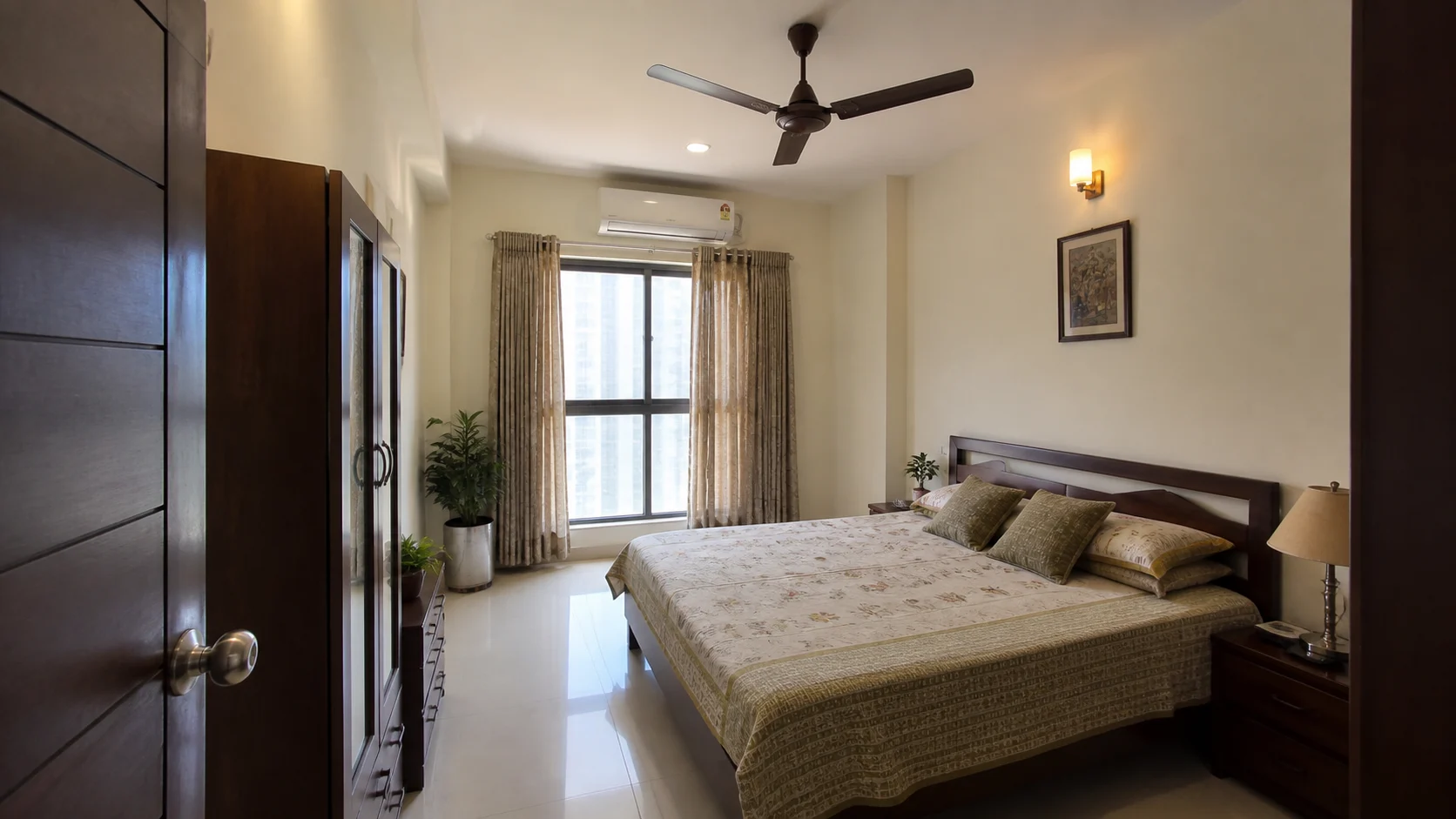
The first mistake is using one central bright light for everything. It may be easy for cleaning, but it can create glare when someone is lying down. The second mistake is using decorative lamps that look good but do not give usable light. A lamp should be beautiful and functional.
The third mistake is placing lights without thinking about shadows. A wardrobe light behind you may cast a shadow exactly where you need visibility. A dressing mirror with a light only above the head can create dark shadows on the face. A study lamp facing the wrong way can cause glare on books or screens.
The fourth mistake is cable clutter. Extension boards beside the bed, loose chargers, tangled lamp wires and overloaded sockets make the room feel messy and unsafe. The fifth mistake is ignoring night safety. A low warm night light can help elders, children or new parents move safely without turning on a harsh ceiling light.
The sixth mistake is using coloured party lighting as permanent bedroom lighting. Occasional festive lighting is fine, but flashing strips, strong red light or constantly changing colours can make the room feel restless. Keep daily lighting quiet.
Practical examples for Indian homes
Compact 1BHK bedroom
Use one warm bedside lamp and a soft ceiling light. Keep the lamp on a narrow table so wardrobe doors and balcony curtains still open easily.
Master bedroom
Use two balanced bedside lamps, a dimmable ceiling or cove light and a brighter wardrobe light. Pair this with the Master Bedroom Vastu guide.
Children's bedroom
Use soft general light, a safe study lamp and no loose wires near the bed. Avoid glass lamps and unstable floor lights in play areas.
Guest bedroom
Use one easy bedside lamp, a visible switch and a simple ceiling light. Guests should not need instructions to use the room comfortably.
Rental apartment
Use plug-in lamps, clip lights and smart bulbs where allowed. Avoid permanent rewiring unless the owner approves.
Bedroom with study table
Keep the study lamp focused on the desk, not the pillow. For desk placement, read Study Table in Bedroom Vastu.
Bedroom lighting do's and don'ts
| Do | Avoid |
|---|---|
| Use warm light near the bed for evening comfort. | Use only harsh white light directly above the pillow. |
| Keep switches easy to reach from entry and bed. | Force people to cross a dark room to turn lights on. |
| Use stable bedside lamps with tidy wiring. | Place loose extension boards and tangled chargers near bedding. |
| Use task lighting for reading, study and wardrobe use. | Make one central light do every job poorly. |
| Clean shades, bulbs and corners regularly. | Let lamps collect dust or hide insects and clutter. |
How to improve bedroom lighting without renovation
Start by replacing a harsh bulb with a warmer one. Clean the light fixture and lamp shades. Move the bedside lamp so it lights the book or walkway rather than the face. Add cable clips so wires do not hang near the bed. If the room feels dark, add a plug-in lamp on a stable console instead of buying more decorative items.
If the ceiling light is too bright, use a lower wattage bulb or add a second softer source for evening use. If the wardrobe area is dark, add a safe battery or plug-in light inside or near the wardrobe. If a mirror creates glare, shift the lamp slightly or use a diffused shade.
For homes with elders, add a small warm night light near the bathroom path. For children, choose covered fixtures and safe wiring. For couples, give each side of the bed independent control if possible. These changes are practical and also support the Vastu idea of balance.
Lighting, headboard and sleep direction
Lighting should be planned together with the bed wall. A beautiful headboard can feel uncomfortable if the lamp behind it creates glare or if the switch is hidden. Read Headboard Vastu when planning the wall behind the pillow, and read Sleeping Direction Vastu when deciding the bed orientation.
If the bed is under a window, use curtains to control morning glare and street light. A warm bedside lamp can make the arrangement feel more settled. If the bed faces a mirror, use lighting carefully so reflections do not become distracting at night. Bedroom Vastu is strongest when light, bed, storage and movement all support rest.
Buying checklist for bedroom lights
- Choose warm light for bedside and evening use.
- Use neutral light only where clear visibility is needed.
- Check whether the fixture causes glare when lying down.
- Make sure lamp bases are stable.
- Keep wires away from pillows, curtains and walking paths.
- Use covered bulbs near children.
- Match lamp size with bedside table height.
- Choose easy-to-clean shades and finishes.
- Keep switches simple for guests and elders.
- Prefer fewer useful lights over many confusing decorative lights.
Frequently asked questions
Which light is best for bedroom as per Vastu?
Soft warm lighting is usually best for bedrooms because it supports rest. Use brighter task lighting only where needed, such as reading or dressing areas.
Can I keep a lamp on the bedside table?
Yes. A stable bedside lamp with warm diffused light is practical and calming, especially when wires are tidy and the shade does not glare into the eyes.
Which direction is best for bedroom lamps?
East, north or a balanced bedside position can work, but the lamp should primarily support safe movement, reading comfort and a calm sleep routine.
Is bright white light bad in bedroom Vastu?
Bright white light is useful for cleaning or dressing, but it can feel harsh before sleep. Use warm light for evening and night routines.
Should the bedroom have ceiling lights or lamps?
A layered setup works best: one soft ceiling or cove light, bedside lamps and focused task light only where needed.
Can fairy lights be used in a bedroom?
They can be used sparingly if safe and not visually cluttered. Avoid tangled wires, cheap overheating lights and flashing modes near the sleep zone.
Conclusion
Bedroom Lighting Vastu is less about decorative drama and more about daily comfort. Use warm light near the bed, brighter light only where function needs it, and keep wiring safe. Let morning light enter when possible, but make the evening room gentle enough for rest.
When light supports sleep, movement and maintenance, the bedroom feels calmer without major renovation. Continue with Bedroom Vastu, Bedside Table Vastu and Headboard Vastu for a complete sleep-zone setup.