

On this page
Quick answer: what is the best headboard as per Vastu?
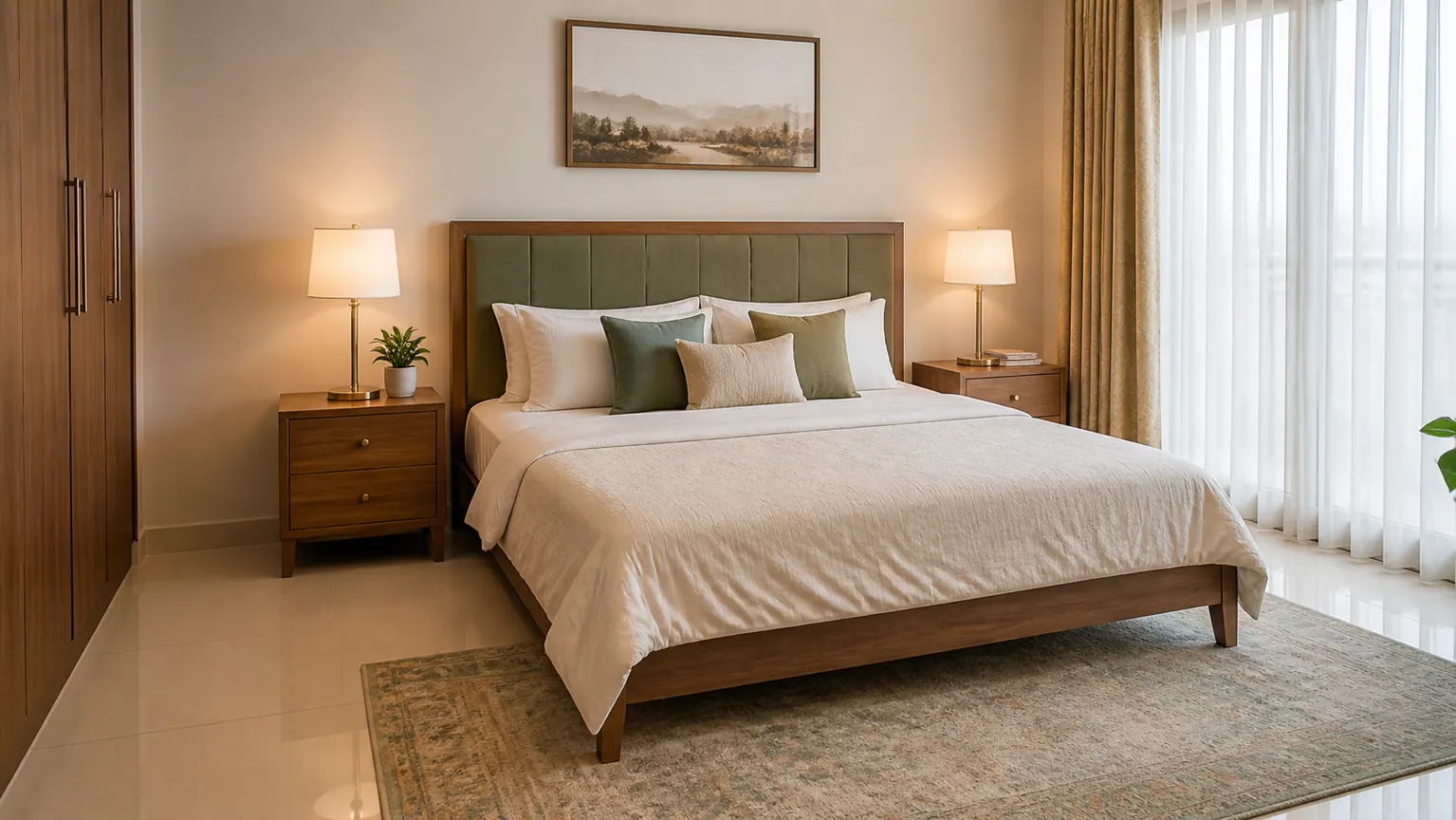
The best headboard is solid, comfortable, proportionate to the bed and placed against a steady wall. Wood and upholstered headboards are usually the easiest choices because they feel warm, grounded and quiet. Avoid shaky frames, sharp corners near the pillow, broken panels, noisy metal joints and heavy shelves directly above the head.
In many Vastu traditions, people prefer sleeping with the head toward south or east, but the exact bed layout should also respect door position, window draft, privacy, light, fan placement and walking space. A technically correct direction that leaves the bed floating in the middle of the room rarely feels restful.
Why headboard Vastu matters
Bedrooms work differently from living rooms. A living room can handle display, movement and conversation. A bedroom needs the opposite: visual quiet, predictability and a protected sleep zone. The headboard sits at the most sensitive end of the bed, so it affects how secure the bed feels even before any direction rule is applied.
When the pillow side has a blank stable wall, the body reads the bed as anchored. When the pillow side has a window, open passage, exposed storage or an unstable partition, the bed can feel temporary. That is why many Vastu consultants talk about support behind the head. It is partly symbolic, but it is also very practical.
A good headboard also solves everyday issues. It prevents pillows from rubbing the wall, makes reading in bed more comfortable, softens contact with a cold wall and helps the bed look complete. In small Indian apartments, where bedrooms often double as storage and work areas, this small decision can make the room feel more intentional.
Headboard direction and bed wall support
Start with the broader bedroom plan. The sleeping direction guide explains common head-direction preferences in detail, but the headboard decision should be made together with the bed location. South and east head directions are commonly preferred. South-west is often treated as a stable zone for the primary bedroom, while east can feel bright and routine-friendly.
Do not treat direction as a single isolated rule. If placing the headboard on the south wall forces the bed against a bathroom door or under a leaking window, it is not a better outcome. A good Vastu decision should improve sleep, not create new discomfort. Choose the best supported wall first, then refine direction where the room allows.
The wall behind the head should ideally be solid, dry and quiet. Avoid damp walls, walls with plumbing noise, walls shared with a noisy lift shaft and walls packed with exposed wiring. If the room is compact, use a modest headboard instead of an oversized one that crowds the side tables and wardrobe path.
Best headboard materials, shape and colour
Wooden headboards suit most Indian bedrooms because they feel steady and natural. Upholstered headboards can be comfortable if the fabric is cleanable and does not collect dust. Cane, rattan or woven panels can work in airy rooms, but they should be sturdy. Metal headboards are not automatically wrong, but avoid rattling joints, cold finishes and thin bars that feel visually restless.
For shape, simple rectangles with soft edges are safest. Curved or gently arched headboards can feel pleasant when they match the room. Avoid sharp spikes, aggressive shapes, cracked mirrors, very busy carvings or headboards with intimidating images. The pillow side should feel restful, not theatrical.
Colours should support sleep. Warm wood, beige, soft grey, muted green, cream, off-white, gentle blue and earthy neutrals are easy to live with. Very bright red, glossy black or loud neon colours can feel stimulating in a bedroom unless used with great restraint. If the rest of the room is already busy, let the headboard be calmer.
Headboard under window, beam or storage
A bed under a window is common in apartments because doors, wardrobes and attached bathrooms limit options. It is not ideal from a support perspective, but it can be managed. Use a strong headboard, secure curtains, good window locking, and make sure there is no draft, leakage, glare or outside noise disturbing sleep. The full guide on bed under window Vastu covers this situation in more detail.
A beam above the head can feel heavy, especially when it is low or visually dominant. If relocation is impossible, use softer ceiling colour, balanced lighting and a headboard that creates a more settled visual base. Do not add more visual weight with bulky shelves above the pillow.
Storage headboards need care. A slim closed shelf for books or glasses is fine if it is stable and does not project over the pillow. Heavy overhead cabinets directly above the head are best avoided. They can feel oppressive, create dust traps and raise safety concerns. For storage planning, read the loft storage Vastu guide.
Headboard Vastu do's and don'ts
| Do | Avoid |
|---|---|
| Use a solid headboard or a clean wall behind the pillow. | A shaky bed frame, loose panels or a floating bed with no support. |
| Keep the headboard proportionate to bed and room size. | Oversized designs that block windows, switches or wardrobe movement. |
| Choose calm colours and soft edges for sleep comfort. | Sharp, cracked, noisy, very glossy or visually aggressive designs. |
| Keep the wall dry, clean and free from heavy clutter. | Damp walls, exposed wires, leaking windows or heavy shelves above the head. |
| Pair the headboard with practical bedside lighting. | Bright glare directly in the eyes while lying down. |
Practical examples for Indian homes
Compact 1BHK bedroom
Use a slim upholstered headboard on the quietest wall. Keep one narrow bedside table and leave wardrobe shutters enough space to open.
Master bedroom
A wooden headboard on a stable wall, matching side tables and warm lamps support a calm sleep routine. Review the Master Bedroom Vastu guide for the full layout.
Bed below window
Use a higher headboard, layered curtains and leak-free window maintenance. Avoid leaving the pillow directly exposed to draft or harsh light.
Rental flat
Choose a freestanding headboard or bed frame that moves with you. Avoid drilling heavy panels into rented walls unless allowed.
Children's room
Use rounded edges, washable fabric or wood and no heavy shelf above the pillow. Safety is more important than decorative height.
Guest room
A simple headboard, clean bedding and one lamp make the room feel complete without adding unnecessary furniture.
Common headboard mistakes
The first mistake is buying a headboard only for looks. A tall panel may look premium online but overwhelm a 10 by 10 bedroom. The second mistake is ignoring maintenance. Fabric headboards need cleaning, wooden headboards need stable joints and cane panels need dust control. A neglected headboard becomes bedroom clutter.
The third mistake is treating storage as always useful. Storage near the pillow can become a dumping spot for chargers, medicines, receipts and random objects. If you want storage, keep it closed and minimal. The fourth mistake is placing heavy art, shelves or mirrors above the head. Even when fixed securely, they can create psychological pressure while sleeping.
The sixth mistake is ignoring daily posture. If you read, pray, scroll or talk in bed, the headboard should support the upper back without forcing the neck forward. A beautiful but uncomfortable panel slowly becomes a problem. Test the bed like you actually use it, not only as a showroom display.
How to improve an existing headboard without renovation
Start by tightening loose screws and cleaning the wall behind the bed. Remove unused objects from the headboard shelf. If the headboard feels too dark, balance it with lighter bedding and warm side lamps. If it feels too low, add a plain cushion panel or a neat wall treatment behind it.
If the bed is under a window, improve curtains and sealing before worrying about remedies. If the wall behind the bed is damp, solve the moisture issue first. Vastu remedies should not cover building problems. For no-demolition corrections, continue with Vastu remedies.
For a rented home, use a fabric headboard that straps to the bed frame, a tall cushion panel or a lightweight freestanding design. Keep it stable so it does not knock the wall. The goal is support and calm, not permanent carpentry.
Also check the room during night use. A headboard that looks good in daylight may cast awkward shadows, block a switch, or make bedside charging inconvenient. Small comfort checks like these keep the Vastu advice practical, especially in apartments where every inch of wall space has to work harder.
Buying checklist for a Vastu-friendly headboard
- It fits the exact bed size without crowding side movement.
- The height suits the wall, window and ceiling fan position.
- The material feels quiet, warm and easy to clean.
- Edges near the pillow are soft or rounded.
- No heavy shelf projects above the head.
- The colour supports sleep rather than excitement.
- The frame is strong and does not rattle.
- Switchboards, windows and wardrobes remain accessible.
- The design works with bedside tables and lamps.
- It can be maintained easily in your climate and lifestyle.
Frequently asked questions
Which headboard is best as per Vastu?
A solid wooden or upholstered headboard against a stable wall is usually preferred because it gives visual support and keeps the bed feeling grounded.
Can a bed have no headboard in Vastu?
It can, but a headboard or clear wall support often feels calmer and more stable. If you cannot add one, keep the wall behind the head neat and uncluttered.
Is it bad to keep the headboard under a window?
A window behind the head can reduce privacy and support. If it cannot be changed, use secure curtains, a stable headboard and avoid drafts or glare.
Should a headboard have storage?
Light, closed storage can work, but avoid heavy overhead storage directly above the pillow. Keep sleep-zone storage quiet, clean and easy to maintain.
Which head direction is best for sleep?
Many Vastu traditions prefer sleeping with the head toward south or east. Comfort, ventilation, noise and bed support should also guide the final layout.
Can a metal headboard be used?
Yes, if it is sturdy, quiet, safe and comfortable. Wood or upholstered finishes usually feel warmer and calmer in bedrooms.
Conclusion
Headboard Vastu is simple when you focus on support. Choose a stable bed wall, a comfortable headboard, calm colours and a clutter-free pillow zone. Direction matters, but it should never override safety, sleep quality, ventilation or basic comfort.
If you are planning the whole room, continue with Bedroom Vastu, Sleeping Direction Vastu and Bedside Table Vastu. Together, these small details create a bedroom that feels grounded, practical and restful.