

On this page
What does “bed under window” mean?
A bed under a window usually means the headboard side of the bed sits directly below or very close to a window opening. In older independent houses, it was easier to avoid this because rooms were larger and window positions could be planned. In modern Indian apartments, bedrooms are compact, wardrobes are fixed, balcony doors take one wall, and the attached bathroom may block another wall. As a result, many families place the bed below a window because it seems like the only workable option.
From a practical Vastu point of view, the issue is not the window alone. The issue is whether the bed feels stable, private and restful. A window behind the head can bring light, air, noise, street movement, dust, rain seepage, direct AC airflow or a feeling of exposure. If the window is well sealed, covered with good curtains, and the bed has a strong headboard, the placement may be manageable. If the window is noisy, leaky, harshly lit or unsafe, sleep quality can suffer.
This guide is especially for flat buyers, renters and apartment owners who cannot shift windows or change room dimensions. Use it with Bedroom Vastu, Bedroom Vastu for Sleep and Sleeping Direction Vastu for a complete bedroom reading.
Vastu view: why a solid headboard wall is preferred
Many Vastu traditions prefer the bed headboard against a solid wall because it creates a sense of support. Sleep is a vulnerable daily state. The body relaxes better when the head side feels protected, quiet and stable. A window behind the head can feel less grounded, especially if curtains move, traffic noise enters, or bright morning light hits directly on the face.
There is also a practical design reason. A solid wall allows a proper headboard, stable side tables, clean electrical points and balanced art or lighting. A window wall often has sill height, curtain rods, grills, uneven surfaces and limited space for a headboard. If the window opens frequently, pillows may touch curtains, dust may gather and privacy may become an issue.
Still, Vastu should not become fear-based. A bed under a window is not a reason to panic or reject a good apartment automatically. First check the real experience. Is the room quiet at night? Is the window secure? Does light disturb sleep? Is there airflow directly on the head? Is there a better wall available? Practical observation is more valuable than a blanket rule.
Best bed placement alternatives in apartments
The first preference is to place the bed with the headboard against a solid wall, ideally allowing the head towards South or East where the room permits. The bed should not block wardrobe doors, balcony access, bathroom entry or the main walking path. It should be easy to make the bed, clean around it and access side tables. Good Vastu is also good daily usability.
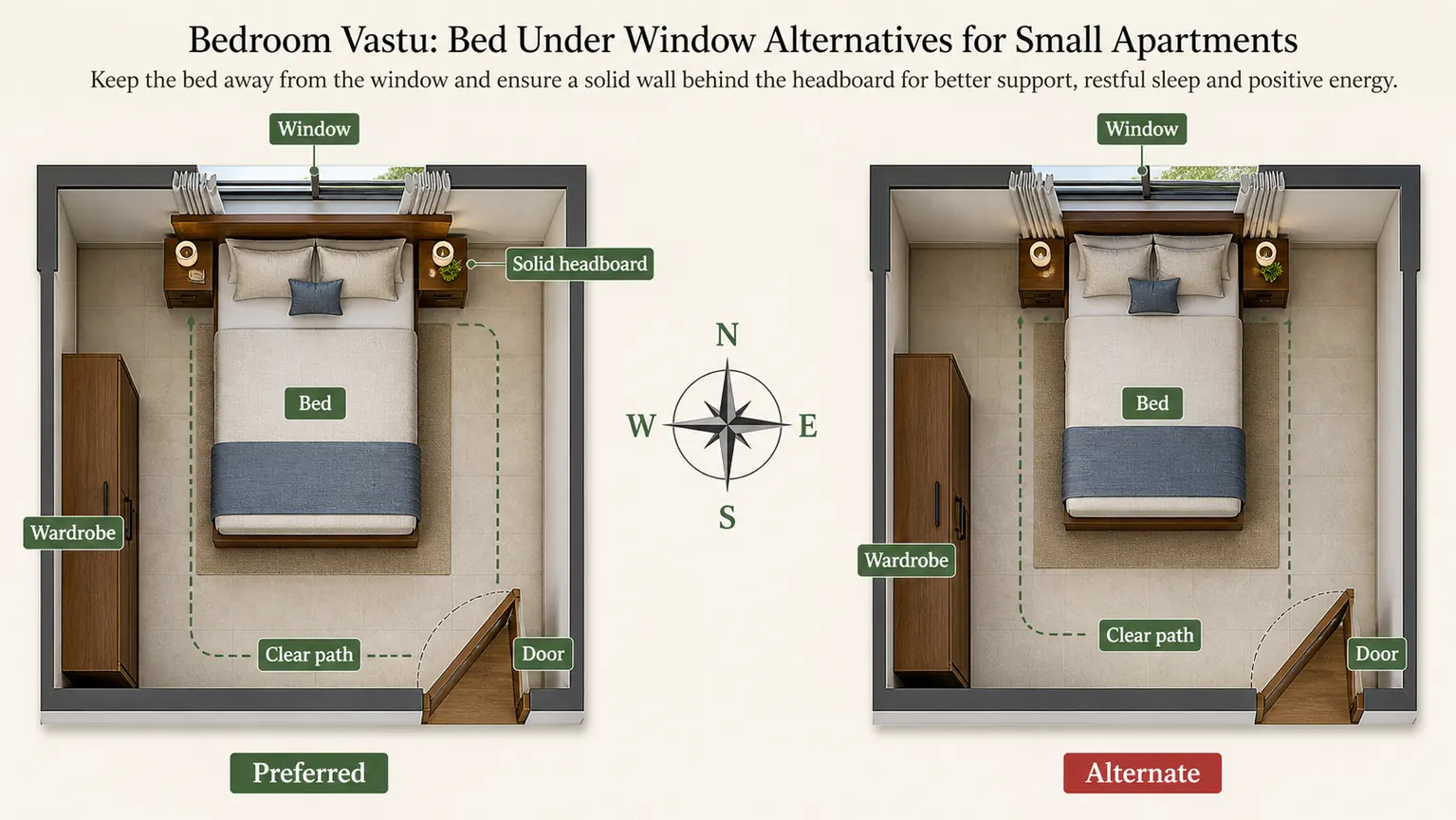
If the window wall is the only possible headboard wall, try to create a stable buffer. Use a solid headboard that rises above pillow height. Keep the bed slightly away from the wall if curtains need space. Use layered curtains: sheer for daylight and thicker curtains for privacy and night comfort. Keep the sill clean and avoid heavy items above the head.
If the window is on the side of the bed rather than behind the head, the arrangement is usually easier. Side windows can bring good daylight and ventilation without disturbing head support. Control glare with curtains and keep enough space to open the window safely. In small flats, a side-window bed arrangement often works better than forcing the bed into a cramped “perfect direction.”
How to check your floor plan before moving the bed
Before shifting furniture, draw a simple plan of the room. Mark the door, window, wardrobe, bathroom door, balcony door, electrical sockets and AC location. Then mark the bed in two or three possible positions. This quick exercise prevents frustration because you can see which placement blocks movement or creates awkward access.
Measure the bed width and length including the frame. Many people forget the extra inches added by the headboard or side rails. Mark the bed size on the floor with tape or newspaper. Open wardrobe shutters, pull out drawers and walk from the door to the bed. If the path feels tight in daylight, it will feel worse at night.
After checking movement, verify direction. Do not assume the top of a builder plan is North. Use How to Check Directions Correctly to confirm the room orientation. If direction and comfort conflict, choose the option that supports safe sleep and practical use first, then apply small Vastu improvements.
No-demolition fixes for a bed under a window
Solid headboard
Use a sturdy headboard to create visual and physical support behind pillows.
Layered curtains
Use sheer plus blackout curtains to control light, privacy, dust and night disturbance.
Safe airflow
Avoid direct wind, AC draft or fan blast on the head while sleeping.
Clean sill
Keep the window sill free from clutter, broken items, leaking pots or dusty decor.
Balanced lamps
Use warm bedside lamps to make the bed area feel stable and intentional.
Privacy check
Use curtains or frosted film if the window faces another flat or public corridor.
If the window wall feels too exposed, add a padded headboard, wall-mounted curtain treatment, soft rug and bedside symmetry. These are simple changes, but they make the bed feel anchored. Avoid placing large mirrors opposite the bed because reflections can make sleep feel restless. For mirror-specific guidance, read Mirror Vastu and Wardrobe Mirror Vastu.
Practical examples for Indian apartments
Example 1: 2BHK with fixed wardrobe. The wardrobe occupies the South wall, the bathroom door is on the West wall and the window is on the East wall. The family wants the head towards South but the wardrobe blocks the bed. In this case, a side-window layout may be better than forcing the bed below the window. The goal is stable sleep, not a mathematically perfect rule that ruins access.
Example 2: Rental flat with bed below window. The tenant cannot drill or change curtains. A freestanding headboard, heavier curtain panels on the existing rod, a rug, two side tables and a clutter-free sill can improve the setup without permanent work. This is a sensible rented-home solution. For more rented-home ideas, see Rented House Vastu Tips.
Example 3: Children’s room with window glare. A child’s bed is below a window that gets harsh morning sun. The fix is not fear; it is comfort. Use blackout curtains, adjust pillow position, keep the study table away from glare and ensure the child has enough fresh air during the day. Read Kids Study Corner Vastu for study placement.
Common mistakes to avoid
Do not keep a cracked window, broken latch or loose curtain rod above the bed. Safety comes first. Do not place heavy decor, shelves or large frames directly over the headboard. Do not keep damp curtains or plants leaking water on the sill. Moisture near the bed can create smell, allergies and discomfort.
Avoid placing the bed so close to the window that curtains cannot move properly. Avoid direct streetlight glare on the pillow. Avoid sleeping with the head under an AC draft or fan blast. Avoid using the bed as a storage platform for bags, old clothes and office items. Clutter around the bed weakens rest more than many people realize.
Another mistake is treating the bed as isolated furniture. The bed must work with the door, wardrobe, bathroom, window, AC, switches and daily walking path. A good bedroom layout is a system. If one part improves but another becomes awkward, the room will still feel unsettled.
Bed under window Vastu checklist
- Prefer a solid headboard wall when the room allows it.
- If the bed stays under a window, use a strong headboard.
- Control light with layered curtains or blinds.
- Keep the window secure, clean and leak-free.
- Avoid direct airflow on the head while sleeping.
- Keep the window sill uncluttered.
- Do not place heavy shelves or sharp decor above the head.
- Check wardrobe, bathroom and door movement before final placement.
- Use warm bedside lighting for calmness.
- Verify direction using a plan and compass before making decisions.
Solid wall vs window wall comparison
| Check | Solid wall headboard | Window behind headboard | Best response |
|---|---|---|---|
| Support | Feels stable and grounded | May feel exposed | Add a strong headboard if window side is unavoidable |
| Light | Easier to control | Can disturb sleep | Use blackout curtains where needed |
| Airflow | Usually calmer | May create draft | Avoid direct airflow on head |
| Privacy | Usually stronger | Depends on view | Use curtains, blinds or frosted film |
| Maintenance | Easy wall cleaning | Sill and curtains need care | Clean regularly and check leaks |
Helpful internal links
Continue with Bedroom Vastu, Master Bedroom Vastu, Bedroom Vastu for Better Sleep, Sleeping Direction Vastu, South-West Bedroom Vastu, Wardrobe Placement Vastu, Mirror Vastu, Apartment Vastu, Small Apartment Vastu and the full Vastu blog archive.
Frequently asked questions
Is it bad to keep a bed under a window as per Vastu?
A bed directly under a window is usually not preferred because the head area may feel less supported and sleep can be disturbed by light, noise, airflow or outside movement. If the layout is fixed, use a solid headboard, good curtains, stable side tables and keep the window clean and safe.
What is the best fix for a bed under a window?
The best fix is to move the bed to a solid wall if possible. If not, add a strong headboard, use layered curtains, avoid open shelves above the head, seal drafts, and keep the area uncluttered.
Can I sleep with my head towards a window?
It is better to sleep with the head supported by a solid wall. If the only practical place is near a window, keep the headboard stable, close curtains at night, avoid direct air on the head and maintain privacy.
Which direction is best for bed placement?
Many Vastu traditions prefer sleeping with the head towards South or East. However, in apartments, also check door position, window glare, wardrobe access, ventilation and comfort before final placement.
Are curtains useful as a Vastu remedy for bed under window?
Yes. Thick curtains or layered curtains can reduce glare, privacy issues and restless airflow. They do not replace a stable layout, but they are a useful no-demolition improvement.
Should a bed face the bedroom door?
Avoid placing the bed where the feet point directly into the door path if another option is available. The bed should feel private, stable and easy to approach from both sides where possible.
Can a rented flat bed placement be corrected without renovation?
Yes. Use movable furniture, a solid headboard, curtains, bedside lamps, rugs, better storage and small layout adjustments. Rented homes can often be improved without drilling or construction.
What should be avoided near the bed window?
Avoid broken blinds, sharp curtain rods, damp walls, noisy AC outdoor units, direct streetlight glare, clutter on the sill, loose wiring and open storage above the head.
Conclusion
A bed under a window is not always ideal, but it can often be improved without demolition. The best bedroom layout gives the head support, controls light and airflow, protects privacy, and keeps movement clear. If a solid wall placement is available, prefer it. If not, make the window-side bed feel stronger with a headboard, curtains, clean surfaces and balanced lighting.
In Vastu, the bedroom should support rest, not fear. Observe how the room feels at night, how the morning light enters, how the wardrobe works, and whether the bed truly feels comfortable. That practical reading will help you make a better decision than any single rule taken alone.