
Sleep
Support rest with stable bed placement and soft light.
Relationship
Reduce visual noise, sharpness, and work clutter.
Modern homes
Adapt rules for flats, wardrobes, attached toilets, and work corners.
Why bedroom Vastu matters
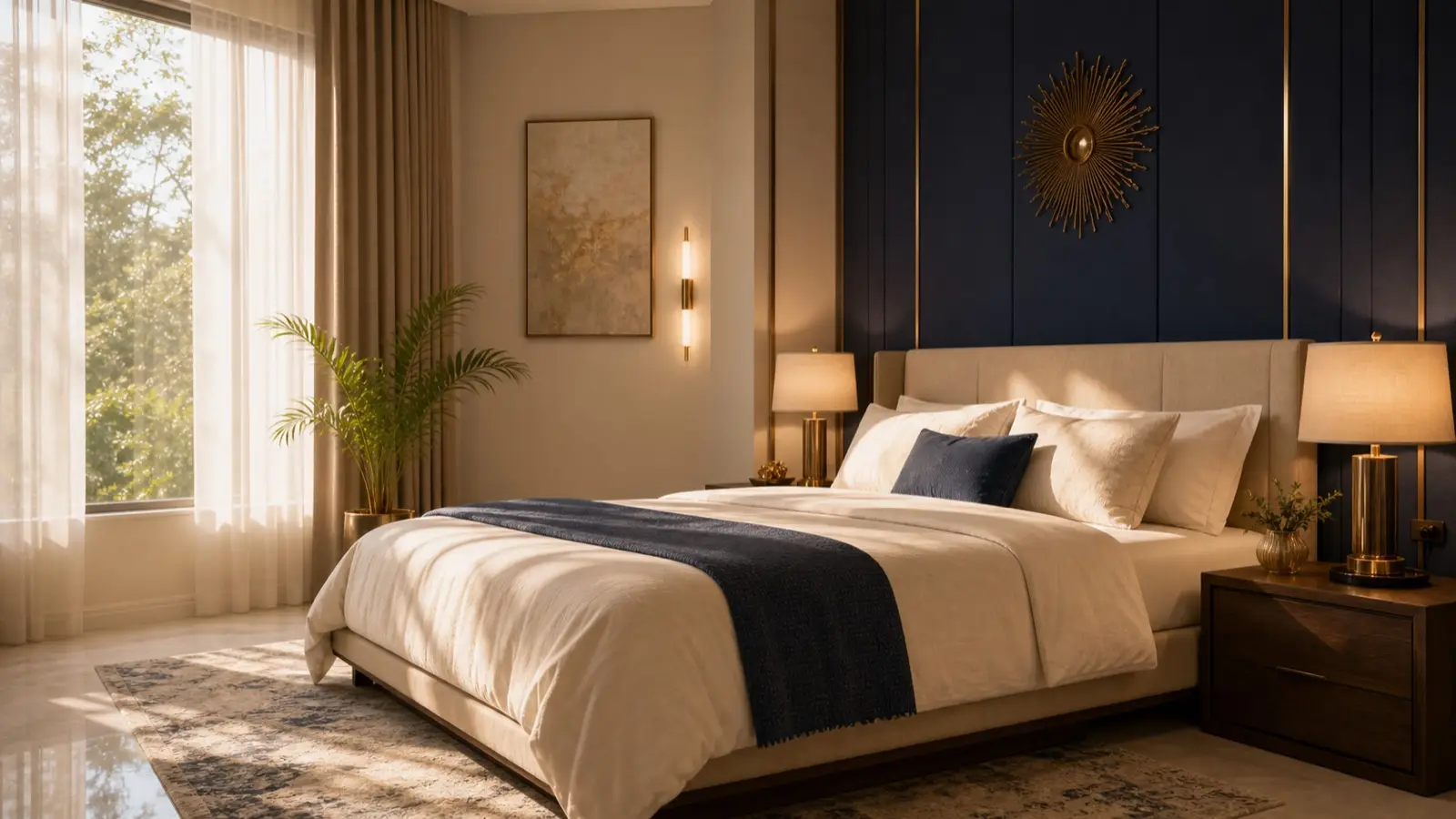
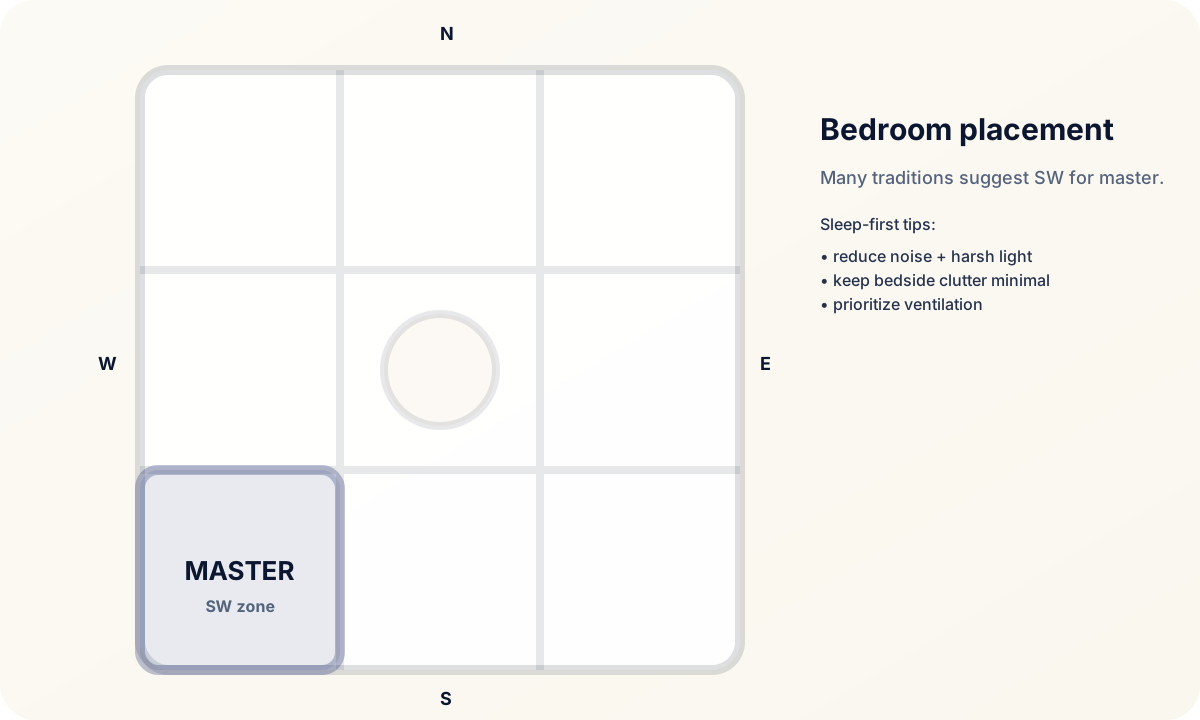
A bedroom is not meant to behave like a living room, storage room, or office. When it becomes all three, sleep suffers. Vastu gives a simple principle: the bedroom should feel stable, private, clean, and restful. The master bedroom is often preferred in the South-West because that zone is associated with weight, grounding, and long-term stability. If your apartment does not allow this, you can still improve bed direction, storage, mirror placement, colour, and lighting.
Many sleep problems are practical before they are mystical. Bright screens, harsh lights, noisy ceiling fans, open shelves, clutter under the bed, and mirrors reflecting movement can keep the mind alert. For overhead airflow and sleep comfort, read Ceiling Fan Vastu. Bedroom Vastu works best when it improves these daily issues.
Best bed placement
Many Vastu traditions suggest sleeping with the head toward south or east; confirm directions with How to Check Directions Correctly. South is often considered stable, while east is associated with freshness and clarity. Avoid sleeping with the head toward north if it causes discomfort or goes against your family tradition. In small flats, choose the best practical option while keeping the bed accessible and comfortable.
Do
- Keep the headboard against a solid wall
- Allow easy movement on at least one side
- Use soft warm light near the bed
- Keep storage under the bed light and organised
Avoid
- Mirror reflecting the bed directly
- Heavy shelves above the head
- Sharp corners pointing at sleeping area
- Office files and laptops beside pillows
Mirrors, wardrobes, and attached toilets
Mirrors are useful in modern bedrooms, especially with wardrobes, but their reflection matters; read Mirror Vastu for placement rules. If a mirror reflects the bed and you feel disturbed, cover it at night or reposition it. Wardrobes are usually heavy, so keep them toward south or west walls when possible. Attached toilets should stay dry, ventilated, and closed when not in use. Odour and dampness affect sleep more directly than most decorative remedies.
Colours for bedroom peace
Choose colours that calm the nervous system: warm white, cream, soft beige, muted green, gentle peach, or light earthy tones. Avoid intense red, glossy black, or very loud patterns across the entire room. If you enjoy bold colours, keep them as cushions, artwork, or a single accent, not as the main sleeping environment.
Good
Warm whites, muted greens, creams, soft peach.
Use carefully
Dark blue, grey, maroon, black, and strong red.
Lighting
Use warm lamps and avoid harsh blue-white light at night.
Comparison table: Sleep blockers and Vastu fixes
| Issue | Effect | Fix |
|---|---|---|
| Mirror facing bed | Restlessness for some people | Cover or reposition mirror |
| Work desk beside bed | Mind stays active | Create end-of-day closure routine |
| Clutter under bed | Heavy feeling | Store only clean, seasonal items |
Modern Indian bedroom realities
Most bedroom Vastu advice sounds simple until you apply it to a real Indian apartment. The wardrobe may be fixed. The attached toilet may be on the only available wall. The bed may fit in only one direction because of windows, AC point, balcony door, or electrical sockets. Many couples also use the bedroom as a home office, dressing room, storage room, and child-care zone. This is why bedroom Vastu should be practical, not rigid.
The first question is not, "Is my bedroom perfect?" The better question is, "Does this room help me sleep, recover, and feel emotionally steady?" If the answer is no, start with the daily irritants. Is the room too bright at night? Is there office clutter beside the bed? Are clothes visible everywhere? Does the mirror reflect movement when you wake up? Is the attached bathroom damp? These small issues shape the feeling of the room more than decorative remedies.
For the master bedroom, many Vastu traditions prefer the South-West because it is associated with grounding and stability. If your master bedroom is elsewhere, you can still create stability with a solid headboard, balanced side tables, calm colours, closed storage, and a clear sleep routine. Stability is not only a direction; it is also how the room behaves.
Stability signals
- Solid wall behind the headboard
- Clear floor around bed
- Soft light after sunset
- Wardrobe doors close properly
- Bathroom stays dry and odour-free
Restless signals
- Open shelves full of visual clutter
- Bright screen use in bed
- Mirror reflection of sleeping area
- Heavy storage above pillows
- Work stress visible from bed
Bedroom Vastu for couples and relationships
Relationship harmony is one reason bedroom Vastu is searched so often. A peaceful bedroom cannot fix every relationship issue, but it can reduce avoidable irritation. A room with piles of laundry, harsh lighting, no privacy, and work devices everywhere keeps the mind defensive. A cleaner, softer room helps conversations settle more gently.
For couples, avoid turning one side of the bed into a storage zone while the other side stays clear. Balance matters visually and emotionally. If space allows, keep access on both sides of the bed. Use pairs where practical: two pillows, two side lights, or two small tables. This does not need to be decorative or expensive. The idea is to make the room feel shared, not dominated by one person's clutter.
Keep family arguments, bills, office files, and repair items out of the bedroom as much as possible. If the bedroom must hold paperwork because the flat is small, use closed storage and review Small Apartment Vastu. Do not let stressful documents sit openly near the bed. The last thing the eyes see at night and the first thing they see in the morning should not be unfinished financial pressure.
Children's bedrooms and guest bedrooms
A child's bedroom needs a different energy from a couple's bedroom. It should support sleep, study, play, and growth. If the study table is in the bedroom, facing east or north is often preferred. Keep the bed separate from the study pressure if possible. Avoid putting the child to sleep under heavy shelves, exposed storage, or harsh lighting.
Guest bedrooms can be lighter and more flexible. North-West is often considered suitable for guests because it supports movement and temporary stay. Practically, a guest room should be clean, airy, and not used as a dumping space. Many Indian homes call a room "guest room" but fill it with old suitcases, broken appliances, and unused mattresses. That creates stagnant energy and also makes guests feel like an afterthought.
Master bedroom
Prioritise stability, privacy, and calm colours.
Children's room
Balance sleep with study and avoid overstimulation.
Guest room
Keep clean, light, and free from household dumping.
The sleep routine as a Vastu remedy
Some of the strongest bedroom remedies are habits. Open the windows for a few minutes in the morning if air quality allows. Make the bed. Remove cups, plates, and laundry. Close wardrobe doors. Dim lights after dinner. Keep the phone away from the pillow. These actions tell the room what it is meant to do.
If your bedroom has an attached bathroom, keep the bathroom door closed at night and maintain ventilation. If the room has an AC, clean filters regularly. If you use incense or fragrance, avoid overpowering smells. The bedroom should not feel smoky or heavy. Freshness and softness are more important than intensity.
For people who work late, create a visible shutdown ritual. Close the laptop, place it in a drawer or sleeve, clear the desk, and switch to warm light. This separates earning energy from sleeping energy. In small apartments, this boundary is essential because rooms often serve many purposes.
Real-life bedroom examples
Example one: A couple in a 2BHK could not change bed direction because of the wardrobe. They improved sleep by covering the mirror at night, removing office files from the bedside table, switching to warm lamps, and reducing under-bed storage. The direction was not perfect, but the room became calmer.
Example two: A child's room had bright colours, open toy shelves, and a study table facing distractions. The family shifted the study chair toward a quieter wall, used boxes for toys, softened the wall colour, and added a reading lamp. The room became more focused without renovation.
Example three: A guest room was used as storage. Once old boxes were removed, bedding was cleaned, and one plant was placed near a window, the room felt usable again. This is Vastu in its simplest form: restore the purpose of the room.
Seven-day bedroom Vastu reset
If the bedroom feels heavy, do not try to fix everything in one day. Use a seven-day reset. On day one, remove obvious clutter: cups, old papers, extra packaging, unused items, and laundry piles. On day two, clean under the bed and keep only items that are clean, seasonal, and properly packed. On day three, check mirrors and reflections. If the mirror reflects the bed and bothers you, cover it at night or shift it where possible.
On day four, improve lighting. Replace harsh blue-white bulbs with warmer lamps for evening use. On day five, review electronics. Move chargers, laptops, and work devices away from the pillow zone. On day six, clean the attached bathroom, repair leaks, and ensure ventilation works. On day seven, reset the emotional tone of the room: fresh bedsheet, calm fragrance if suitable, closed wardrobe doors, and no unresolved paperwork near the bed.
This reset is powerful because it addresses the real experience of the bedroom. Many people look for a dramatic remedy, but the nervous system responds to simple signals: clean air, soft light, order, privacy, and comfort. When the bedroom sends these signals consistently, sleep and relationships often improve naturally.
Morning habit
Open curtains, make the bed, and clear cups or laundry.
Evening habit
Dim lights, close work, and keep screens away from pillows.
Weekly habit
Clean mirrors, under-bed storage, wardrobe tops, and bathroom corners.
For compact apartments, the weekly habit matters even more. A small bedroom becomes visually crowded quickly. If you cannot change direction, control what you can: light, clutter, reflection, smell, airflow, and emotional boundary. That is practical bedroom Vastu.
Most searched bedroom Vastu concerns
One common search is whether sleeping in the wrong direction causes health problems. It is wiser to frame this practically. Sleep quality is affected by noise, mattress comfort, light, temperature, stress, and routine. Vastu direction can be used as a supportive layer, but it should not create fear. If you sleep well with a certain placement and the room is calm, do not disturb everything without reason. If you sleep poorly, test improvements one by one.
Another frequent question is about beams above the bed. Many people feel uncomfortable sleeping under a heavy beam because it creates visual pressure. If you cannot move the bed, soften the effect with ceiling treatment, lighting, or a fabric panel if appropriate. Also check whether the discomfort is actually from low ceiling height, poor fan placement, or harsh light.
People also ask about electronics in the bedroom. From a practical Vastu perspective, reduce devices near the pillow. Phones, routers, work laptops, and TV noise keep the room mentally active. If you cannot remove them, create a charging station away from the bed and stop screen use before sleep. A bedroom should tell the mind that the day is complete.
Bedroom checks before buying or renting
When you visit a new flat, spend a few minutes in each bedroom without talking. Notice sound, light, privacy, and furniture possibility. Can the bed fit without blocking the wardrobe? Is there space to walk? Does the window bring fresh air or only noise? Is the attached bathroom dry? Where will the mirror go? These questions matter because bedroom problems are difficult to ignore after moving in.
Also check whether the bedroom shares a wall with lift shafts, pumps, common toilets, or noisy corridors. A bedroom may look fine in photos but feel disturbed at night. Good bedroom Vastu includes peace from outside disturbance. If the room is noisy, ask whether better windows, curtains, or layout changes can solve it. If not, think carefully before committing.
For couples, check storage honestly. If the room cannot hold wardrobes without crowding the bed, daily clutter may become a relationship irritant. For children, check study light and play space. For elders, check bathroom access and safe movement at night. A bedroom is successful when the person using it can rest without fighting the room every day.
FAQ
Which direction is best for sleeping?
Many Vastu traditions prefer head toward south or east. Choose the best practical direction that supports comfort and sleep.
Can mirrors face the bed?
If it disturbs you, avoid it. A mirror that reflects movement can make the room feel restless.
Is a bedroom in North-East bad?
North-East is often kept lighter and calmer. If your bedroom is there, reduce heaviness, clutter, and harsh colours.
Related guides
Continue with Bedroom Vastu, Apartment Vastu, Small Apartment Vastu, and Vastu FAQ.
More Vastu guides to read next
Home and layout
Home Vastu, Apartment Vastu, Balanced Layout, Small Apartment Vastu
Directions and buying
Check Directions, Main Door Vastu, East-Facing House, North-Facing House
Room-wise help
Kitchen Vastu, Bedroom Vastu, Bathroom Vastu, Pooja Room Vastu
Focus and work
Study Room Vastu, Home Office Vastu, Wealth Vastu, Office Vastu
Remedies and support
Vastu Remedies, No-Demolition Remedies, Vastu FAQ, Trust and Support
Popular blog topics
Kitchen Do's and Don'ts, Mirror Vastu, Vastu Plants, Brahmasthan Vastu