
On this page
Quick answer: what is the best ceiling fan placement?
The best ceiling fan placement is the point where airflow supports the main activity of the room without creating noise, wobble, visual pressure or safety risk. In a bedroom, this usually means balanced airflow over the bed and walking space, with the fan kept stable and not visually heavy above the pillow line. In a living room, it means serving the seating area without colliding with lights, curtains, beams or TV sightlines.
Traditional Vastu often talks about weight above the head, calm sleep and orderly movement. A ceiling fan can support these ideas when it is clean, quiet, proportionate and placed with the furniture layout. It can disturb the room when it is oversized, noisy, very low, dusty, unbalanced or squeezed under a beam. Direction matters less than comfort, safety and maintenance.
Use this page with Bedroom Vastu for Better Sleep, TV Placement Vastu, Electrical Switchboard Vastu and the Balanced Layout guide.
Ceiling fan Vastu for bedrooms
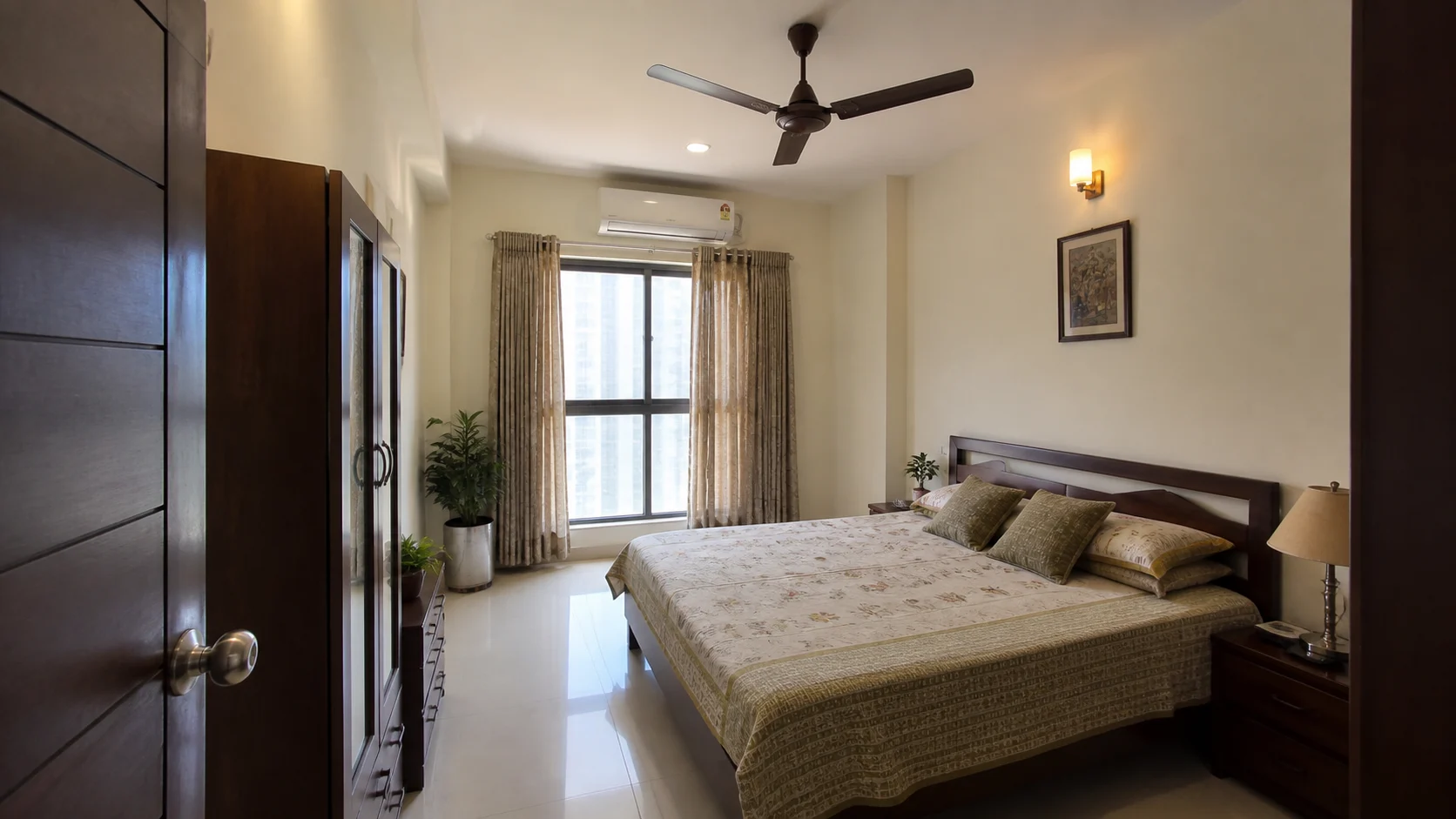
Bedrooms should feel restful, stable and easy to sleep in. A fan that creates strong air directly on the face, rattles at night or visually hangs over the headboard can make sleep lighter for some people. Many Vastu advisers therefore suggest avoiding a heavy object exactly over the sleeping head. In real Indian apartments, however, the fan point is usually fixed in the ceiling, so the practical question is how to make the arrangement more comfortable.
If the fan is above the bed, keep it clean and balanced. Use a comfortable speed instead of strong air all night. Keep the bed headboard against a solid wall and avoid placing large pendant lights or heavy ceiling features in the same zone. If you are renovating, ask the electrician to mark the bed location before finalising the fan point. This prevents the fan from sitting awkwardly over only one sleeper or too close to a wardrobe shutter.
Low ceilings need extra care. The fan should have safe height clearance and should not make the room feel compressed. If the ceiling is too low for a normal fan, consider a safe low-profile model chosen by a professional installer. Do not hang decorative items from the fan, and do not use unstable rods or makeshift extensions.
Ceiling fan Vastu for living rooms
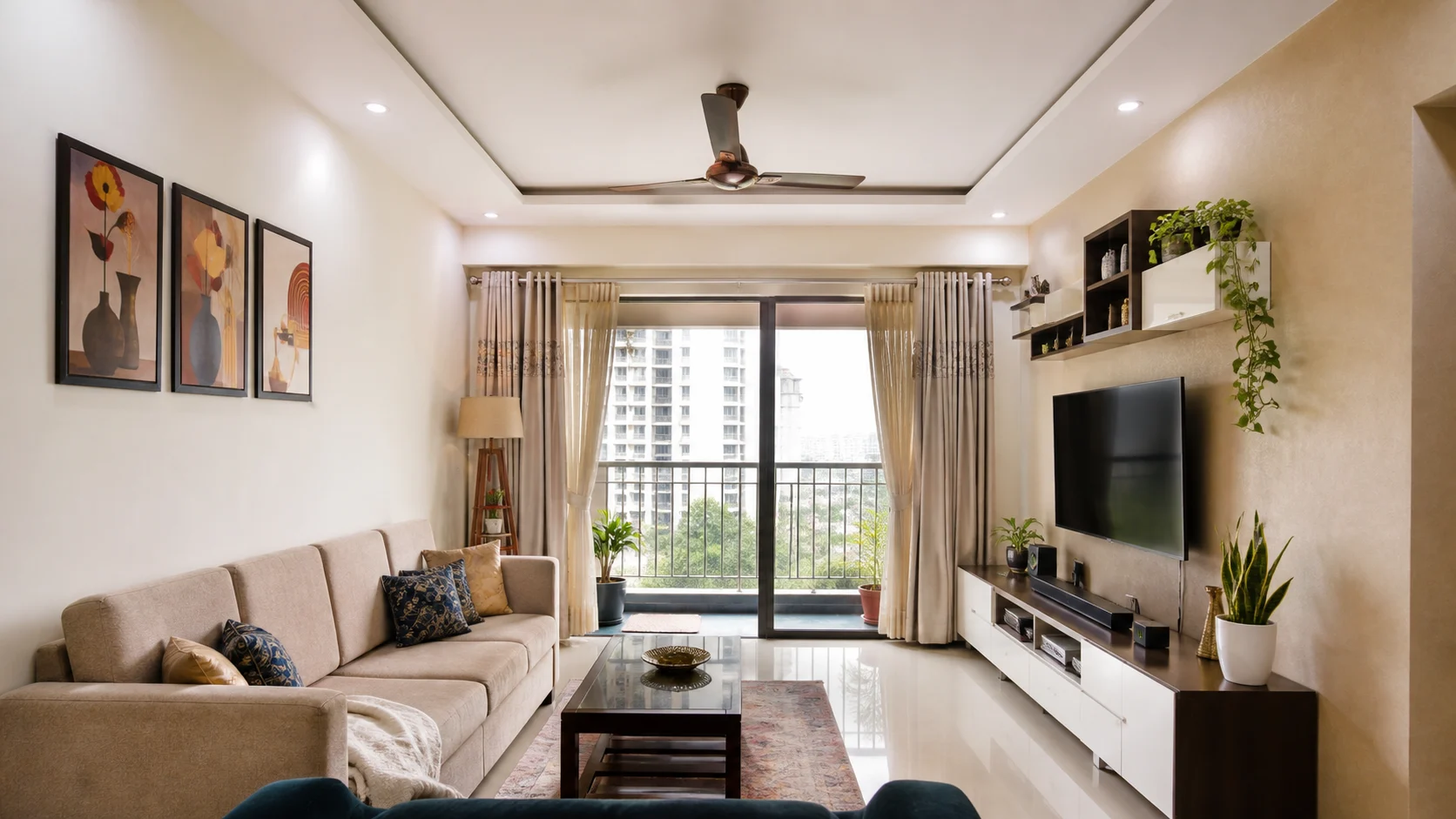
In a living room, the fan should serve conversation, seating and movement. A fan centered only in the empty room may not work after the sofa, center table and TV unit are placed. Instead, align airflow with the actual seating zone. If the room is long, two smaller fans or one carefully placed fan may be better than one oversized fan struggling to cover everything.
Keep blade clearance from curtains, pendant lights, loft edges and balcony doors. In modern flats, false ceilings often combine fans with recessed lights. The arrangement should look calm and practical: no flickering shadows, no fan blades cutting through light beams, and no awkward air direction toward the dining plate or pooja corner.
If the TV wall is the visual focus, avoid placing a fan so low or close that it distracts from viewing. The room should not become a contest between screen, fan, lights and decor. For broader seating and screen balance, read Sofa Placement Vastu and TV Placement Vastu.
Fan placement for study tables and work corners
A study or home office needs steady airflow without distraction. Strong fan speed can scatter papers, dry eyes, disturb a laptop microphone or create camera flicker with ceiling lights. If the study table is in a bedroom, separate the work light from the sleep light and avoid making the fan the only comfort solution. Good ventilation, daylight and posture matter too.
For children, keep the study table away from a fan that blows directly on books and craft material. For remote workers, test the desk during a real video call. If the fan noise enters the microphone or the light flickers behind the blades, adjust speed, lighting or desk position. Direction preferences such as facing east or north are useful only when the desk remains ergonomic and calm.
For desk-specific planning, see Study Table in Bedroom Vastu, Home Office Desk Vastu and Wi-Fi Router Vastu.
Ceiling fan safety checklist
Stable mount
Use a proper ceiling hook, box or rated support. Avoid weak false-ceiling-only fixing.
Safe height
Keep enough head clearance, especially in bedrooms, bunk-bed rooms and compact flats.
No wobble
Repair imbalance, bent blades, loose screws and unusual sound quickly.
Clean blades
Dusty blades spread dirt and make the room feel neglected.
Light spacing
Avoid blade shadows cutting through recessed lights, pendants or study lamps.
Clear edges
Keep blades away from curtains, loft cabinets, tall doors and wall shelves.
These checks are not separate from Vastu. A fan that is quiet, clean and safely installed supports a calmer room. A fan that shakes, clicks or gathers dust becomes a daily irritation no matter where it is placed.
Ceiling fan placement table
| Room | Good placement | Avoid | Practical correction |
|---|---|---|---|
| Bedroom | Balanced over sleep and circulation, with moderate airflow. | Very low fan directly crowding pillow line or wobbling above bed. | Balance fan, reduce speed, adjust bed if possible. |
| Living room | Aligned to sofa and movement, away from lights and curtains. | Fan centered to empty room but not useful after furniture layout. | Plan fan point after sofa and TV wall are decided. |
| Dining area | Gentle airflow around seating without blowing directly on food. | Strong air over plates, candles or lightweight decor. | Use lower speed or shift table slightly. |
| Study corner | Comfortable airflow that does not disturb papers, eyes or calls. | Noisy fan above microphone or flickering blade shadows. | Change light angle, speed or desk location. |
| Rental flat | Existing fan cleaned, serviced and used sensibly. | DIY electrical changes or ignoring loose fittings. | Ask owner for repair and use reversible furniture changes. |
Practical examples for Indian homes
Example 1: Small 2BHK bedroom. The fan point is fixed slightly toward the foot of the bed. The family worries that it is not centered. If airflow is comfortable and the fan is safe, this may be better than a fan directly over the head. Keep bedside lighting soft and avoid heavy storage above the bed.
Example 2: Living room with false ceiling. The interior plan places downlights close to the fan, creating moving shadows at night. The correction is to adjust the light circuit, use indirect lighting or shift one fitting during renovation. This is a design problem as much as a Vastu problem.
Example 3: Child study corner. A ceiling fan above the desk blows papers away and makes the child restless. The family shifts the desk slightly, adds a small task lamp and uses lower fan speed during study time. The room becomes calmer without any demolition.
Common ceiling fan Vastu mistakes
The first mistake is ignoring maintenance. Dusty fan blades, clicking sound and wobble make a room feel unsettled. Clean the fan monthly and service it when the sound changes. If the fan is old, bent or unsafe, replacement is a practical remedy.
The second mistake is planning the ceiling before planning furniture. Builders and interior teams often mark fan points from room dimensions, but real use depends on bed, sofa, dining table and wardrobe position. During renovation, always review the furniture layout before final electrical work.
The third mistake is using a very heavy decorative fan in a small room. A large dark fan can visually lower the ceiling and create pressure. Choose size, blade colour and finish according to room scale. A simple fan that blends with the ceiling often feels more peaceful.
The fourth mistake is treating fan direction as a fear rule. A ceiling fan does not have the same directional logic as a door, stove, bed or desk. It mainly affects air movement, sound, light and comfort. Use Vastu to refine the experience, not to create panic.
Apartment and rental home tips
In apartments, fan points are often fixed. Before spending money to shift them, observe the real problem. Is the fan noisy? Is airflow too strong? Is the bed poorly placed? Does a light create flicker? Many issues can be solved with balancing, cleaning, speed control, furniture adjustment or better lighting.
Renters should avoid electrical changes without owner approval. They can still improve fan Vastu by cleaning blades, asking for repair, using a stable regulator, changing bed orientation within the room and reducing visual clutter on the ceiling. Never hang cloth, decorations or storage from a fan.
For independent houses under construction, coordinate fan points with ceiling beams, loft storage, AC indoor units and window positions. A room can have a preferred direction but still feel uncomfortable if airflow fights the AC, curtains or bed position. For related planning, read AC Placement Vastu and Loft Storage Vastu.
Related guides
For complete room planning, continue with Bedroom Vastu, Living Room Vastu, Study Room Vastu, False Ceiling Vastu, Bed Under Window Vastu, Entrance Lighting Vastu and the full Vastu blog archive.
Frequently asked questions
Is it bad to sleep directly under a ceiling fan as per Vastu?
Traditional guidance often prefers avoiding strong downward pressure over the head, but practical comfort matters. Use a stable fan, moderate speed, safe height and a bed position that feels restful.
Which direction is best for a ceiling fan?
There is no single direction for every ceiling fan. Place it where airflow supports the room without blocking lights, beams, doors or safe movement.
Can a ceiling fan be above the bed?
Yes, many bedrooms require this. Keep it centred for airflow, maintain safe blade height, avoid wobbling and use slower speeds if direct air disturbs sleep.
Should the fan be exactly in the centre of the room?
Centre placement often works, but furniture layout matters more. In long rooms, align the fan to the seating or sleeping zone rather than blindly to the empty ceiling.
Is a fan under a beam bad?
A beam can create visual pressure and may disturb airflow. If unavoidable, keep the fan safely mounted, avoid cramped clearances and soften the beam with lighting or ceiling treatment.
Can ceiling fan face the main door?
A fan does not face like a door or desk. Check whether its airflow, noise or visual position affects the entrance experience, then adjust furniture or lighting if needed.
What is the best ceiling fan position in a living room?
Place it above the seating circulation zone with safe distance from pendant lights, curtains, TV wall and balcony doors.
Can a fan be above a study table?
It can be nearby, but avoid strong air that scatters papers, dries eyes or creates screen discomfort. Task lighting and steady airflow are more important than direction alone.
Is a noisy fan a Vastu problem?
A noisy or wobbling fan is first a maintenance and safety problem. Repair, balance or replace it before considering symbolic remedies.
What fan colour is best for Vastu?
Use a colour that blends with the ceiling or room palette. White, wood, matte neutral or simple metallic finishes usually feel calmer than visually heavy designs.
Can renters improve ceiling fan Vastu?
Yes. Clean the fan, balance it, improve lighting, change bed or sofa placement if possible and avoid hanging items from the fan.
What is the simplest ceiling fan Vastu remedy?
Keep the fan clean, quiet, stable, safely installed and aligned with the room use. A well-maintained fan supports comfort better than fear-based changes.
Conclusion
Ceiling Fan Vastu is ultimately about comfort above the body, clean airflow, safe installation and a room that feels settled. Traditional guidance can help you notice weight over the head, sleep quality and room balance, but practical checks must lead: height, stability, wiring, noise, light shadows and furniture fit.
Start with cleaning, balancing and observing the room. Then adjust bed, sofa or desk placement where possible. A quiet, safe, proportionate fan that supports daily comfort is the best Vastu correction for modern Indian homes.