
On this page
Quick answer: is loft storage okay in Vastu?
Loft storage can be acceptable in Vastu when it supports the home instead of weighing it down. In traditional guidance, heavier storage is often considered more suitable toward South, West or South-West zones because these areas are associated with stability and weight. In modern apartments, the better rule is more layered: keep lofts structurally safe, closed, clean, light enough to access, and away from places where overhead pressure feels uncomfortable.
A loft is not automatically good or bad. A neat wardrobe-side loft that stores two suitcases and winter blankets may be perfectly practical. A deep loft above the bed filled with old electronics, paint cans, broken chairs and forgotten cartons is a different story. It can feel visually heavy, collect dust, attract pests and create real safety risk.
Use this article with Flat Buying Vastu Checklist, Wardrobe Placement Vastu, and Declutter Home Vastu. Direction matters, but weight, access, hygiene and maintenance decide whether the loft actually improves the home.
Best directions for loft storage
Many Vastu practitioners prefer substantial storage in the South, West or South-West parts of a room or home. These directions can work well for wardrobes, closed cabinets and rarely used household items, provided the wall is strong and dry. If you are designing a new flat interior, place heavier loft units along stable wardrobe walls rather than across every empty stretch of ceiling.
North and East are often treated as lighter, more open directions. That does not mean you can never have a loft there, especially in a compact apartment. It means the loft should be shallow, neat and visually quiet. Avoid blocking the best daylight window just to create storage. A room with better light and airflow will usually feel more balanced than a room that follows one direction rule but becomes dark.
The North-East is traditionally kept clean and light in many homes. If your flat already has a loft in that zone, do not panic. Reduce the load, keep the shutters closed, remove broken objects and make the area below bright. If you are building new storage, avoid making the North-East the main dumping zone.
Room-wise loft storage Vastu
Bedroom lofts
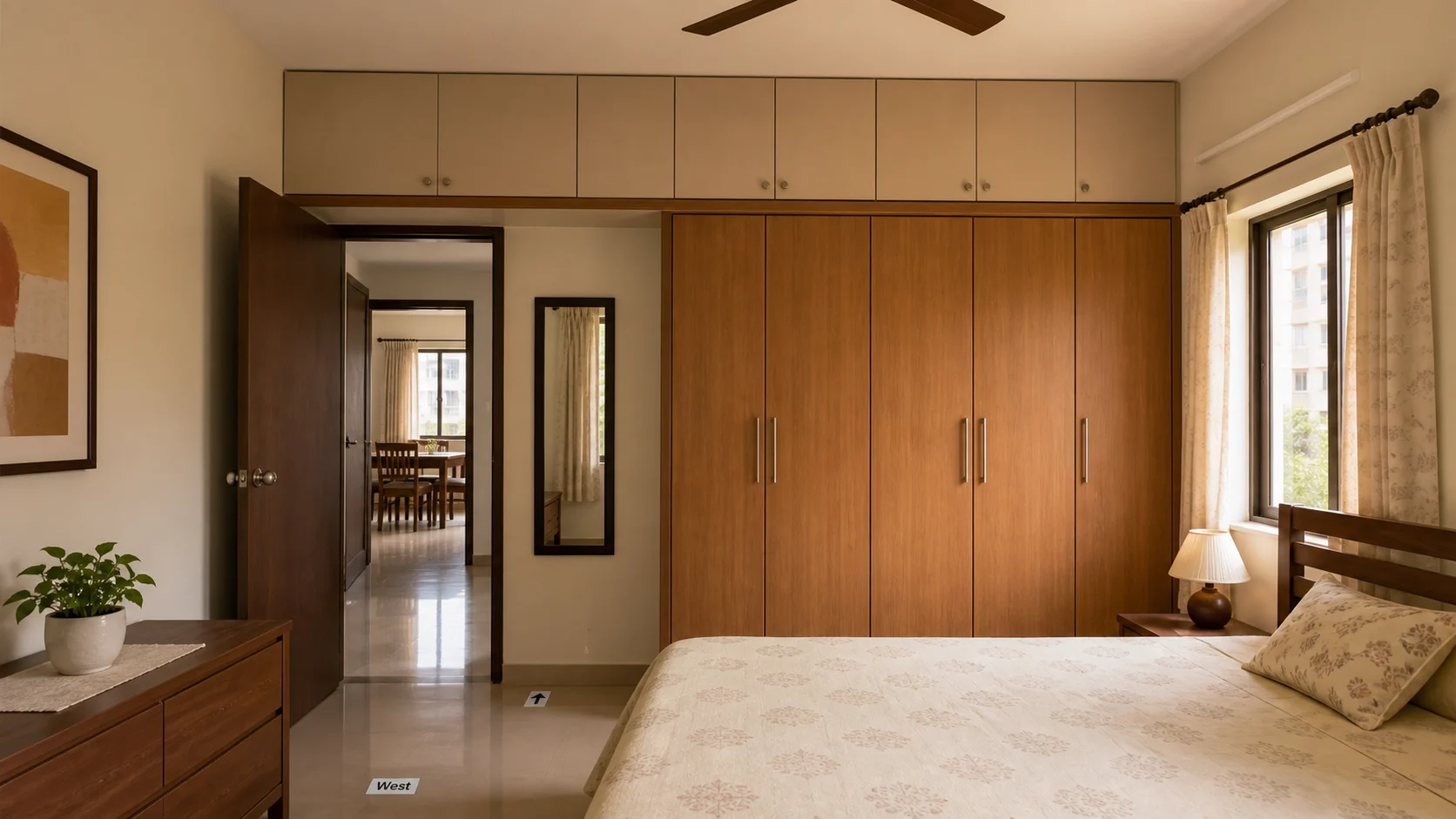
Bedrooms need a restful ceiling line. Heavy cabinets directly over the bed can make the sleeping area feel pressed down. This is why many practical Vastu consultants prefer lofts above wardrobes, along side walls, or near room edges rather than above the pillow area. If the loft already runs above the bed, reduce weight, keep it closed and avoid storing items that rattle, smell or need frequent access.
Coordinate lofts with the wider Bedroom Vastu plan. The bed should have a stable headboard, clear movement and calm lighting. A direction-perfect bed below an overloaded loft is not a good outcome.
Kitchen lofts
Kitchen lofts are tempting because Indian kitchens have endless seasonal vessels, lunch boxes, festival pans and bulk supplies. Still, avoid placing heavy tins or large utensils high above the stove or sink. Heat, steam and access difficulty make this risky. Use kitchen lofts for light, rarely used items and keep daily grains, oil and heavy vessels in lower cabinets.
For detailed cabinet logic, see Kitchen Storage Vastu and Kitchen Chimney and Exhaust Fan Vastu. A loft should not block exhaust, chimney clearance or service access.
Main entrance and passage lofts
A loft above the main door can make the entrance feel low and compressed, especially when the ceiling height is already modest. Vastu traditionally gives importance to a bright, welcoming entrance; practically, the door area should feel open, safe and easy to clean. If an entrance loft cannot be removed, keep it shallow, light-coloured, closed and not overloaded. Add good light below it and keep shoes, dustbins and broken items away from the threshold.
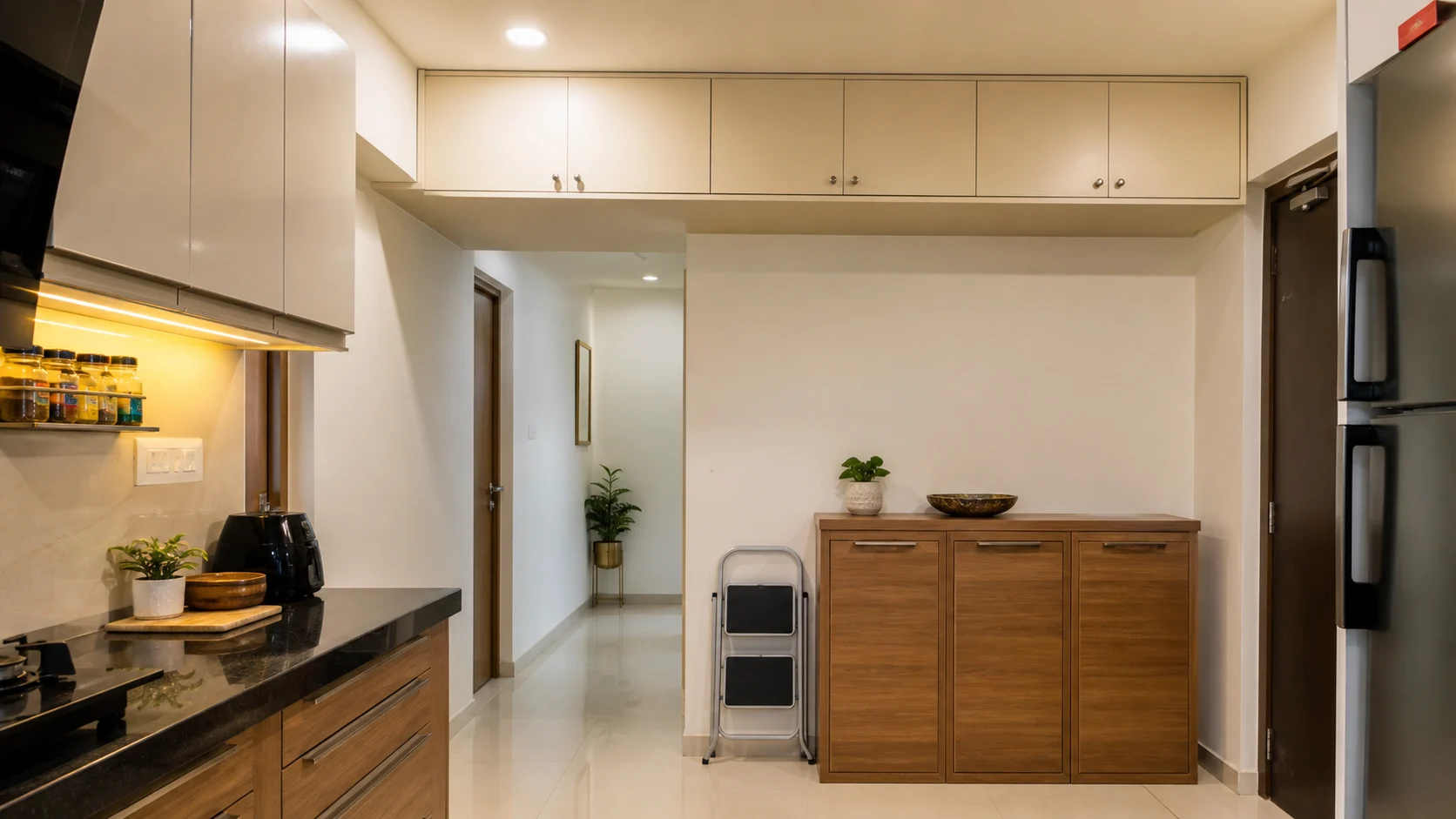
Passage lofts can be useful if they do not narrow the corridor visually or physically. Avoid projecting cabinets at head height or placing handles where people brush against them. Read Passage and Corridor Vastu for movement and lighting guidance.
Pooja, study and living areas
A pooja corner should not feel buried under random storage. If the prayer shelf is below an unavoidable loft, keep only clean and respectful items above it, preferably in closed storage. In a study room, avoid bulky cabinets directly above the desk because they can make the user feel boxed in. In living rooms, lofts should be visually integrated with the wall rather than appearing like emergency storage squeezed into the ceiling.
Loft storage direction and room table
| Area | Traditional Vastu preference | Best practical use | Avoid |
|---|---|---|---|
| South / West wall | Often suitable for heavier storage | Closed wardrobe lofts, suitcases, seasonal bedding | Overloading weak partitions |
| South-West zone | Associated with stability and weight | Well-fixed, dry, closed loft storage | Damp walls or unreachable deep cabinets |
| North / East wall | Usually kept lighter where possible | Shallow storage for light items | Blocking daylight and ventilation |
| North-East | Traditionally kept clean and open | Minimal storage only if already built | Dense clutter, broken items, heavy boxes |
| Above bed | Generally avoided for heaviness | Only very light, closed storage if unavoidable | Heavy cartons, sharp objects, rattling items |
| Above entrance | Can feel compressed | Light closed storage with bright light below | Broken items, dark paint, shoe clutter below |
Loft storage safety checklist
Safety is not separate from Vastu; it is the first layer of a balanced home. Before using any loft, check whether the cabinet is fixed to a suitable wall, whether the shutters close properly, whether the bottom panel sags, and whether there are signs of termite damage, dampness or loose fasteners. If anything looks doubtful, ask a carpenter or interior professional to inspect it.
- Store heavy items in lower cabinets, not overhead.
- Use labelled lightweight boxes so you do not pull everything down to find one item.
- Keep a stable step stool available; do not climb on chairs or kitchen counters.
- Leave access to electrical junctions, plumbing inspection panels, exhaust ducts and AC drain lines.
- Do not store flammable liquids, old paint or aerosol cans in hot lofts.
- Keep food, documents and medicines away from damp or pest-prone lofts.
- Clean every three to six months instead of waiting for years.
Practical examples for Indian flats
Example 1: 1BHK with one wardrobe wall. The family stores all luggage above the wardrobe, but the loft extends over part of the bed. The best fix is to move the heaviest suitcase to lower storage, keep only blankets and empty bags above, and add a soft wall colour so the cabinet does not dominate the room.
Example 2: 2BHK kitchen passage loft. The loft holds festival vessels and extra lunch boxes. This works if the passage remains bright and the cabinet does not block chimney service. The family should keep a step stool nearby and avoid storing oil cans or grain sacks overhead.
Example 3: Rental flat with loft above entrance. The tenant cannot remove it. A practical remedy is to clear old cartons, keep only light decorations or spare bags inside, close the shutters properly and improve the light at the door. This supports the principles in Main Door Vastu without renovation.
Example 4: Bedroom loft in North-East corner. The layout is fixed, but the loft is stuffed with old paperwork and broken electronics. Reduce the contents, move important documents to a dry cabinet, and keep the North-East visually lighter. The change is more useful than adding a symbolic remedy below clutter.
Common loft storage mistakes
1. Dumping zone
Using the loft for every object the family does not want to decide about.
2. Heavy overhead load
Keeping grain sacks, tools, tiles, books or large vessels above head level.
3. Over-bed pressure
Letting cabinets visually press down on the sleeping area.
4. Hidden dampness
Covering seepage or plumbing walls with closed panels.
5. Poor access
Needing unsafe climbing every time something is required.
6. Blocked services
Sealing exhaust, wiring, duct or AC drain access behind storage.
No-demolition fixes for existing lofts
The first remedy is subtraction. Empty the loft, clean it, check for insects and return only useful items. If you have not used something for years and it is not sentimental, legal or seasonal, remove it. Broken items should not be preserved above living areas simply because they are out of sight.
The second remedy is weight correction. Move heavy items down. Keep light bedding, empty bags, festival decor and rarely used soft items above. Use smaller boxes rather than one large container that becomes difficult to lift safely. Label the front of each box so the loft remains organized.
The third remedy is visual lightness. If the loft makes a room feel low, use lighter shutter colours, clean handles and better lighting below. Avoid dark bulky panels and decorative objects that collect dust.
Finally, review the loft every season. Monsoon humidity, summer heat and pest movement can change what is safe to store. A well-maintained loft supports apartment life; a forgotten loft becomes hidden clutter.
Traditional guidance with practical limits
Vastu is a traditional planning system, so its direction advice should be framed as cultural guidance rather than a guarantee of health, wealth or success. Loft storage will not create prosperity by itself, and a misplaced loft will not ruin a family. What it can do is change how a room feels and functions. Heavy overhead storage can increase anxiety, reduce light, collect dust and create avoidable risks. Clean, stable storage can make a compact home easier to live in.
Use the three-level test: safety first, daily comfort second, traditional preference third. If a loft is unsafe, fix it before thinking about direction. If it is safe but inconvenient, improve access and organization. Once those basics are handled, refine placement, colour and room balance according to your family’s Vastu preference.
Final checklist before building a new loft
- Confirm the wall and ceiling can safely support the cabinet.
- Choose South, West or South-West for heavier storage where practical.
- Keep North, East and North-East lighter where the layout allows.
- Avoid heavy storage over beds, pooja corners and main entrances.
- Do not block windows, exhaust fans, chimney service or electrical access.
- Plan a safe step-stool position.
- Use closed shutters to reduce dust and visual clutter.
- Store only light, seasonal or rarely used items overhead.
- Review the loft every three to six months.
- Keep the rest of the room bright, ventilated and easy to move through.
Frequently asked questions
Is loft storage good as per Vastu?
Loft storage can be acceptable when it is closed, clean, structurally safe and used for light or seasonal items. Avoid turning lofts into heavy clutter zones, especially over beds, pooja areas, main entrances or the center of the home.
Which direction is best for loft storage?
Many traditional practitioners prefer heavier storage toward South, West or South-West where the wall and structure allow it. In a flat, structural safety, access, ventilation and daily comfort must come first.
Can loft storage be above the bed?
It is better to avoid heavy overhead storage directly above the bed. It can feel visually pressing and may be unsafe if overloaded or poorly fixed. Use wardrobe-side lofts or another wall when possible.
Is loft storage above the main door bad?
A heavy loft over the main entrance can make the entry feel low and compressed. If it already exists, keep it light, neat, closed and well lit below, and avoid storing broken or unused items there.
Can kitchen lofts be used for grains and utensils?
Use kitchen lofts only for light, rarely used items. Heavy grain tins, oil cans and large vessels are safer in lower cabinets. Keep anything above cooking areas away from heat and steam.
What should not be kept in a loft?
Avoid very heavy boxes, leaking containers, old electronics, expired products, medicines, important documents near damp walls, broken items and anything that needs frequent access.
How can renters improve loft Vastu?
Renters can declutter, use labelled lightweight boxes, add battery lights if safe, keep shutters closed and avoid drilling or overloading without owner approval.
Should lofts be open or closed?
Closed lofts are usually better because they reduce dust and visual clutter. Open lofts should be used sparingly and kept extremely neat.
Can a loft be in the North-East?
Many families prefer the North-East to remain visually light. If a loft already exists there, keep it minimal, clean and not overloaded rather than adding dense storage.
Is loft storage over a pooja corner okay?
Avoid heavy storage directly above a pooja corner when possible. If unavoidable in a compact flat, keep the area clean, closed and free from unrelated clutter.
How often should lofts be cleaned?
Check lofts every three to six months. Remove expired, broken or unused items, look for dampness or pests and confirm that shutters and supports remain secure.
What is the best practical remedy for a bad loft location?
Reduce weight, remove clutter, improve lighting below it, keep the shutters closed, repaint in a lighter shade if needed and stop storing emotionally heavy or broken items there.
Conclusion
Loft storage Vastu is not about filling every high wall. It is about using overhead space carefully so a small home feels organized rather than burdened. Prefer stable South, West or South-West storage where possible, keep sensitive areas visually light, avoid heavy load above beds and entrances, and treat safety as the first rule.
For the next step, read Declutter Home Vastu, Wardrobe Placement Vastu, and Apartment Vastu.