
On this page
Why kitchen storage affects Vastu
Storage controls how a kitchen feels every day. When counters are full, cabinets are overloaded, and expired items hide in corners, the kitchen feels heavy. Vastu often speaks about energy, but in a kitchen that energy is closely connected with hygiene, food respect, ventilation, and order.
Heavy storage is often better toward the South, West, or South-West side where possible, while lighter daily-use items can stay near preparation zones. But this should not override safety. Do not keep heavy jars where they may fall, and do not store oil or plastic too close to heat.
Use this guide with Kitchen Vastu, Kitchen Vastu Dos and Don’ts, and Kitchen Sink and Stove Vastu.
Best cabinet placement
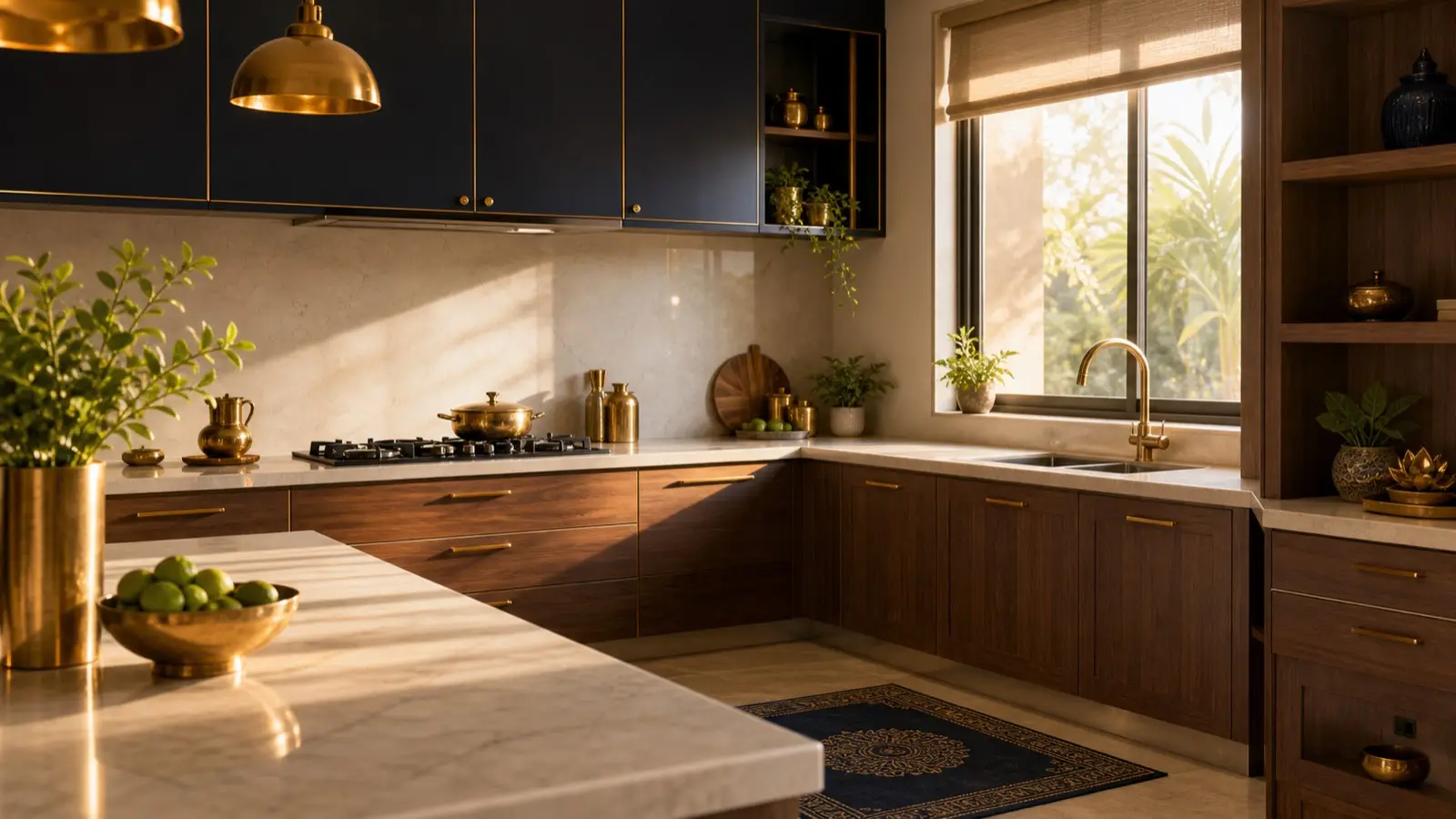
Upper cabinets should not make the cooking zone feel suffocated. If cabinets are above the counter, keep them proportionate and easy to clean. Leave enough height above the stove for chimney or exhaust clearance.
If your kitchen has overhead lofts, keep them light and rarely used; the detailed Loft Storage Vastu guide explains when high cabinets become unsafe or visually heavy.
Heavy grains, large vessels, and bulk storage can be kept in lower cabinets or pantry units. This is safer and more stable. Daily spices should be reachable, but not scattered across the entire counter.
Avoid storage that blocks windows or exhaust fans. A kitchen with beautiful cabinets but poor airflow will feel uncomfortable during Indian cooking.
Grains, spices, oil, and utensils
Grains and pulses should be kept dry, sealed, and accessible. Use containers that close properly and label them if needed. A clean grain area supports both food hygiene and the traditional idea of abundance.
Spices should be near the cooking zone but protected from direct heat and moisture. Oil bottles should not sit too close to the burner. Utensils used daily should be easy to reach; rarely used vessels can go into higher or deeper storage.
Do not mix cleaning chemicals with food storage. Keep dishwashing supplies, floor cleaners, and pest-control items away from grains and utensils. This is basic safety and also good Vastu practice.
Small apartment kitchen examples
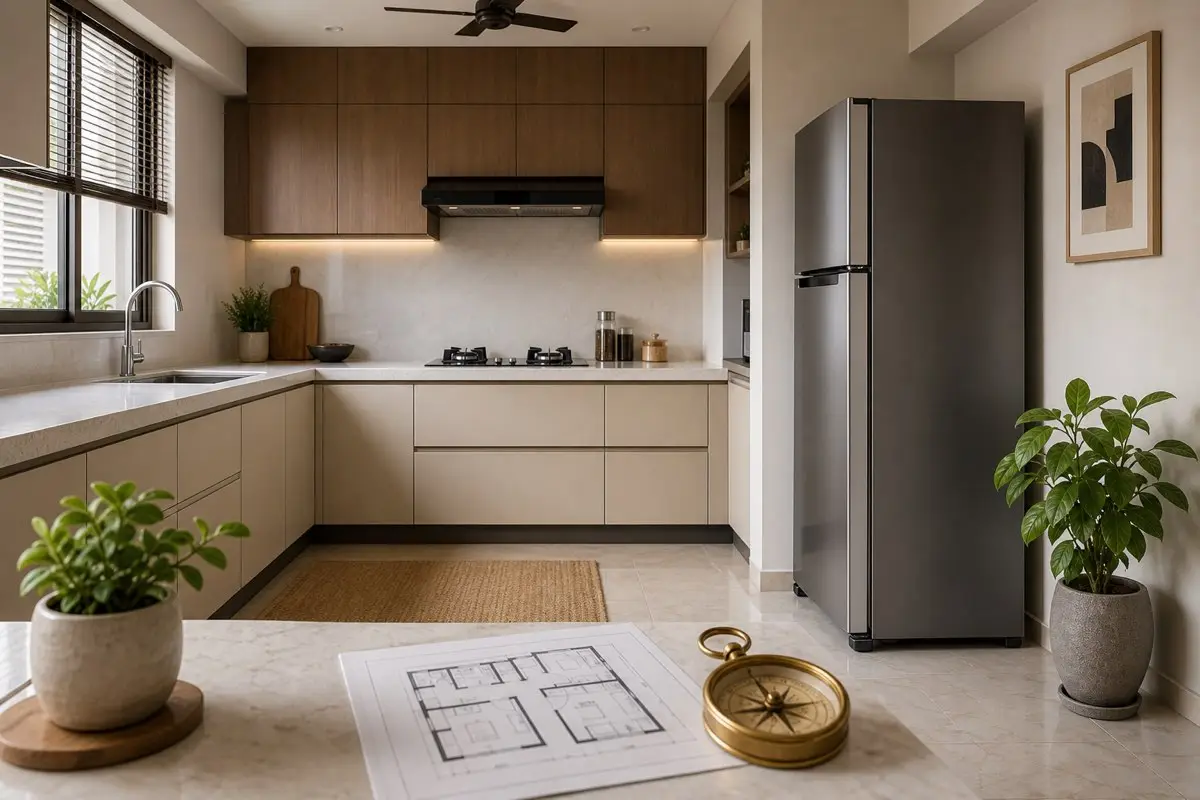
Example 1: A 1BHK kitchen has only two cabinets. Use vertical organizers, one clear spice tray, and a weekly grocery limit. Too much bulk buying can overwhelm a small kitchen.
Example 2: A 3BHK family kitchen has many appliances on the counter. Store rarely used appliances inside cabinets and keep the main preparation counter clear.
Example 3: A rented flat has old cabinets. Clean them thoroughly, add removable shelf liners, use sealed containers, and avoid drilling unless permitted.
Common storage mistakes
The biggest mistake is using the kitchen as a general storage room. Old plastic boxes, broken lids, festival decorations, medicine strips, and random tools slowly occupy valuable food space. Remove what does not belong.
Another mistake is storing heavy vessels in high cabinets. This is unsafe and inconvenient. Store heavy items low and lighter items high.
A third mistake is ignoring expiry dates. A monthly pantry review is a strong Vastu remedy because it restores order and respect for food.
Quick checklist
1. Practical check
Keep counters as clear as possible.
2. Practical check
Store heavy grains and vessels in lower cabinets.
3. Practical check
Keep spices away from moisture and direct heat.
4. Practical check
Separate cleaning items from food storage.
5. Practical check
Do a monthly expiry-date review.
6. Practical check
Do not block windows, exhaust, or chimney access.
Practical examples
| Home type | Best practical response |
|---|---|
| Compact apartment | Keep the layout light, easy to clean, and free from blocked movement. |
| Independent house | Plan direction early, but verify structure, maintenance, ventilation, and safety. |
| Rental home | Use reversible fixes such as lighting, organizers, curtains, movable storage, and decluttering. |
Common mistakes
A common mistake is copying a design from social media without checking room size, natural light, maintenance, and family habits. Vastu becomes useful only when it improves the real experience of the home.
Another mistake is treating a single direction rule as more important than hygiene, safety, comfort, and daily use. Before buying products or making structural changes, start with cleaning, repair, lighting, airflow, and clutter control.
Related guides
Home Vastu
Read Home Vastu for whole-house planning basics.
Room-wise Vastu
Explore room guides for deeper placement logic.
Vastu Remedies
Use remedies carefully before making expensive changes.
Practical storage planning notes for modern Indian kitchens
Kitchen storage Vastu is not only about where to keep rice, grains, utensils, or appliances. It is also about how easily the kitchen works every morning. In Indian homes, the kitchen handles cooking, tea, lunch boxes, snacks, festival preparation, and sometimes utility work. If storage is not planned well, even a beautiful modular kitchen becomes stressful. Start by separating daily-use items, weekly-use items, monthly stock, cleaning items, and festival vessels.
Keep heavy grains, large containers, pressure cookers, and extra utensils in stable lower cabinets. This is practical, safer, and easier for elders to use. Daily spices, tea, coffee, oil, and frequently used ladles should stay near the cooking zone, but not so close that heat damages them. Avoid placing food storage directly below a sink if there is a leakage risk. If space is limited, use airtight containers, labels, pull-out trays, and vertical dividers to reduce visual clutter.
Many Indian apartments have compact kitchens where the refrigerator, sink, stove, and storage are very close to each other. In such cases, do not force a perfect textbook arrangement. Instead, keep the fire zone clean, maintain a dry counter, separate cleaning chemicals from food, and avoid blocking the window or exhaust. A clean and usable kitchen supports the spirit of Vastu better than a forced layout that makes cooking difficult.
Before ordering cabinets, make a simple inventory of what your family actually owns. Count grain tins, appliances, lunch boxes, pooja vessels, serving plates, and cleaning supplies. Then plan storage around real use. This prevents overbuilding cabinets and helps the kitchen feel lighter, safer, and more organized. Good kitchen storage should make daily cooking smoother, reduce waste, and keep the home feeling settled.
Frequently asked questions
Which direction is best for kitchen storage?
Heavy storage can often go toward South, West, or South-West where practical, but safety and access matter most.
Where should grains be kept as per Vastu?
Keep grains in clean, dry, sealed containers. Stable lower or pantry storage is usually practical.
Can spices be kept near stove?
Yes, but protect them from direct heat and steam. Use a closed spice drawer or rack.
Should cleaning items be stored in kitchen?
They can be under the sink or in a separate closed area, but never mixed with food or utensils.
Is clutter bad in kitchen Vastu?
Yes. Clutter affects hygiene, movement, cooking speed, and the feeling of the kitchen.
Where to keep heavy utensils?
Keep heavy utensils in lower cabinets for safety and stability.
Can pantry be outside kitchen?
Yes, if it is clean, dry, pest-free, and easy to access.
What is the easiest kitchen storage remedy?
Remove expired items, clear counters, organize grains, and keep chimney/exhaust access open.
Conclusion
Kitchen Storage Vastu: Cabinets, Grains, Utensils, and Clutter Rules works best when it helps your home feel calmer, cleaner, safer, and easier to live in. Use direction guidance as a planning lens, then balance it with proportion, comfort, light, airflow, and maintenance.
For more practical help, continue with Balanced Layout, Room-wise Vastu, and the complete Vastu blog archive.