
On this page
Why bedside table Vastu matters
In many Indian bedrooms, Vastu discussions focus on bed direction, sleeping position, mirrors, wardrobes and attached bathrooms. Bedside tables are often treated as decoration, but they influence the bedroom every day. They hold lamps, phones, books, water, medicine, spectacles, chargers and sometimes the small pile of items we do not want to deal with before sleep. Because they sit close to the pillow, their condition affects rest more than people realise.
Practical Vastu is not about making a bedroom perfect by one rule. It is about creating balance, safety, cleanliness and comfort. A bedside table supports these qualities when it is proportional, stable, easy to reach, uncluttered and placed without blocking movement. It becomes a problem when it is too high, too low, too sharp, overloaded with wires, full of papers or squeezed into a walking path.
For modern apartments, the bedside table also solves a real layout challenge. Builder bedrooms are compact. Wardrobes, balcony doors, windows, AC points and electrical sockets decide where furniture can go. If you choose a bulky table before checking the room, it may crowd the bed or block wardrobe shutters. If you plan calmly, even a small bedroom can feel premium and restful.
Use this guide as a practical checklist. It is educational and beginner-friendly, not fear-based. If your room cannot follow every recommendation, start with the corrections that improve sleep quality, walking space, cleaning and visual calm.
Best placement beside the bed
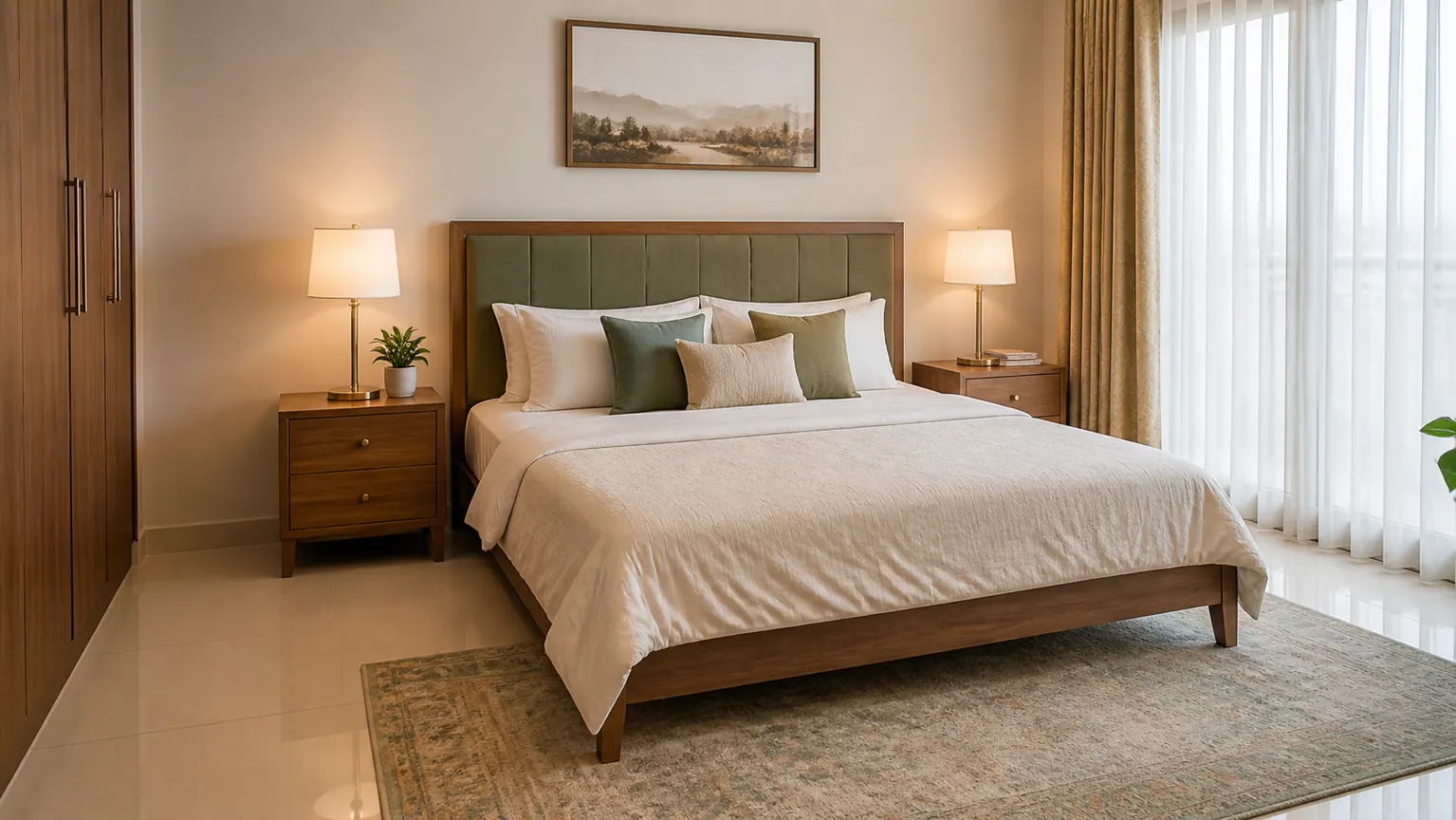
The most common and balanced arrangement is one bedside table on each side of the bed, especially in a couple’s bedroom or master bedroom. Two similar tables create symmetry, give both sleepers equal access and make the bed feel anchored. In Vastu language, symmetry supports steadiness; in design language, it simply looks composed.
If the bed is against a solid wall and there is enough space, keep both tables aligned with the headboard. Leave a comfortable walking gap on each side. The tables should not push the bed into a cramped corner unless the room is extremely small. Avoid forcing a table where it blocks the wardrobe, balcony door, bathroom door or curtain movement.
In compact 1BHK and 2BHK flats, one bedside table may be more practical. If only one side has space, choose a slim table, wall-mounted shelf or small floating drawer. The goal is not to buy matching furniture at any cost. The goal is to keep the sleeping zone useful, safe and calm. A single neat table is better than two oversized tables that make the room hard to use.
For the master bedroom, connect bedside planning with the larger bedroom layout. Many Vastu traditions prefer stable, heavier furniture in the South or South-West side where practical, but the bed, wardrobe, doors and windows must all be considered together. Read the complete Bedroom Vastu guide and Master Bedroom Vastu for room-level planning.
Height, shape and material
The best bedside table height is close to the mattress level. When the tabletop is too low, you bend awkwardly to reach water or a lamp switch. When it is too high, it feels visually heavy near the pillow and can be uncomfortable at night. A table aligned with the mattress or slightly below it usually works best.
Choose rounded or softly edged furniture where possible. Sharp glass corners near the head area can feel harsh and may be unsafe in small bedrooms. If you already have a sharp table, soften the effect by positioning it carefully, using a stable lamp and keeping the corner away from the pillow line.
Wood, wood veneer, cane, rattan and matte laminate finishes usually suit bedrooms well because they feel warm and stable. High-gloss black glass, mirrored surfaces and very reflective finishes can make a sleep zone look busy. This does not mean glass is “bad” in every case, but it needs careful handling. If the table reflects the bed, lamp glare or clutter, the room may feel less restful.
Colours should support sleep. Warm wood, cream, beige, muted green, off-white, walnut, teak, light grey and earthy finishes usually work well. Avoid overly bright neon colours or busy patterns beside the bed. If you want colour, add it through a book, small planter, fabric shade or art instead of making the table itself too loud.
Lamps, charging and electronics
A bedside lamp is one of the most useful bedroom items. Soft warm light helps the room shift from activity to rest. Harsh white light near the face can feel clinical and may disturb the calm mood of the bedroom. Choose warm, diffused lighting with a shade that does not create glare in the eyes.
If you use two tables, matching lamps create a premium look. If you use one table, balance the other side with wall art, a floor lamp, a slim shelf or clear open space. Do not overload the tabletop with a lamp, charger, diffuser, multiple phones, water bottle, clock, jewellery tray and random medicines all at once. A crowded bedside table often means the mind goes to sleep beside unfinished tasks.
Charging is a modern reality. Phones, watches, earbuds and tablets often end up near the pillow. Keep charging cables short, organized and safely connected. Avoid cheap overloaded extension boards under the bed. If the socket is badly placed, use a proper cable organizer rather than letting wires cross the walking path. For broader electrical planning, read Electrical Switchboard Vastu.
If sleep is disturbed, experiment with moving the phone away from the headboard. Keep work laptops outside the bedroom if possible. At minimum, avoid using the bedside drawer for office files, unpaid bills and stressful paperwork. Bedside storage should support rest, not remind you of unfinished work.
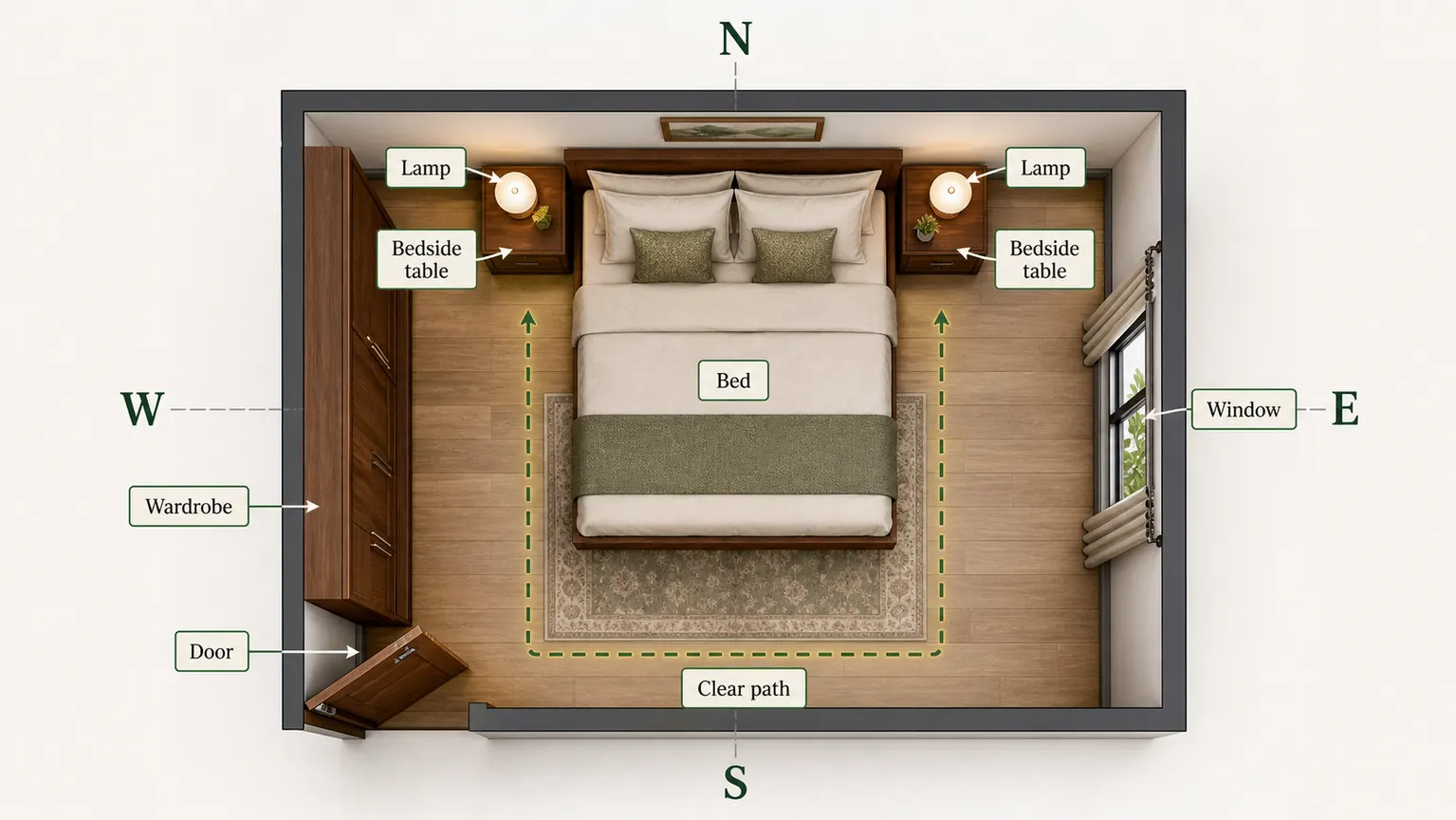
Bedroom floor-plan example
Look at the bedroom as a working layout, not only as a furniture shopping list. First mark the bed. Then mark the wardrobe, door swing, window, balcony door, AC point and electrical sockets. Only after that should you decide the bedside table size. This sequence prevents the common mistake of buying beautiful furniture that cannot function in the real room.
In the example floor plan, the bed is central, the bedside tables are close to the headboard and the walking path remains clear. The wardrobe can open without hitting the table. The window is not blocked. The lamp positions are visible and practical. This is the kind of planning that makes a bedroom feel premium even when the room is not large.
For a 10 by 12 foot apartment bedroom, choose compact tables around 16 to 20 inches wide if space is tight. For a larger master bedroom, wider drawer tables can work. In rental flats, use movable tables or lightweight shelves so you can adjust without drilling. In children’s bedrooms, choose rounded edges and avoid tall unstable tables near the bed.
Practical Indian bedroom examples
Compact 2BHK bedroom
Use one slim bedside table and one wall shelf if both sides cannot fit furniture.
Master bedroom
Two matching tables and warm lamps create symmetry, useful storage and a calmer headboard wall.
Rental flat
Pick movable tables, clip-on lamps and no-drill organizers so the layout stays flexible.
Bedroom with window
Keep the table small enough that curtains, ventilation and cleaning remain easy.
Bedroom with wardrobe
Check shutter swing and drawer opening before placing the table beside the bed.
Child’s bedroom
Choose rounded corners, stable legs and less clutter; keep study books away from the pillow zone.
Common bedside table mistakes
The first mistake is choosing a table only because it matches the bed design. Matching furniture is nice, but function matters more. If the table blocks a wardrobe, catches the curtain or leaves no walking space, the bedroom will feel inconvenient every day.
The second mistake is letting the tabletop become a clutter zone. Old receipts, medicines, hair clips, keys, remotes, coins, chargers, jewellery, earbuds and office notes quickly collect beside the bed. This clutter is visually small but emotionally noisy. Clean the table every few days and keep only what you truly use at night.
The third mistake is using harsh lamps. A lamp that shines directly into the eyes can disturb sleep. A very bright blue-white bulb may suit a study desk, but it rarely suits the sleep zone. Choose warmer light and a shade that spreads light softly.
The fourth mistake is ignoring safety. Loose extension boards, unstable tables, sharp glass corners and tall lamps that can be knocked over are practical problems. Vastu should never override safety. A beautiful but unsafe bedside arrangement is not balanced.
Bedside table Vastu checklist
- Keep the table height close to mattress height.
- Use two balanced tables where space allows.
- Choose slim furniture for small apartment bedrooms.
- Prefer soft edges and stable legs.
- Keep lamp light warm and diffused.
- Organize phone chargers and avoid wire clutter.
- Keep medicine and emergency items neat, not scattered.
- Avoid office files, unpaid bills and stressful papers near the bed.
- Make sure doors, wardrobes and curtains open freely.
- Clean drawers monthly and remove broken items.
Bedside table options comparison
| Option | Best for | Strength | Watch out for |
|---|---|---|---|
| Two matching tables | Master bedrooms | Symmetry and equal access | Needs enough walking space |
| One slim table | Small flats | Saves space and stays useful | Needs visual balance on the other side |
| Floating shelf | Rental-style compact rooms | Light and minimal | Must be safely fixed and not overloaded |
| Drawer table | Bedrooms needing storage | Hides small items | Can become a hidden clutter box |
| Open stool table | Minimal bedrooms | Airy and affordable | Limited storage and needs tidiness |
Direction and room logic
Bedside table direction should not be treated separately from bed direction. First decide the bed location and head direction based on the room’s doors, windows, wardrobes and comfort. Then place the table where it supports that arrangement. If your bed head is toward the South or East, the tables will naturally fall on the sides of the bed. Their job is to support access, lighting and storage.
If a table ends up in the North-East corner of a small bedroom, keep it light, clean and minimal. Avoid heavy clutter in that corner. If a table is near the South-West side, a heavier wooden table may feel stable, but it should still be easy to clean. If a table sits near a window, make sure it does not block daylight or fresh air. These are practical interpretations rather than strict fear-based rules.
If you are still planning the full room, combine this guide with Sleeping Direction Vastu, Bedroom Vastu for Better Sleep, Bed Under Window Vastu, Wardrobe Placement Vastu and Mirror Vastu. These topics work together in real bedrooms.
Helpful internal links
For deeper planning, read Bedroom Vastu, Master Bedroom Vastu, Apartment Vastu, Small Apartment Vastu, Bed Under Window Vastu, Sleeping Direction Vastu, Bedroom Vastu Sleep Guide, Wardrobe Placement Vastu, Mirror Vastu, Vastu FAQ and the full Vastu blog archive.
Frequently asked questions
Are bedside tables important in Vastu?
Bedside tables are not a major structural Vastu item, but they affect bedroom balance, storage, lighting and sleep comfort. A neat bedside setup supports a calmer bedroom.
Should both sides of the bed have bedside tables?
If space allows, two balanced bedside tables usually create a more stable and symmetrical bedroom. In small flats, one table can work if the walking path remains clear.
What should be kept on a bedside table as per Vastu?
Keep only useful calm items such as a lamp, book, water glass, small plant or clock. Avoid clutter, bills, medicine piles, office files and too many charging cables.
Can I keep a phone on the bedside table?
You can, but keep charging cables tidy and avoid using the bedside table as an electronics dumping zone. If sleep is disturbed, move the phone farther from the pillow.
Which material is best for bedside tables?
Wood, wood veneer, cane, rattan and warm neutral finishes usually feel stable and restful. Avoid sharp glass corners near the pillow area.
What height should a bedside table be?
The top of the table should ideally be close to mattress height so lamps, water and books are easy to reach without strain.
Which colour is good for bedside tables?
Warm wood, cream, beige, muted green, walnut, teak, white and soft earthy shades usually suit bedrooms. Choose colours that calm the room instead of making it visually heavy.
Can a bedside table be kept against a window wall?
It can work if it does not block curtains, ventilation or movement. Keep the window accessible and avoid crowding the room with oversized furniture.
What should I avoid keeping in bedside drawers?
Avoid old bills, broken chargers, expired medicine, sharp items, random papers and work stress near the bed. Bedside storage should support rest, not mental clutter.
Conclusion
Bedside table Vastu is mostly about balance, reach, light and clutter control. Choose a table that suits the room size, stays close to mattress height, supports warm lighting and does not block movement. Keep the surface calm and the drawer purposeful.
In modern Indian apartments, small furniture decisions make a big difference. A bedroom with neat bedside tables, soft lamps, safe charging and clear walking space feels more restful than a room filled with oversized furniture. Start with simple corrections, observe the room for a week, and keep the sleep zone clean enough to help the mind slow down every night.