
On this page
Quick answer: where should a water purifier be placed?
North, north-east and east are commonly preferred directions for a drinking-water purifier in contemporary Vastu practice. These zones are traditionally associated with lightness and water, and they can work well when the purifier is near a suitable sink connection. A north-west position is a practical alternative in many modular kitchens. Whatever the direction, the unit needs a strong mounting surface, safe power, controlled drainage, ventilation and enough room for maintenance.
Do not move a purifier across the kitchen only to reach a preferred compass point if the new position requires long loose tubes, exposed wiring or drilling into an unsuitable wall. The best available placement balances direction with water safety and everyday use. Direction does not change the quality of water or replace the need to select appropriate treatment for the actual source.
Mark the kitchen accurately before deciding. Use the guide to checking directions or the Vastu Direction Finder, then note the sink, existing inlet, drain, socket, windows, stove and cabinet doors. This avoids treating one wall in isolation.
Best water purifier direction according to Vastu
First preference: north or north-east
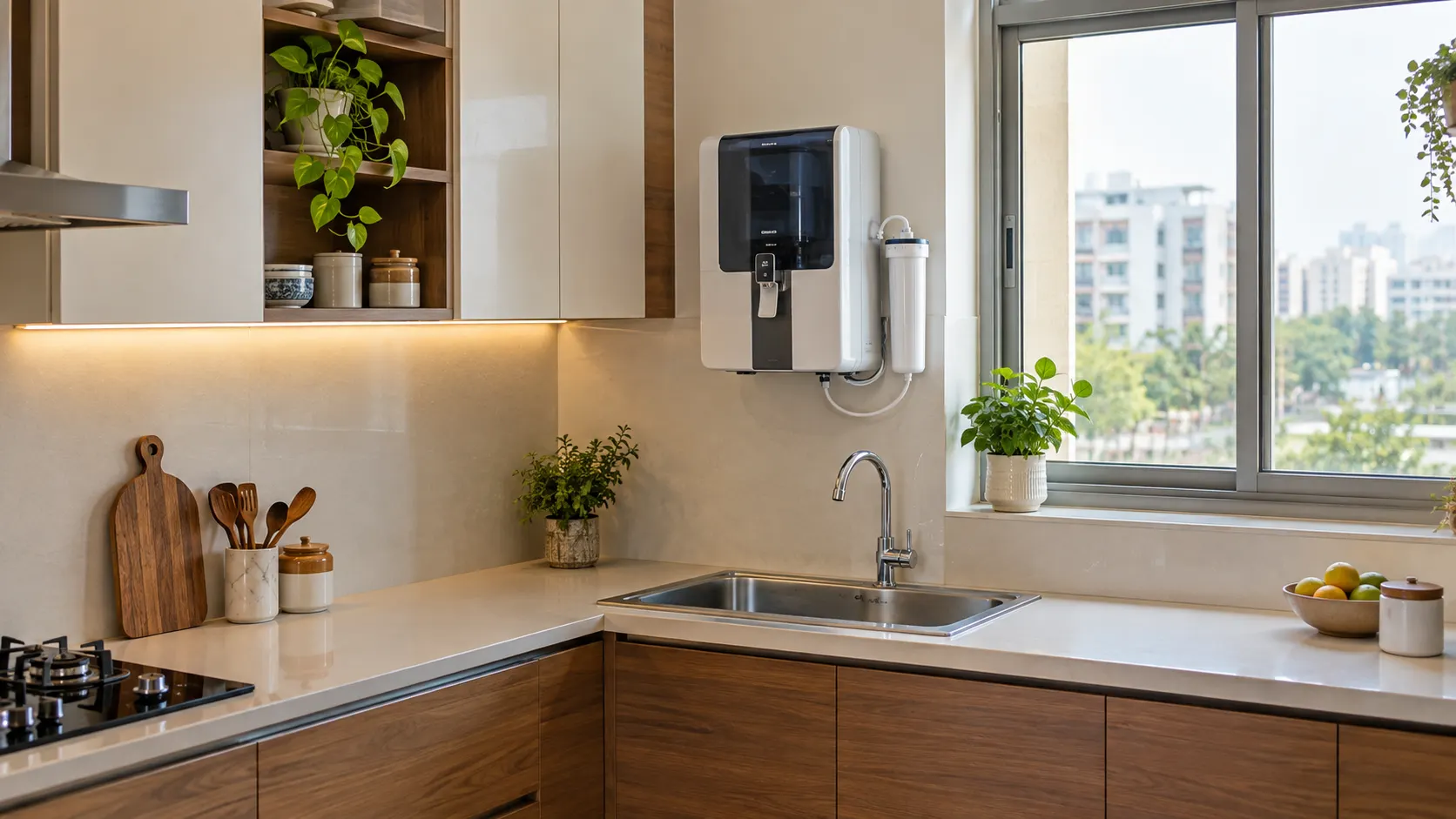
Many traditions favour north and north-east for clean water and light activity. In a kitchen, this can be suitable for a wall-mounted purifier when the position does not block a window or force tubing across the counter. Keep the surrounding surface uncluttered and leave room to open the purifier cover, remove filters and operate the tap comfortably.
The north-east of the whole home may not fall inside the kitchen. Do not place a purifier in a distant living-room corner merely to match the overall house direction. Apply the preference within the kitchen first, because that usually supports plumbing, refilling and cleaning.
Second preference: east
An east wall can offer useful morning light and a convenient location near the sink. Avoid direct harsh sunlight on the appliance for long periods, as heat can affect plastic parts and stored water. If the window occupies most of the east wall, choose an adjacent stable section rather than hanging the unit over glass or narrowing ventilation.
Keep a purifier away from the hob even when both are on the east side. Steam, oil and heat make servicing more difficult and can soil the unit. Use the sink and stove Vastu guide to examine the wider water-and-fire relationship.
Third preference: north-west
North-west can be a sensible alternative, particularly when the builder has provided a water inlet and socket there. This direction is often associated with movement, which suits a frequently used appliance. It is more important that tubing stays controlled and that the purifier remains accessible than to create a complicated relocation to north-east.
A purifier in south-east should be kept clearly separated from the cooking zone. If the existing connection is south or south-west, maintain it carefully rather than assuming that demolition is necessary. Review reversible changes in the Vastu remedies without demolition guide.
Direction comparison for modern kitchens
| Zone | Vastu preference | When it works well | Check carefully |
|---|---|---|---|
| North | Strong preference | Dry wall near sink and service point | Cabinet and window clearance |
| North-east | Strong preference | Light, uncluttered wall section | Do not block ventilation or daylight |
| East | Good alternative | Convenient plumbing without stove heat | Direct sun and greasy splashes |
| North-west | Practical alternative | Builder connection already provided | Secure tubing and easy access |
| South-east | Use carefully | Fixed layout with safe separation | Hob, oven, steam and heat |
| South or south-west | Lower preference | Existing safe installation | Do not relocate from fear alone |
Match the purifier type to the available space
Wall-mounted RO purifier
A wall-mounted unit keeps the counter free but requires a strong surface and correct mounting hardware. Check the filled weight, not only the empty appliance. The bottom should be high enough for a glass or vessel but not so high that the family cannot operate it safely. Leave side and top clearance for filter replacement according to the manual.
Countertop purifier
A countertop model can suit rentals or kitchens where drilling is restricted. Place it on a level, stable surface away from the counter edge. Keep the power cord dry and avoid a location immediately beside the hob. Confirm that the cabinet above does not prevent opening or refilling the unit.
Under-sink purifier
An under-sink purifier creates a clean appearance but needs careful leak protection and ventilation. The cabinet must remain accessible for cartridge changes, valves and inspection. Do not pack the remaining space with food or cleaning products. If a leak occurs, the source should be visible and reachable rather than hidden behind deep storage.
Gravity-based or non-electric purifier
A non-electric purifier still needs a stable surface and hygienic handling. Filled vessels can be heavy, so avoid weak overhead shelves. Choose a location where refilling does not require lifting water over a hot stove or crossing a busy passage. Purifier technology should match the source water and manufacturer guidance rather than a compass rule.
Plumbing, drainage and electrical planning
Keep the inlet valve reachable so water can be shut off during service or a leak. Tubes should be secured without sharp bends and protected from heat, cutting edges and crushing cabinet doors. Wastewater from an RO system requires an appropriate connection; it should not drip onto the floor or into an open container that creates a spill risk.
Use the electrical arrangement specified for the appliance, with suitable earthing and protection. Avoid extension boards and loose adapters near the sink. The socket and cord should remain dry and accessible without becoming the first thing hit by a splash. Electrical changes belong with a qualified professional.
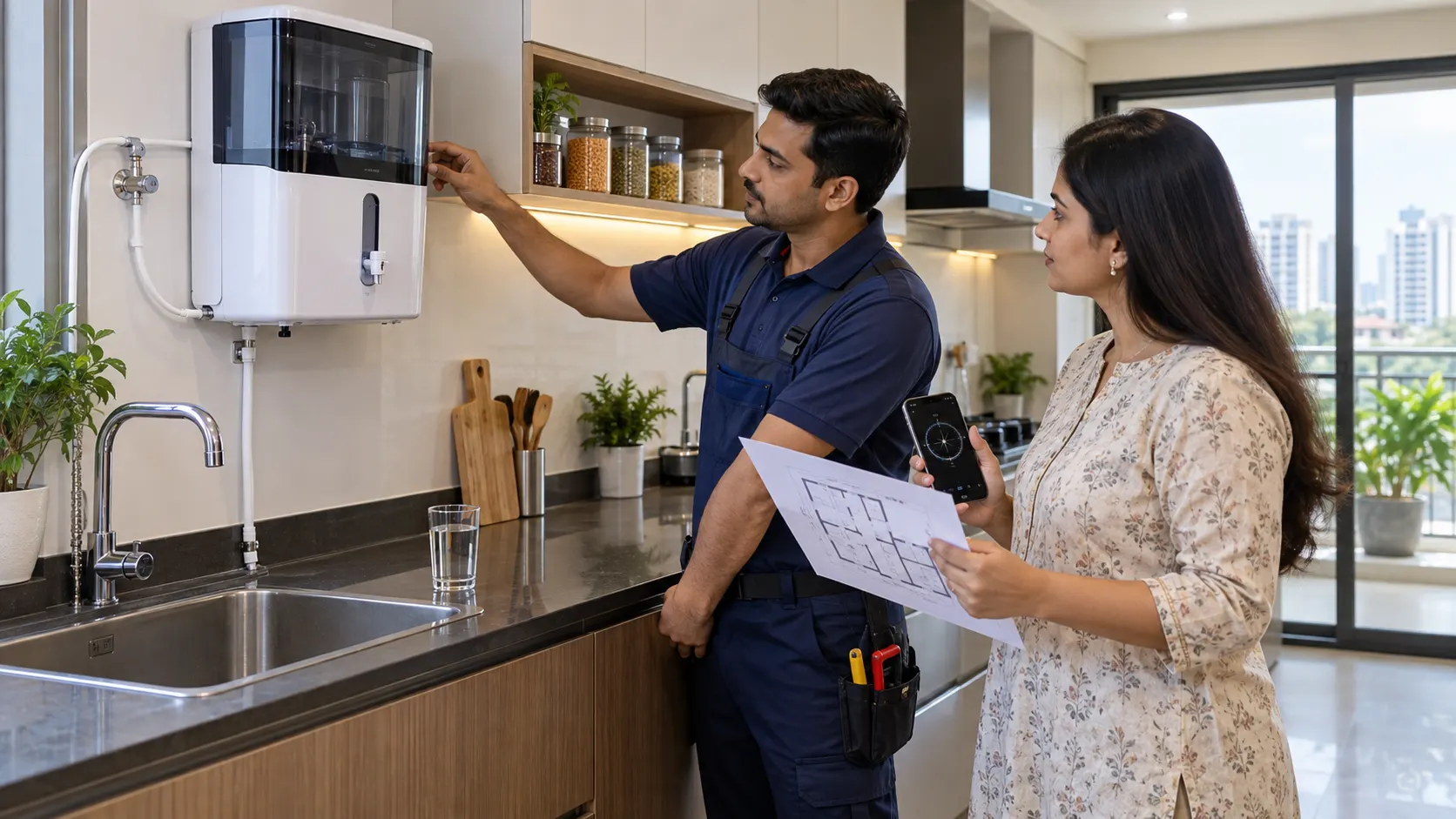
Leave enough space for filters to be removed, the cover to open and the tank to be inspected. A purifier squeezed tightly between overhead cabinets may look neat but make every service visit difficult. Good Vastu planning should support maintenance rather than hide the appliance.
Water quality comes before compass direction
A purifier's location does not show whether it is the correct technology for the source water. Municipal supply, borewell water and tanker water can have different characteristics. Select, operate and service equipment using reliable water information, manufacturer instructions and qualified advice where needed. Do not assume that every home requires reverse osmosis.
Replace filters and other parts according to the model, actual usage and service guidance. An arbitrary festival date or Vastu calendar cannot determine filter condition. Keep service records so the household knows what was changed and when. If taste, odour, flow or appearance changes, follow the appropriate supplier or public-health guidance rather than diagnosing the issue from direction.
For storage outside the appliance, use clean food-grade containers and protect them from recontamination. The Water Tank Vastu guide explains how source and storage systems differ, while Water Leakage Vastu focuses on repair and dampness.
Water purifier Vastu examples
Two-bedroom apartment
The sink and service point are on the north wall. The purifier fits beside the window without covering it, and a technician can reach the valve from the counter. The family keeps the area below clear rather than filling it with jars.
Compact rental kitchen
The landlord does not permit wall drilling. A countertop purifier stands on a stable east counter away from the hob. Tubing follows the approved route, and the tenant keeps the cord dry without altering the fixed cabinetry.
Fixed south-east connection
The builder's purifier point is near the cooking side. The owner keeps a clear cabinet-width buffer from the hob, protects tubing from heat and uses the safe existing services instead of relocating the appliance across the kitchen.
Large family home
A wall-mounted unit sits north-west of the sink. Drinking glasses are stored nearby, but detergent and groceries remain separate. Service dates are recorded so maintenance does not depend on memory.
Common water purifier placement mistakes
Mounting directly above intense heat
A purifier over a hob or immediately beside a chimney collects grease and experiences unnecessary heat. It is also difficult to operate while cooking. Preserve a safe separation and follow appliance instructions.
Blocking the kitchen window
North-east or east may be preferred, but covering the primary window can reduce light and ventilation. Use a neighbouring wall section or the next practical direction rather than sacrificing the room's basic comfort.
Hiding valves and filters
Decorative panels and tightly fitted cabinets can prevent quick leak control and routine servicing. Keep the shut-off valve, tubes and filter access visible to the responsible technician.
Using unsafe wiring near water
Loose adapters and extension cords near the sink are not remedies for a missing socket. Arrange a suitable connection through a qualified professional and keep the cord away from wet surfaces.
Assuming direction guarantees safe water
North-east placement cannot replace correct purifier selection, maintenance or water-quality decisions. Treat direction as a planning preference, not as a scientific test or health guarantee.
Water purifier Vastu do's and don'ts
Do
- Prefer north, north-east or east when practical.
- Use a strong wall or stable counter.
- Keep valves, tubes and filters accessible.
- Protect power connections from water.
- Separate the purifier from direct stove heat.
- Follow the model's maintenance schedule.
Don't
- Block windows or normal sink use.
- Run loose tubes across the worktop.
- Hide an active leak behind a cabinet.
- Store heavy water on weak shelves.
- Use unsupported electrical extensions.
- Relocate safe plumbing because of fear.
Installation review checklist
- Confirm the kitchen directions and mark the practical options.
- Identify source water, inlet valve, drain and power location.
- Check wall strength, filled weight and mounting requirements.
- Measure filter, cover, tap and cabinet clearances.
- Protect the unit from hob heat, steam and greasy splashes.
- Secure tubing and keep the shut-off valve reachable.
- Record installation and maintenance information.
Connect this appliance decision with the complete Kitchen Vastu guide, Kitchen Vastu dos and don'ts and Apartment Vastu. A purifier works best as part of the kitchen rather than as a separate directional object.
Frequently asked questions
Which direction is best for a water purifier according to Vastu?
North, north-east or east are commonly preferred when plumbing and the kitchen plan support them. North-west is a useful alternative. Safe installation and maintenance access remain essential.
Can an RO purifier be installed above the kitchen sink?
A nearby position can simplify plumbing, but it should not obstruct the tap, window or washing area. Follow the recommended mounting height and preserve access to filters and valves.
Is a south-east water purifier acceptable?
It may be workable in a fixed kitchen if separated from the hob, oven and direct heat. Safe existing services are usually preferable to disruptive relocation based only on direction.
Can a water purifier be kept in the south-west?
Many traditions prefer north or east zones. If an existing south-west installation is safe, keep it clean, dry and serviceable rather than assuming immediate renovation is required.
Where should a countertop purifier be placed?
Use a stable, dry counter away from direct heat, harsh sun and the counter edge. Leave enough room to refill, open and service the unit safely.
Should purified water be stored separately?
Use clean food-grade vessels with secure lids where storage is needed. Do not put a heavy filled container on a weak overhead shelf or in a busy passage.
How can renters improve water purifier placement?
Use approved service points, secure tubing and preserve ventilation. Obtain permission before drilling or changing cabinetry; a countertop model may be easier in some rentals.
Does purifier direction change water quality?
No. Direction does not test or treat water. Source water, suitable technology, filter condition, maintenance and appropriate testing determine practical water-quality decisions.
How often should RO filters be replaced?
Follow the manufacturer or qualified service provider because the interval depends on the model, source and usage. Do not substitute a Vastu date for maintenance instructions.
Conclusion
Water purifier Vastu is most useful when it supports clean, accessible and maintainable drinking-water equipment. North, north-east and east are common first preferences, with north-west as a practical alternative. A fixed position elsewhere does not automatically require renovation if the appliance is safe, dry and separated from heat.
Check the source water, select appropriate equipment, follow the installation manual and keep service access open. Direction can help organise the decision, but water quality and household safety depend on practical treatment, plumbing and maintenance—not on the compass alone.
Educational only. Vastu direction preferences are not water-quality, medical, plumbing or electrical advice. Use qualified guidance for equipment selection and installation.