
Can a smaller home work well with Vastu?
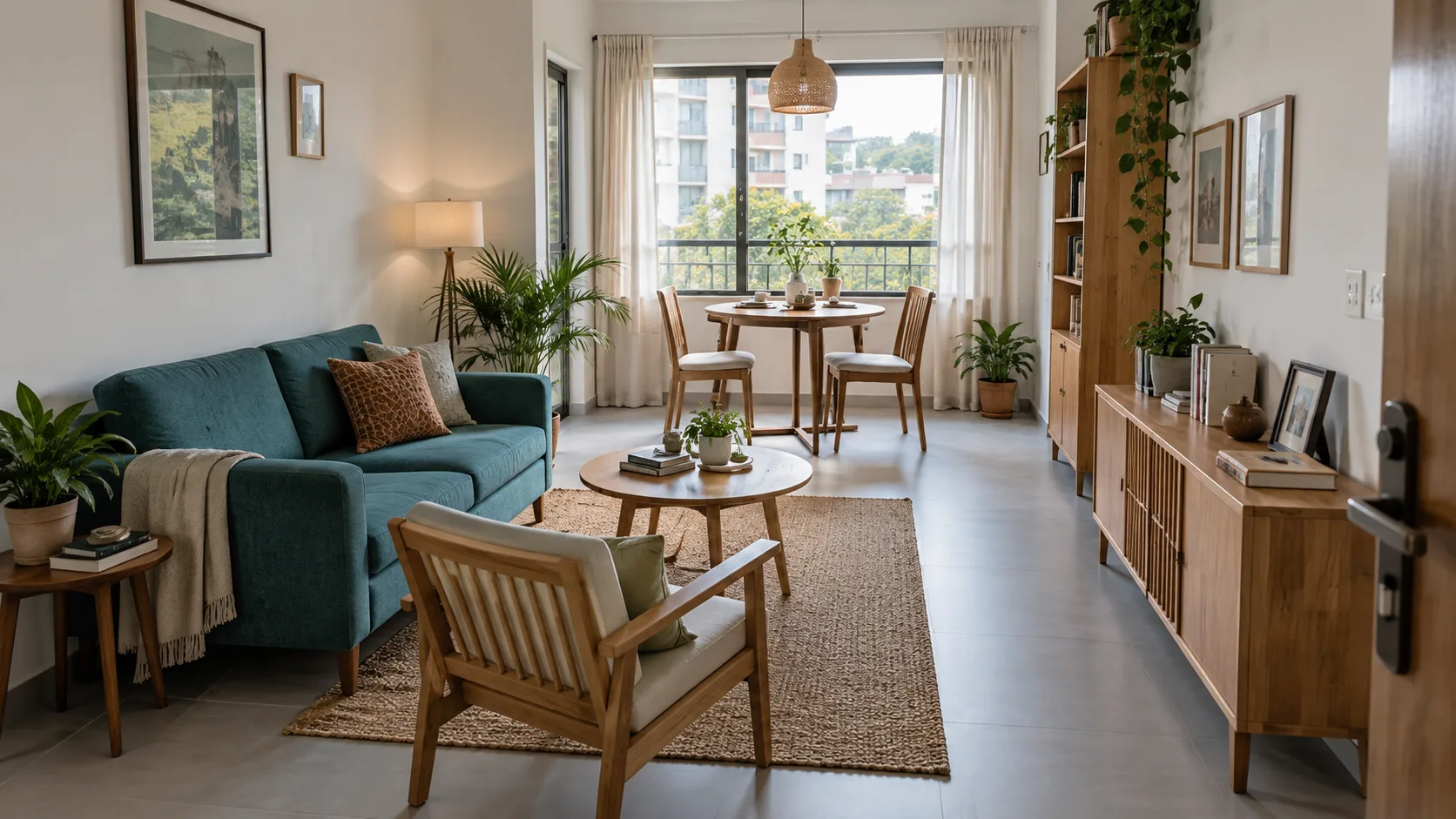
Yes, you can consider traditional Vastu preferences in a smaller home without trying to reproduce every room in your previous property. Downsizing is a change in how space is used, not simply a reduction in square footage. A dining room may become a dining corner; a guest bedroom may also hold a desk; a large prayer room may become a carefully chosen shelf.
The useful question is not whether the smaller home contains everything the larger one did. It is whether it supports the life you actually lead. Start with sleep, cooking, bathing, storage and daily movement. Then consider directional preferences where they fit. Neither a smaller floor area nor fewer possessions establishes that a home is unlucky or unsuitable.
This guide is for the transition itself: deciding what to bring, testing furniture before moving, adapting familiar routines and avoiding purchases that recreate the same space problem. For general compact-home layouts, see the small apartment Vastu guide.
Decide what the move must improve
Write down three reasons for choosing a smaller home. They might include less cleaning, fewer stairs, a shorter journey to work or keeping only the rooms you regularly use. Turn each reason into something you can check. If less maintenance is the priority, an apartment packed with deep cabinets and fragile display pieces may not deliver the change you wanted.
List your normal activities over a week, including the less visible ones: drying laundry, sorting paperwork, charging devices, exercising and welcoming visitors. Assign each activity a realistic place. Do not dedicate a whole room to an occasional event while squeezing a daily task into a passage. A guest arrangement used a few nights a year should be balanced against everyday work and rest.
Discuss the list with everyone moving. One person may happily reduce kitchen equipment but want to keep a sewing table; another may value books more than a second television. These are choices about a household, not a competition to own the fewest things. Preserve the activities that make the new home feel like yours.
Measure usable space, not just floor area
Two homes with similar advertised areas can accommodate furniture very differently. A long corridor, several doorways or an awkward window can reduce the continuous wall space you need. Sketch the actual rooms and mark doors, windows, built-in cupboards, electrical outlets and fixed equipment. Measure your furniture as well as the empty floor.
Include the space an object uses when operated. A wardrobe needs room for opening and standing; a recliner extends; dining chairs move backwards; a storage bed needs access to its lifting mechanism or drawers. A sofa that fits between two walls may still make the room unusable if the remaining route runs across everyone's knees.
- Measure large pieces at their widest points, including arms and handles.
- Check the delivery route through the entrance, lift, stairs and turns.
- Draw both the closed and open positions of movable furniture.
- Test the route from entrance to kitchen and bedroom to bathroom.
- Leave access to service panels, switches and windows that need operating.
Use removable tape or paper shapes to trial furniture footprints where permitted. These are planning aids, not certified clearance standards. If someone uses a mobility aid or needs assistance, assess the arrangement for that person's actual requirements with suitable professional support.
Use traditional preferences as a second layer
Common contemporary Vastu advice favours a south-west principal bedroom and a relatively open north-east area. Some guidance also prefers east- or north-facing study positions. These are traditional interpretations, not guarantees about sleep, concentration or prosperity, and they do not override a room's physical constraints.
When several layouts work equally well, a directional preference may help you choose. When the preferred position blocks a window, forces an extension lead across the floor or prevents a cupboard opening, choose the usable arrangement. An existing apartment does not need every activity placed in a separate directional zone.
Record the direction once on your measured plan, using the direction-checking guide if needed. Avoid repeatedly turning furniture to satisfy conflicting advice. A written list of essential needs and optional preferences makes it easier to explain why a practical compromise is reasonable.
Choose which furniture earns its place
Start with the largest objects, because they determine how the remaining space works. For each one, ask whether it supports a frequent activity, fits the new room when in use and leaves the necessary routes available. The answer may be different from whether the item is attractive, expensive or still in good condition.
A six-seat dining set can be valuable in a household that regularly eats together, yet unnecessarily dominant for someone who usually dines alone. Before replacing it, test whether a different placement works. Before keeping it, check that the arrangement remains comfortable with chairs occupied. Do not use photographs of empty show flats as proof of usable space.
Give sentimental furniture a deliberate decision rather than an automatic yes or no. One inherited chair might become the reading corner that gives the home character. A bulky cabinet might be offered to someone who genuinely wants it, with their agreement. Photographing an object can preserve a memory, but it is not a reason to pressure someone into parting with belongings.
Reduce storage demand before adding cabinets
Sort belongings by the task they support and how often they are used. Keep daily items near their point of use, seasonal items in less convenient storage, and items awaiting a decision in one limited, labelled area. Multiple boxes marked miscellaneous make it difficult to know whether storage is genuinely insufficient or simply unplanned.
Check usable shelf depth and height rather than counting cupboard doors. A deep shelf filled with several rows may hold plenty but make everyday objects difficult to retrieve. Keep a realistic amount of kitchen equipment for your cooking habits, not a universal rule about how many pans everyone should own. Preserve documents according to their actual purpose and applicable requirements rather than discarding them to meet a decluttering target.
Do not solve a floor-space problem by stacking unstable furniture. The US Consumer Product Safety Commission's Anchor It guidance recommends securing furniture and televisions according to the manufacturer's instructions. Arrange appropriate installation, including permission where needed in a rental. Directional placement is not an alternative to preventing tip-over hazards.
Let rooms share functions without constant disruption
A dual-purpose room works when changing its use is manageable. A desk and occasional guest bed may fit together, but ask where work equipment goes when someone stays. If changing the room requires moving heavy furniture each evening, the arrangement may create more work than the smaller home saves.
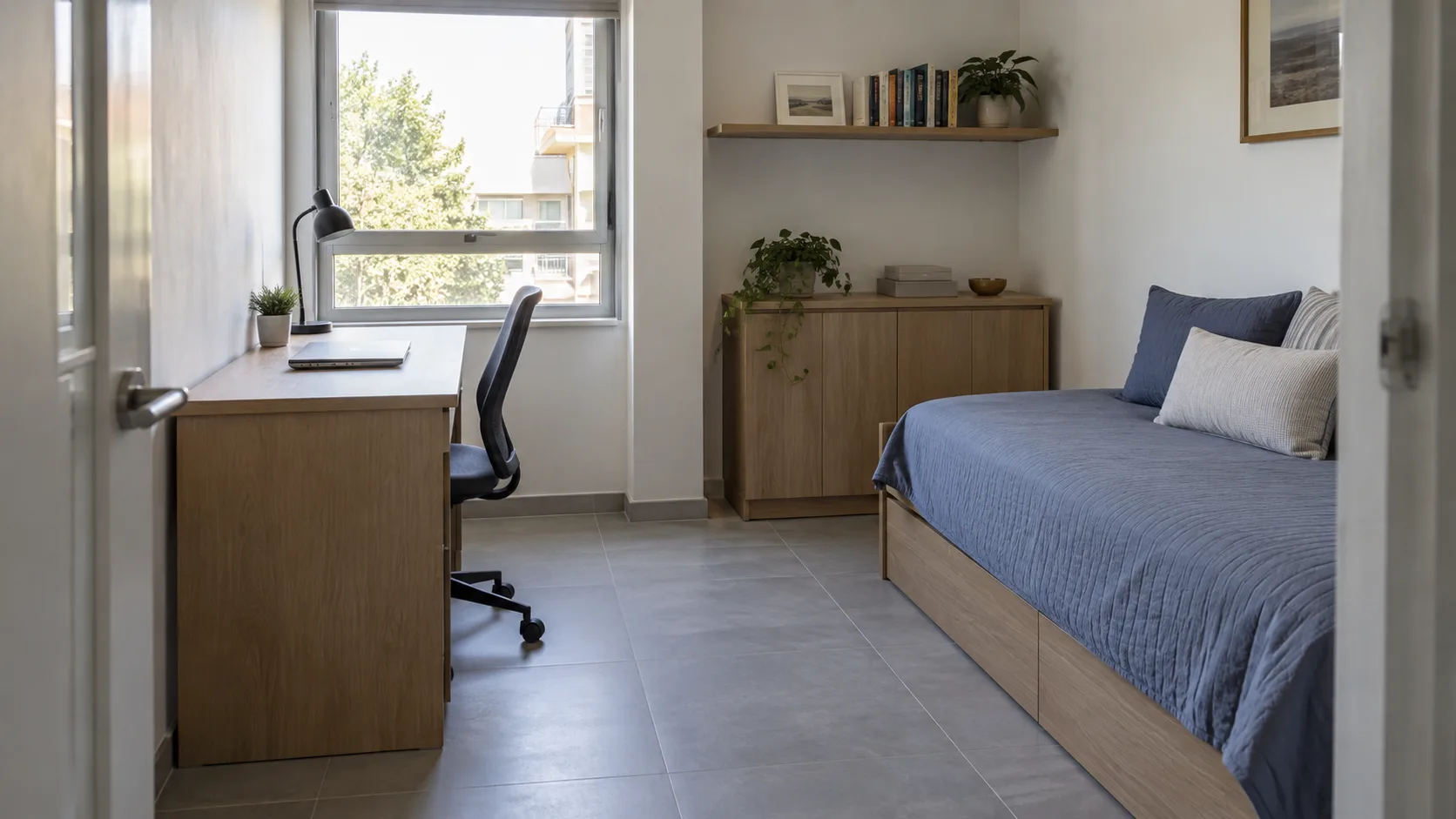
Keep the daily function easy to use and give the occasional function a complete plan. For example, a study can hold a daybed, stored linen and a small place for a visitor's belongings. It should not require the visitor to sleep among paperwork or prevent the person working there from accessing essential documents.
Where one surface serves work and meals, provide a nearby place to store the laptop and papers before dining. Consider call noise, glare and power access alongside any preferred desk direction. The home office desk guide explores those placement decisions separately.
Keep meaningful routines in a smaller form
Moving from a house to an apartment can remove a garden, utility area or dedicated prayer room. Identify the activity you want to preserve before buying a replacement object. A small permitted planting area may support daily gardening; a convenient drying arrangement may matter more than retaining every laundry basket from the old home.
If prayer is part of your routine, choose a respectful, usable place that does not obstruct movement or compete with a cooking surface. A traditional north-east preference can be considered where feasible. The small pooja corner guide discusses compact arrangements. Do not introduce flames into a cramped shelf or disregard building rules merely to imitate the previous prayer room.
Likewise, preserve everyday comfort rather than decorative quantity. Keep a favourite reading light where you actually read and an accessible place for shoes where you enter. A few familiar, useful objects can make the move feel continuous without filling every wall and corner.
Three illustrative downsizing examples
A couple moving from a three-bedroom house to a two-bedroom flat
The couple rarely uses its formal dining room, but one person reads every afternoon and the other regularly works from home. Their first plan brings the full dining set and display cabinet. On the measured drawing, that leaves no comfortable reading seat and pushes the desk into the bedroom.
They trial a smaller everyday dining arrangement, retain the favourite armchair and give the second bedroom a desk plus an occasional guest bed. They discuss what happens during visits before ordering furniture. Their traditional bedroom preference remains optional; they do not give up the better everyday layout simply to preserve the old room labels.
A renter relocating with an oversized sofa
A renter's existing sectional fits along two walls in the new apartment, but its projecting section narrows the route to the balcony. Rotating it to a preferred compass position moves the same obstruction to the entrance. Neither arrangement works well when someone carries laundry or opens the balcony door.
Instead of buying a Vastu remedy, the renter asks whether the sectional can be separated as designed. If not, they compare a smaller sofa with keeping one useful chair. They confirm delivery access and the new measurements before making a purchase, and leave the fixed walls and services unchanged.
A resident keeping a large book collection
A reader downsizes but wants to retain books used for a continuing research project. Advice to remove everything rarely touched would miss the purpose of the collection. The resident separates active reference material, books to lend or pass on, and a smaller archive that genuinely needs keeping.
They plan stable, appropriately secured shelving and a usable reading position before assigning space to decorative storage. The collection has an intentional place rather than spreading into corridors. This is a different decision from keeping boxes indefinitely because sorting them feels difficult; the room plan reflects an activity that remains important.
Set up essentials first and review after moving
Pack an easily identified essentials group for the first night and morning: bedding, toiletries, daily clothing, basic kitchen items, chargers and necessary personal supplies. Set up the sleeping area and clear the main routes before arranging ornaments. Keep packing materials out of exits and avoid making the balcony an indefinite overflow store.
Delay nonessential storage purchases until you have used the home. After a week, note repeated annoyances: a chair that blocks a drawer, missing space for laundry, or paperwork that takes over the dining table. Correct those specific problems before adding more furniture. After a month, review the remaining undecided boxes and agree a next action for each.
Before you commit to the furniture plan
- Every large item has a measured location and a workable delivery route.
- Doors, drawers, chairs and reclining parts have been tested in use.
- Daily activities have priority over occasional entertaining.
- Personal keepsakes and shared belongings have been discussed respectfully.
- Storage supports actual possessions rather than encouraging more purchases.
- Fixed services and safety requirements take priority over compass preferences.
- The household has a plan to review the arrangement after moving.
Frequently asked questions
Is moving to a smaller home bad according to Vastu?
A reduction in floor area does not establish that a home is unsuitable or unlucky. Consider whether the new home supports your daily activities, ventilation, privacy and safe movement. Traditional directional preferences can be considered where they fit, without treating downsizing itself as a defect.
Should I replace furniture that does not fit a preferred direction?
Not solely for that reason. First test alternative arrangements and check how the furniture operates. Replacement is worth considering when an item obstructs movement or cannot serve its purpose in the available space, rather than because its old orientation cannot be reproduced.
Can a study also serve as a guest room?
Yes, when both uses have a practical arrangement. Check the bed or daybed in use, provide somewhere for work equipment and visitor belongings, and agree what happens during working hours. A room that requires heavy furniture to be moved constantly may not be a useful compromise.
Do I need to discard sentimental belongings when downsizing?
No. Decide which objects matter to you and give them intentional space. Discuss shared or inherited items before making decisions. Keeping selected meaningful pieces is different from keeping every object automatically; there is no universal number of possessions a home should contain.
What should I measure before moving a large wardrobe?
Measure the wardrobe, the intended wall, ceiling height, door-opening space and the route into the home. Include handles, skirting and nearby switches. Check assembly and anchoring requirements with the supplier or installer before assuming that an item will fit safely.
Which room should I arrange first after downsizing?
Make the sleeping area usable and keep main routes clear, then set up basic kitchen and bathroom supplies. Decorative arrangements can wait. Use the home before buying additional cabinets so purchases respond to an actual storage need rather than the temporary appearance of moving boxes.
A smaller home should simplify the right things
Successful downsizing is not about fitting a reduced version of every former room into a new address. Keep the activities and belongings that matter, measure honestly and make practical compromises. Vastu preferences can be part of that process without becoming a demand to replace good furniture, discard treasured possessions or start an unnecessary renovation.
Educational only. Traditional Vastu preferences are not guarantees of health, prosperity or family harmony. Building alterations require appropriate professional advice.