
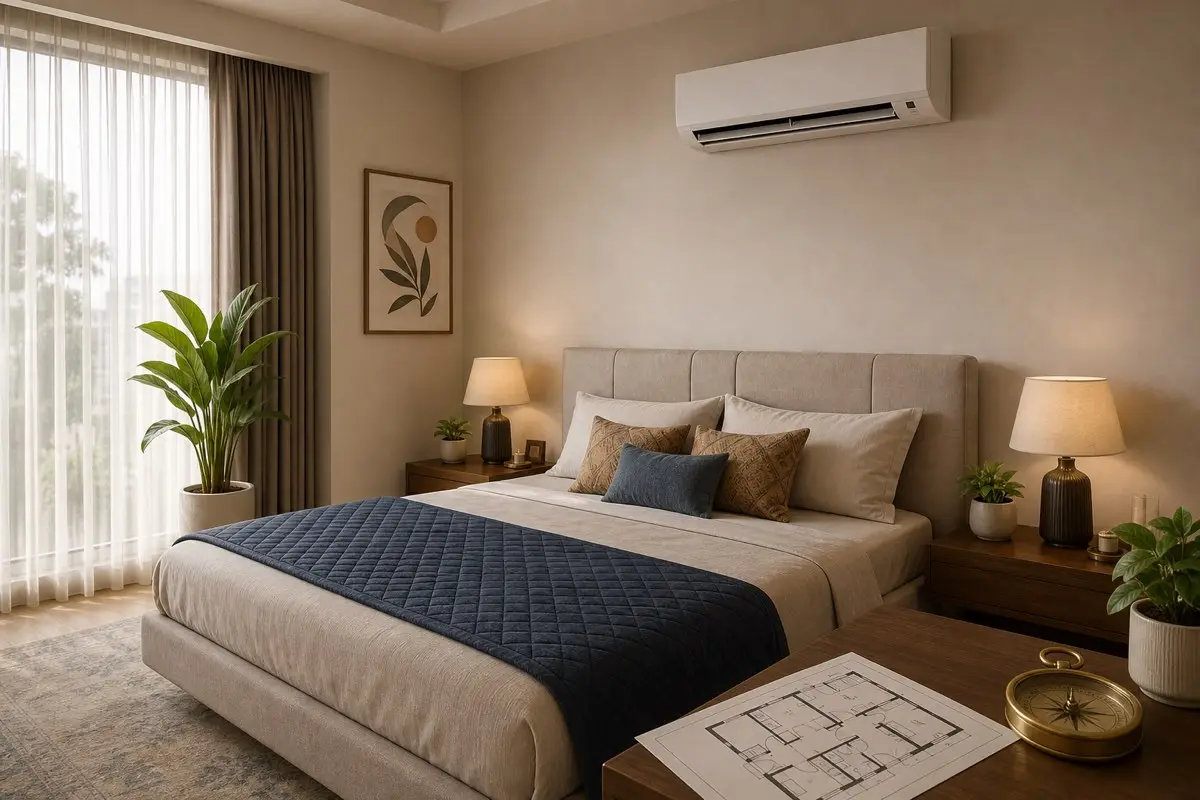
Why AC placement matters
An air conditioner is not just a cooling machine. It changes airflow, temperature, sleep quality, wall design, electricity consumption, and furniture placement. In Vastu, air movement and comfort should support calm living, not create harsh airflow, noise, or discomfort.
Indian homes face strong summer heat, humidity, dust, and changing monsoon conditions. A good AC position cools the room evenly without blowing directly on the head, face, or chest for long hours. The best solution combines Vastu, health, service access, and engineering.
Best direction for air conditioner
Many Vastu consultants prefer placing heavy electrical appliances toward the south-east, south, west, or north-west side depending on the room. For AC placement, the wall should also allow proper outdoor unit routing, drainage, service access, and balanced airflow. A technically wrong AC location can create leakage and poor cooling.
Do not place the indoor unit only by direction if it sends cold air directly onto the bed or sofa. Comfort is the first test. The AC should cool the room, not attack the person sitting or sleeping below it.
AC placement grid
Ideal placement
Use a wall that cools the room evenly without direct cold airflow on the bed or sofa.
Keep away
Avoid blocked vents, poor drainage, weak brackets, and AC placement directly over sleeping heads.
Best remedy
Use swing control, deflectors, curtains, regular filter cleaning, and furniture adjustment.
Bedroom AC placement
In bedrooms, avoid placing the AC directly above the headboard if cold air falls on the face or neck throughout the night. A side wall that allows air to circulate across the room is often better. Keep the bed away from direct blast and use swing settings carefully.
If the AC is already above the bed in a flat, use a deflector, adjust the swing, increase temperature slightly, and avoid sleeping directly below harsh airflow. Also check the bedroom layout using Bedroom Vastu so bed direction, mirror placement, and cooling work together.
Living room AC placement
In living rooms, the AC should cool the main seating area without blowing directly into guests’ faces. A wall above or near the TV is common, but it should not drip onto electronics or make the TV wall look crowded. In open living-dining rooms, place it where airflow reaches both zones when possible.
Avoid hiding the AC behind curtains, shelves, or decorative panels that block airflow. A clean, simple installation often looks more premium than a forced concealment that reduces cooling.
Outdoor unit and drainage
The outdoor unit should have proper ventilation, firm brackets, and safe drainage. Do not allow water to drip onto neighbours’ balconies, electrical lines, or entrance paths. Poor drainage creates stains, arguments, and maintenance problems.
Vastu advice should respect building rules. In apartments, outdoor unit placement may be controlled by the builder or society. Use approved locations and keep the unit serviced. A noisy outdoor unit can disturb the home and neighbours.
Colours, visual balance, and décor
Most indoor AC units are white or off-white, which fits many rooms. If the wall colour is dark, the AC may stand out strongly. Keep the wall around it clean and avoid overdecorating with shelves or frames too close to the unit.
For a premium look, align the AC with wall proportions, curtains, wardrobe heights, and false ceiling lines. Practical neatness often creates a more Vastu-friendly room than decorative clutter.
Common mistakes to avoid
Common mistakes include direct airflow on the bed, poor drainage slope, weak brackets, blocked filters, AC above electronics without protection, and ignoring service access. Another common mistake is setting the temperature too low, which can disturb sleep and increase bills.
Avoid placing a bed, sofa, or study desk where cold air hits the body for hours. If the room is already built, use swing adjustment, deflectors, furniture shifts, and regular cleaning.
Apartment and rental home tips
In apartments, AC points are often fixed. If placement is imperfect, do not panic. Focus on airflow control, temperature setting, curtains, insulation, and furniture arrangement. In rental homes, avoid drilling new holes without approval and keep installation documents safe.
A portable or window AC may be used in some older homes. In that case, prioritise safe wiring, window sealing, drainage, and noise control. The best Vastu remedy is a cool, safe, comfortable room that supports health.
Maintenance and comfort checklist
Clean filters regularly, service before summer, check drainage pipes, inspect outdoor brackets, and avoid running the AC in dusty rooms without cleaning. A poorly maintained AC spreads smell and reduces comfort. Maintenance is a powerful no-demolition remedy.
Use curtains, blinds, and door sealing to reduce heat load. When a room is naturally cooler, the AC works less aggressively. This supports health, electricity savings, and peaceful sleep.
Health, sleep, and family comfort
A bedroom may look Vastu-perfect on paper, but if the AC blows cold air directly on the sleeper, the room will not feel comfortable. Many families experience dry throat, blocked nose, stiff neck, or disturbed sleep because of harsh airflow. Keep the temperature moderate, use sleep mode when available, and avoid placing children or elderly family members directly under the air stream.
In living rooms, guests should not feel chilled on one sofa while another part of the room remains warm. Balanced cooling creates better hospitality. If the room is large, combine AC placement with curtains, fan direction, and seating arrangement. Vastu works best when comfort is shared by everyone using the space.
No-demolition correction ideas
If the AC is already in a difficult position, avoid unnecessary wall cutting. Use an air deflector, change the swing setting, shift the bed slightly, move the study table away from direct flow, and service the unit. If condensation appears, fix the drainage slope quickly before the wall stains or mould spreads.
For rental homes, use removable curtains, door seals, and furniture adjustments instead of permanent changes. If the outdoor unit is noisy, ask a technician to check brackets and vibration pads. These small corrections can make an imperfect AC placement far more comfortable.
Real-life Indian room scenarios
In many builder apartments, the AC point is already provided above the bed headboard. If this creates direct airflow, do not immediately plan demolition. First try changing the swing, using a deflector, adjusting fan speed, and setting a moderate temperature. A small bed shift can also reduce discomfort without changing the electrical point.
In living rooms, the AC is often placed on the TV wall because that wall is available and easy for piping. This can work if the unit does not drip over electronics and the air reaches the seating zone evenly. In long living-dining rooms, one AC may not cool both ends well, so furniture layout and curtains become important.
In independent houses, plan AC sleeves, drainage, and outdoor unit locations before plastering. This prevents ugly pipes across the elevation later. In rental homes, keep installation reversible and approved by the owner. A clean, safe installation supports both comfort and Vastu confidence.
Quick comparison table
| Check | Good practice | Avoid |
|---|---|---|
| Direction | Choose a suitable zone after checking the full room layout. | Following direction blindly while ignoring safety. |
| Maintenance | Keep the appliance clean, working, and easy to service. | Keeping broken, leaking, noisy, or dusty appliances. |
| Daily use | Support smooth movement and family routine. | Blocking doors, passages, windows, or furniture. |
Expert checklist before final placement
Before finalising the appliance position, stand in the room and test the real experience. Open the appliance door fully, walk around it, check nearby switches, look at the view from the entrance, and confirm that cleaning is easy. Then check whether the placement affects heat, water, airflow, sound, privacy, or daily movement. This simple test prevents most mistakes.
If the appliance is already installed, observe it for one week. Notice where clutter collects, whether anyone bumps into it, whether noise disturbs sleep or study, and whether maintenance access is easy. Vastu becomes useful when it improves real living, not when it creates fear. A calm, safe, clean, well-maintained appliance placement supports the home better than a theoretically perfect but uncomfortable arrangement.
Finally, take one photo of the room from the doorway. Photos reveal crowding, awkward gaps, dark corners, and visual imbalance that the eye may ignore in daily use. If the appliance looks too dominant, soften the area with cleaner storage, better lighting, and simpler surrounding décor.
Frequently asked questions
Where should AC be placed in bedroom as per Vastu?
A side wall that cools the room without blowing directly on the head or face is usually best. Direction matters, but comfort and health matter too.
Can AC be above the bed?
It is better to avoid direct airflow over the sleeper. If already installed there, use swing control, deflector, and moderate temperature.
Which direction is best for AC outdoor unit?
Use the approved building location with ventilation, safety, drainage, and service access. South, west, or north-west sides are often practical where allowed.
Can AC affect sleep?
Yes. Direct cold air, low temperature, noise, and dirty filters can disturb sleep. Good placement and maintenance are important.
Recommended internal links
Bedroom Vastu
Read the full guide here: Bedroom Vastu.
Living Room Vastu
Read the full guide here: Living Room Vastu.
Home Vastu
Read the full guide here: Home Vastu.
Direction Vastu
Read the full guide here: Direction Vastu.
Final thoughts
Appliance Vastu works best when tradition and practical planning agree. Choose a sensible position, keep the area clean, fix maintenance issues quickly, and avoid fear-based changes. A safe, neat, well-used appliance supports a more peaceful and premium home.