
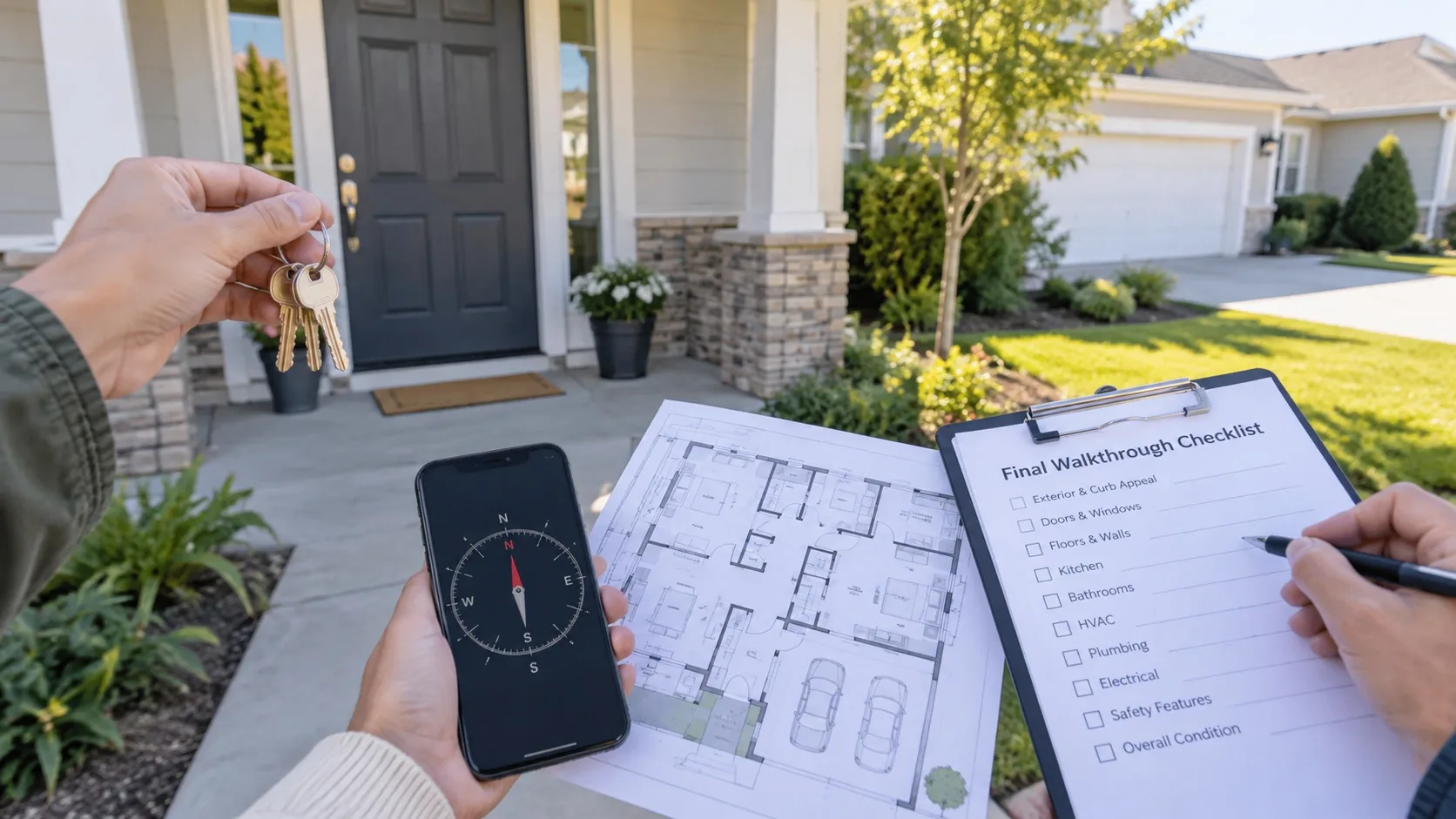
Quick answer: what is a final walkthrough Vastu check?
A final walkthrough Vastu check is a practical review done near closing day, possession day or key handover. It does not replace the legal closing process or professional inspection. It helps the buyer look at the home one more time through the lens of entry quality, light, air, room flow, cleanliness, repairs, utilities and first-week routines.
This is not the moment for panic or dramatic remedies. It is the moment to confirm that the home is in the expected condition, that agreed repairs are visible, that doors and windows work, that water and electricity behave normally and that the most important rooms can support daily life. Good Vastu starts with a home that is safe, dry, clean and usable.
Before you go to the walkthrough
Carry the purchase contract, inspection notes, repair agreement, floor plan, phone charger, flashlight, measuring tape, compass app and a simple checklist. If the home is outside your current city or country, ask your agent, attorney or trusted local representative to record slow videos of the entry, kitchen, bathrooms, utility areas, garage and bedrooms.
Do not rush. A walkthrough done in ten distracted minutes may miss issues that affect the first month of living. Open doors, turn on lights, run taps, flush toilets, test windows, observe smells and check whether large furniture can move through the main paths. If something was supposed to be repaired, compare it with your written notes.
From a Vastu angle, also confirm the direction one more time. Stand at the main door looking outward and take a compass reading away from metal objects. This helps you plan later placement without guessing. For direction basics, use How to Check Directions Correctly and the Vastu Direction Finder.
Main entry, keys and first impression
The main door is the first place to check. It should open smoothly, lock properly and feel safe. Test every key. Check the doorbell, porch light, exterior step, threshold, weather stripping and whether water can collect near the entry. If the entrance is dark, broken or blocked, note it before closing rather than discovering it on moving day.
Vastu gives importance to the entry because it shapes the home’s arrival experience. Practically, the entry decides where shoes, coats, packages, keys and bags will land. Look for a place inside the door where daily items can be organized without blocking movement. If there is no obvious storage, plan a slim cabinet or closed basket after move-in.
Also check the garage entry if the family will use it daily. Many USA homes have a beautiful formal front door but the real entrance is through the garage or mudroom. That route should be bright, safe and not full of hazards. For deeper entry ideas, read Main Door Vastu.
Room-by-room walkthrough checks
In the living room, look for clear movement, balanced light and usable wall space. Imagine where the sofa, television, prayer shelf, books, plants and daily storage would go. If the room feels smaller than expected, measure the main wall and walking path. Vastu is easier to apply when the room already supports movement.
In the kitchen, run water, check sink drainage, test lights, open cabinets and look for moisture or smell. Confirm that the stove, refrigerator, dishwasher and exhaust area are in the expected condition. A kitchen that looks clean but smells damp needs attention. For future setup, pair this with Kitchen Vastu.
In bedrooms, stand where the bed would go. Check window light, street noise, closet doors, outlets, HVAC vents and privacy from neighboring homes. A good bedroom should support sleep before it supports decoration. If the bed can only fit in one awkward position, note that before final commitment. Continue with Bedroom Vastu for placement guidance.
Bathrooms and utility areas deserve slow inspection. Look under sinks, around toilets, near tubs, at ceilings and around laundry connections. Dampness, slow drains and bad smell should be documented. Vastu remedies should never be used to ignore water or ventilation problems.
Final walkthrough comparison table
| Area | Vastu-friendly sign | Practical issue to catch | Buyer action |
|---|---|---|---|
| Main door | Clean, bright, smooth and secure | Sticky lock, dark porch or blocked threshold | Test keys, bell, lights and door swing |
| Living room | Clear seating and walking flow | Awkward walls or harsh glare | Measure sofa path and window exposure |
| Kitchen | Dry, ventilated and usable | Leaks, smell or poor appliance condition | Run water and check cabinets |
| Bedrooms | Quiet, private and easy to furnish | Noise, heat or weak bed position | Stand where the bed will go |
| Bathrooms | Dry, clean and ventilated | Dampness, stains or slow drains | Flush, run taps and inspect ceilings |
| Utilities | Accessible and working | Unsafe panels or missing service access | Document concerns before closing |
Practical examples
Keys work, entry feels dark
The buyer confirms all locks work but notices the porch light is weak. After closing, a brighter warm light and clear shoe storage make the entrance calmer.
Kitchen looks staged
The counters are clean, but the sink cabinet smells damp. The buyer documents the concern and reviews inspection notes before accepting the condition.
Bedroom feels noisy
The primary bedroom faces a busy road. The buyer tests window closure, HVAC sound and bed wall options before deciding how to set up sleep.
Garage is the real entry
The formal door is beautiful, but the family will enter through the garage. The buyer plans lighting, shoe storage and a clean path from garage to kitchen.
Remote closing
An international buyer cannot attend. A trusted local contact records slow videos of doors, windows, plumbing, repairs, light and room flow.
First-week setup
The family avoids unpacking everything at once. They set up entry, kitchen, beds and bathrooms first so the home feels settled before decorating.
First-week Vastu setup after getting keys
After closing, start with cleaning and function. Wipe the entry, test all lights, open windows where practical, check smoke and carbon monoxide alarms, clean kitchen shelves and dry bathrooms. If any repair issue appears, document it and contact the correct professional. A clean and safe home is the foundation of every Vastu improvement.
Set up only the essential rooms first: entry, kitchen, bedrooms and bathrooms. Avoid stacking boxes in the center of the home for weeks. Keep pathways open so the family can move easily. Heavy furniture should be placed thoughtfully because moving it later is tiring. If you are unsure, live with a temporary arrangement for a few days before finalizing decor.
Use flexible improvements first. Curtains for glare, lamps for dark corners, closed baskets for shoes, simple plants in real light and organized storage can improve the home quickly. Avoid major remedies or renovation until you understand how the home behaves through ordinary mornings and evenings. For no-demolition ideas, see Vastu Remedies Without Demolition.
Checklist before you leave the walkthrough
- Test all keys, door locks, garage openers and main entry lights.
- Confirm agreed repairs are complete or clearly documented.
- Run kitchen and bathroom water long enough to notice slow drainage.
- Check for damp smell, ceiling stains, cabinet moisture and leaks.
- Open and close important windows, doors, closets and sliders.
- Observe natural light and glare in living rooms and bedrooms.
- Confirm utility areas are accessible and not blocked by stored items.
- Measure furniture paths if large items arrive soon after closing.
- Take photos or videos of anything uncertain.
- Discuss contract concerns with the proper professional before closing.
Remote and international closing notes
If you are closing from another city or country, ask for a slow video walkthrough instead of only photos. The video should start at the curb, move through the main door, pause in the living room, kitchen, bedrooms, bathrooms, garage and utility areas, and show windows opening where practical. This helps you notice light, sound, movement and maintenance issues that still images can hide. Request close views of completed repairs, keys, appliance areas and any spaces that worried you during inspection.
Related buyer guides
Use this final walkthrough guide with Vastu Home Inspection Checklist for USA Buyers, Open House Vastu Checklist for USA Home Buyers, Renting Before Buying and Vastu and Resale Value for USA Home Buyers. For first-week rituals and practical move-in order, compare with Housewarming Vastu Checklist.
Frequently asked questions
What should I check during a final walkthrough from a Vastu point of view?
Check the main entry, light, ventilation, kitchen, bedrooms, bathrooms, utility systems, repaired items, cleanliness, keys and whether the home can support daily routines after move-in.
Should I do Vastu remedies before closing?
No permanent remedy should be done before ownership or written permission. Use the walkthrough for observation, documentation and planning, then make safe changes after closing.
Can Vastu replace a final walkthrough inspection?
No. Vastu is an educational planning lens. Buyers should still use real estate, inspection, legal and financial professionals for closing and repair decisions.
Which rooms matter most on closing day?
The main door, kitchen, primary bedroom, bathrooms, utility areas, garage entry and living room matter most because they affect safety, comfort, maintenance and first-week routines.
What if something feels wrong during the walkthrough?
Document the concern, photograph it, compare it with the contract and inspection report, and discuss next steps with your real estate professional before closing.
What should I do in the first week after getting keys?
Clean the entry, test lights and utilities, set up kitchen basics, choose stable bed placement, dry bathrooms, reduce clutter and create calm storage before adding decorative remedies.
Conclusion
The final walkthrough is not only a formality. It is the last practical moment to confirm whether the home is ready for safe, calm daily life. Vastu makes this review more complete by asking you to notice entry, light, flow, maintenance and the way each room will actually be used.
Use the walkthrough to document concerns, plan first-week setup and avoid rushed remedies. When the keys are handed over, begin with clean entry, working utilities, restful bedrooms and a practical kitchen. A grounded start gives the new home a better rhythm from day one.