
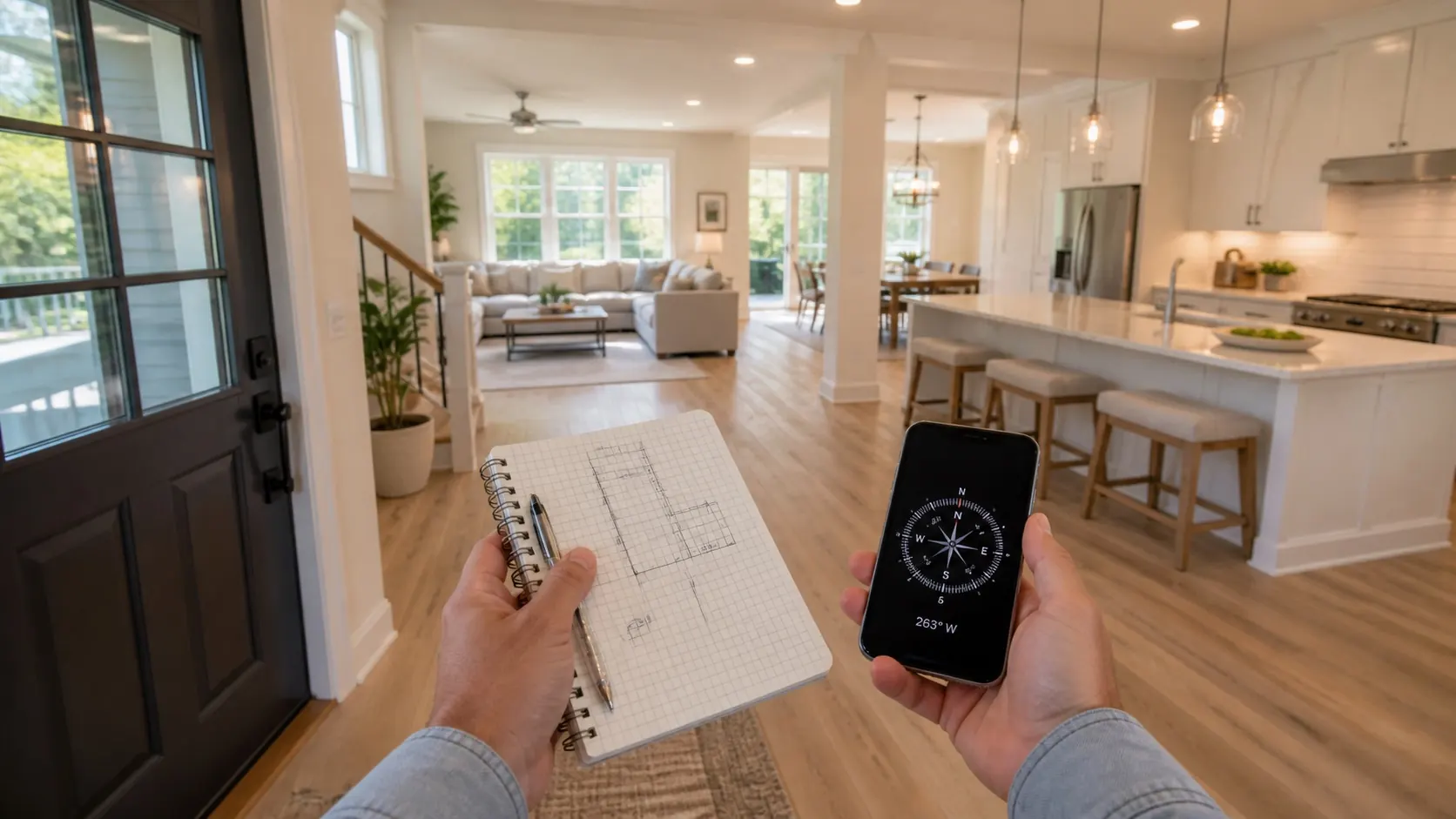
Quick answer: what should buyers check at an open house?
At an open house, use Vastu as a fast observation checklist. Check the real entrance, compass direction, first view, natural light, kitchen workflow, bedrooms, bathrooms, garage route, basement or balcony, noise, storage and whether furniture can fit without blocking movement. Do not try to solve every concern during the tour. Your job is to identify what feels strong, what feels fixable and what needs inspection.
This is useful for USA buyers because homes often have open kitchens, attached garages, basements, stairs, laundry rooms and large windows. It is also useful for international buyers who may be touring remotely through an agent or trusted friend. A short walkthrough can reveal more than listing photos if you know what to watch.
Before the tour: prepare a simple checklist
Before you enter the property, save the listing floor plan, address, price, taxes or association fees, school or commute notes and any available disclosures. If you can, mark north on the plan. Many buyers walk into a showing emotionally, then forget basic details because the staging looks attractive. Preparation keeps the visit grounded.
Carry a phone compass, small notebook, measuring tape and a list of must-have furniture. If you are touring remotely, ask the person walking through the property to move slowly and avoid jumping from room to room. A calm video from outside to inside helps you understand sequence, not just appearance.
Set expectations before the visit. You are not looking for a perfect textbook plan. You are checking whether the home supports your family’s real routine. A minor direction issue may be easy to improve, while a dark entry, difficult stairs or no workable bed wall can affect everyday comfort.
Entry, first view and daily flow
Begin at the real daily entrance. In a detached house, this may be the front door or garage door. In a condo, it is the unit door from the corridor. In a townhome, the garage or lower-level entry may matter more than the formal door. Stand inside and look out to confirm direction, then stand outside and walk in naturally.
Notice the first view. Does the door open into a bright, calm area, or directly into a cramped wall, bathroom, cluttered stair or narrow passage? Is there space for shoes, coats, bags and keys? A clean entry creates daily ease. A beautiful door with no practical landing area can become stressful after move-in.
Then walk the path from entry to kitchen and living room. In USA homes, grocery flow from garage to pantry can matter a lot. If the island blocks the route or the mudroom is too tight, daily life may feel awkward. Good Vastu is not only where a room sits on a grid; it is also how the family moves through the home.
Room-by-room open-house checklist
Living room
Check daylight, glare, window direction, fireplace or TV wall, sofa placement and passage through the room. A staged sofa may hide that your own sectional will not fit. Stand where you would sit and notice whether the room feels open, private and easy to use. For more detail, see Living Room Vastu.
Kitchen
Review stove, sink, refrigerator, island, pantry, exhaust and walking clearance. Open-house kitchens often look clean because nobody is cooking, so imagine breakfast, lunch boxes, dinner and cleaning. If sink and stove are crowded, or if the refrigerator door blocks the walkway, note it. Continue with Kitchen Sink and Stove Vastu.
Bedrooms
Draw a quick bed position in each important bedroom. Look for a stable headboard wall, privacy from the door, closet clearance, window placement, outlets and noise from road, garage, elevator, HVAC or stairs. A room can look large when empty but become difficult once a bed, desk and dresser are placed.
Bathrooms and laundry
Check exhaust, smell, water pressure, dampness, caulk, storage and whether bathroom doors create awkward views. Laundry should have safe connections, ventilation and a practical route from bedrooms. Direction matters less than cleanliness, dryness and maintenance during a fast showing.
Garage, basement, balcony or yard
Detached homes and townhomes need garage review. Condos need balcony and parking review. Basement homes need moisture and light review. Stand in these areas long enough to notice smell, noise, slope, storage and safe access. For inspection-level review, use Vastu Home Inspection Checklist for USA Buyers.
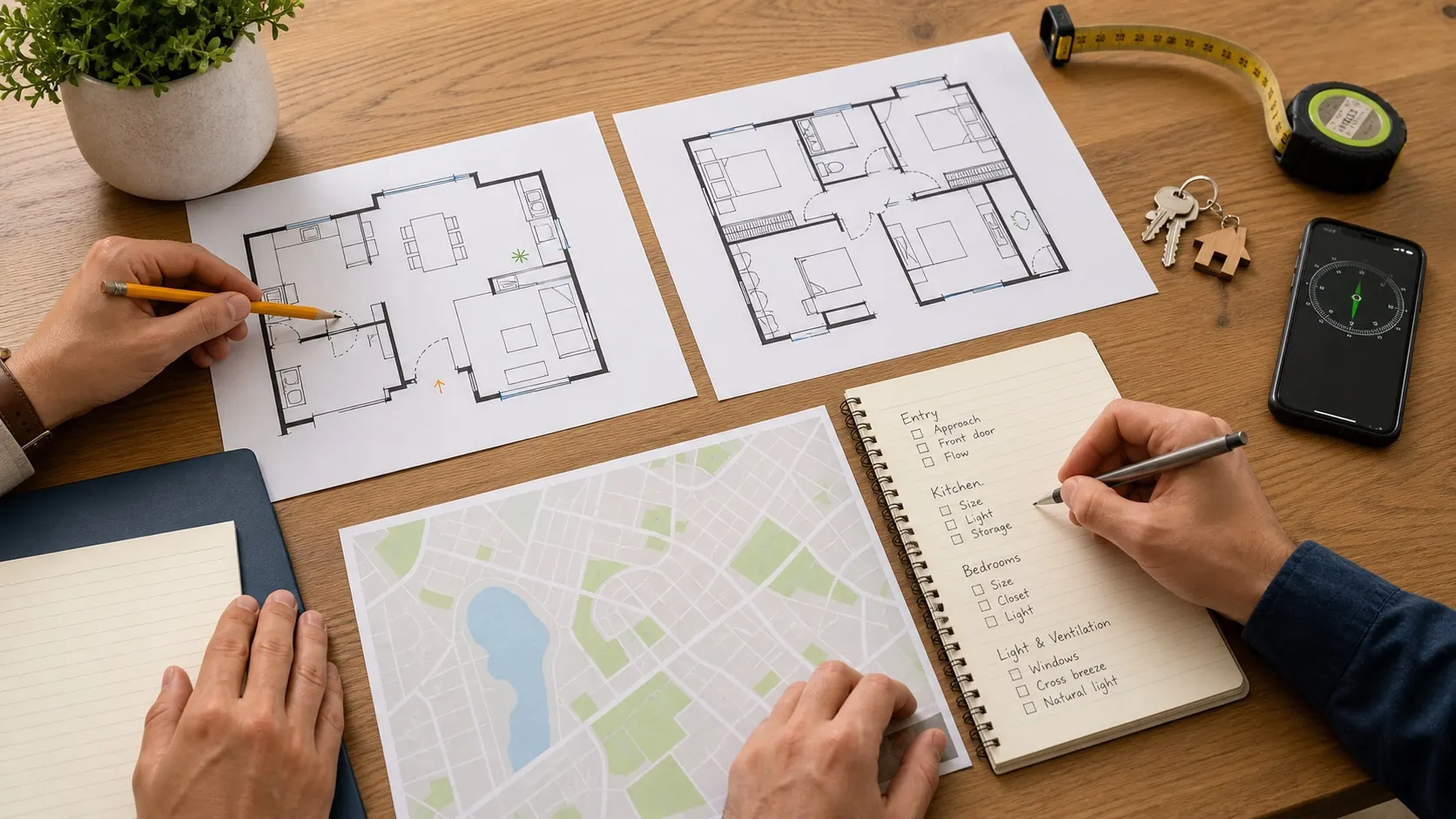
After the tour: sort your notes before emotion takes over
After leaving the home, write your notes immediately. Do not wait until the evening after seeing multiple properties. Record the entry direction, first impression, kitchen comfort, bed placement, daylight, ventilation, noise, storage, repair concerns and neighborhood feeling. If you toured remotely, save screenshots only for personal comparison and ask for missing angles quickly.
Sort concerns into fixed, expensive and easy. Fixed concerns include entrance location, stair placement, windows, garage side, plumbing, building orientation and lot slope. Expensive concerns include kitchen changes, major repairs, drainage, roof, electrical, HVAC and basement work. Easy concerns include lighting, curtains, shoe storage, furniture, rugs, plants, mirrors and decluttering.
This sorting helps you avoid two common mistakes. One is rejecting a good home because of a fixable small issue. The other is accepting a difficult home because the staging looked peaceful. A clear list keeps Vastu practical and buyer-friendly.
Showing-day comparison table
| Area | Good sign | Warning sign | Next step |
|---|---|---|---|
| Entry | Bright, clear and easy to use | Cramped first view or no storage | Check if lighting and furniture can improve it |
| Kitchen | Safe stove, sink and island flow | Blocked walkway or weak exhaust | Measure and review inspection notes |
| Bedroom | Stable bed wall and quiet feel | No workable bed position | Sketch furniture before offer |
| Bathroom | Dry, ventilated and clean | Smell, stains or poor exhaust | Inspect moisture and plumbing |
| Basement/garage | Dry, safe and organized route | Musty smell or cluttered daily entrance | Ask for inspection and repair details |
| Neighborhood | Comfortable noise, commute and access | Stressful road, parking or safety concern | Visit at another time of day |
Practical examples for USA and international buyers
Busy USA open house
The home looks beautiful, but many visitors make it hard to feel the entry. Step outside, re-enter slowly and record your first-view notes before leaving.
Remote buyer abroad
A friend walks the home on video. Ask them to pause at each doorway, show windows, open closets and describe smells, noise and natural light.
Condo showing
The unit has good light, but the corridor feels dark and noisy. Include hallway, elevator and parking experience in your Vastu notes, not only the unit interior.
Townhome tour
The family will enter through the garage every day. Check the garage door route, stairs, shoe storage and grocery path before judging only the front door.
New-build model
The model home may face a different direction than the lot you will buy. Compare the real plot plan before accepting the model’s feeling as proof.
Resale with staging
Staging hides clutter, but it cannot change window placement, room size or noise. Measure the rooms and imagine your actual furniture.
What to revisit after the showing
A showing is a screen, not a final verdict. Revisit any home that remains a serious candidate. Go at a different time of day if possible. Morning and evening can reveal light, traffic, neighbor noise, parking pressure and temperature differences that a midday tour misses.
Ask for disclosures, inspection history, HOA or strata rules, utility costs and any repair documents. If the home has a basement, ask about water history. If it has a west-facing glass wall, ask about heat. If the kitchen is open, consider smell and sound. These practical questions make Vastu more grounded.
International buyers should avoid making final decisions from one polished video. Ask for a second walkthrough focused only on weak points: entry, bathrooms, mechanical spaces, balcony, basement, parking, trash area and exterior drainage. A trusted local person can notice small details that cameras skip.
Simple checklist before making an offer
- Confirm the actual daily entrance and compass direction.
- Observe the first view from the doorway.
- Walk the route from entry to kitchen, living room and bedrooms.
- Check stove, sink, refrigerator, pantry and island clearance.
- Draw bed and desk placement before assuming rooms will work.
- Notice daylight, glare, ventilation, smell and noise.
- Check garage, basement, balcony or yard conditions based on property type.
- Separate fixed layout concerns from easy decor improvements.
- Visit or request video at a second time of day when possible.
- Use inspection for physical defects before relying on remedies.
Related buyer guides
For the wider property decision process, read Vastu Checklist for USA and International Home Buyers. For relocation and remote tours, use Vastu for International Relocation Home Buyers. For inspection red flags, read Vastu Home Inspection Checklist for USA Buyers. For detached homes, continue with Vastu for USA Single-Family Homes.
Frequently asked questions
How do I check Vastu during a short open house?
Use a simple route: stand at the entry, check compass direction, observe first view, walk to kitchen, bedrooms, bathrooms and outdoor areas, then note light, airflow, noise, storage and fixed constraints.
What should USA buyers check first at a showing?
Check the real daily entrance, entry storage, kitchen workflow, bedroom bed walls, bathroom ventilation, natural light, garage route, basement condition, noise and any obvious repair concerns.
Can an open house replace inspection?
No. An open house helps you screen layout and comfort, but inspection is still needed for roof, structure, electrical, plumbing, HVAC, drainage, moisture and safety concerns.
Should I reject a home after one imperfect Vastu point?
Not automatically. Separate fixed issues from fixable ones. A home with good light, safe kitchen, restful bedrooms and clean entry may still work well after simple improvements.
How can international buyers review an open house remotely?
Ask a trusted person or agent to record a slow video from street or lobby through every room, with compass direction, daylight, noise, storage and problem areas shown clearly.
What notes should I take after a property tour?
Write down entry direction, first impression, kitchen flow, bed placement, light, ventilation, noise, repair concerns, fixed constraints and whether the home supports your real daily routine.
Conclusion
An open house is short, but it can tell you a lot when you move through the home calmly. Use Vastu to notice the entry, first view, kitchen, bedrooms, bathrooms, light, air, sound and movement. Then use inspection to verify physical condition before you make a final decision.
The best home is not always the one that looks most impressive in photos. It is the one that supports your daily life with safe entry, practical cooking, restful sleep, healthy air, manageable repairs and a neighborhood that fits the family. A clear showing-day checklist helps you see that before emotion takes over.