
On this page
Quick answer: how should overseas buyers use Vastu?
Use Vastu as a practical decision checklist, not as a reason to reject every house. First verify the facing direction, entrance quality, natural light, ventilation, kitchen safety, bedroom support, bathroom position, stairs, garage access and floor-plan flow. Then separate what is fixed from what can be improved after purchase.
This matters especially outside India because homes are built around local climate, building codes, heating systems, garages, basements, laundry rooms, open kitchens and resale expectations. A rule copied from an Indian independent house may not fit a US townhouse or London flat exactly. The better approach is to understand the principle behind the rule and adapt it intelligently.
Why USA and international homes need a practical Vastu lens
International homes often have layouts that differ from Indian flats and houses. In the USA and Canada, the garage may be the daily entrance. In the UK, older homes may have narrow staircases, compact kitchens and shared walls. In Australia, sun exposure and heat can matter more than symbolic direction. In Dubai or Singapore, high-rise apartments may have fixed service shafts and limited control over windows.
Because of this, the first question is not "is this perfect Vastu?" The better question is "can this home support health, rest, work, family movement and maintenance?" Vastu becomes useful when it helps you notice light, air, clutter, water, fire, stability and circulation before signing a contract.
Also remember that international purchases involve inspections, appraisals, insurance, property taxes, homeowners association rules, strata rules and local permits. Vastu should sit beside these checks, not replace them. If the roof leaks, the foundation has movement, or the electrical panel is unsafe, no symbolic remedy should distract from the real issue.
Open-house Vastu checklist for buyers
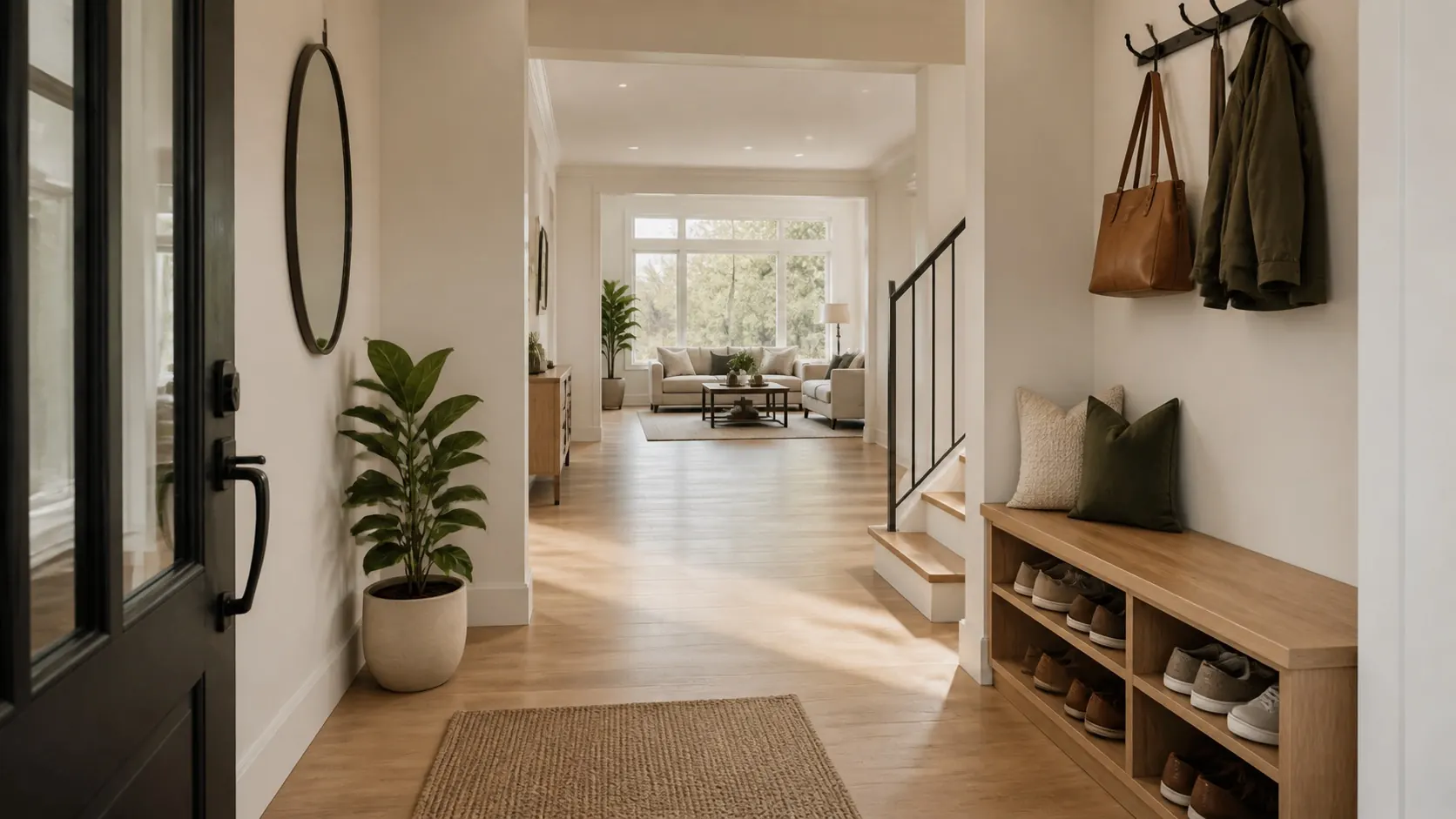
At an open house, you may have only twenty minutes. Start with the front approach. Is the entrance visible, clean, safe and easy to reach? Does the door open comfortably? Is there enough light near the entry? Are shoes, coats and bags likely to block the path in daily life? A beautiful foyer that has no storage can become stressful after move-in.
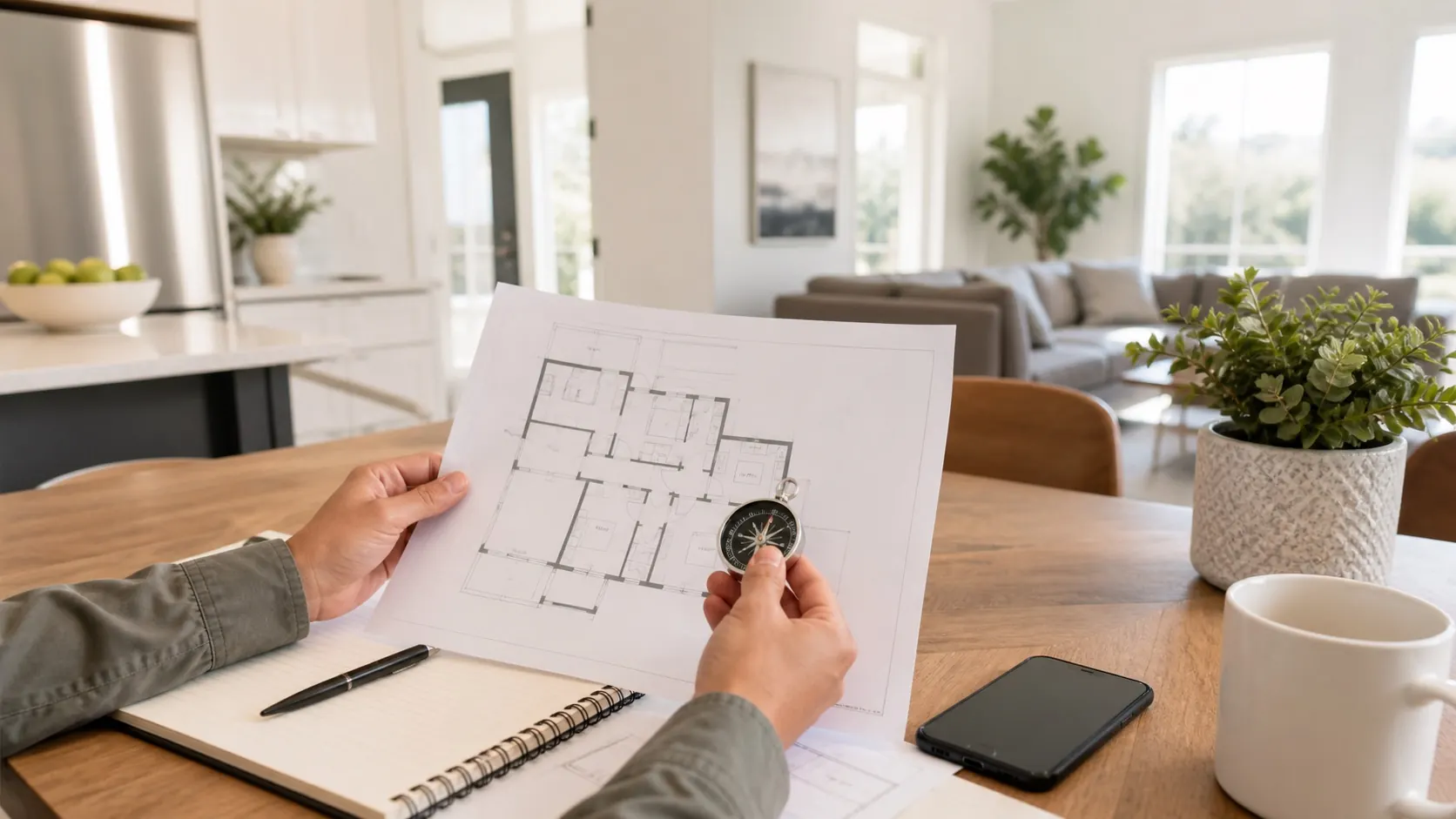
Next, check direction. Use a phone compass away from cars, metal railings, refrigerators and electrical panels. Stand at the main daily entrance and take a reading while facing out. Then compare with map north and the listing floor plan. One reading is not enough; phones can drift near metal and wiring.
Then walk the house slowly. Notice whether movement from entrance to living room, kitchen, stairs, bedrooms and bathroom feels natural. Check whether the centre of the home is open or overloaded. Observe natural light. A home that photographs bright may feel dark during your actual viewing time. Return at a different time of day if the purchase is serious.
Separate fixed issues from fixable issues
This is the most important skill for international home buyers. Fixed issues are difficult or expensive to change: entrance location, building orientation, stairs, structural walls, plumbing stacks, bathrooms, garage location, basement condition, window positions and major kitchen placement. Fixable issues include paint, curtains, furniture, lighting, mirrors, storage, plants, artwork and daily routines.
A home with one non-ideal fixable issue may still be excellent. For example, a bedroom mirror facing the bed can be moved or covered. A dark hallway can often be improved with lighting. A cluttered entry can be corrected with better storage. But a constantly damp basement, poor drainage, unsafe stairs or a kitchen with serious ventilation problems needs deeper review.
When comparing properties, give more weight to fixed comfort. Good daylight, dry walls, safe stairs, quiet bedrooms, clean bathrooms, a functional kitchen and easy entry flow often matter more than small directional imperfections. This approach prevents fear-based decisions and protects your budget.
Room-by-room Vastu checks before buying
Entrance and foyer
The entrance should feel safe, bright and easy to use. In colder countries, check where coats, boots and wet umbrellas will go. In suburban homes, decide whether the front door or garage door is the true daily entrance. If the garage is used every day, it deserves the same cleanliness and lighting review as the formal front door. Use the main door Vastu guide for deeper entrance checks.
Kitchen
Many international homes have open kitchens. This is not automatically wrong. Check stove ventilation, sink-stove spacing, island circulation, exhaust quality, fridge position, natural light and whether cooking smells will travel into bedrooms. South-east is traditionally preferred for kitchens, but safety and ventilation are the first priority. Review sink and stove Vastu for practical fire-water balance.
Bedrooms
Bedrooms should allow a supported bed wall, clear movement and privacy from the door. Avoid layouts where the only bed position sits directly under a window, below a heavy beam or beside a noisy mechanical room. If the direction is not ideal but the bed has support, light is soft and storage is clean, the room may still work well. See Headboard Vastu and Sleeping Direction Vastu.
Bathrooms and laundry
International homes often have multiple bathrooms, powder rooms and laundry closets. Check leaks, smell, exhaust fans, window ventilation, floor slope and distance from bedrooms or kitchen. A bathroom in a less preferred zone may be manageable if it is dry and well ventilated. A preferred layout with hidden leakage is worse.
Basement, stairs and garage
Basements are common in North America. Check dampness, smell, sump pumps, cracks and natural light. Stairs should feel safe and well lit. Garages should not become the neglected main entrance, especially if the family enters there every day. Read Basement Vastu and Staircase Vastu if those features drive the layout.
Buyer comparison table
| Area | Good sign | Warning sign | Likely action |
|---|---|---|---|
| Entrance | Bright, safe, clear, easy storage | Dark, cramped, wet, confusing access | Fixable if lighting/storage can improve it |
| Kitchen | Good exhaust, safe circulation, clean counters | Poor ventilation, heat near passage, awkward island | Review cost and code limits |
| Bedroom | Stable bed wall, privacy, soft light | No usable bed wall, noise, dampness | Check furniture plan before offer |
| Bathrooms | Dry, ventilated, no smell | Leakage, mold, poor exhaust | Inspection priority |
| Basement | Dry, bright enough, no musty smell | Damp corners, cracks, pump issues | Professional inspection needed |
| Flow | Natural path between rooms | Furniture would block movement | Measure before deciding |
Practical examples for international buyers
US suburban home
The front door is east-facing, but the family enters through the garage. Treat both entries seriously: keep the garage path bright, clean and organised.
Canadian townhouse
The kitchen is open to the living room. Good exhaust, safe island clearance and clean sink-stove separation make it workable even if the compass zone is not perfect.
London flat
The flat has limited windows and fixed plumbing. Prioritise daylight, ventilation, bed placement and whether the bathroom smell stays contained.
Dubai apartment
High-rise layouts often have fixed shafts. Check entry flow, balcony heat, AC placement and whether furniture can create a calm living zone.
Australian home
Sun and heat matter strongly. A western glass wall may need shading, curtains and landscape planning before it feels comfortable.
NRI remote purchase
Ask for a marked floor plan, video walkthrough, compass reading at the entrance, window directions and inspection notes before paying a deposit.
Red flags that deserve extra caution
Pause when you see damp basements, mold smell, poor drainage, unsafe staircases, blocked windows, very dark central areas, bedrooms with no reasonable bed wall, a kitchen without workable exhaust, or a main entry that feels hidden and unsafe. These are not only Vastu concerns; they are daily living concerns.
Also be careful with beautiful staging. Furniture may hide awkward circulation. Rugs may hide floor slope. Fragrance may hide damp smell. Bright listing photos may hide weak natural light. Open cupboards, check corners, look behind doors and imagine the home without staging.
If you are buying remotely, request a slow video from the main door to every major room. Ask the person recording to pause at windows, bathroom corners, stairs, garage entry and kitchen exhaust. A fast cinematic tour is not enough for Vastu or practical inspection.
No-renovation improvements after purchase
Many small Vastu corrections are simple after move-in. Use warm lighting for dark entries, closed storage for shoes and coats, curtains for glare, plants where there is real light, mirrors only where they do not disturb sleep, and furniture placement that keeps movement clear. Improve the home you bought before worrying about dramatic remedies.
For apartments and condos, avoid changes that violate HOA, strata or landlord rules. Use removable hooks, floor lamps, freestanding shelves, rugs that do not create trip hazards and curtains that improve privacy. Read Vastu remedies without renovation for more renter-friendly ideas.
The most powerful correction is often maintenance: fix leaks, clean vents, repair door hardware, organise storage and create a weekly reset. A well-maintained home usually feels better than a directionally ideal home that is neglected.
Offer-stage checklist
- Confirm the main entrance and daily entrance directions.
- Mark kitchen, bedrooms, bathrooms, stairs, garage and basement on the floor plan.
- Check whether the bed has a supported wall in each bedroom.
- Review daylight at the actual viewing time.
- Look for dampness, mold smell, cracks and drainage issues.
- Test whether furniture can fit without blocking circulation.
- Separate fixed issues from fixable decor issues.
- Respect local inspection, permit, HOA and insurance requirements.
- Request a second viewing if the first visit feels rushed.
- Do not let fear or excitement replace practical review.
Frequently asked questions
Can Vastu be used for homes in the USA or outside India?
Yes. Use Vastu as a practical planning checklist for direction, light, air, entry flow, kitchen safety and bedroom comfort, while respecting local building codes and real home constraints.
What should international home buyers check first for Vastu?
Check the actual compass direction, main entrance experience, kitchen position, bedroom support, natural light, ventilation, bathrooms, stairs and major fixed constraints before judging smaller details.
Should I reject a house abroad if the direction is not ideal?
Not automatically. Separate fixed issues from fixable issues. A non-ideal direction with excellent light, flow and maintenance may be more livable than an ideal direction with serious practical problems.
How do I check direction during an open house?
Use a phone compass away from large appliances, cars and metal railings, then confirm with the listing floor plan, sun path, map north and a second reading outside the property.
Is this checklist suitable for condos and townhomes?
Yes. For condos and townhomes, focus on what is fixed: entrance, windows, shafts, kitchen, bathrooms, stairs, garage access and usable furniture layout.
What Vastu issues are usually fixable after buying?
Furniture placement, lighting, curtains, mirrors, storage, plants, colour, clutter, work desk setup and bed support are usually easier to correct than structural issues.
Conclusion
Vastu for USA and international home buyers works best as a calm review method. Check direction, but also check the entrance experience, daylight, airflow, kitchen safety, bedroom support, bathrooms, stairs, garage and maintenance history. The right home should feel practical before it feels symbolically perfect.
Before you make an offer, slow down and mark the floor plan. If most fixed features are comfortable and the concerns are fixable, the property may be workable. If the home has serious dampness, unsafe movement or poor room function, pause and get expert advice. Continue with Vastu Checklist Before Buying a Flat, How to Check Directions Correctly and Home Vastu.