
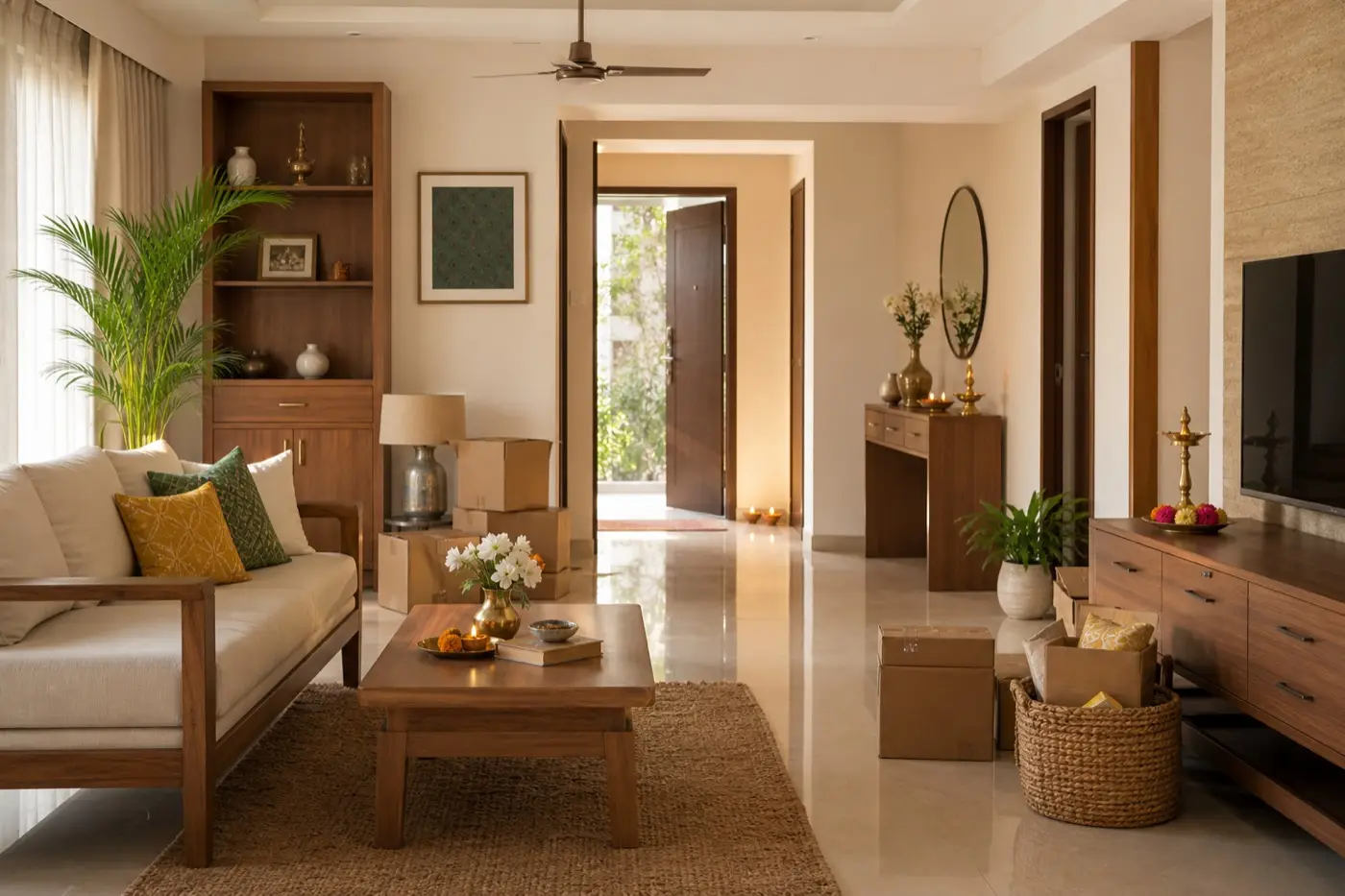
What housewarming preparation really means
Griha Pravesh traditions vary across Indian regions, languages, and families. Some households arrange a detailed ceremony with a priest; others light a lamp, offer a simple prayer, and share food. Vastu preparation does not require everyone to follow one ritual. Its useful purpose is to begin life in a home with cleanliness, gratitude, order, and attention.
Separate three tasks that often become mixed together: making the building safe, making the rooms usable, and planning the ceremony. Electrical faults, gas leaks, damp walls, and unsafe railings cannot wait for an auspicious date. Furniture styling and decorative purchases can wait. This distinction makes moving less expensive and less stressful.
Safety first
Utilities, locks, railings, gas, drainage, and emergency access.
Vastu setup
Direction, entrance, room purpose, light, order, and calm.
Ceremony
Follow your family custom without obstructing neighbours or safety.
Two weeks before moving: inspect and repair
Walk through the property with the builder, landlord, or seller. Photograph meter readings and existing damage. Test water pressure, drains, flushes, geysers, sockets, door locks, windows, fans, exhausts, lifts, intercom, and parking access. Check for seepage under sinks and around balcony doors. Arrange pest control early enough for the home to air out safely.
Confirm the main door direction with a compass and plan. Decide the likely location of the bed, stove, pooja area, study desk, shoe storage, and heavy cupboards. Traditional guidance often prefers cooking in the south-east, a master bedroom toward south-west, and a clean prayer space toward north-east. Use alternatives when the fixed layout demands them; do not block windows or fire exits to chase a diagram.
Create one “must work on day one” list: drinking water, one bathroom, lights, fans, locks, phone charging, basic cooking, medicines, and bedding.
Deep cleaning without creating new problems
Clean from ceiling to floor and from inner rooms toward the exit. Remove construction dust from fans, cupboards, window channels, exhaust filters, and plumbing traps. Use suitable products for marble, wood, granite, and laminates. Never mix bleach with acids or ammonia. Ventilate well and keep children and pets away until surfaces are dry.
Traditional practice associates stagnant clutter, unpleasant smell, darkness, and broken objects with disturbed energy. The practical interpretation is straightforward: discard packaging, fix leaks, replace fused bulbs, and remove unusable items. Do not throw paint, chemicals, flowers, oil, or ritual remains into apartment drains.
Prepare the entrance
The entrance shapes the first physical and emotional impression. Make sure the door opens fully, locks smoothly, and has a safe threshold. Clean the frame, update the nameplate, and provide steady lighting. Keep the common corridor free of shoes, cartons, planters, and furniture if society rules require clear passage.
A toran, rangoli, flowers, or lamp may be included according to custom, but keep materials secure and non-slip. Open flames should remain attended and away from curtains, wood, children, smoke detectors, and escape routes. In a windy corridor, an LED diya may be the safer choice.
Welcome
Readable nameplate, clean mat, working bell, pleasant light.
Clear passage
No shoe pile, delivery carton, loose wire, or slippery decoration.
Privacy
Use furniture or a light screen only when circulation remains open.
Set up rooms in the right order
Start with the kitchen, bathroom, and sleeping area. Clean the kitchen thoroughly, connect the gas through an authorised technician, and check the chimney or exhaust. Place the hob so the cook has a stable workspace; facing east while cooking is a common preference when the plan allows it. Keep the sink area dry and leave enough separation between water and flame for safe work.
In the main bedroom, position the headboard against a solid wall. South or east head direction is commonly preferred, but comfort, sockets, windows, and medical needs matter. Avoid placing the bed where the door strikes it or where a leaking AC drain can damage the wall. Unpack bedding before decorative objects.
Choose a calm, clean prayer corner, often in the north-east or along an appropriate east or north wall. Keep it away from shoe storage and wet bathroom walls where possible. In a small flat, a ventilated cabinet or shelf can be more respectful and manageable than an oversized unit.
| Area | Before moving day | First-day minimum |
|---|---|---|
| Kitchen | Gas test, exhaust, clean storage | Water, kettle, simple meal |
| Bedroom | Bed position, curtains, fan | Mattress, linen, medicines |
| Bathroom | Drain, geyser, exhaust, locks | Towels, soap, safe floor |
| Entrance | Door, bell, light, nameplate | Keys and clear access |
| Pooja area | Clean shelf and safe lamp spot | Simple items you actually use |
Choosing the date and time
If your family follows a panchang, consult a trusted priest or knowledgeable elder familiar with your region and family tradition. Online muhurat lists can differ by city, sunrise time, and calendar method. Avoid signing contracts, delaying urgent repairs, or leaving a property unsecured only to match a generic internet date.
Also consider real-world logistics: lift booking, building work hours, school schedules, traffic, weather, elderly guests, parking, and the availability of water and electricity. A calm ceremony with essential services working is better than an “ideal” time surrounded by unfinished wiring and exhausted family members.
Moving-day sequence
Carry keys, identification, essential medicines, chargers, drinking water, snacks, cleaning cloths, and a small toolkit separately. Do not bury them in the moving truck. Assign one adult to supervise unloading and another to check rooms and inventory. Protect lift walls and floors as required by the housing society.
Enter in the manner meaningful to your family. Open curtains and windows where weather permits. Turn on lights, run taps briefly, and confirm that the refrigerator and essential appliances work. Keep ceremonial fire small, attended, and approved by the building. Never disable smoke alarms or use combustible material indoors for appearance.
Common housewarming mistakes
Moving into dust
Construction residue can irritate lungs and damage appliances.
Ignoring leaks
A small seepage patch can become mould behind furniture.
Overcrowding
Too many guests, cartons, and rituals make a new home unsafe.
Buying remedies
Do not purchase objects before checking the actual plan and need.
Blocking exits
Decorations and shoes must not narrow common escape routes.
Unverified gas
Use an authorised installer and test for leaks before cooking.
The first week: observe before changing
Live in the space before buying every piece of furniture. Notice where morning light arrives, which route becomes cluttered, how sound travels, and whether rooms overheat. Adjust curtains, rugs, lamps, and storage based on actual use. Keep the centre and main passages easy to move through.
Start simple routines: open windows when air quality permits, empty bins, dry bathroom floors, clean the entrance, and return frequently used items to assigned places. Healthy household habits create more lasting harmony than a one-day arrangement. Invite fewer people initially if the family needs rest after the move.
Housewarming in a rental home
Tenants can use the same process without permanent alterations. Photograph the handover condition, obtain permission before drilling, and use freestanding storage or removable hooks. Choose room functions sensibly, keep the entrance welcoming, and use portable lighting where a corner is dark. A simple prayer or shared meal can mark the new beginning.
Do not spend heavily correcting a fixed direction in a temporary home. Prioritise safety, cleanliness, privacy, ventilation, and affordable furniture placement. Record all defects in writing so you are not charged for them later.
Frequently asked questions
Must the house be completely furnished before Griha Pravesh?
No. Essential utilities, safety, cleanliness, and a usable kitchen, bathroom, and sleeping area matter most.
Can we perform housewarming in a rented flat?
Yes. Keep it simple, respect the tenancy and society rules, and avoid permanent changes without permission.
Can we sleep in the home before the ceremony?
Customs differ. Ask your family adviser, but never leave the property unsafe or delay necessary occupancy during an emergency.
What should enter the home first?
Traditions vary. Practically, carry keys, water, essential medicines, and ceremony items separately so they are easy to find.
Is a large havan required in an apartment?
No. Follow building fire rules. A smaller approved ritual or flameless alternative may be safer.