
Quick answer: North vs South facing homes
North facing homes are often preferred in Vastu because the north direction is traditionally associated with opportunity, movement and financial clarity. South facing homes are often misunderstood, but they are not automatically bad. A South facing home can work well when the entrance is planned carefully, the rooms are comfortable, the property is maintained and the climate response is sensible.
For USA and international buyers, the better choice depends on more than the compass. Local climate, tree cover, window exposure, heating and cooling needs, garage entry, neighborhood noise, bedroom comfort, inspection results and resale appeal all matter. A North facing house with poor layout and damp bathrooms may be weaker than a South facing house with good light, dry structure and practical room flow.
Confirm the true facing direction first
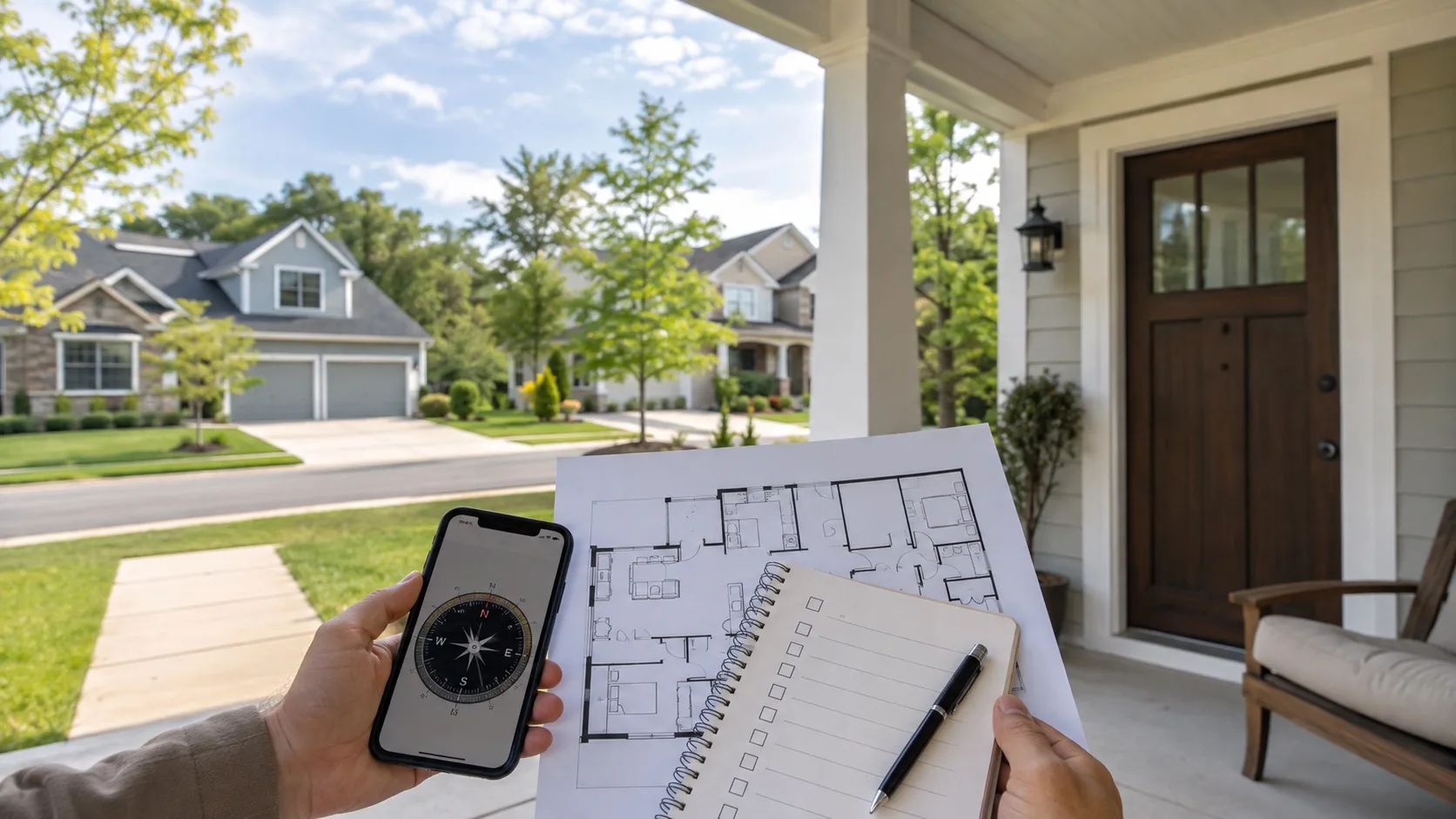
Stand at the main door looking outward and take a compass reading. Do not rely only on listing descriptions, road direction, map arrows or what another buyer says. Phone compasses can drift near metal doors, cars, appliances and electrical panels, so take several readings. If the family usually enters through the garage, also review that route because it shapes daily life.
Condos and apartments need extra care. The unit entry may face one direction while the balcony and main windows face another. In that case, review the entry, living room windows, bedrooms and balcony together. For a calmer method, use How to Check Directions Correctly and the Vastu Direction Finder.
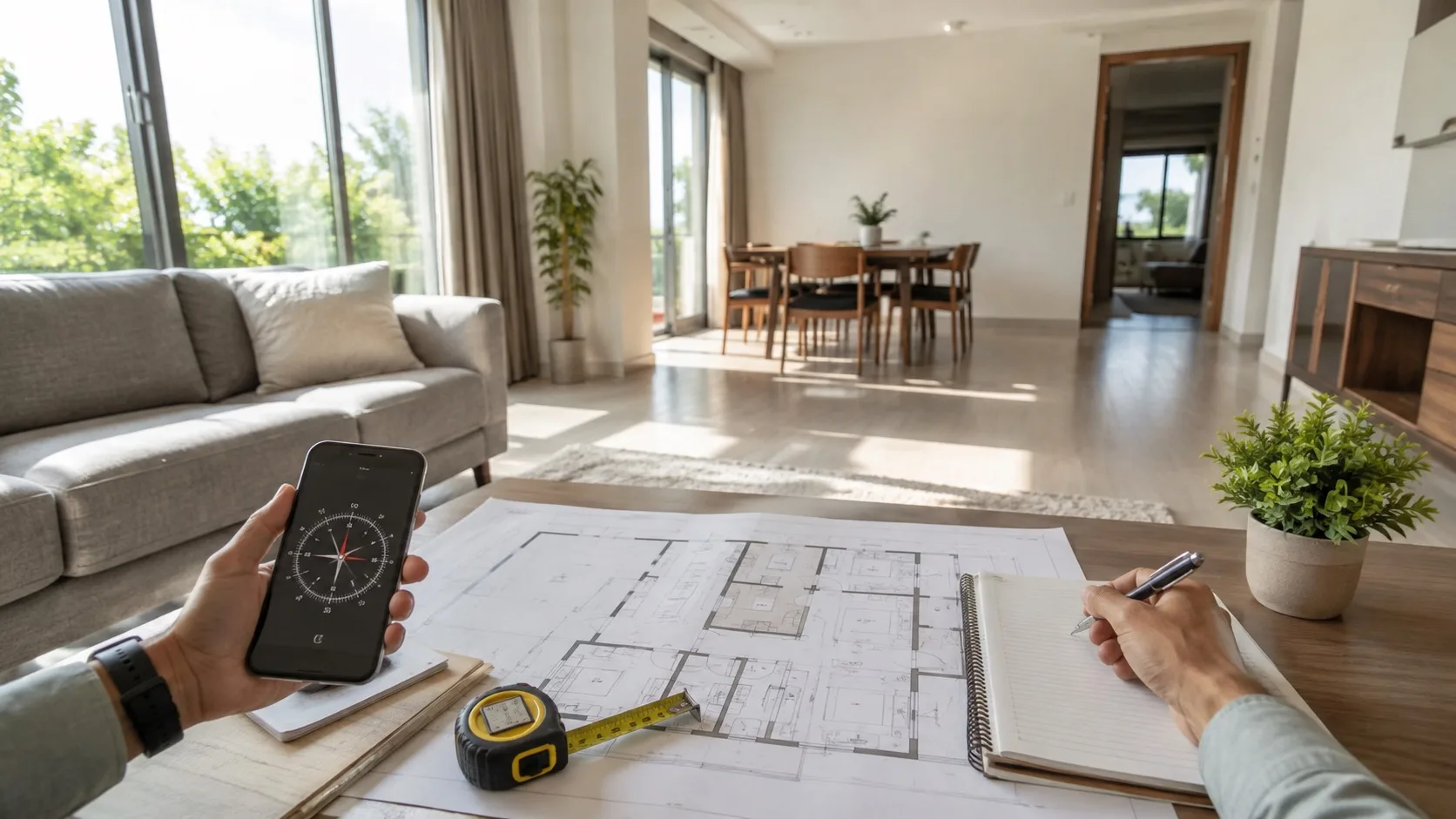
Write down the same facts for every home: main-door direction, strongest window direction, kitchen position, primary bedroom position, backyard exposure, garage route, light pattern and any heat or noise concern. This makes comparison fair.
North facing house Vastu for buyers
A North facing home may feel attractive because it aligns with a widely preferred Vastu direction. In many climates, north light can be gentle and steady, though the exact effect depends on hemisphere, latitude, window size and local shade. A clear, clean, well-lit north-facing entry can create a pleasant first impression.
Still, buyers should not stop at the label. Check whether the front door is visible, safe and easy to use. A narrow porch, dark foyer, blocked walkway or garage-dominated entry can weaken the experience. If the living room is too dark or the kitchen is cramped, a North facing label will not fix daily discomfort.
North facing homes may also have south-facing backyards or rear rooms. In colder parts of the USA, that can bring welcome sunlight. In hot areas, it may need shade, insulation and cooling review. Think about how the family uses the backyard, family room and bedrooms during real hours.
South facing house Vastu for buyers
South facing homes often create anxiety because many buyers hear simplified warnings. A better approach is to inspect the exact plan. Some South facing homes have excellent light, strong curb appeal, useful winter warmth and practical room arrangement. Others may have harsh heat, poor entry placement or uncomfortable bedrooms. The direction alone does not tell the whole story.
The main caution is climate response. In many USA regions, south exposure can bring strong daylight. This may reduce winter gloom but increase summer heat if windows are large and unshaded. Review roof overhangs, curtains, HVAC condition, insulation, shade trees and whether bedrooms overheat. Practical comfort should guide the decision.
The entrance should feel calm and proportionate. Avoid accepting a South facing house where the door is hidden, cluttered, poorly lit or squeezed by the garage. If the entry is clean, protected and supported by a good floor plan, the home deserves a fair review. For traditional concerns, compare with South-Facing House Vastu.
Room-by-room checks
Start with the entry and foyer. In both North and South facing homes, the door should open smoothly into a clean, bright and usable area. There should be space for shoes, coats, bags and deliveries without blocking movement. A polished exterior with no entry storage can become stressful quickly.
Review the living room next. A north-facing front living room may feel calm but sometimes underlit. A south-facing front living room may feel bright but may need glare control. Test where the sofa, television and reading chair would sit. A good room should support conversation and movement without forcing furniture into awkward corners.
The kitchen should be reviewed for workflow, ventilation and heat. Direction matters in Vastu, but buyers should also inspect exhaust, sink-stove spacing, refrigerator access, counter space and cleaning ease. A beautiful kitchen that overheats or lacks ventilation can become tiring.
Bedrooms need sleep-focused review. South-facing bedroom windows may feel warm in summer and pleasant in winter. North-facing bedrooms may feel cooler or darker depending on location. Check noise, privacy, bed wall, closet access, blackout options and HVAC performance. Continue with Bedroom Vastu for placement basics.
North vs South buyer comparison table
| Buyer factor | North facing home | South facing home | What to verify |
|---|---|---|---|
| Entry | Often preferred in Vastu | Needs calm, clean placement | Door visibility, porch, foyer and garage route |
| Daylight | May be softer or cooler | May be brighter and warmer | Real light at morning, noon and evening |
| Climate | Can feel calm but sometimes dim | Can help winter warmth but needs summer shade | Local weather, trees, glass and insulation |
| Bedrooms | Often cooler, sometimes darker | Often warmer, sometimes brighter | Sleep schedule, curtains, noise and HVAC |
| Backyard | Rear may receive more south light | Rear may be calmer depending on plan | Outdoor use during real family hours |
| Resale | May appeal to Vastu-aware buyers | Can still appeal with good planning | Condition, layout and local buyer demand |
Practical examples
North-facing townhome
The entrance feels correct, but the living room is dark and the garage entry collects clutter. The buyer notes that direction is good, but daily entry storage needs attention.
South-facing detached home
The front is bright and warm, with a protected porch and clear foyer. The buyer checks summer heat, window quality and whether bedrooms stay comfortable at night.
Cold-climate buyer
A south exposure feels valuable during winter. The buyer still reviews insulation, snow safety, heating cost and whether sunlight creates glare in work areas.
Hot-climate buyer
Large south-facing glass makes the home bright but warm. The buyer asks about HVAC sizing, shade trees, overhangs and electricity bills before offering.
Condo comparison
The unit door faces north, but the main windows face a noisy street. The buyer compares sleep, balcony use and sound rather than trusting entry direction alone.
International relocation
The family is new to the climate. They request videos at different times and compare direction with commute, schools and neighborhood rhythm.
What buyers should not overcorrect
Do not reject every South facing property out of fear. Also do not overpay for every North facing property without checking condition. Vastu should make judgment sharper, not narrower. A home with safe structure, clean entry, practical rooms and good light is stronger than a direction label with hidden problems.
Do not use remedies to ignore real defects. Dampness, roof issues, bad wiring, unsafe stairs, mold, poor ventilation and foundation drainage must be handled through inspection and repair. Simple Vastu improvements such as lighting, decluttering, curtains, plants and furniture placement are helpful only after practical problems are understood.
Do not assume all family members experience light the same way. A remote worker, elderly parent, young child or night-shift sleeper may need a different room than a standard checklist suggests. Let the family routine guide the final choice.
Offer-day checklist
- Confirm the main-door direction by standing at the door and looking outward.
- Check whether daily entry is through the front door or garage.
- Observe light in the living room, kitchen and bedrooms.
- Review summer heat, winter warmth, shade, insulation and HVAC condition.
- Check kitchen ventilation and practical cooking flow.
- Test bedroom quietness, privacy, curtains and temperature.
- Compare backyard exposure with your actual outdoor-use hours.
- Separate fixable issues from structural or location concerns.
- Use inspection, appraisal and financial advice before deciding.
- Compare the home with neighborhood, commute and resale needs.
Related buyer guides
Use this comparison with East vs West Facing House Vastu for USA Buyers, Neighborhood Vastu Checklist for USA Home Buyers, Open House Vastu Checklist for USA Home Buyers and Vastu and Resale Value for USA Home Buyers. For whole-home planning, continue with Direction Vastu and Balanced Layout.
Frequently asked questions
Is a North facing house better than a South facing house in Vastu?
Not automatically. North facing homes are often preferred in Vastu, but a well-planned South facing home can also work when entry, light, heat, rooms and practical comfort are reviewed carefully.
Are South facing homes bad for USA buyers?
No. South facing homes are not automatically bad. Buyers should check climate, sunlight, cooling or heating comfort, entry quality, bedroom placement, privacy and inspection condition.
What should buyers check first when comparing North and South facing homes?
Confirm the true main-door direction, then review natural light, room flow, kitchen comfort, bedroom temperature, window exposure, garage entry, neighborhood, inspection risks and daily routines.
Does climate change the best choice?
Yes. In colder regions, south exposure may add useful warmth and daylight. In hotter regions, strong sun may require shade, insulation and cooling review. Local climate matters.
Can remedies improve a South facing home?
Practical remedies such as entry lighting, clean thresholds, shade, curtains, ventilation, furniture placement and clutter control can help, but they should not replace inspection or safety fixes.
Should international buyers reject a home only because it faces South?
No. Compare the complete property: location, structure, price, inspection, layout, light, commute, schools, resale appeal and family needs before deciding.
Conclusion
North facing homes may be easier for Vastu-aware buyers to accept, but South facing homes should not be dismissed automatically. The best property is the one where direction, entry, light, room flow, comfort, inspection condition and family routine work together.
Buyers make better decisions when they compare the whole home calmly. Confirm direction, study real light, check climate comfort, inspect the rooms and choose the house that supports daily life with the least friction.