
On this page
Quick answer: East vs West facing homes
For home buyers, an East facing house is often valued because it receives morning light at the front and can feel fresh at the start of the day. A West facing house is not automatically negative; it may offer useful afternoon light, good curb appeal and strong living spaces when the plan is balanced. The practical question is not only “Which direction is better?” but “Which property supports the family’s real life with the least stress?”
In USA and international markets, facing direction must be reviewed together with climate, windows, HVAC comfort, trees, neighboring buildings, garage position, backyard use, resale expectations and inspection results. A textbook direction cannot compensate for water intrusion, poor ventilation, severe glare, unsafe access or a layout that does not match the family routine.
First confirm the true facing direction
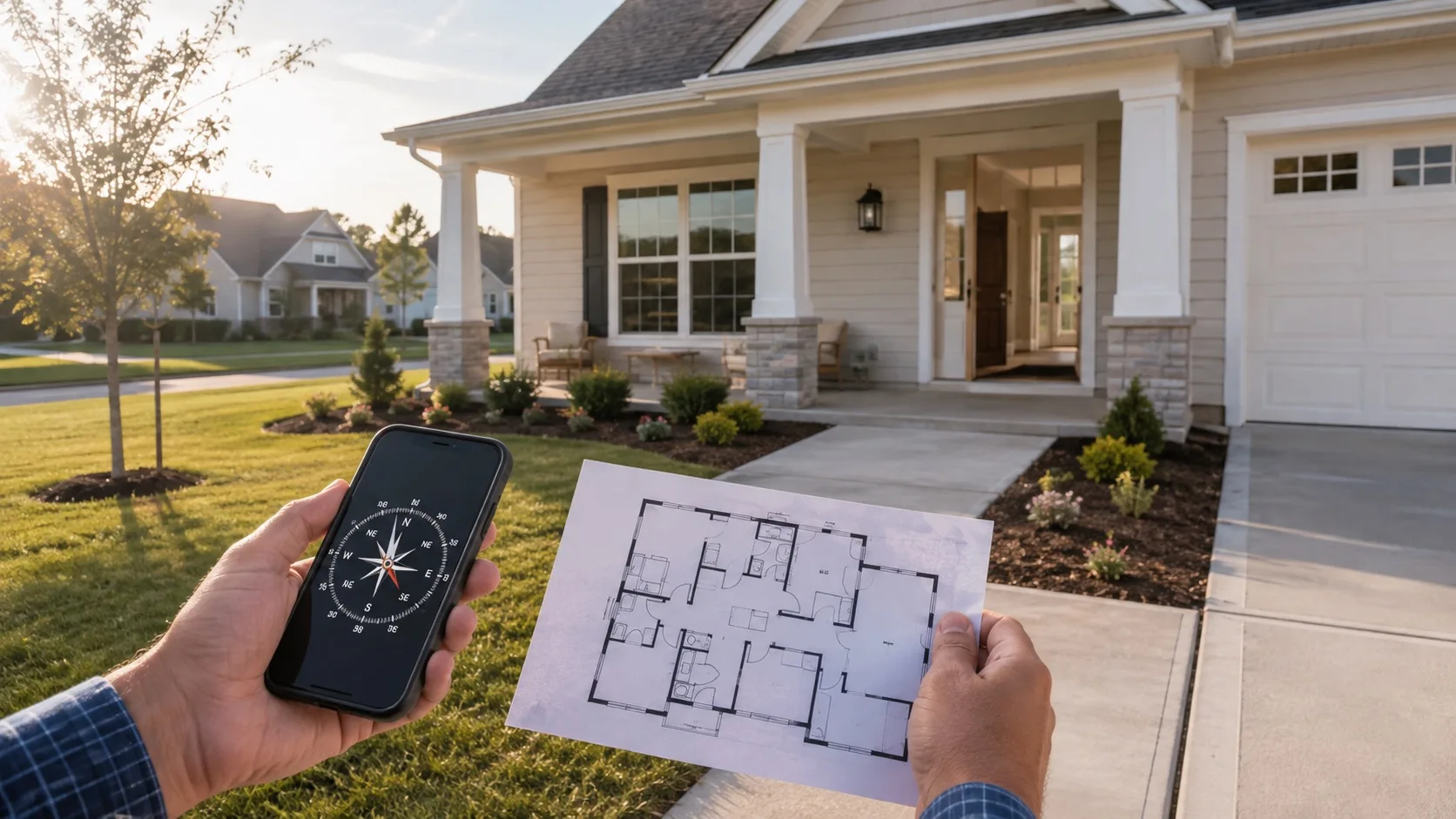
Before comparing East and West, confirm what “facing” means for the specific home. In many listings, the direction may be guessed, simplified or based on the street instead of the main usable entrance. Stand at the main door looking outward and use a reliable compass app. If the family normally enters through the garage, also review that approach because it affects daily movement even when the formal front door is different.
For apartments and condos, direction can be more complicated. A unit may have a corridor entry on one side and major windows on another. In that case, review the entrance, living room windows, balcony and bedroom light together. For a deeper direction method, use How to Check Directions Correctly and the Vastu Direction Finder.
When comparing properties, take notes in the same format every time: front door direction, garage entry direction, strongest window exposure, kitchen position, primary bedroom position, backyard exposure and any heat or glare concerns. This turns a confusing emotional choice into a calm buyer checklist.
East facing house Vastu for buyers
East facing homes are popular in Vastu because the front receives morning light. For many families this feels clean, open and energizing. In practical terms, an East facing entry may make morning routines brighter, especially when the foyer, porch, living room or breakfast area connects naturally to the front of the home.
For USA buyers, East facing can be especially pleasant in warmer climates because the strongest afternoon sun may fall toward the back or side rather than directly at the front facade. However, the actual comfort depends on window size, insulation, trees, roof overhangs and neighboring homes. An East facing home with poor shading, dark interiors or an awkward garage entry may still feel less supportive than a better planned West facing home.
Inspect the entry carefully. The front door should be easy to approach, well lit, clean, visible and protected from harsh weather. If the door opens into a cramped foyer, staircase wall, powder room view or cluttered shoe area, the direction alone does not solve the entry experience. Simple storage, lighting and clear movement are often more useful than symbolic corrections.
East facing homes can also have west-facing backyards. In hot areas such as parts of Texas, Arizona, Nevada, California, Florida or the Gulf region, that may mean strong afternoon heat in the rear patio, family room or primary bedroom. Buyers should check whether the backyard will be comfortable during the hours they actually plan to use it.
West facing house Vastu for buyers
West facing homes are sometimes dismissed too quickly, but a West facing house can work well when the layout is practical and heat is managed. Afternoon sun can make the front look warm and inviting, and in colder climates it can help brighten spaces later in the day. For buyers who spend mornings away and return home in the afternoon, the lived experience may be different from traditional assumptions.
The main caution is glare and heat. Large west-facing windows, glass front doors or upstairs bedrooms can become uncomfortable during summer evenings. This is not only a Vastu concern; it can affect cooling bills, furniture fading, sleep quality and daily comfort. Review window treatments, overhangs, shade trees, insulation, HVAC age and whether the sun directly hits rooms where the family will rest or work.
A West facing entrance should still feel dignified, clean and easy to use. Avoid homes where the front approach is blocked by garage dominance, parked cars, sharp landscaping, poor lighting or a narrow walkway. If the garage takes over the facade, check whether guests can naturally identify the main door and whether the family has a calm transition into the home.
West facing homes may be very suitable when the floor plan places living areas, kitchen, dining and bedrooms sensibly, when cross-ventilation is good and when the strongest heat is controlled. The goal is not to “defeat” the direction; it is to make the home comfortable, stable and easy to live in.
Room-by-room comparison checklist
Start with the main door. In both East and West facing homes, the door should be easy to find, proportionate, protected, clean and free from clutter. A good entrance creates a better daily rhythm than a favorable compass label with poor access. For more detail, see Main Door Vastu.
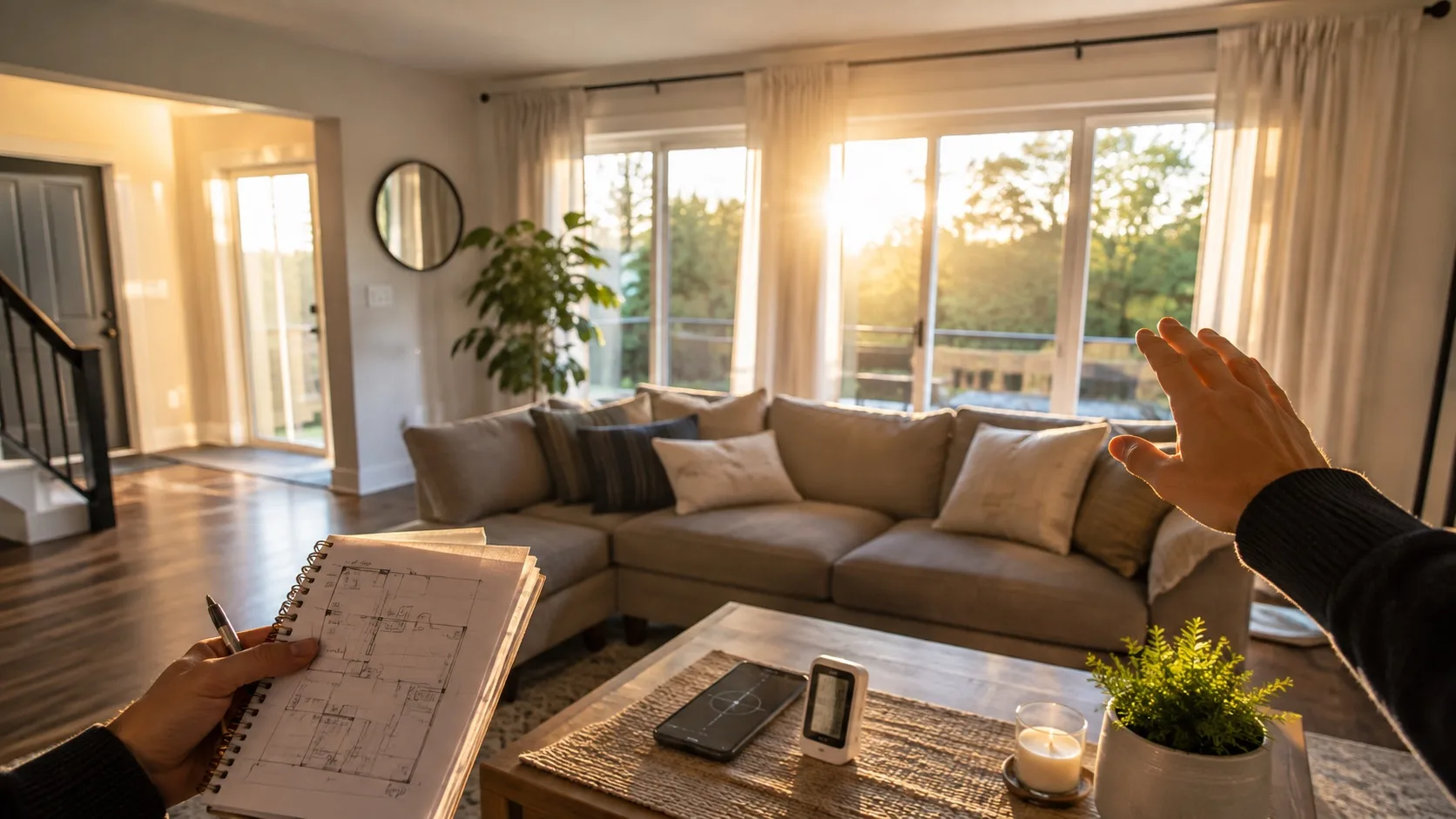
Next review the living room. In East facing homes, front living rooms may receive pleasant morning light. In West facing homes, front living rooms may need curtains, blinds or shade to stay comfortable in the evening. In both cases, the seating should allow clear conversation, easy movement and a calm view from the entry.
The kitchen deserves a practical check. Do not change a good kitchen simply to chase a perfect rule, but inspect heat, ventilation, cooking flow, sink-stove relationship, natural light and whether the family can use the space without crowding. If the kitchen sits in an area with strong afternoon heat, confirm the exhaust, window covering and cooling comfort.
Bedrooms need special attention because sleep quality is hard to fake. A west-facing primary bedroom may be warm at bedtime in summer. An east-facing bedroom may wake sensitive sleepers early. Check window exposure, blackout options, noise, bed wall strength and airflow. Use Bedroom Vastu along with normal inspection judgment.
For home offices, consider work hours. Morning-light rooms can support early schedules, while west-light rooms can become hot or glary during video calls. If remote work is important, test where the desk would go, how light hits the screen and whether the room stays quiet during the day.
East vs West buyer comparison table
| Buyer factor | East facing home | West facing home | What to verify |
|---|---|---|---|
| Entry feeling | Often bright in the morning | Often warm later in the day | Door visibility, path, porch and garage route |
| Sunlight | Useful morning light at front | Strong afternoon light at front | Window size, trees, overhangs and neighboring shade |
| Heat comfort | May be easier in hot afternoons | May need stronger shade and cooling | HVAC age, insulation, glass exposure and curtains |
| Backyard use | Backyard may receive more west sun | Backyard may be calmer in morning or midday | Patio comfort during real family hours |
| Bedrooms | Can wake early if windows face east | Can stay warm into evening | Sleep schedule, blackout shades and airflow |
| Resale confidence | Often easier for Vastu-aware buyers | Can still resell well with good plan and comfort | Local market demand and complete condition |
Practical examples
East facing suburban home
The entry is bright and welcoming, but the family room and backyard face west. The buyer checks summer patio heat, shade options and whether evening gatherings will still be comfortable.
West facing townhome
The front gets strong afternoon light, but the living room is deep, the windows have good coverings and the bedrooms stay cooler. The buyer does not reject it only because of the facing direction.
Cold-climate detached house
Afternoon sunlight helps the front rooms feel cheerful in winter. The buyer checks insulation, snow approach, entry safety and heating costs along with Vastu direction.
Hot-climate new build
A west-facing glass-heavy elevation looks attractive in photos, but the buyer asks about window upgrades, overhangs, HVAC sizing and tree placement before choosing the lot.
International apartment buyer
The entry faces east, while major windows face west toward a busy road. The buyer checks sound, glare, balcony usability and sleep comfort before valuing the entrance alone.
Remote purchase review
The buyer asks the agent to record morning and afternoon videos from the front door, living room and primary bedroom. This reveals light and heat patterns that floor plans miss.
What buyers should not overcorrect
Do not make expensive changes before understanding the real problem. If a west-facing room is hot, start with practical fixes such as proper blinds, curtains, shade trees, window film where allowed, sealing, attic insulation and HVAC review. If an east-facing bedroom wakes someone too early, blackout curtains and furniture placement may solve the issue without changing the room’s use.
Do not hide serious concerns with decorative remedies. Foundation drainage, roof leaks, mold, unsafe stairs, poor electrical systems, bad ventilation and major noise are not solved by symbols or color alone. Use Vastu as one layer of judgment beside inspection, appraisal, legal review and financial planning.
Do not assume every family needs the same answer. A household with young children, night-shift workers, elderly parents, remote workers or frequent guests may experience the same orientation differently. The right home is the one that supports the people who will live there.
Offer-day checklist for East vs West facing homes
- Confirm the true direction from the main door looking outward.
- Check whether daily entry happens through the front door or garage.
- Observe morning and afternoon light in living areas and bedrooms.
- Ask how hot west-facing rooms feel during peak summer.
- Review shade from trees, porches, awnings, curtains and neighboring buildings.
- Check kitchen ventilation, heat and work flow.
- Test bedroom comfort for sleep, noise and evening temperature.
- Compare backyard exposure with the hours your family will use it.
- Review inspection issues before focusing on small remedies.
- Compare the home with your commute, school route, budget and resale needs.
Related buyer guides
Use this direction guide with Open House Vastu Checklist for USA Home Buyers, Neighborhood Vastu Checklist for USA Home Buyers and Vastu Home Inspection Checklist for USA Buyers. Detached-home buyers can continue with Vastu for USA Single-Family Homes, while relocation buyers may prefer Vastu Checklist for USA and International Home Buyers.
Frequently asked questions
Is an East facing house better than a West facing house in Vastu?
Not automatically. East facing homes are often preferred for morning light and entry freshness, but a well-planned West facing home can also work when heat, glare, entry flow and room placement are handled carefully.
Are West facing homes bad for USA buyers?
No. West facing homes are not automatically bad. Buyers should check afternoon heat, window glare, cooling cost, bedroom comfort, patio use and whether the layout supports daily routines.
What should buyers check first when comparing East and West facing homes?
Confirm the true facing direction with a compass, then review front entry, living room light, kitchen position, bedroom comfort, window exposure, climate, shade, driveway flow and inspection concerns.
Does climate change the best facing direction?
Yes. In hot climates, harsh west sun may need shade and cooling review. In colder climates, afternoon sunlight can feel useful. Local weather, tree cover and neighboring buildings can matter as much as compass direction.
Can remedies improve a West facing home?
Practical remedies such as shading, curtains, lighting, entry cleanliness, furniture placement, ventilation and decluttering can improve comfort, but they should not be used to ignore serious layout, heat, safety or inspection problems.
Should international buyers reject a home only because it faces West?
No. International buyers should compare the complete property: location, price, structure, layout, light, climate, commute, schools, inspection results and family routine before making a decision.
Conclusion
East facing homes often feel appealing because of morning light and a fresh entry experience. West facing homes can still be comfortable, practical and valuable when the plan, shading and climate response are right. The better choice is the home that balances direction with livability.
For USA and international buyers, the smartest approach is calm comparison. Confirm direction, study light, review heat, inspect the rooms, understand the neighborhood and choose the property that supports everyday life. Vastu is most useful when it helps you see the whole home clearly.