
Quick answer: why should buyers check neighborhood Vastu?
Neighborhood Vastu means reviewing the surroundings that influence the home before you judge the interiors. For USA and international buyers, this includes road approach, traffic, driveway access, nearby buildings, trees, slope, drainage, sunlight, noise, privacy, walking comfort, commute, schools, parks and essential services. These factors affect daily living more than many small interior remedies.
A beautiful house can feel stressful if it sits on a noisy cut-through road, has poor drainage toward the foundation, receives harsh afternoon glare, lacks privacy or creates a difficult school and work commute. A modest home can feel much better when the street is calm, the entrance is easy, light is balanced and daily needs are close.
Street approach, driveway and first impression
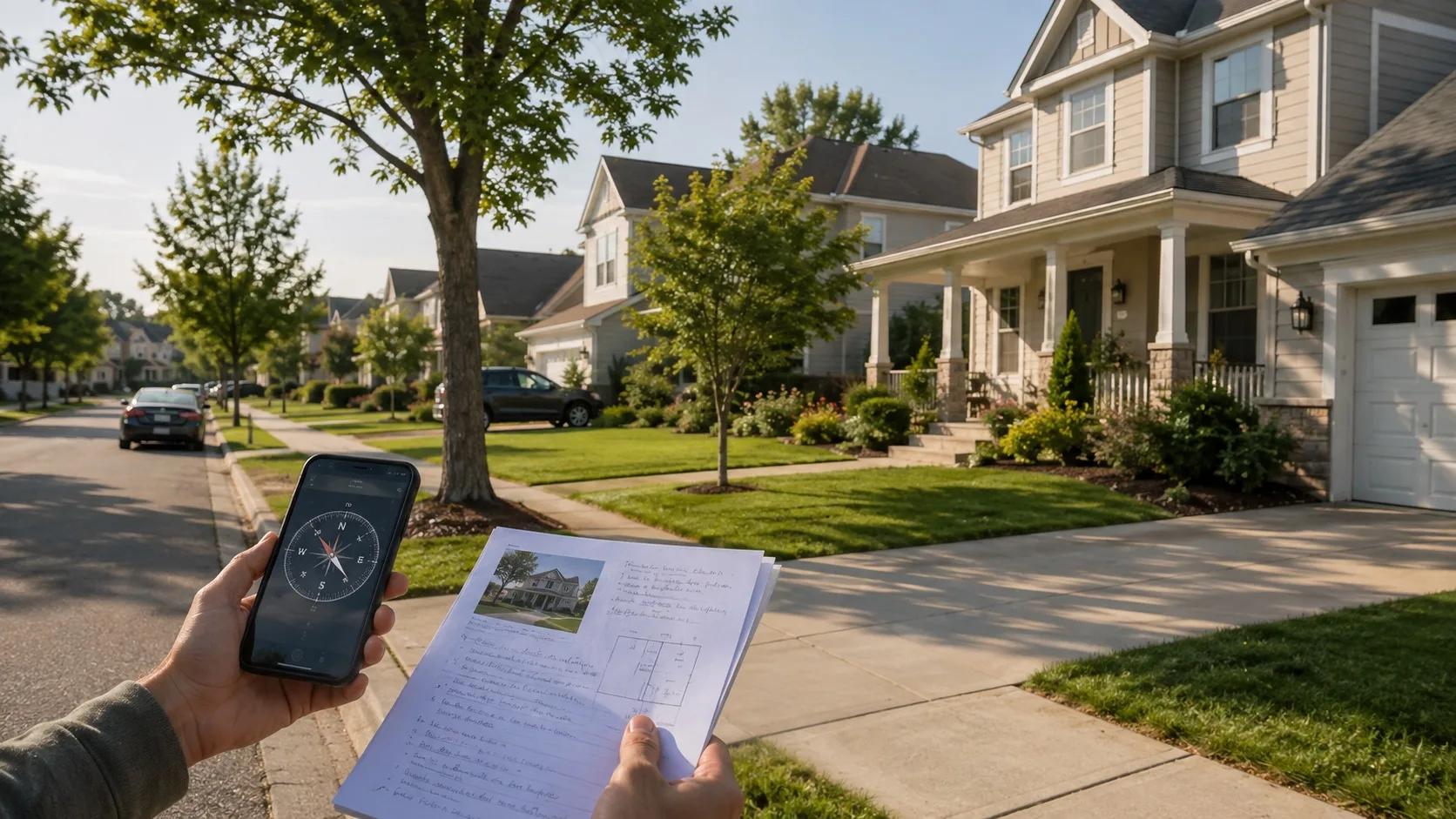
Start outside the property. Drive or walk toward the home as you would on a normal day. Notice whether the road feels calm or rushed, whether the house is easy to identify, whether parking is stressful and whether the driveway supports the family’s routine. In Vastu, approach matters because it shapes arrival energy. Practically, it decides how you feel every time you come home.
Check the front door from the street. Is it visible, protected and naturally approachable? Does the walkway feel clear, or is it squeezed between parked cars, bins, sharp landscaping or awkward steps? A home can have a favorable direction but still feel uncomfortable if the entry route is confusing or unsafe.
For detached homes and townhomes, garage position matters. If the family will enter through the garage every day, inspect that route too. A beautiful front porch cannot fully compensate for a dark, clutter-prone garage entry. For more entry detail, read Main Door Vastu and Open House Vastu Checklist for USA Home Buyers.
Surroundings: neighbors, trees, roads and privacy
Look at the immediate surroundings. Large healthy trees can offer shade and beauty, but roots, falling branches, blocked gutters or excessive darkness may become maintenance concerns. Neighboring homes should not overpower the property so strongly that privacy and light suffer. A home beside constant activity may feel restless even if the interior is well designed.
Road patterns also matter. A quiet local street usually feels different from a road used as a shortcut. Corner lots may bring extra light and access, but also more exposure, traffic, sidewalk shoveling, fence limits or noise. A cul-de-sac may feel protected but could also have less airflow or more parking congestion depending on the layout. Avoid judging by label alone; stand on the site and observe.
For international buyers, nearby cultural and practical services matter. Grocery access, school route, public transport, medical care, worship/community options, parks and safe walking areas can strongly affect settlement. Vastu should support life in the new place, not only the drawing of the house.
Climate, direction and daily comfort
Direction behaves differently across climates. In colder regions, south or west sunlight may feel valuable during winter. In hot regions, west-facing glass may increase cooling costs and glare. In rainy or snowy regions, road slope, drainage, mudroom storage and slip-resistant entry matter a lot. A direction that sounds good in one country may feel different in another climate.
Observe light at different times if possible. Morning light can make the entry and kitchen feel fresh. Afternoon glare can overheat living rooms or bedrooms. North-facing spaces may feel calm in some areas and too dark in others. Mature trees, neighboring buildings and hills can change light more than compass direction alone.
Ventilation and noise also connect with direction. Windows that face a busy road may remain closed most of the time, reducing air and light. A balcony with a nice direction may be unused if traffic noise or privacy issues are high. Practical Vastu asks whether the family will actually use the space comfortably.
How to compare two neighborhoods calmly
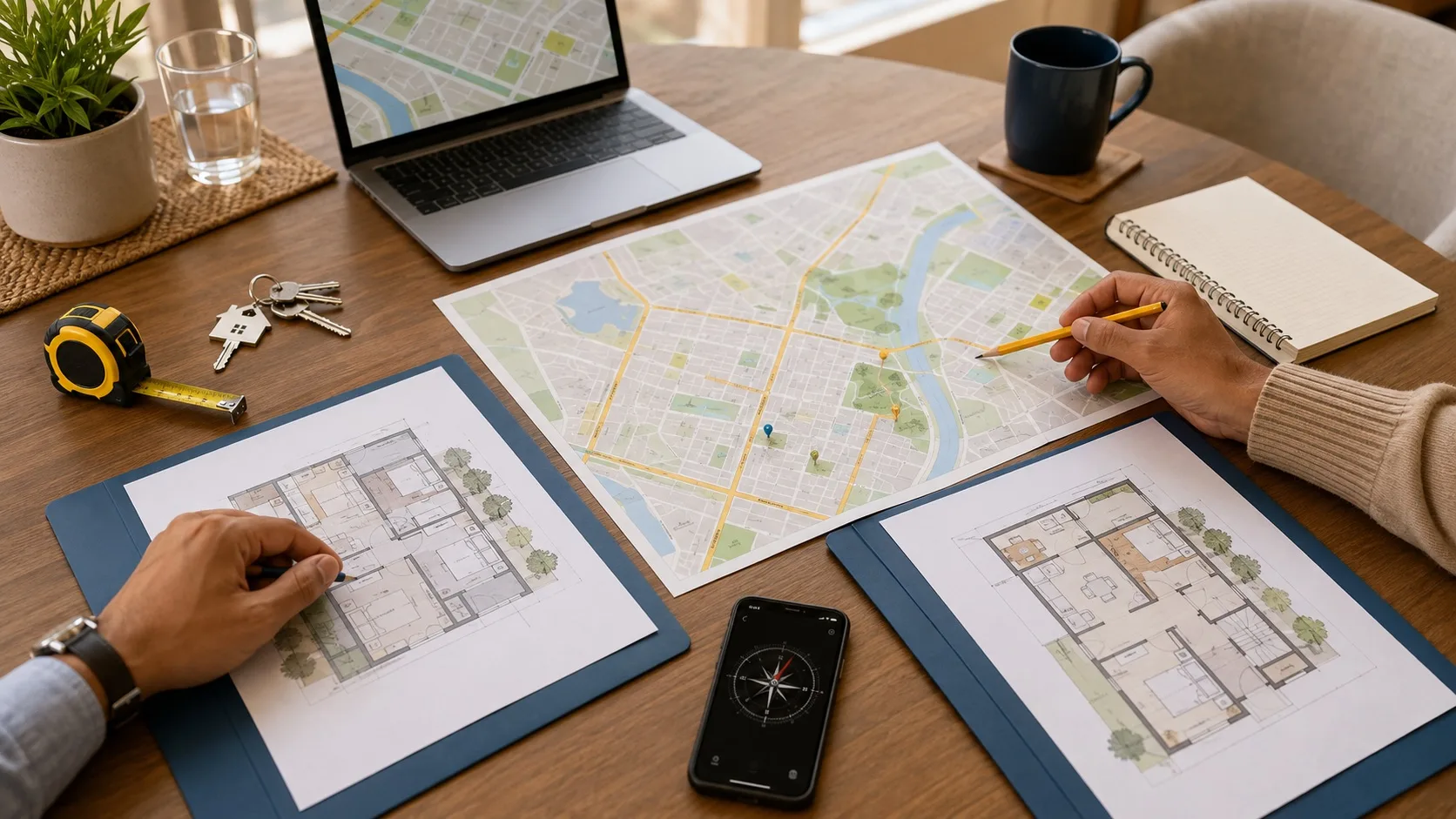
When two homes are close in price, do not compare only interiors. Make a simple table for neighborhood support. Rate entry approach, road noise, sunlight, drainage, privacy, commute, school route, grocery access, medical access, walking comfort and future resale confidence. Then compare the floor plans. This keeps emotion from taking over after a polished showing.
Some factors are hard to change after purchase. Road noise, nearby commercial activity, poor drainage, an awkward driveway, lack of sunlight, unsafe walking routes and very long commutes are not solved by interior decor. Other issues are easier: paint, curtains, plants, entry storage, lighting and furniture arrangement can be changed after move-in.
If buying remotely, ask a local person to record the street at different times: morning commute, school pickup time, evening and weekend if possible. Ask them to stand quietly near the front door and backyard for one minute so you can hear traffic, equipment, aircraft or neighbor noise. This small step often reveals what listing photos cannot.
Neighborhood Vastu comparison table
| Outside factor | Good sign | Warning sign | Buyer action |
|---|---|---|---|
| Road approach | Calm, clear and easy to navigate | Fast traffic or confusing turn | Visit at commute hours |
| Front entry | Visible, bright and protected | Hidden, cramped or exposed | Check lighting, steps and walkway |
| Slope and drainage | Water moves away from the home | Yard or driveway slopes toward foundation | Ask inspector about grading |
| Neighbors | Balanced privacy and scale | Overlooking windows or overpowering walls | Check window views and fence rules |
| Sunlight | Useful light without harsh heat | Dark rooms or strong glare | Review morning and evening light |
| Daily services | Commute and errands feel manageable | Stressful distance from essentials | Map normal weekly routines |
Practical examples for USA and international buyers
Quiet suburban street
The home has a slightly imperfect entrance direction, but the street is calm, drainage is good, light is balanced and school commute is easy. It may still be a strong choice.
Busy corner lot
The lot feels bright and open, but two roads create noise and exposure. Check fence rules, window privacy, traffic speed and bedroom sound before deciding.
Beautiful wooded lot
Mature trees give shade, but the interior feels dark and gutters may clog. Review roof, drainage, foundation distance and whether daylight reaches daily rooms.
International city apartment
The unit has good layout, but the street below is loud at night. Check windows, balcony use and sleep quality before valuing the direction alone.
Remote buyer abroad
The agent shares a polished indoor video. Ask for exterior street clips, commute route notes, parking view and a slow entry approach to judge surroundings.
New-build subdivision
The model home feels ideal, but your lot faces a different road and slope. Compare the exact plot plan before choosing upgrades.
What not to overcorrect
Do not reject every home because the road direction is not textbook-perfect. The full environment matters. A clean, safe, calm street with good light and practical access can support the family well. Likewise, do not accept a stressful location only because one direction sounds favorable. Vastu should improve judgment, not narrow it.
Do not rely only on online maps. Maps may not show noise, slope, privacy, smell, construction activity, school pickup traffic or evening light. They are useful for screening, but the final decision needs observation through a visit, video, inspection or trusted local review.
Do not assume parks, water bodies or open land are always positive. A park may bring beauty and activity, but also parking pressure or noise. A lake or pond may look peaceful but require flood, mosquito, drainage or insurance review. Read the practical condition, not only the symbol.
Simple neighborhood checklist before an offer
- Drive or review the actual route to the home, not just the address pin.
- Stand at the curb and observe road speed, noise, slope and privacy.
- Check whether the front door is visible, protected and easy to approach.
- Review garage, parking, sidewalk and guest access.
- Observe sunlight on the entry, living room, kitchen and bedrooms.
- Ask how water drains during heavy rain or snow melt.
- Compare commute, schools, groceries, healthcare and community needs.
- Visit or request videos at morning, evening and weekend times.
- Separate hard-to-change location concerns from easy interior improvements.
- Use inspection and local advice before making a final offer.
Related buyer guides
For showing-day interior review, read Open House Vastu Checklist for USA Home Buyers. For inspection red flags, continue with Vastu Home Inspection Checklist for USA Buyers. For remote buying and relocation, use Vastu for International Relocation Home Buyers. For detached homes, read Vastu for USA Single-Family Homes.
Frequently asked questions
Does neighborhood matter in Vastu for home buyers?
Yes. Road approach, noise, sunlight, drainage, nearby activity, privacy, safety, commute and daily convenience all affect how supportive a home feels.
What should USA buyers check outside the house first?
Check the street approach, driveway, front door visibility, sidewalk, slope, drainage, neighboring homes, traffic noise, street lighting, parking and whether the entry feels safe and easy.
Is a corner lot good or bad in Vastu?
A corner lot can be good when access, privacy, slope, traffic and yard use are balanced. It needs careful review because two road exposures may bring more noise, light, dust or visibility.
Should buyers choose direction over commute and schools?
No. Direction is one planning factor. A home with good Vastu but stressful commute, poor schools, unsafe surroundings or high noise may not support the family well.
How can international buyers review a neighborhood remotely?
Ask for slow street videos, daylight and evening clips, exterior photos, route notes, local noise observations, map review and a trusted local walkthrough before deciding.
What neighborhood issues are hardest to fix after buying?
Road noise, traffic, slope, flooding risk, poor sunlight, neighboring building impact, unsafe access and difficult commute are much harder to fix than furniture, lighting or decor.
Conclusion
Neighborhood Vastu helps buyers remember that a home is shaped by more than its walls. The road, entry approach, neighbors, light, noise, slope, drainage, commute and daily services all influence peace and practicality. Review these before falling in love with staging or finishes.
When the surroundings feel supportive, the interior has a better foundation. When the surroundings create stress, even a beautiful floor plan can become tiring. Use outside-to-inside review, compare homes calmly and choose the place that supports real daily life.