
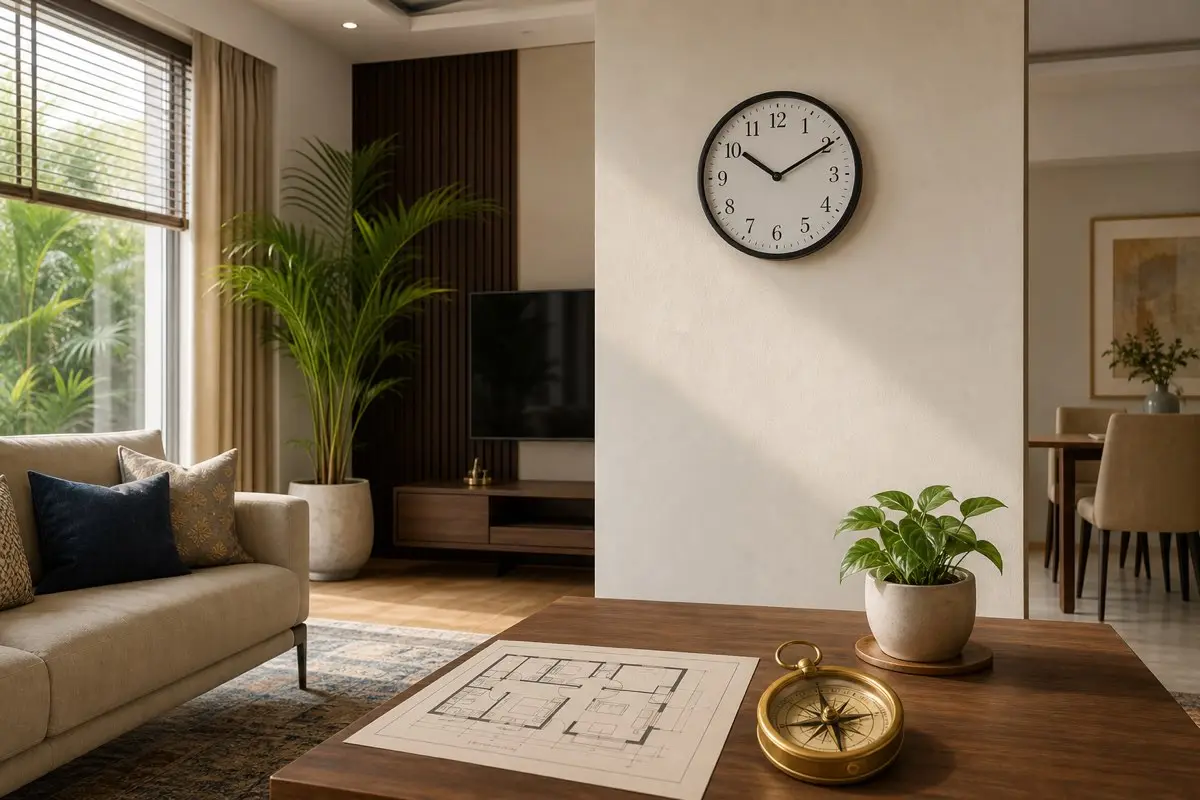
Why clock placement matters in Vastu
In Vastu Shastra, time is connected with rhythm, movement, routine, discipline, and progress. A clock is not a structural element like the entrance, kitchen, bedroom, or toilet, so it should never be treated with fear. Still, it is a visible daily object, and its placement can influence how a space feels. A clean, working clock can make a room feel organised. A stopped, cracked, dusty, or badly placed clock can make a beautiful room feel neglected.
For Indian homes, the practical side is equally important. Many flats have compact walls, TV units, pooja shelves, photo frames, switchboards, beams, and wardrobes competing for space. A clock should be easy to see, proportionate to the wall, and placed where it does not create visual stress. Good Vastu is not about hanging many clocks. It is about selecting the right clock, keeping it working, and placing it in a calm, useful position.
Best wall direction for clocks
Many Vastu traditions prefer the north, east, or north-east zone for a clock because these directions are generally associated with clarity, growth, new beginnings, and positive movement. In a living room, dining room, study room, or office corner, a clock on a north or east wall is usually considered a safe and practical choice. The idea is simple: when time is visible from a clean and bright area, the room supports routine and order.
Do not force a clock into a bad-looking position only because a direction sounds ideal. If the east wall is packed with windows or the north wall has a wardrobe, choose the next best clean wall. A clock should not look squeezed, tilted, or hidden behind décor. Use the full floor plan, not only a phone compass, and cross-check with the guidance in How to Check Directions Correctly.
Clock placements to avoid
Traditional Vastu often advises avoiding clocks in the south-west when they dominate the room, because the south-west is usually treated as a stable, heavy, grounded zone. A large ticking clock there may feel symbolically restless. Many people also avoid placing clocks directly above the main door, above a bed, directly facing the bed, or in a dirty corner near a toilet door. These placements can feel uncomfortable even without a Vastu explanation.
Avoid broken clocks, stopped clocks, clocks with cracked glass, and clocks that run too fast or too slow. In Vastu language, they suggest disturbed time. In real life, they simply create irritation and visual neglect. If a clock is not useful, repair it or remove it. Do not keep non-working clocks in drawers, lofts, or store rooms for years.
Quick Clock Vastu grid
Best zones
North, east, and north-east are commonly preferred for clean, visible wall clocks in living, dining, study, and work areas.
Use carefully
South and west walls can be considered when the room layout demands it, but keep the clock simple, working, and proportionate.
Avoid strongly
Broken, stopped, dusty, cracked, oversized, noisy, or oddly shaped clocks should not be used as daily room décor.
Clock Vastu for living room
The living room is the most common place for a wall clock. It supports family routine, guest timing, school schedules, office calls, and daily movement. A north or east wall generally works well if the clock is visible from the main sitting area. Keep it away from cluttered shelves and avoid placing it so high that it looks disconnected from the room.
If your living room already has a large TV wall, do not fight the layout. Place the clock on a side wall where it balances the room. A very large clock behind the sofa may look stylish in photographs, but it can feel heavy if the room is small. Use a clock size that matches the wall and furniture scale. For more room planning, read Living Room Vastu.
Clock Vastu for bedroom
Bedrooms need calm more than display. Avoid placing a big clock directly above the bed or directly facing the bed, especially if it has a loud ticking sound or bright light. For many people, constantly seeing the time at night increases stress. A small bedside clock is fine if it helps routine, but it should not disturb sleep.
Choose soft colours, quiet movement, and a clean design. If the clock is part of a phone or digital device, keep brightness low at night. For better rest, combine clock placement with bed direction, wardrobe placement, lighting, and mirror rules from Bedroom Vastu.
Clock in kitchen and dining area
A kitchen clock is useful for cooking, but it should not be placed too close to heat, steam, oil, or water. Avoid hanging it directly above the stove or sink. A simple clock on a clean side wall can support timing without becoming a distraction. In open kitchens, a clock visible from the dining area is often better than one squeezed between cabinets.
Dining rooms benefit from a calm wall clock, especially for family routines. However, avoid a noisy or oversized design that makes meals feel rushed. Since kitchens are strongly connected with fire and daily nourishment, also review Kitchen Vastu before placing decorative items.
Clock Vastu for study room and home office
In study rooms and home offices, a clock can support discipline when used wisely. Place it where it is visible but not stressful. A north or east wall works well for many study and work areas. Avoid placing a clock directly in front of the eyes if the person keeps checking it every minute. Time awareness should help focus, not create pressure.
For children, choose a simple clock with clear numbers. It helps them learn routine, homework timing, and exam discipline. For adults working from home, use a quiet, elegant clock that matches the desk zone. Pair this with good desk direction from Home Office Vastu and Study Room Vastu.
Clock colours, shape, and material
Round clocks are usually safe because they feel soft and balanced. Square or rectangular clocks can also work if they suit the room. Avoid aggressive, sharp, broken, distorted, or very abstract clock designs in daily-use spaces. For colours, choose calm and readable finishes. White, cream, wood, brass, muted gold, soft blue, and earthy tones often blend well in Indian homes.
Do not choose a clock only because it looks expensive online. Stand in the room and imagine whether it supports the wall, furniture, curtains, and light. A premium-looking home often uses fewer objects but keeps them clean and meaningful. If a clock competes with wall paintings, photo frames, TV, and shelves, the wall becomes noisy.
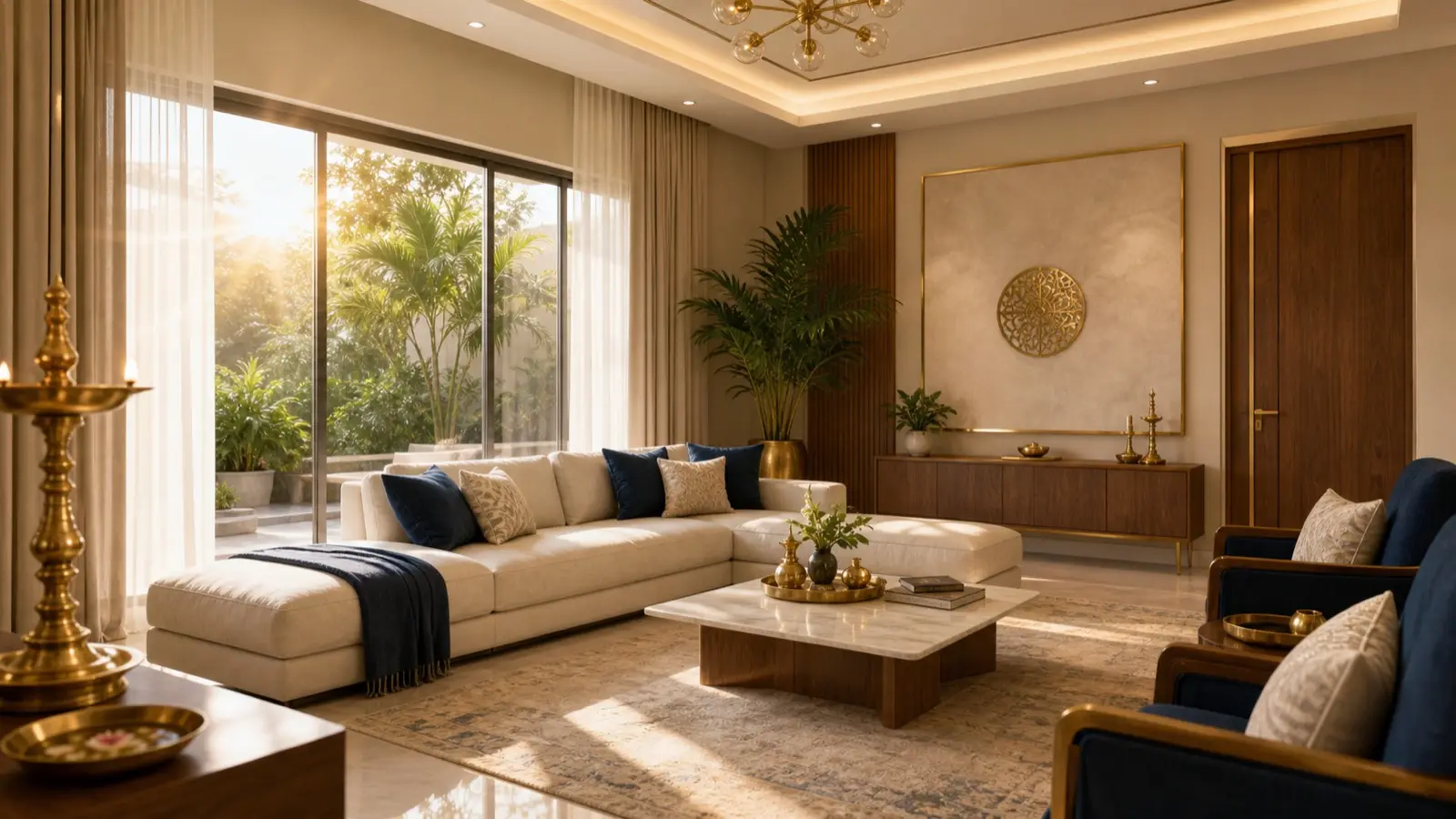
Do’s and don’ts for Clock Vastu
| Do | Don’t |
|---|---|
| Use a clean, working, easy-to-read clock. | Keep stopped, cracked, noisy, or dusty clocks. |
| Prefer north, east, or north-east when the wall is suitable. | Force a clock into a cramped or awkward wall only for direction. |
| Keep bedroom clocks quiet and subtle. | Place a large clock directly above or facing the bed. |
| Match clock size with wall and furniture scale. | Use oversized statement clocks in small rooms. |
| Repair or remove old clocks quickly. | Store broken clocks for years as forgotten clutter. |
Common mistakes Indian homeowners make
The most common mistake is treating a clock as a quick decoration without checking the wall. People buy a large clock for a small flat, hang it too high, place it near a beam, or allow it to compete with the TV wall. Another mistake is keeping sentimental but broken clocks because they were gifted by relatives. Sentiment is understandable, but a broken object should be repaired, stored respectfully, or removed from daily display.
Some homeowners also panic after hearing that one direction is “bad.” Vastu should be used with calm judgement. A clock is movable, so correction is simple. Shift it, clean it, repair it, or choose a quieter model. If bigger layout issues exist, solve them through practical remedies from Vastu Remedies Without Demolition.
Clock Vastu for apartments and rental homes
Apartments have fixed walls, beams, switchboards, and compact living-dining layouts. You may not get the perfect direction. That is okay. Choose a visible, clean wall where the clock does not block artwork, windows, or cupboards. Use removable hooks if you are renting, and avoid drilling expensive tiles or rented walls without permission.
In rental homes, the best remedy is flexibility. Keep the clock simple, lightweight, and easy to move. Avoid installing heavy designer clocks on weak plasterboard walls. Since rented homes often rely on small corrections, read Rental Home Vastu for more non-permanent ideas.
Buying checklist for a Vastu-friendly clock
Before buying, check size, sound, readability, colour, battery access, weight, wall type, and room use. A clock that looks beautiful in a showroom may look too large in a 1BHK living room. A ticking clock that seems charming in a shop may become annoying in a bedroom. A glass-heavy clock may not suit a child’s room or a narrow passage.
If the home has a traditional interior, wood or brass tones may suit it. If the home is modern, a clean white, black, or muted metal clock may be better. Avoid clocks with sad images, aggressive weapons, falling objects, dark themes, or confusing designs. The purpose of a clock is clarity.
Clock Vastu FAQ
Which direction is best for a wall clock?
North, east, and north-east are commonly preferred. Still, the wall should be clean, visible, and proportionate to the room.
Can a clock be placed in the bedroom?
Yes, but keep it quiet and subtle. Avoid large clocks directly above or facing the bed.
Is a stopped clock bad in Vastu?
Traditionally, stopped clocks are avoided because they symbolise stagnant time. Practically, they create neglect and should be repaired or removed.
Can I place a clock on the south wall?
If no better wall is available, use a simple working clock and keep the area clean. Do not panic; clocks are easy to shift.
Should I keep antique clocks?
Yes, if they are clean, working, safe, and emotionally positive. If they are broken or create heaviness, repair or relocate them.
Recommended internal links
Home planning
Start with Home Vastu, Direction Vastu, and Balanced Layout.
Room details
Continue with Living Room, Bedroom, and Study Room Vastu.
Related décor
Also read Mirror Vastu, Vastu Colours for Home, and Vastu FAQ.
Final thoughts
Clock Vastu is simple when you keep the principle practical: time should feel clear, clean, and supportive. Choose a working clock, place it on a calm wall, avoid stressful bedroom placement, and remove broken pieces. Small details like this can make a home feel more organised, premium, and peaceful.