
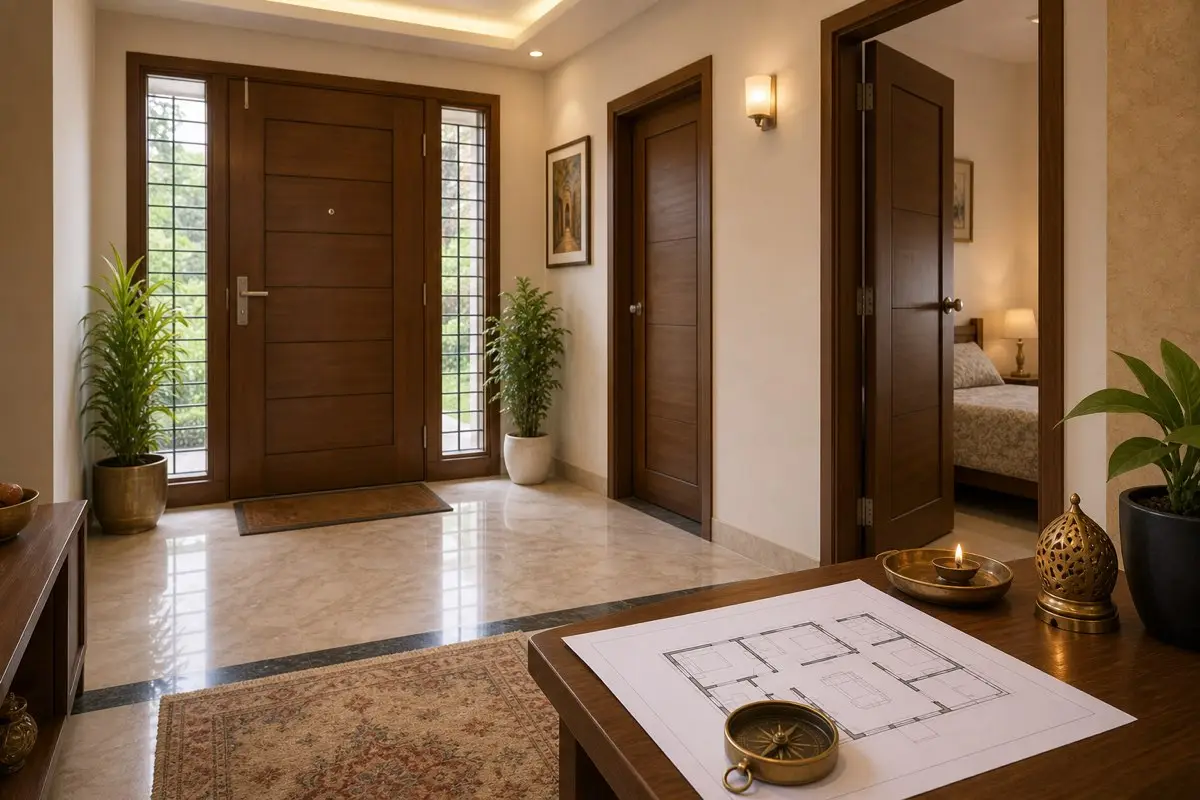
Why door Vastu matters
Every door changes how people move through the house. The main door affects arrival, while internal doors affect privacy, noise, furniture placement, and room usability. In Vastu, doors represent entry and flow. In architecture, they are circulation, access, security, and fire-safety elements.
Door planning becomes especially important in compact Indian flats where every inch matters. A wrong door swing can block wardrobes, hit furniture, expose a toilet, or make a room feel smaller. Good Vastu should also make the plan practical.
Main door and internal doors
The main door should be stronger, cleaner, and more prominent than most internal doors. It should open smoothly, be well-lit, and feel welcoming. Internal doors should support privacy and function without creating awkward collisions.
Do not judge all doors the same way. A pooja room door, bathroom door, bedroom door, kitchen door, and balcony door each has a different role. The best placement depends on the room, wall, furniture, and direction.
Door planning grid
Read each door together with the furniture and the route on both sides of it.
Swing clearance
Draw the open leaf and handle, then check beds, wardrobes and neighbouring doors.
Private views
Stand in the corridor and check what a visitor sees when the room door opens.
Usable access
Check the clear passage, threshold and handle with the people who use that room.
Number of doors in a house
Many traditional discussions mention auspicious or inauspicious counts of doors. In practical planning, the number should be sufficient for access, safety, ventilation, and privacy. Avoid adding unnecessary doors that create confusion or reduce wall space.
If you follow a traditional door-count rule, apply it after basic functionality is correct. Do not remove a useful bathroom, balcony, or emergency door only to satisfy a number. Safety and legal requirements come first.
Door alignment and direct visibility
Some alignments can feel uncomfortable, such as the main door directly facing a toilet, a bedroom bed, a mirror, or a cluttered service area. If the structure is fixed, use a foyer, screen, curtain, plant, partition, or furniture arrangement to soften direct visibility.
Doors facing each other across a corridor are common in apartments. This is not always a problem. Study what is visible, how air moves, and whether privacy is affected. A clean, bright, uncluttered view is usually easier to manage.
Door do's and don'ts
Separate a furniture conflict from a defect in the door itself.
| Do | Don't |
|---|---|
| Check two neighbouring doors open at the same time. | Assess only the closed-door floor plan. |
| Keep the route from bed to exit unobstructed. | Put a privacy screen in the walking route. |
| Report a latch that fails to engage. | Assume repainting will fix a loose frame. |
| Confirm fire-door requirements before alterations. | Remove a closer to make opening easier. |
Threshold, material, and opening direction
A clean threshold, working lock, smooth hinge, and proper door frame matter. The door should not scrape the floor, creak loudly, or remain half-broken. Wooden doors, engineered doors, metal doors, and glass doors can all work if used in the right place.
Main doors traditionally open inward in many homes, creating a welcoming feeling, but site and safety conditions matter. Internal doors should open where they do not hit fixtures or block movement.
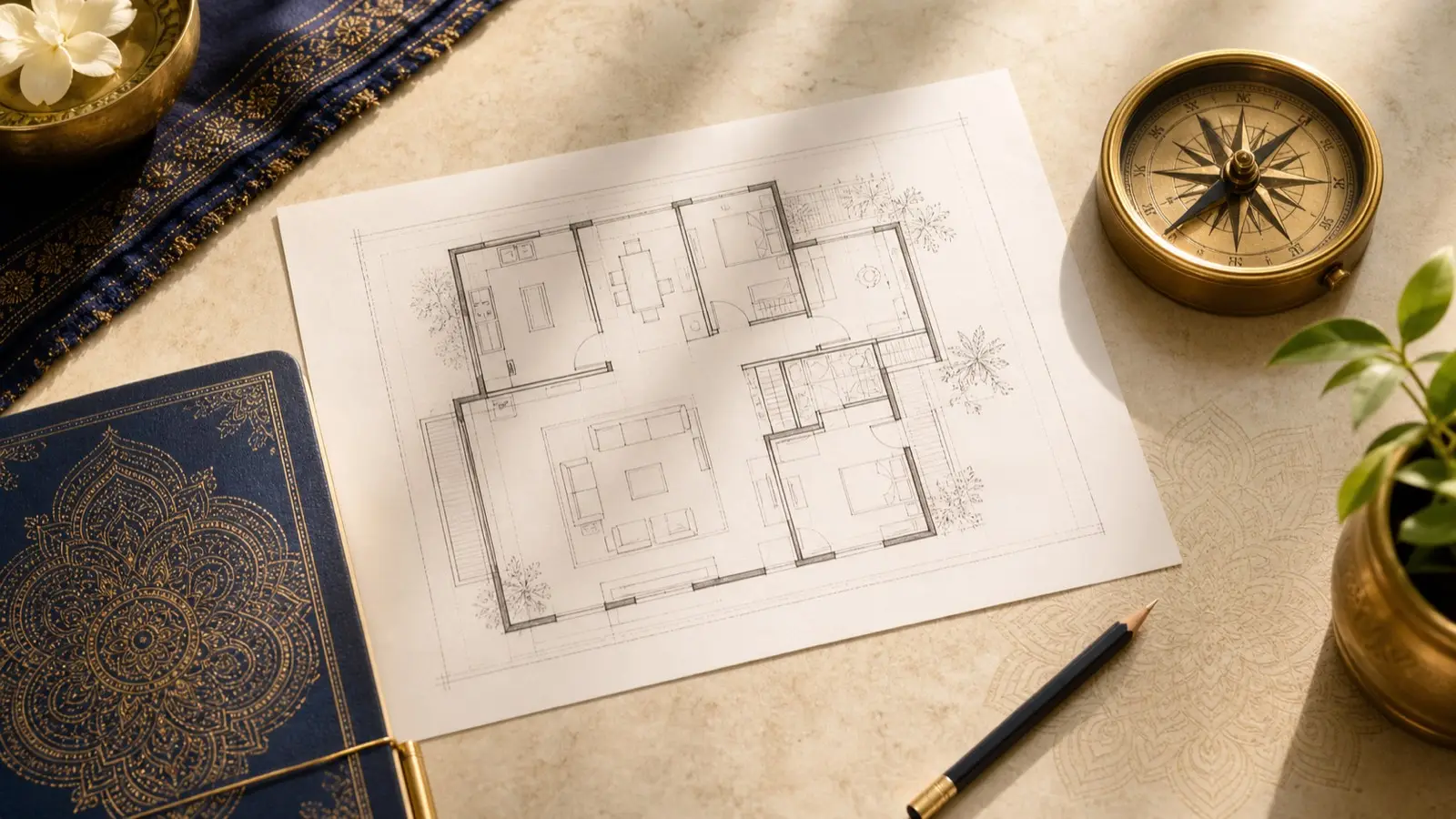
Room-wise door tips
Bedroom doors should protect privacy and not open directly to the bed when avoidable. Bathroom doors should not dominate dining, kitchen, or entrance views. Kitchen doors should support safe movement and ventilation. Pooja doors or cabinet shutters should be clean and respectful.
Balcony and terrace doors should be secure and weather-resistant. Store room and utility doors should allow access for cleaning and repairs. Every door should match the real use of the room.
Common door Vastu mistakes
Common mistakes include broken locks, dark entrances, clutter behind doors, doors hitting furniture, toilet doors left visually dominant, and main doors hidden behind vehicles or shoe racks.
Another mistake is focusing only on symbolic remedies while ignoring maintenance. A clean, well-lit, smooth-working door often improves the feel of a home immediately.
Frequently asked questions
Must the main door be larger than every internal door?
That is a traditional preference, not a reason to widen a sound opening. The entrance needs suitable clear access and an appropriate door specification. A larger decorative leaf is not automatically more usable.
Should I reverse a bedroom door that hits a wardrobe?
First try moving the wardrobe or changing its internal arrangement. Rehanging needs a carpenter to check the frame, switches and route outside the room. It must not create a new collision or obstruct an exit.
Do two doors opposite each other require a partition?
No. Check whether there is an actual privacy problem. A bed or desk may be moved out of the direct view. Add a screen only if it leaves sufficient passage and door clearance.
Should I close an unused door to obtain a preferred door count?
Do not permanently block an opening solely for a traditional number. Establish whether it provides required access or escape, and whether closing it would make the room harder to use.
Check door swings with furniture in use
On a measured plan, mark the hinge side, handle and full swing of each leaf. Add the wardrobe with its shutters open, the desk chair pulled back and the bed in its intended position. Check whether someone can enter, close the door and reach the room's controls without squeezing behind furniture. Door width on a drawing is not the same as the clear opening available in use.
Diagnose sticking, rattling and failed latches
Note whether a sticking door rubs at the top, bottom or latch edge, and whether the problem appeared after rain or new flooring. Give these observations to the carpenter rather than asking for an immediate trim. Check loose handles and a latch that misses its strike plate separately. Fire-rated leaves, seals and frames require specialist advice before adjustment; ordinary decorative repairs may affect their performance.
Work around a fixed flat entrance
In a rented flat, start with changes inside your own entrance: move a shoe cabinet out of the swing, keep keys reachable and check that a mat does not catch the leaf. Do not add a raised threshold that creates an access obstacle. Ask the owner or building manager before changing locks, drilling a door or adding another security door. A shared corridor is not extra storage space.
Inspect each door before accepting handover
Make a room-by-room list: entrance, bedrooms, bathrooms, balcony and service spaces. Open, close and latch each door normally; record scraping, loose frames, damaged edges and handles that are difficult to operate. Check whether furniture delivery is feasible through the route, not just the first opening. Ask the seller which doors are fire-rated and request relevant specifications instead of judging performance by appearance or weight.
Weather protection and fire-door function
For an exposed balcony or entrance door, photograph water marks and identify when water appears. A threshold alteration should be reviewed for both weather protection and access. Do not seal ventilation openings or modify a fire door to stop a draught without advice.
The London Fire Brigade's fire-door guidance warns against propping fire doors open. Treat this as safety guidance, not a statement of Indian building law: confirm the requirements for your building with its responsible manager or a qualified local professional.
Example: a bedroom door meets a wardrobe
In an illustrative compact flat, the bedroom door opens against a wardrobe shutter. Both work separately, but the occupant cannot leave easily while choosing clothes. Moving the wardrobe to another wall resolves the collision without moving the room entrance. If it cannot move, compare a different wardrobe arrangement with a professionally assessed door change. Count neither an auspicious door number nor a favourable direction as a solution to the physical obstruction.
Questions to take to the carpenter
Bring the furniture plan and defect list. Ask whether the problem is hardware, frame alignment, moisture or the opening position, and what an alteration would affect. Changing the opening itself needs appropriate building review, not only carpentry. Keep the conversation specific: can the door close securely, can the occupant use its handle, and can people pass without colliding with another leaf?
Related guides
Entrance planning
Read Entrance & Main Door Vastu, Main Door Mistakes, and Main Door Pada Vastu.
Home layout
Use Home Vastu, Balanced Layout, and Direction Vastu.
Corrections
For existing homes, see Vastu Remedies Without Demolition, Direction Checking, and Vastu FAQ.
A useful door plan starts with access
Review doors as working parts of individual rooms. Resolve collisions and defective hardware, protect private views without narrowing routes, and keep required safety features intact. Traditional placement preferences can then inform choices where there is genuine flexibility; they do not establish that a functioning door needs replacement.